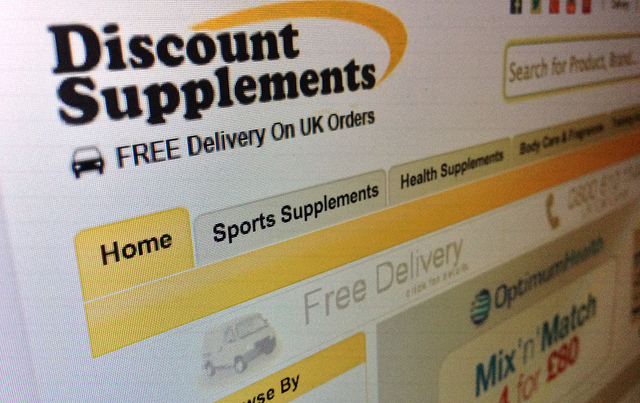
In the celebration of Singapore’s 50 years of progress, several online and physical shops have been offering discounts of 50% or above. To name a few, New Look is having 50% on dresses, bags and Footwear in their Somerset, City Square and Westgate stores while Zalora offers 50% on local designers and international labels.
So, whether you are shopping online for the perfect holiday outfit or considering a huge appliance purchase, spend your money wisely and save along the way with the 5 Shopping Hacks Everyone Should Know:
1. COMPARE PRICES
Before purchasing anything, compare the different prices offered by various shops for a particular product you have been eyeing on. Do this by intelligently finding information in the comparison website called PricePanda Singapore. When shopping online, it is best to get the biggest discount by using a coupon code. You may use the coupon codes available at Singapore’s CupoNation.
2. READ THE MEASUREMENT GUIDES
You are just wasting money if you bought something online that is not true to its fit. This is why it is essential to read the footnotes or the measurement notes. It will tell you the size and measurements across an array of countries. Also, it will tell you if the garment is tight or loose. Then, get more information about the clothing article by reading the height and the size of the model.
3. SAVVY QUESTIONS TO ASK AT A STORE BEFORE YOU PURCHASE
a. Do you give rebates?
b. Is there a mailing list that announces the promotions or sales earlier?
c. Do you offer a loyalty or membership program to earn back points or cash on purchases?
d. What is the return policy?
4. ADD UP THE COSTS
Do not be fooled by the flashy “sale” sign on the window or on the website’s sidebar because some shops will make you spend extra for shipping, minimum purchases, restocking fees, return policies, or even discount exclusions. Therefore, you must add up the product price plus the extra fees first before making a purchase. Also, make sure that your online retailer is reliable.
5. EMPLOY THE “URGENCY TEST”
If you are on a physical store and you are thinking twice on purchasing an item, ask yourself if you are willing to try it on the dressing room at that very moment. If you are not really excited to wear it then, do not bother to buy it.
Image Credits: Pixabay (License: CC0 Public Domain)
Have you heard of the saying: “out with the old and in with the new”? If you have and you strongly believe in it then, let me change your mind with these vintage or old things that you can still reuse:
1. CLOTHES
You can recycle your gorgeously patterned old clothes by sewing it into pillowcases or teapot covers. On the other hand, you can accept mint condition hand-me-downs from family and friends especially those who have baby clothes or infant toys. Do not be too picky. These said items are not utilized a lot since babies grow significantly every day anyway.
2. PIECES OF FURNITURE
There are plenty of used pieces of furniture that you can greatly score online. Try searching for drawers, tables, chairs, and closets at singapore.craigslist.com.sg or carousell.com.
Alternatively, do not be shy to ask your friends or neighbors if they are giving away any pre-owned furniture. Be careful or do avoid the articles with fabric (e.g., couch) to prevent getting bed bugs into your home.
3. DESIGNER BAGS
Pre-loved bags that long-lived across time can be found in online shops too! With prices that are up to 80% lower than the retail price, how can you resist an online bargain deal? Start with the trusted retail websites such as madammilan.com.sg and reebonz.com.sg.
What is special about these vintage bags is that they give a one-of-a-kind twist in the modern fashion.
4. CARRIER BAGS
Give your carrier bags a chance by recycling them! Plastic bags can be reused at home as the bin bags around the flat while paper bags make as a simple wrapping paper.
5. BOOKS AND MAGAZINES
Save more money by purchasing secondhand books or magazines that still look practically new. Start with purchasing good condition used books at Evernew Bookstore, Bras Basah Complex. Evernew Bookstore has a full collection of non-fiction books, fiction books, textbooks, children’s books, and so much more.
Image Credits: Sharon & Nikki McCutcheon via Flickr with Creative Commons License
Another option of browsing books and magazines would not cost you a thing! Go to your neighborhood public library and flip through a nice book or two.
Online shopping is finally catching up in Asia, and with it the use of credit cards. Credit cards are one of the best ways to get discounts and rewards. You can even compare credit cards in Singapore to find the best one for you.
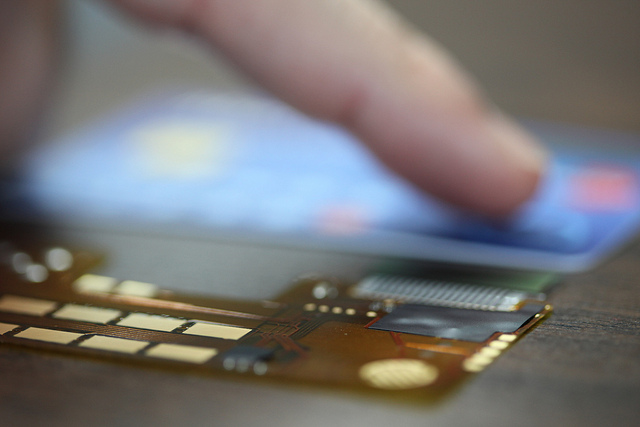
However, using a credit card for online shopping brings about the danger of identity theft. Here’s how to prevent your credit card account from getting into the wrong hands:
Avoid Storing Your Credit Card Information
Often, what gets stolen is not your card details but your access to a particular website. If your credit card details are saved on this web account, the thief can then use it to make purchases. For example:
You sign up for an account with an online shopping site (this can range from the App store on your tablet to a retailer’s online store). You are asked to key in your credit card details, which are then automatically saved for your convenience. That way, you won’t have to key it in again on your next purchase.
That sounds like a good idea. But should someone gain access to your shopping account, they may then be able to buy using your credit card, and send the goods to an alternate location (which may very well be in a different country).
To prevent this, avoid storing the credit card information on your shopping accounts. It may be inconvenient, but it’s safer. It also helps in stopping impulse purchases.
Look for Security Signs
Look for the “secure website” logo, a little padlock, which normally appears at the bottom of the browser window. A legitimate e-commerce site should also begin with http://. If the beginning of the address says anything else, you should navigate away and avoid purchases.
You should also observe corporate and brand logos carefully–a common trick is to set up a fake website that vaguely resembles the real thing. Any information you key in is then sent to the identity thief who built the site.
When in doubt, Google the website you are making purchases from. Look for any negative reviews or scam warnings.
Never Pay for Anything by E-Mailing Your Bank Account or Credit Card Details
No legitimate payment portal will require you to e-mail your bank account or credit card numbers. If you receive this request, you are almost assuredly on a scam website. Not only should you navigate away, you should have your computer brought to an expert and scanned for spyware.
Be Stingy with Your Personal Details, However Trivial You Think It Is
Identity thieves can gain access to your computer with nothing more than your NRIC number, address, and phone number. A common way to get this is through scam dating sites–you think you’re filling in details for a dating profile, but you’re really just feeding details to a thief who’s slowly sniffing out your credit card numbers.
Note that, once your credit card number is stolen, chasing down the site owners (an almost impossible task) is useless. These websites often do not use your card information themselves, but sell your data to identity thieves via onion sites.
Call Your Friends Directly if You Get Weird E-Mails From Them
A common tactic is to hack someone’s computer, and then e-mail their contacts to ask for money for an “emergency”.
If your friend’s computer has been hacked, for example, you might get a strange request asking you to send your credit card details because she is trapped in a foreign country, is in an accident, will pay you back tonight, etc.
Call your friend to verify this, and if you can’t get through, seek confirmation from her family or other acquaintances. Do not send your credit card details. If you really need to send money urgently, insist on doing in cash and in person (e.g. no purchasing of iTunes cards or online game currency for transfers.)
Do Not Store or Write Down Your Credit Card Details
There is seldom a good reason to write down your credit card details, or to store them in your phone, hard drive, etc.
If you make a habit of doing this, even a lost phone or discarded computer (on which you may have forgotten to delete the file) can give away your credit card access. It is quite common for identity thieves to acquire “junk” machines and search intact hard drives, in the hopes of coming across sensitive financial information.
Every place on which you record your credit card details gives identity thieves another point of access.
Ultimately, credit cards are a safe, convenient form of payment. With them, you can get a range of money saving benefits–you’ll just have to be careful on how and where you use them.
How to compare credit cards to get the best? There are price comparison sites for credit cards that allow you to find the most suitable card for you.
Katie Paterson from Flipit.com gives the inside scoop on how to get creative in ensuring you pay the lowest price online. Flipit.com is Singapore’s number one promo code portal and all round money-saving platform.
We all love the fun, flexibility and convenience of shopping online, but the biggest perk has got to be the fact you can pretty much guarantee you’ll always be paying the lowest price possible – that is, if you know how to shop online like a pro! Here are a few sneaky insider tips and tricks to help you score a discount each and every time you spend money online.
Bookmark a good coupon code provider – Discount codes almost always have a limited time span (which makes it all the more rewarding when you catch it in time!). The best way to ensure you keep up to date with all the best codes as soon as they’re available is by bookmarking the homepage of a reputable coupon code provider such as Flipit.com. Homepages are updated daily, so checking this page out regularly will ensure you never miss a beat!
Tease webstores by pretending to abandon your cart – Brands who notice and take offence to this kind of move are likely to get in touch and ask why you didn’t see your purchase through, offering a discount (usually around 10%) to encourage you back and make the final payment. Similarly, brands who are being particularly innovative with understanding customer behaviour have been known to install cursor movement detectors which are triggered when you swipe upwards to close the window, revealing a ‘leaving so soon?’ pop-up window. Give it a try!
Sign up to webstore newsletters – Signing up to newsletters can be really useful for online stores. Of course, some can end up bombarding you with emails on a daily basis, but unsubscribing in these situations is simply a matter of clicking a button. It’s worth signing up to newsletters of brands that you love, as those on the mail list are considered a priority, and are always first to be notified of sales, special events or exclusive discounts.
Use a price comparison site – Price comparison sites are the epitome of everything that’s great about shopping online. Shopping around various stores in person to find the cheapest price is an exhausting and time-consuming task, but with price comparison sites such as Priceme.com.sg you can guarantee you’re always paying the lowest possible price available.
Never pay shipping – Shipping costs are a nuisance. Hopefully soon enough they will become a thing of the past, as more brands begin to realise that making the sale and gaining loyal customers is way more important than covering a few dollars postage cost. Unless you’re seeking certain shipping privileges such as same- or next-day delivery, there are a number of ways that you can avoid paying for the delivery of your purchase. For example, some stores offer free shipping if you reach beyond a certain purchase total, so it might be worth buying more (perhaps two of the same item but in different sizes to ensure a perfect fit) and returning whatever isn’t suitable, free of charge. Alternatively, many stores offer shipping voucher codes, and you can always try chancing your luck and reaching out to the brand to ask for free shipping – sometimes being bold pays off, and what have you got to lose?
Imagine if you can pay an online shop as quick as a taking a Selfie, how easy would that be?
Most of us are aware of how lengthy it really is to send money or pay your purchases online. Aside from remembering your passwords, you will be tasked to verify it with a code or PIN sent via SMS or via a security token (know more about the security token, here). These steps of authorization are called two-factor authentication as it involves “what you know” (e.g., 6-digit password) and “something you have” (e.g., verification code).
But as our technology progresses, companies have pushed ways to improve our lives by making things quicker and more efficient. This is why MasterCard is testing out a new way of payment authorization that utilizes fingerprint scanning and facial recognition.
Biometrics, measurement and analysis of unique physical characteristics, is the underlying tech that enables this type of authorization to work. I bet our ancestors would not think that this would soon be possible! MasterCard is now closely working with Google, Microsoft, Apple, Samsung, and BlackBerry to introduce this project.
As passwords are likely to experience breaching, your fingerprints and facial features are less susceptible. You may be aware that swift touch of a fingerprint scanner is something Samsung and Apple have already implemented. On the other hand, facial recognition is made through taking a Selfie. I for one thought that one can cheat the system by using a photograph, but the system do not work that way. MasterCard holders are required to blink to indicate that they are live human beings.
Fast forward to that day, are you going welcome this new payment method with open arms?
Even an innovative step as astounding as this cannot please everyone, especially the generations prior to the Millennials (Generation Y). One thing is for sure though, if this method is successful, companies may work on other possible authorization methods such as voice recognition or heartbeat pattern checking.
Are you ready for that?
Image Credits: Robert Scoble via Flickr with Creative Commons License