
Tidy Up Your Family’s Life In 5 Professional Steps

With a house full of children, life can quickly get a little topsy-turvy! Juggling through the chaos of household chores, family relationships, and work responsibilities can become overwhelming. Luckily, you can adopt a professional system that has been present for centuries.

This system is none other than the “business system”. Businesses, enterprises, and firms are organized because they follow a synchronized structure. Apply this to your home life by following these simple tips:

1. DETERMINE YOUR FAMILY’S CORE VALUES

Core values exhibit what is important in the company and its members. In your case, you must consider what are the important beliefs and morals that you want your family members to uphold. Determine your family’s core values to help guide your every decision. For example, if your family values saving money and hard work then your plans for your next vacation will be based on those values. Furthermore, it will affect how much you will save (i.e., practices) and what you will spend your money on (i.e., strategies).

2. SET YOUR PRIORITIES

Spreading out your energy and time to things that are not necessary can be a waste of your resources. This is why efficient companies set their priorities straight and focus more of their resources on the top priority. Your priorities as a family can be anything that you would like to accomplish in the near future such as exercising together everyday. These priorities are personal and subjective to you.

3. ESTABLISH A SCHEDULE

Most of the firms follow a strict schedule for every employee. Apply this to your family by using a digital calendar to automate your family’s schedule. A beloved digital calendar by most is the Google Calendar, which is available if you have your own Gmail account. Establish a schedule that includes household chores, special events, school works, and etc. You can assign a different color for each child too.

Alternatively, you may use a Microsoft Excel spreadsheet and assign a color and a row for each child. It is best to plan the week ahead by making the schedule every Sunday night.

4. PRACTICE TEAMWORK

Cooperation and teamwork can extend the walls of your home too! Join or organize a parenting group including the other parents in your children’s school. Aside from meeting new people, you can save more money by taking turns in babysitting each other’s children. Use WhatsApp or a private Facebook group to exchange your contacts for emergency purposes and to schedule events together. Taking care of each other’s kids are matters of trust so make sure that these newfound friends can be trusted.

5. REVIEW YOUR PROGRESS

As a whole, you must sit together once a week for at least 10 minutes to review your progress in terms of your priorities, your schedule, and your other issues. Talk openly and honestly.

Image Credits: pixabay.com (License: CC0 Public Domain)

Image Credits: pixabay.com (License: CC0 Public Domain)

To increase the positivity and the sense of accomplishment, commend your children for their achievements that week (no matter how big or small it may be).


Sources: 1 & 2

Read More...

5 Helpful Steps To Talk To Your Elderly Parents About Money

Money gives people, of all ages, the decision-making opportunities they need. Unfortunately for elderly parents, research has shown that financial decision-making ability declines after age 53. This maybe attributed to the 2013 survey done by National Endowment for Financial Education which found that 7 out of 10 adults have difficulty discussing to their families about who will make the financial decisions on behalf of their elderly family member.

Talking about the aging parents’ finances is a good idea but that does not mean people actually do it. Some people avoid the subject because it raises uneasy situations (e.g., quarreling over the estates or feeling “extra” sensitive toward the elderly). Resolving this negative mindset will help your aging parents to organize their financial life. And, that is the most important thing right now.

So, here are 5 Helpful Steps To Talk To Your Elderly Parents About Money…

1. DO YOUR RESEARCH

You have one goal – to organize your elderly parents’ financial life. Know what issues or topics to discuss that will aid this goal. Due to the declines in someone’s body as they age, topping the list is healthcare. Also, you must consider their life insurance, medical insurance, or long-term care coverage policies. Then, talk about estate and other assets. Having a last will and testament ready is a crucial thing.

2. GATHER DATA

After researching the topics to discuss, you must prepare the documents needed. These documents are the banking statements, credit card bills, tax records, insurance policies, and so on. Put these documents in one safe place such as a relatively small safe deposit box at home. Grant access only to the people who are really trusted (e.g., the lawyer or immediate family member).

3. CONVERSE TO THEM STRATEGICALLY

Before talking to your parents, build a strategy that will work for your family dynamics. For instance, some families are more comfortable with having everyone around while other feel that they are being ganged up by their children. Another tip is to talk to them as if you are talking to your adult peers with objectivity and compassion. Do not make them feel that you are treating them as young children.

4. START THE DISCUSSION

All your homework led you to this moment. Emphasize on the benefits of the talk and speak with love. Delaying the talk will only be more expensive because as health declines, premium prices increase. Ease the flow of the conversation by adding real-life experiences as examples.

Image Credits: pixabay.com (License: CC0 Public Domain)

Image Credits: pixabay.com (License: CC0 Public Domain)

5. LEARN FROM THE EXPERIENCE

Traditional financial advisors suggest that parents save for their own retirement first before saving for tertiary education. This is because you only have one shot at retirement while there are many ways to get student loans. With this experience, you must realize that it is necessary to save as much as you can for retirement during your peak years (i.e., aged 20-35) in order to age gracefully.

Sources: 1 & 2

Read More...

Know These Money Disorders That Sabotage Your Finances

In Dr. Brad Klontz’ book called the “Mind Over Money: Overcoming the Money Disorders that Threaten Our Financial Health” he dishes about the different ways one can sabotage his or her finances. Dr. Klontz knows what he is talking about, as he is a financial psychologist, investment advisor, an associate professor at Kansas State University, and a co-author of four financial books by profession.

To start with this discussion, Money Disorders are defined as persistent patterns of self-limiting and self-destructive financial behaviors. The root of these said disorders are the beliefs about money that you developed during the course of your life. Particular events, which are distressing and dramatic in nature, were dubbed “financial flashpoints”.

Examples of financial flashpoints include childhood poverty or abrupt unemployment. These financial flashpoints affect your financial behaviors because they leave an emotional scar that you will carry on throughout your adulthood. Fortunately, you can overcome the money disorders and take charge of your monetary life! You just have to know its types first.

The Mind Over Money book outlines the 3 types of Money Disorders as:

1. MONEY-WORSHIPPING

Money-worshipping patterns can either display through hoarding or compulsive buying. Hoarding is keeping excessive amount of stuff or money to gain a sense of security, safety, and relief from anxiety. While, compulsive buying is overspending on unnecessary things in order to feel good. They use money as an escape from troubles or worries.

2. MONEY AVOIDANCE

Money avoidance patterns exist as financial denial or financial rejection. Financial denial is when you refuse to face your financial problems (e.g., ignoring the credit card bills) to “minimize” the situation. On the other hand, financial rejection is when you experience guilt whenever your cash increases. People with low self-esteem most likely feel this.

3. RELATIONAL MONEY PATTERNS

Relational money patterns include disorders that are influenced by your loved ones or other social interactions. It exists as financial infidelity and financial enabling. Financial infidelity is when you lie about your spending to your spouse or life partner. For instance, you can open a secret bank account or spend beyond your agreed-upon budget.

Financial enabling, commonly seen in the Asian setting, is when you give money to your less fortunate relatives or friends whether you can afford it or not. You give them money even though it is not in their long-term best interest or because you just cannot say “No!”

Image Credits: Consumerist Dot Com via Flickr with CC License

Image Credits: Consumerist Dot Com via Flickr with CC License

As you can see, Money Disorders exist in different forms, and often exist without your conscious knowledge. Awareness and identification is the first step to conquer these disorders! 🙂

Sources: 1 & 2

Read More...

Golden Do’s In Giving Your Child’s School Allowance

As the modern world has become more complex, children nowadays have been inseparable with school allowance or pocket-money. From a variety of books, to a selection of gadgets, accessories, or snacks…there is always something else they needed to buy! Furthermore, they are more knowledgeable about money as they have access not only to the lives of their friends but also to the kids around the world – through the Internet.

Having these in mind, giving money to your children must be used in the most positive manner in order to mold their values while young. Let us first start with the amount to give.

Most mothers in Singapore agree that an allowance of about S$5 is enough for the needs of children in Primary 1-6. This is done so to meet the costs of food and other miscellaneous. But, if the day falls on a co-curricular activity, they give extra cash.

Aside from this, the best way to decide the pocket-money amount is to discuss it with your child. Know his or her needs and plan it together. Start giving this amount on a regular or consistent basis so that your child can manage his money accordingly.

After the suitable amount is settled, let us evaluate the Do’s in allowance giving…

1. TEACH THE VALUE OF SAVING

Teach your kid to make their own monetary choices by giving the allowance in smaller denominations (e.g., three pieces of S$1 coins and four pieces of S$0.50 coins) so he or she can save a part of it (e.g., 10% or S$0.50). Promote saving by providing a piggy bank or a money jar with their name on it.

2. TEACH THE VALUE OF EARNING

Instead of just handing cash over, make them earn it. Instill the importance of sharing the household chores around the house then, reward him or her for chipping in. You do not have to be all competitive about it by assigning a dollar for each chore, just explain what your child can do to help out.

3. TEACH THE VALUE OF MONEY

Money is a currency that puts relative price on almost everything. Letting your child make a few unnecessary purchases, such as spending their entire savings on sticker tattoos, as a part of the learning process is OKAY. But, it is also acceptable to put limits on what your child can spend on. This shall teach both the value of money and responsibility of a smart consumer.

Image Credits: Aka Hige via Flickr

Image Credits: Aka Hige via Flickr

Sources: 1 & 2


Read More...

How to maximize your life with a $3,000 paycheck

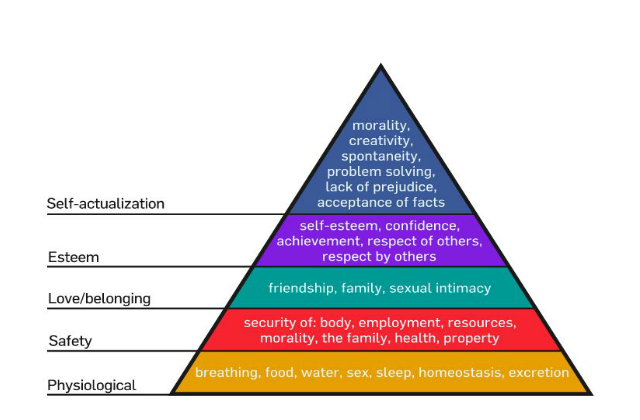
Maslow Hierarchy of Needs

With S$3,000 for a monthly salary, many fresh graduates do not think that is enough to spend nor save. But think again. As a bachelor or bachelorette earning $3,000, you are already better off than many others beset with hefty household bills. So, for someone fresh out of school with no dependants or minimal financial liabilities, maximizing your life with your $3,000 paycheck may be attainable and here is how we can approach this mathematical sum with the help of Maslow’s hierarchy of needs. According to Abraham Maslow, a renowned American psychologist, inherent human needs are fulfilled in the following priorities, starting from physiological needs, safety needs, love/belonging needs, esteem needs and finally, self-actualization needs.

Need(s) fulfilled: Physiological Image credit: ss3singapore.wordpress.com

Need(s) fulfilled: Physiological
Image credit: ss3singapore.wordpress.com

1. Spend 20% or $600 on irresistible meals that are simply affordable. Fortunately, it is never a hassle to find them in the heartlands or the CBD areas which serve to satisfy your hunger pangs after a half day of hard work! Alternatively, you can prepare your own nutritious and palatable meals within the budget!

Need(s) fulfilled: Love/belonging, safety Image credit: en.wikipedia.org

Need(s) fulfilled: Love/belonging, safety
Image credit: en.wikipedia.org

2. Spend 10% or $300 on delighting your beloved family, partners and friends. Rope them in for a laugh by watching a hilarious movie, enjoy a hearty chat over a scrumptious meal or simply participate in a sport that all of you relish.

Need(s) fulfilled: Love/belonging, safety, physiological, self-actualization Image credit: todayonline.com

Need(s) fulfilled: Love/belonging, safety, physiological, self-actualization
Image credit: todayonline.com

3. Save 50% or $1,500 for your upcoming big ticket items. In Singapore, your residential property is probably your greatest prized asset. Your lifetime of savings and efforts will be manifested in your small but cozy HDB flat. At the end of the day, it is the family warmth that truly matters in the home, not so much about the size. Depending on your risk appetite, a portion of the 50% may be used for investment purposes to earn a return over the inflation rate. As easy as this may sound, engaging in due diligence is key to making or breaking it.

Need(s) fulfilled: Love/belonging, safety, esteem Image credit: huishilicious.wordpress.com

Need(s) fulfilled: Love/belonging, safety, esteem
Image credit: huishilicious.wordpress.com

4. Set aside 10% or $300 as an emergency fund. Life is filled with surprises. You never know what will happen tomorrow. Putting aside 10% of your income  may seem wise to buffer yourself against uncertainties. Take for example an unexpected invitation to your superior or colleague’s wedding or baby shower. An emergency fund boosts your readiness and willingness to share the joys, build a stronger rapport and put you in a better position to  win people’s hearts.

Need(s) fulfilled: Physiological, safety Image credit: graphichive.net

Need(s) fulfilled: Physiological, safety
Image credit: graphichive.net

5. The last 10% or $300 is reserved for miscellaneous expenses such as transport fares, therapeutic services and new merchandises. After a month’s worth of toiling, you definitely deserve some pampering. Indulge in a massage to relieve yourself of the piled-up stress from work. Recharge before moving on to the greater things in life.

The good news is that the higher level needs such as the esteem needs and self-actualization needs often do not pose a material constraint on your financial resources. By living within your means while maintaining optimism, you gain the understanding and respect of your peers and family members. Through demonstrating  your forthcomingness  in celebrating others’ blissfulness and successes while realizing the relentless quest for material wealth does not always lead to happiness, you would have already achieved the moral high ground.

Read More...