How Much To Tip When Traveling In These 10 Countries

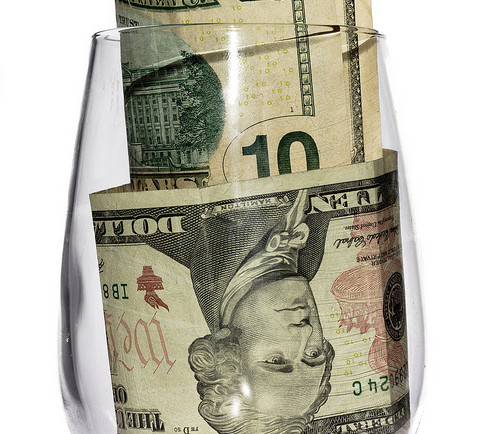
Tipping is a practice of gratitude and recognition to those who have provided you with excellent service. In Singapore, they automatically have service charges in restaurants but you can still leave about 5% for great service.

Not all countries welcome tipping. In fact, some parts of China and Japan may be offended when you give them tips. Before leaving your hotel, it is important to research on the country’s tipping practices. Here are 10 countries you can start with

1. AUSTRALIA

Tipping of 10-15% of your bill is appreciated for waiters and waitresses especially those who are serving you from expensive restaurants. It is customary to tip the hotel bellman at least AU$1 per bag.

2. FRANCE

A service charge of 15% is always included in your restaurant or bar tab. So, typing beyond that is not a must. For taxi drivers, you may tip at least 1 Euro and the hotel bellman should get at least 1 Euro per bag.

3. GERMANY

Like France, a service charge is included but, you may leave at least 5-10% of tip for good service. At least 1 Euro should be left for the hotel’s bellman per bag and the hotel’s maid per day.

4. HONG KONG

Tipping is certainly acceptable in Hong Kong. Offer your bellman at least HK$2-3 per bag.

5. ARGENTINA

You may tip at least 10% in restaurants but, do not tip your taxi drivers. Your bellman should get at least 2 Pesos per bag.

6. SOUTH AFRICA

Tip at least 10% in restaurants and taxis for gratitude. Group tours should receive at least R 10/tour guide while private tours should receive R 50/guide for half-day tours and R 100/guide for whole day tours. Hotel maids should get R 50 per day while the hotel bellman should get about R 5 per bag.

7. UNITED ARAB EMIRATES

Consider at least 10% of tip for restaurants. Your bellman should get at least 5 Dirhams per bag.

8. UNITED STATES, CANADA, AND MEXICO

It is common to tip the person who assisted you with your baggage in the airport or the hotel with at least US$1 per bag. Bellman should receive about US$1 per bag too. And, the hotel maid should be tipped at least US$2-5 per day.

Image Credits: Tax Credits via Flickr

Image Credits: Tax Credits via Flickr

Since some hospitality workers are paid less, they will truly appreciate a tip. Tipping per day will not only be a gesture of gratitude but it will help you to receive continued shower of good service.

Source: Fodors

Read More...

How To Land Your Dream Job Without Spending A Dollar

Landing your dream job or any job can be a challenging task. But, it is definitely worth the effort. Throughout the process, you will have to tap into your creative mind and stay motivated. Here are 6 tips that can help you…

1. TAKE ADVANTAGE OF FREE ADVICE FROM THE EXPERTS

Job portals or online classified ads such as Jobstreet and Monster have articles that can teach you how to make a professional Curriculum Vitae (C.V.) wherein your qualifications are presented efficiently. For example, it is recommended to have no more than a page for every 10 years of experience.

2. MAKE YOUR C.V. EYE-CATCHING

Your C.V. will stand out from a pile of other candidates if you add a sparkle of creativity. Use Adobe Photoshop for retouching your photos or Prezi.com for making an interactive presentation. As much as possible, make the content specific and concise.

3. MAXIMIZE YOUR ONLINE JOB SEARCH

If job portals have no listings that match your qualifications, then submit your C.V. to the employers’ websites directly. Most websites have “Careers or Jobs” tab on the home page. By doing so, you are actively pursuing new openings.

4. SEEK AND YOU SHALL FIND

Aside from researching for job openings online, go outside and talk to your friends, family, church-mates or fellow spinning classmates…they might just have a position for you. But, you shall never ask a person you just met for a job; ask them for career advice and contacts. The more people you share your goals to, the greater your chance of scoring a lead.

5. RESEARCH

Research the companies that interest you. Find out about their job operation, products, and services. If you are acquainted with some of the employees in the firm then, ask them about the skills that are valued most when hiring and the job opportunities that are available at the moment.

6. WORK YOUR WAY IN 

You will never know if you’re suited for the company unless you try it yourself. Even though there are no current full-time positions available, consider internships, freelance, and volunteering opportunities.

Image Credits: Kevin Dooley

Image Credits: Kevin Dooley

This will benefit you because big companies tend to hire within and the experience will fill the gaps in your C.V.

Read More...

Use These Brain Techniques To Save More And Spend Less

1. EMPLOY THE “URGENCY TEST” WHILE SHOPPING

When you are thinking twice on purchasing an item, ask yourself if you are willing to try it on the dressing room at that very moment. If you are not really excited to wear it then, do not bother to buy it.

2. AVOID “GIVING UP”, USE “SAVORING” INSTEAD

You will only feel deprived if your perspective is to give up something in order to save more. So, change your perspective and start “savoring” the moments that you indulge on lavish things. The goal is to change your frequency of indulgence and not to hinder you from enjoying life’s goodness.

3. WHEN YOU ARE NOT EARNING, YOU ARE SPENDING

Keep in mind that when you are not earning, you are just losing the money you earned. If there are opportunities to work more and your body feels okay then, take on the challenge. Sometimes, the feeling of losing money is more painful than missing it.

4. MAKE TIME A CURRENCY

To get a clearer perspective, break down the monetary value of things by the hour. For example, if you make S$10 an hour and a bowl of bean curd is S$2 then that is 12 minutes of your work and life. This technique will help a lot to cut down your impulse purchases.

5. BE MOTIVATED WITH A SLOGAN

If you are struggling to be frugal, make a tangible slogan or a poster that you can hang on to. For example, you can use this slogan to help you think critically when purchasing: “Use it up, Wear it out, Make it happen, or Do without it”.

6. UTILIZE THE “GAS OR BREAK METHOD” 

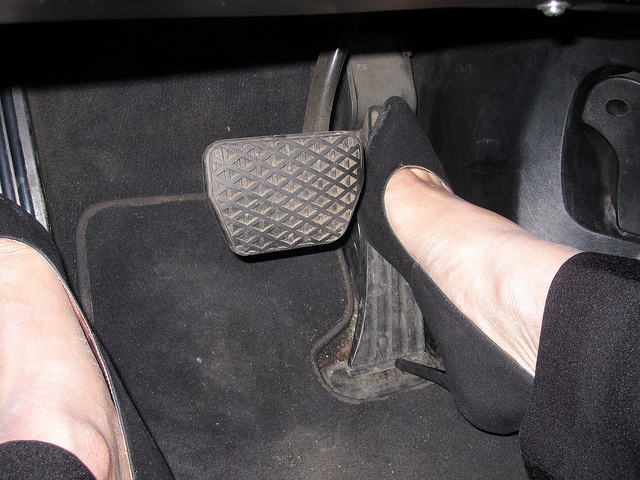
Compare your financial progress to driving. In every decision you can either get closer to where you want to be (gas) or slow down (brakes).

Image Credits: loveheels via Flickr

Image Credits: loveheels via Flickr

So, the next time you have to make a monetary decision then ask yourself this: “Am I stepping on the gas or the brake? Is it worth it?”

Read More...

Psychology of Spenders And Savers

There are two types of people in the world: those who spend and those who save.

SPENDERS

Compulsive spenders do not want to delay gratification. If they want something, they will purchase it right away…as long as they are happy. It worked so well in the past, so they stick to the same habit. But, when expenses and debts extremely increase then, it is the time they realize that they need to kick that habit away.

Here are 3 ways to prevent your impulses and to help you save:

1. IDENTIFY YOUR FINANCIAL GOALS

How much do you need when you retire or how much do you need to pay for your child’s education? Ask yourself these questions to identify your financial goals. Then, be vocal about it to your friends and family.

2. NEED VS WANT

Before purchasing anything, evaluate and know whether you need or want the item. Then, purchase according to your budget.

3. STAY AWAY FROM THE PLASTIC CARDS

By using mainly cash and withdrawing it from your bank account, then you became more aware of your spending and your account balance.

SAVERS

For financially aware individuals, the act of spending can activate neural activity in the anterior insula and amygdala. These two parts are responsible for the mood and unpleasantness felt. This is why the more these two are activated; the less likely a financially aware individual will spend. On the other hand, the act of saving will bring immense pleasure to them.

While many people take pleasure in purchasing things, some savvy savers do not feel the same. Instead some of these people are uncomfortable when shopping, they constantly look for the price tag and calculate the total, and they feel emotionally painful when they are paying. If you are not experiencing enough pleasure in life, you deserve to loosen up and enjoy spending every once in a while.

So, what brings the pleasure back as a savvy saver that is spending?

1. STAY AWAY FROM THE PLASTIC CARDS

Give yourself the vacation or rest day you deserve by budgeting a portion of your money to a category called “personal incentives”. With that money, you would not need to use your credit or debit card since you have already set aside the cash to cover it. Now all you can do is relax and take your mind off the expenses.

2. PURCHASES=REWARDS

At the end of the month and once you meet your savings goal, reward yourself with the pampering you deserve for working hard and doing so well. To prevent frugal fatigue, reward yourself by using a responsible amount of 4% – 8% of your savings.

3. THINK OF THE FUTURE

Study has shown that people are happier when they spend their money on experiences (e.g., sky diving) than in goods (e.g., Gucci bag). So, do the same with your personal incentives. Do you really want to regret experiences you did not take because you don’t want to spend money on enjoyment?

Image Credits: Tax Credits via Flickr

Image Credits: Tax Credits via Flickr

Even though you belong in one category now…you can still change! Whether you are a saver or spender, you hold your financial present and future.

Read More...

Score Great Deals At Flea Markets In Just 5 Steps

1. NARROW DOWN WHAT YOU WANT

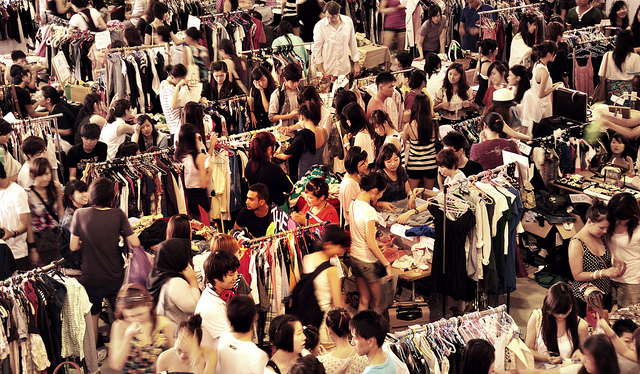
Know what you want to buy before coming in to the flea markets. A whole area of second hand and budget-friendly items can be overwhelming so it is best to come prepared. The more focused you are, the easier it is to avoid impulse purchases.

2. MEASURE AND RE-MEASURE

To avoid buying furniture that does not fit your home, measure the room dimensions accurately by using a tape measure and a ruler. If you want to match an item with the room then take a picture or bring a fabric piece with you as you buy.

3. TIME IS ESSENTIAL

You will get the best selection in the first few hours of sale but vendors are reluctant to negotiate early one. So, if you want to save more then wait until the final day. But, expect your selection to be slimmer.

4. DO RESEARCH

Be sure to do your online research before shopping in the flea markets. This way you will be able to spot if the item is overpriced. Then if it is, use your bargain powers to sway the price.

5. GET CREATIVE

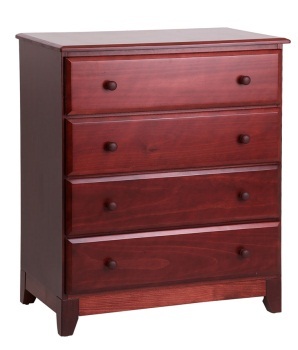
The items for sale may be multi-purposed. For example you are looking for a sideboard to put your dishes in, but a dresser/drawer has a better price. Grab the gorgeous dresser instead since you may use it as a sideboard.

Image Credits: US CPSC  via Flickr

Image Credits: US CPSC via Flickr


BONUS! Here are some of the recommended and unique flea markets you shall visit…

A. MAAD (Market of Artists and Designers)

MAAD houses pet-friendly and budget-friendly items for the whole family. Their innovative creators are from independent and are known for artsy fashion and artisan stationary pieces. Here you will find a wide array of crafts, plush toys, handmade jewelry, and paintings. The price range starts from S$10 to S$50. Visit museum.red-dot.sg/maad/ for more information.
B. ZOUK FLEA & EASY

Zouk, one of the famous clubs in Singapore, organizes a flea once every three months. From trendy pre-loved threads to hipster rags at bargain prices, Zouk Flea & Easy offers an eclectic flea experience.Blogshops are welcome to participate! Visit zoukclub.com for more.

C. CHINA SQUARE CENTRAL (CSC)

CSC has a Sunday flea market that offers DVDs, souvenirs, and electronics for less. Aside from that, comic book junkies can grab the later issues and action figures at CSC’s Level 2. Price range starts from S$5 to S$30.

Read More...