The Real Cost Of Hiring A Helper In Singapore

Our concrete jungle has wired us to focus mainly on work. As work occupies most of your day, it is easy to take domestic life for granted. To handle the so-called burden of managing your household chores while you tackle occupational responsibilities, you may turn to a maid agency for help.

Let us be honest! It is becoming a fairly common practice to hire domestic help in Singapore. Many families come from dual-income households where both parents work long hours. Who will be left to take care of the children, elderly relatives, and chores?

There are various reasons why you may hire a helper. Whatever your reasons are, here are the initial and monthly costs that you can expect.

UPFRONT COSTS

The following are some of the initial costs that you need to pay as an employer of a foreign domestic worker.

a. Agency Fees: about S$1,000
b. Settling-in Programme: S$75
c. Work Permit Application: S$30
d. Work Permit Issuance: S$30
e. Security Deposit: S$5,000
f. Foreign Domestic Worker Levy: S$60-S$265
g. Medical and Personal Accident Insurance: about S$250 per month spanning 26 months

The estimated total will amount to more than S$6,000. Now, let us put a spotlight on each element.

Image Credits: pixabay.com

#1: MONTHLY SALARY

To determine someone’s monthly salary, you must consider several factors. Experience and relevant training are just some of the main factors. Not to mention, the applicant’s nationality plays a part too.

The Philippines’ government recently reduced the number of domestic helpers entering Singapore. With the reduced manpower supply, expect salaries to increase accordingly. That being said, the minimum salary for a Philippine domestic helper is S$570. On the other hand, Indonesian authority set its minimum domestic helper salary to about S$500. Lastly, the minimum salary that you can expect to pay to a foreign domestic worker (FDW) from Sri Lanka is S$400.

Other miscellaneous costs include food, accommodation, medical expenses, and travel expenses.

#2: EMPLOYER’S ORIENTATION PROGRAMME

As the name suggests, Employer’s Orientation Programme or EOP is tailored to the employers who are looking to employ some FDWs. It is recommended for employers who are hiring a foreign domestic worker for the first time or have changed workers on a frequent basis. This program lasts for 3 hours and can be both taken in a classroom or online setting. Classroom setting costs about S$30 to S$34. While, the online setting costs about S$46. After all, you are paying for convenience!

Learn more information about EOP by checking this link: mom.gov.sg.

#3: SECURITY BOND

How many times have you encountered a damage deposit or damage bond in your life? One to many, I suppose. A damage deposit ensures that you return an item in good condition. Similar mechanics can be applied to the FDW security bond.

If you are employing a Non-Malaysian domestic helper, you have to pay about S$5,000 to the Singapore government. This security bond ensures the safety of the domestic helper should you break any laws governing the employment. You will eventually be discharged from the security bond when you meet the following requirements:

a. You cancelled your foreign domestic worker’s Work Permit
b. You did not breach any conditions of the said bond
c. Your FDW has returned home

#4: AGENCY FEES

There are more than 500 maid agencies in Singapore, which are licensed by the Ministry of Manpower. Only licensed maid agencies can act as middlemen in finding related jobs in the country. Agency fees vary greatly depending on the services included. They do not usually publish their fees unless you inquire, but you can expect to pay around S$1,000. Be wary if you only have to pay S$200 or less.

#5: FOREIGN DOMESTIC WORKER LEVY

The FDW levy, paid directly to the Singapore government, costs about S$265 on a monthly basis. However, you can qualify for the concessionary rate of S$60 per month. Levy concession is “part of the package to support Singaporeans needing care”.

An employer with a young child or grandchild, an elderly person, or a person with disability living at the registered address can apply for the levy concessionary rate. Learn more about this by going to mom.gov.sg.

Sources: 1 & 2

Read More...

How To Spot A Counterfeit Luxury Watch

One expensive hobbies that many Singaporeans partake in is collecting luxury watches. Due to the changing times, counterfeit or fake watches are becoming harder to spot. Collectors need to be very careful.

Consider these warning signs before purchasing a new watch:

#1: DOES IT HAVE A DOCUMENTATION?

Similar to purchasing an appliance, you must ensure that it comes with a warranty and an authenticity certificate (i.e., with a serial number). If you are acquiring it from a private collector, research the history of its ownership. Nonetheless, your safest bet is to buy the watch directly from the brand’s authorized store.

#2: DOES IT HAVE SPELLING ERRORS?

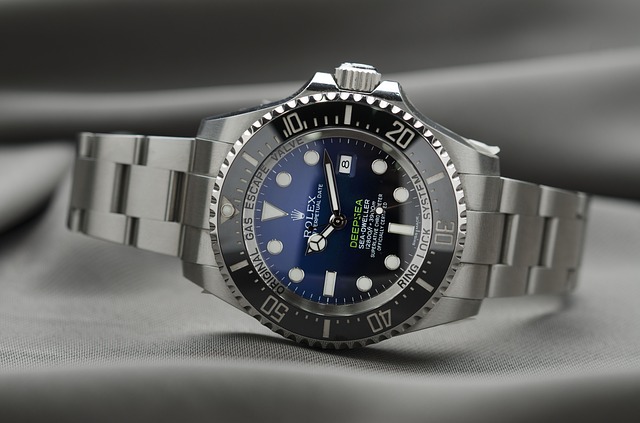
As obvious as this might sound, some fake items have spelling errors. Words such as “Professional” on Omega watches are commonly spelled with a single “s”. That is a red flag right there! Be wary of low quality pictures where the spelling is ambiguous too.

Image Credits: pixabay.com

#3: IS IT TOO LIGHT?

Counterfeit watches are typically lighter than the original watches due to the cheaper materials used in its production. For instance, authentic gold Rolex watches are heavier than the fake ones. The weight of real gold is greater than the base metal used in the fakes.

#4: IS IT TOO LOUD?

Did you know that you can tell the movement of a watch based on its sound? Most fine quality watches have extremely smooth mechanisms, which means that these are engineered to function at an exceedingly low volume. You should not be able to hear a ticking sound unless the watch is put closer to your ear.

#5: DOES IT HAVE THE RIGHT ENGRAVING?

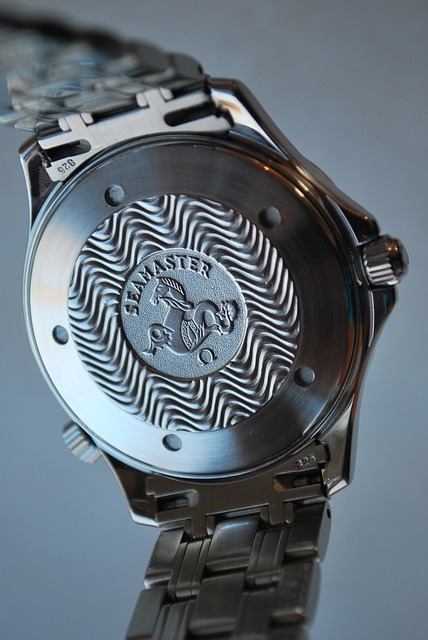
Some luxury brands use distinct engravings to make their products difficult to copy. Rolex uses laser-etched crowns in their sapphire crystals. While, Omega engraves a symbol in the case-back of its watches. Keep a vigilant eye on these specific markers.

Image Credits: pixabay.com

It is better to be safe than sorry! Equip yourself with these tips or ask a professional for quality assessment.

Sources: 1, 2, & 3


Read More...

Budget-Friendly Ways To Enjoy Milk Tea Regularly

As a tea enthusiast who enjoys a daily sip of milk tea, you must devise a plan to satisfy your addiction without harming your budget. Here are just some tips that you can apply:

#1: KNOW WHERE TO PURCHASE

Bubble milk tea originated in Taiwan, whereby the “bubble” refers to the fizz it creates after shaking. As a point of comparison, I focused on the basic pearl milk tea. The cheapest Pearl Milk Tea product in Singapore is offered by Woobbee (for S$2.90). It is made of black tea and black pearls. Drop by one of Woobbee’s three outlets namely: Tanjong Pagar Plaza, Shaw Tower, and Chinatown Point. Second to this is Gong Cha. Its Pearl Milk Tea costs about S$3.20.

#2: HUNT FOR THE CHEAPEST DEALS

Singapore is blessed with a variety of websites offering huge coupons, vouchers, or deals. One of these websites is Deals Singapore. Deals Singapore offers discounted deals getaways, watches, food, beauty products, and lifestyle services. For S$5, you can grab two Partea drinks for the price of one. The voucher includes two Brown Sugar Pearl Milk Tea with fresh milk. You may purchase a couple of these vouchers and review it afterwards. What’s more? You may resell the voucher too.

#3: MAKE YOUR OWN MILK TEA

You can either purchase an instant milk tea mix and add some ice or make your own Hong Kong-style milk tea. Fairprice Online sells the Gold Kili 3 in 1 Instant Milk Tea, which includes 30 packets for S$4.20. You may also purchase the Super 3 in 1 Instant Milk Tea, which includes 25 packets for S$4.95.

On the other hand, Hong Kong-style milk tea involves three ingredients: a cup of water, a can of condensed milk, and 2 tablespoons of black tea leaves. Start by combining the tea leaves and water in a pan over medium heat. Bring this to a low boil and let it simmer for 3 minutes. Turn off the heat and put the condensed milk. Return to boil and let it simmer for another 3 minutes. Strain the mixture and serve.

Image Credits: thespruceeats.com

MODERATION IS THE KEY

I, for one, am addicted to milk tea. However, many experts suggest that you should not start the day with a cup of milk tea.

According to Shilpa Arora, a Macrobiotic Health Coach, “Tea has potent antioxidants catechins and epicatechins, but adding milk cuts down the amount of these antioxidants making this otherwise healthy drink a source of inflammation and acidity. Also, adding sugar makes it even worse.”

Since milk can make the tea acidic, it is recommended to indulge with moderation!

Read More...

How to recoup from the 11.11 sales shopping disaster

Lelong lelong!

What’s better than a Great Singapore Sale? The 11.11 crazy Singles’ Day sales.

If you’re an avid fan of online shopping, you wouldn’t have been spared from the numerous “virtual” billboard signs plastered on your favourite e-commerce shopping platforms, screaming descriptions claiming to offer the biggest and largest deals of the year.

Even if you’re not, you’re not spared either. Virtually every social media platform would have had advertisers interrupt your viewing pleasure with attention-seeking colours to tempt you to shop, shop, shop.

I hate to admit it, but even I have fallen prey to such sales tactics.

Have you accumulated too much credit card charges during the 11.11 sale? Here’s how you can make yourself feel better – choose to repay your credit card outstanding amount with a credit card balance transfer card that has a short-term loan tenure at 0% interest with $0 processing fees.

What is a balance transfer?

Simple logic – the lower the interest rate, the less you have to repay your credit card charges. Balance transfers involve a transfer of funds from a high-interest credit card to a lower-interest card.

This is where the Standard Chartered Credit Card Funds Transfer card comes in.

Some of the Standard Chartered Credit Card Funds transfer card features include:

  • Loan tenure of 6-12 months
  • 0% interest rate during tenure
  • Exclusive 0.9% processing fee, which can be offset by $220 cash back, for new Standard Chartered cardmembers
  • Flexible repayment amounts
  • Comes together with a Standard Chartered Unlimited card

Instead of having to suffer from high interest charges for loan amounts that can be fully repaid in a short period, i.e. 6-12 months, you can now pay them off without these incurring these interest fees and putting an even greater dent on your shopping expenses.

Find out more about the Standard Chartered Credit Card Funds Transfer card on the SingSaver website.

Read More...

How To Shield Yourself From Grab’s Surge Pricing

As a country whose location is near the Equator, Singapore experiences “dry and wet days” throughout the years. Generally speaking, the dry months last from March to August. While, the wet months typically span from September to February. Its tropical climate makes the weather unpredictable.

The most convenient way to travel while it is raining is through a personal or a public car. There is no denying that hailing a cab becomes difficult when it is raining! What’s more? You may experience surge pricing when hailing a cab or booking a Grab car. Surge pricing is the adjustment of ride prices to match driver supply and rider demand. During periods of excessive demand where there are not enough drivers on the road (i.e., rainy weather), Grab increases its normal fares.

To combat this issue, insurance cooperative NTUC Income launched the product Droplet last October. Droplet is a pioneer when it comes to protecting the commuters against unpredictable surge pricing on ride-hailing platforms. Further down the road, it aims to cover other platforms aside from Grab. Just wait for their announcements by the end of the year.

HOW DOES IT WORK

Reap the benefits of Droplet by purchasing the rainsurance at least a day ahead of your rides. The premium will be no more than S$9.60 for the day. You can submit as many ride receipts for claim and receive a maximum of S$50 in a day. Commuters who buy the Droplet coverage closer to the forecast of rain are likely to pay a higher premium that those who purchase the premium cover in advance.

Image Credits: pixabay.com

To buy the insurance, you must select a date range that you would like to receive coverage. Then, you must send your claims by forwarding your E-Receipt through email (to [email protected]).

As of now, Droplet only covers rides booked on the Grab app. It will pay up to 60% of your trip fare or the cancellation fee should it be raining at the point of pickup.

THE BOTTOM-LINE

This post shall end with a statement from NTUC Income.

“Droplet is a blue-sky response to consumers’ pain point – surge pricing due to rain – when they book a ride on ride-hailing platforms. In Singapore, where an average of 167 days of rainfall can be expected a year, consumers can now meaningfully address this pain point with insurance cover by Droplet.”

It is exciting to see how insurance products sync with the modern times. Hopefully, other insurers will be as innovative as this one for the commuters to enjoy the benefits of having options.

Sources: 1 & 2

Read More...