How to be a better partner to your significant other

an asian couple rolling out a carpet

Our relationships with our partners can steer us in different mood directions. Unfortunately, the everyday stresses of life can make it hard to maintain and nurture a loving relationship.

Between social and economic pressure, the ongoing pandemic, and an ever-changing world, some couples experience disconnection and begin to grow apart.

So is it possible to be a better partner to your significant other? Well, it all goes down to the littlest of things.

#1: Keep conversations going

One of the essential things you can do to maintain your relationship is talking to your partner. 

This doesn’t just mean sending them a short text at work or asking what movie they want to watch. It means having face-to-face quality conversations.

The simple act of talking to each other shows that you value each other and helps bring understanding into your relationship through proper conversations. 

#2: Practice active listening

Talking to your partner is only half of the equation. To effectively communicate with your partner, you must cultivate the habit of listening to them.

As M. Scott Peck, author of The Road Less Traveled, rightly writes, “You cannot truly listen to anyone and do anything else at the same time.”

In our busy world, many of us are experts at half-listening. More often than not, our minds are focused on something else – the dishes to wash, the dog to feed, or bills to settle. This is not the best way to listen.

Instead, you want to keep up with active listening. Focus on your partner, listen without judgement, do not interrupt, and repeat summarised concepts to verify you are processing it right.

#3: Ask your partner what you can help with

a couple holding hands at the coffee table

Image Credits: unsplash.com

As people with diverse characteristics, we all have different likes and dislikes. One of the best ways to be a better partner is to ask your partner what their needs are.

See if you can help out with something that coincides with their love languages. Maybe your partner needs to spend more quality time together to feel loved, or perhaps they need to hear positive things from you.

“Talk with your partner about more nuanced ways you both feel loved, cared for and seen,” said psychotherapist Brittany Bouffard.

“Maybe more than your partner’s action of washing the dishes, you feel especially relieved if they called the internet company to dispute a bill — or another adulting task you dread. Your partner doesn’t need to stop helping with the dishes, of course, but it’s good to know more specifically what you most appreciate.”

#4: Start acting lest it becomes empty talk

Once you have your partner’s needs sorted, you should start acting! If your partner has told you that they value simply sitting on the couch and holding hands, initiate it the next time you guys come together to chill in the living room.

A loving gesture does not even need to be big to make a difference. Something as simple as making a cup of coffee or tea for your partner in the morning might just make their day without you knowing.

#5: Be consistent with your actions

We all get busy, and it is easy to forget that you would make dinner or put the laundry away.

“Being consistent and doing what you say goes a long way,” shared marriage and family therapist Anabel Basulto. For folks who are always absent-minded, why not use technology to your advantage?

It doesn’t take much time to set a reminder or alarm to send the car for a wash or pick up fresh loaves of bread for tomorrow’s breakfast.

#6: Let go of the small stuff

oil spill at the sink

Image Credits: Flickr

Due to COVID-19, many of us are spending more time than ever before with our partners at home.

It might be easy to fixate on a minor annoyance in these circumstances, which can escalate to disharmony. But is it really worth fighting over that little accidental spill at the sink? Probably not.

Letting go of your significant other’s mistakes will make your life easier too.

#7: Practice self-care

We’ve spent some time talking about our partners’ needs, but the fact remains that we are independent human beings from them, and we have needs too.

To recalibrate, take a weekend afternoon to yourself, or spend time reading a book, or FaceTime a friend. Doing things to take care of yourself will help you be a more fulfilled, less stressed out partner.

“If we don’t fill our own cups, it’s pretty much impossible to be present, patient and giving to our partners,” said psychologist Melissa Robinson-Brown based in New York City. “Take time for yourself and focus on restoration so you can show up in your relationship.”

#8: Take a break from screen time

Screen time can be a routine we’re so used to. It’s easy to sit and scroll mindlessly on our phones without realising time has passed. But it is the very thing that acts as a thief of attention.

It is hard to engage with someone on a meaningful level while engrossed in your mobile phone. So, put away the phone, turn off the television, and do something together without a device distraction.

Playing board games, taking a stroll, or even going bowling can be fun ways to spend quality time together.  

Be generous with thank-yous

an orange thank you card

Image Credits: unsplash.com

If there’s one thing you want to take away before leaving this page, just remember that being a better partner to your significant other can be as simple as being generous with your gratitude.

Even if they are doing something they routinely do, such as clearing trash, taking a moment of your time to tell them you appreciate their act is likely to warm their heart. We could all do with a little more love, can’t we?


Read More...

Coastal PlayGrove: Say Hello to the Newest Playground in East Coast

Looking for a recreational space where you can spend a day of endless fun? Search no further than the newest addition at East Coast Park! National Parks Board recently opened the family friendly Coastal PlayGrove. It is located at the Area B of the East Coast Park.

This recreational space may induce nostalgic memories as it was the former Big Splash site. The iconic Big Splash was redeveloped into the Coastal PlayGrove after it ceased its operations in 2016. Nowadays, we will be able to enjoy a 4.5-hectare recreation space with a Play Tower, a water play area, an outdoor classroom, as well as retail and dining offerings.

Let us breakdown Coastal PlayGrove’s interesting features. One of its main attractions is the 16m-high Play Tower. This impressive structure is hard to miss due to its massive size and its vibrant design. At its center is the Vertical Challenge. The Vertical Challenge is made up of climbing nets, which ascend from the base to the top of the building. Its dynamic design is a tribute to the coastal heritage of East Coast Park. Moreover, its vibrant colors are the same as the previous water slides. The Vertical Challenge is open from Tuesday to Sunday between 8am to 8pm. The slides are open daily, from 8am to 12pm and 4pm to 8pm.

Image Credits: facebook.com/nparksbuzz

Next to the tower is a water play area. If your kids are looking for ways to cool down on a hot day, try playing at the water play area. This area consists of wading pools, which are connected by a stream with numerous water jets. What is more? These water jets vividly light up at night!

Here are some friendly reminders when playing in this area. It is suitable for children aged 5 to 12 years old. A toilet is located nearby to allow visitors to dry up and change out. Lastly, it follows the same schedule as the Vertical Challenge.

As you stroll further in the Coastal PlayGrove, you will be delighted with the Nature Playgarden. This playgarden allows guests to be immersed with the beauty of nature. It is divided into several themed sections to introduce kids to the different habitats. In all these sections, natural materials such as wood and sand were used. For instance, the first section lets the children explore the bamboo tunnel trail. The last section consists of a trail leading to a sand pit with planted native shrubs. You will be able to spot various fruits and flowers as well as animals such as butterflies and birds. Its biodiversity aims to ignite the curiosity of its guests.

Image Credits: facebook.com/nparksbuzz

Next to the Nature Playgarden is an Outdoor Classroom made for the preschoolers. It is equipped with chalkboard and log stools. Indulge in the coastal views as you learn with your child.

Aside from these interactive features, the Coastal PlayGrove has its own Event Lawn. Large events may not be permitted now, but this spacious Event Lawn can accommodate a whopping 5,000 people once the pandemic is over. Nonetheless, you can use this space by having a seaside picnic, a relaxing kite-flying session, or an exhilarating round of frisbee with your loved ones.

When visiting the Coastal PlayGrove, it is important to follow the COVID-19 guidelines and other safety protocols. With this newest addition to the East Coast Park, guests will be able to bask in the sun, immerse in nature’s beauty, and have a quality time with the whole family.


Address: East Coast Park, 902 E Coast Park Service Rd, Area B, Singapore 449874
Contact: www.nparks.gov.sg
Arrive by riding the bus (31, 36, 43, 47, 48, 134, 135, 196, 197, 401, 853M) or by driving your vehicle. There is a spacious car park with current charges of $0.60 per half hour. Bicycle bays are also available.

Sources: 1 & 2


Read More...

A brief look at debt settlement options in Singapore

an asian couple stressed while doing calculations

Do you know that the average household debt in Singapore is about S$55,000 per capita?

With a value that high, there’s no doubt that it’s about time to learn how to manage your debt and minimise it as much as you can. Financial freedom is within reach if you’re able to settle your debt in time the right way.

Here’s a brief look at various debt settlement options available on our sunny island.

#1: Self-Administration

One of the easiest ways to manage your debt is to directly discuss with your creditors to see if you can potentially negotiate or appeal for a cheaper instalment repayment plan.

However, you need to approach them with some research done beforehand. In your written appeal, fully flesh out your financial situation and suggest a repayment amount that’s okay for you.

Don’t forget to include documental proof like income and CPF statements whenever applicable to bolster your appeal.

#2: Discounted Lump Sum Settlement
handing in a cheque

Image Credits: business-standard.com

Once you’ve accumulated enough financial capital, you can ask your creditors about repaying your debt in a discounted lump sum.

A quick way to build up your lump sum is to consider selling off several assets or taking a low-interest personal loan from a reputable company or financial institution. Then, pull out those negotiating skills to seek a discount.

#3: Debt Consolidation Plan (DCP)

Under this refinancing program, you’re able to pool together all your unsecured debts using one financial organisation.

You should note that some unsecured debts are not allowed, such as medical loans, joint account debts, and more. Unless you don’t fit the DCP criteria, you’re eligible to apply directly at your participating financial institution.

Once your application passes, your unsecured credit facilities will close, and a revolving credit facility will open to aid you in payments.

#4: Debt Management Program (DMP)
Debt-Management-Plan

Image Credits: incharge.org

Whenever heavy financial stress hits and you’re unable to pay your debt back, not all hope is lost.

The Credit Counseling Singapore (CCS) runs a DMP that provides financial counselling sessions to examine your payback ability and ideally settle your debts in one decade.

The CCS will help create a repayment plan with lower interest rates and more extended repayment periods to enable you to pay back those debts. Among other benefits, the program is perfect for you only if you qualify. 

#5: Bankruptcy

As an individual or a business, you can file for bankruptcy with the High Court if you’re unable to repay a debt. This is commonly the last resort because you will face some strict consequences if you pursue this option.

You will be assigned a Private Trustee-in-Bankruptcy (PTIB) or Official Assignee (OA) who can help assess your situation and figure out a target contribution on your behalf to repay your creditors.

#6: Debt Repayment Scheme (DRS)
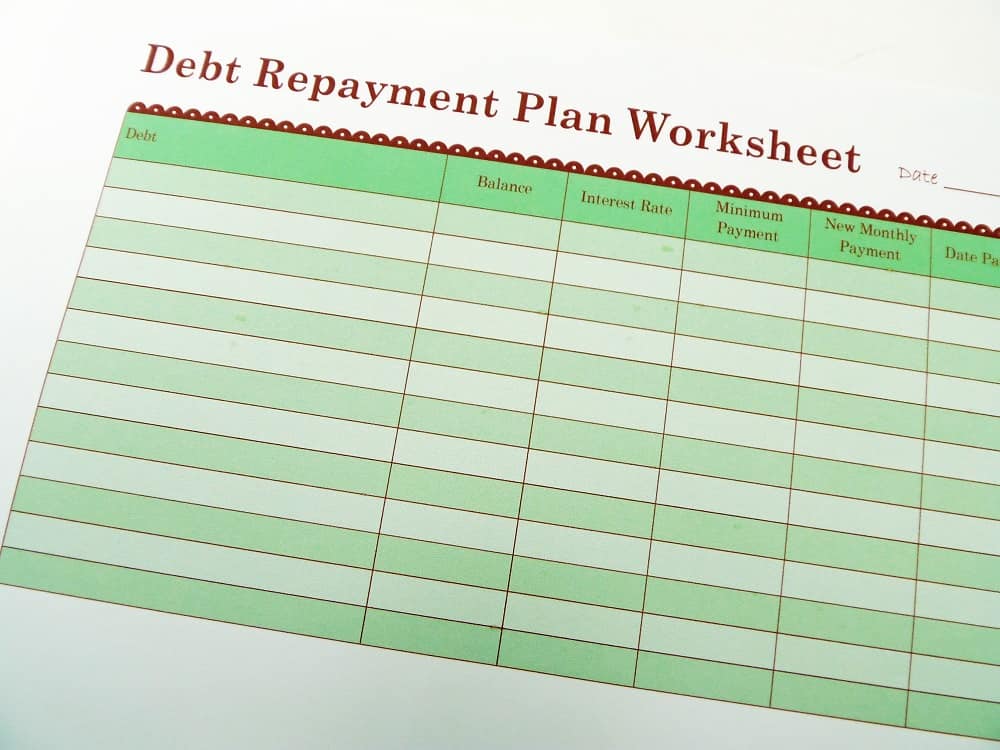
debt repayment plan template

Image Credits: myfrugalhome.com

As we come to a close, there is a way to avoid bankruptcy – your OA can lead you through a DRS.

But because you’re not allowed to apply for this option directly, only your OA can approve you after previewing your bankruptcy application. Upon fulfilling the necessary criteria, you will not be labelled as bankrupt.

However, you must commit to a repayment plan that spans at least five years. For more information on DRS, you may head to the Ministry of Law Insolvency Office’s webpage.

Final thoughts

Debt settlement can be scary if you do not possess sufficient knowledge on the topic. Why not speak to a trained professional if you need help resolving your debt problems?

Folks who need 1-to-1 financial counselling can book an appointment with the CCS. Do note that there’s a one-time fee of S$30, but no further fees required for subsequent meetings (if necessary).

Nothing is impossible to solve. Take heart!

Read More...

WFH tips to help you stay motivated

A mum working from home with a child

Working from home can be wonderful, and that’s why some professionals are hoping it won’t end. If you’re one of the lucky ones who don’t need to return to the workplace from 5 April, we’re glad for you!

While it can be difficult for parents with children, the comforts of being in one’s safe space can sometimes make it easier to focus. Who doesn’t love having the power to turn on their favourite tunes and adjust the air-conditioner to one’s desired temperature?

However, there are ugly truths to it. You would probably agree that your work-life balance has gone haywire and might make you even lazier than before. Not needing to be up early, dress up, or having eyeballs watching you surf the net mindlessly can make it easier to become demotivated.

If so, how can we enjoy the benefits of working from home while staying motivated enough to be productive? Here are some tips to help you stay motivated.

#1: Set a schedule

When working from home, it is easy to develop lousy scheduling habits.

The temptation to turn on your work laptop in bed or check your email from the couch after 6pm can be hard to resist. Thus, it is crucial to set boundaries around your work life and ensure that you work during specific hours and rest when it’s time.

Setting a regular schedule will also improve your sleep pattern and your health in general. 

#2: Get dressed before 9am
a man adjusting his tie

Image Credits: The Western Journal

Suppose that you start work at 9am, then dress up as you would if you were heading to the office.

Putting on a corporate outfit may help us refocus our mindset that it’s time to get the workday started. It’s almost the same theory as when you change to workout clothes before hitting the gym.

Treat this form of fashion as a boundary for yourself. When we have “work clothes” and “casual clothes” on, it can aid us to distinguish the kind of behaviour we should be engaging in.

#3: Separate your workspace

It is comfortable to work from our nice beds or comfy couches. However, humans are creatures of habit.

Associating our sleep areas with our work can interfere with sleep patterns. Similarly, working in a space we associate with relaxation can be a challenge for getting jobs done.

If you’ve been doing that, maybe it’s time you set up a dedicated, separate workspace to help you stay focus on completing your daily tasks.

#4: Work in chunks
a woman working at home with a table filled with documents

Image Credits: HRM Asia

Chunking is a strategy to take if you are often assigned large tasks. By breaking it down into smaller chunks, it is made more approachable and less discouraging.

For example, reading a lengthy report is hard, but reading one section can be a cinch. Instead of worrying that there is a detailed report to write this week, focus on completing a small unit within a stipulated time frame.

That is a much more achievable and far less daunting goal.

#5: Use the 30-minute technique

Speaking of breaking up big tasks into smaller ones, the 30-minute technique might go hand-in-hand.

We’re often faced with tasks that we find boring. Or perhaps you would rather prefer to be doing something else. Whatever the case may be, make yourself a deal when you find it hard to get started.

Tell yourself that you will work for 30 minutes and then take a short break. Most of the time, you might find that once you build a little momentum on a task, it’s easier to bring it to completion. Even if you don’t, working for 30 minutes is better than idling without getting anything done.

#6: Take a short walk before dabao-ing lunch
Singapore residents exercising

Image Credits: The Straits Times

Our brains need breaks. One of the best things to do on a one-hour lunch break is to go outside.

Instead of ordering in using GrabFood, foodpanda, or your go-to food delivery service, why not take a short walk before you go dabao your lunch?

Heading outdoors exposes us to sunlight and fresh air, which your body will thank you for. Plus, the change of scenery and pace is an excellent way to refresh your eyes and brain. Who knows, you might even gain new inspiration for an idea or project you’re stuck at?

#7: Give yourself a reward

Deciding to treat yourself to your favourite snack for dinner if you draw up that PowerPoint presentation for your boss can help push you to get started.

Or maybe you’ve been wanting to watch that latest launch on Netflix but haven’t started yet. If so, why not settle your job’s administrative work first and then tune in as soon as the clock strikes 6pm?

A little incentive as a nudge can go a long way to keep you moving.

Final thoughts
a woman working on her laptop

Image Credits: MSIG Singapore

Working at home can be an enriching and desirable lifestyle. But that lifestyle does bring unique challenges if we allow it to rule our lives.

If you need some motivation, try following some of the abovementioned tips to establish boundaries between your work and home life. This could help you manage your workload during the day and officially “knock-off” from work when you should.

Read More...

Decoding 8 Common Dreams About Money & Success

Weird, hilarious, senseless, or symbolic are just some of the words that you can use to describe your dreams. It should not really make sense at first because dreams are encrypted messages from our unconscious mind. This is the reason why some dreams are worth interpreting.

Different theories surround dream interpretation. For instance, Sigmund Freud (Austrian neurologist and the founder of psychoanalysis) argued that dreams are disguised fulfillments of repressed wishes and motivations. Carl Jung, on the other hand, saw dreams as prospective and universal. He believed that our dreams have universal meanings across cultures. Their works paved way for the creation of dream dictionaries.

Decoding our dreams may bring awareness to our conscious mind. All you need is to identify the central symbols or themes and look at it as a whole. You can come up with two more or more interpretations for a specific dream sequence. All these interpretations can fit your life.

Now, let us focus on the dreams surrounding money. Dreams about money can represent concepts such as love, responsibility, time, energy, friendship, and more.

WASTING MONEY

If you dreamt about spending a lot of cash in a dream, what could this mean? Well, spending a lot of money in your sleeping state can be a sign that you are carelessly spending in real life. Take cues from your unconscious mind and consider being more intentional when it comes to your purchases.

In its latent form, wasting money in a dream can be associated with how you obtain your goals. If you feel like you are wasting your money in a dream, this can mean that you are wasting your energy on something in real life. You may reprioritize some categories in your budget to stay closer to your goals.

LOSING MONEY

Losing money in a dream may be a sign that your actual financial state is unstable. It can represent a general worry that things are beyond your control or an unpleasant feeling that your finances are out of control.

Focusing on what you can control takes discipline. It is a practice that takes conscious effort and energy. You may start by assessing your cash flow.

WINNING THE LOTTERY

Many people fantasize of winning the lottery. In fact, the next TOTO draw is today at 9:30 pm. Its estimated jackpot is at $8,000,000 (as of April 1, 2021). Who would not want to win that? In dreams, winning the lottery can be seen as a life-changing stroke of luck.

Dreaming about winning the lottery can be associated with freedom, responsibility, and happiness. It is not just about monetary gain. You may interpret it as gaining recognition or friendship. Alternatively, you may interpret it as not taking responsibility for your own actions or decisions.

OWNING A LUXURY CAR

A friend of mine once shared about his dream of driving a car. In his dream, he was driving a red luxury car while going around town. According to dream dictionaries, driving a car can mean many things. For starters, a car can represent one’s ability to efficiently make decisions in each situation. When a car is being driven fast, it can be an indication that you are currently feeling stressed out.

Let us go back to my friend’s dream. Driving an expensive vehicle in a dream may mean that you feel like you have an effective strategy in place. Moreover, driving a red car is seen as a symbol of love. His dream may be interpreted as his journey towards finding someone special.

STEALING MONEY

Stealing money in your dream may be a sign that you are willing to do whatever it takes to get what you want. How you feel about acquiring the money can also be an indication of how you feel about going through extreme measure to accomplish something in real life.

Are you willing to exhaust all your efforts to reach what you want in life? This is worth pondering about!

HUNTING FOR A JOB

The act of searching for a job in a dream can mean that you are seeking for a new challenge or personal improvement. It may also indicate that you are having a hard time with your current position and you are looking for a new one.

LENDING SOMEONE MONEY

Lending someone money in a dream supposedly means that you are letting people borrow your time, energy, or attention. Who are you lending the money to? This may indicate that you are worried about a friend who is going through a rough time or a family member who has been making some questionable decisions in their career.

Nonetheless, it can be your unconscious mind’s way of telling you that you need to pay attention to these people.

CLIMBING THE STAIRS

For the past few weeks, I noticed a recurring symbol in my dream. I often dreamt about climbing the stairs. Its frequent occurrence ignited my curiosity in interpreting my dream. Dream dictionaries often associate stairs with progress in certain areas of your life. It can represent feelings of success, failure, fear, and improvement. These feelings depend on whether you ascend or descend a staircase.

If you are happily ascending the flight of stairs, it may mean that you are confident in the face of promotion or moving forward. It can also mean that you are undergoing growth in your experience. In contrast, going down the staircase can mean that you are feeling overlooked for a promotion or you feel like you are descending from a personal stature. It can indicate feelings of failure.

Image Credits: pixabay.com

DISCLAIMER: The meanings behind the dreams are subjective. While others believe that dreams have symbols attached to it, some may see it as mere electrical brain impulses. It is up to you to interpret your dream symbols and how they apply to your personal life. Ultimately, dreams can help you alter your direction and show your innermost emotions.

Sources: 1, 2, 3, & 4

Read More...