How To Manage Your Money In Your 30s

As you enter your thirties, your focus is geared towards saving money and meeting your financial obligations. This is the time to figure out the future you want to have to lay its groundwork.

On that note, let this article give you an idea on some of the financial goals that you need to set when you are in your 30s.

#1: REVISIT YOUR BUDGET

Are you still following the same budget you set in your 20s? If so, it is time for an upgrade. Your responsibilities and financial capacities evolve as time passes. Food, housing, childcare, and medical expenses will require a different type of budgetary attention as you enter your 30s. Examine your current budget and make necessary changes.

#2: GROW YOUR EMERGENCY FUND

If you are still on the fence on whether you should start an emergency fund or not, just think about the uncertainties brought by the pandemic. It is a concrete example of why people need to have a cushion for unforeseen events.

Most financial experts recommend having a savings that will cover your expenses for a minimum of 6 months. However, this amount varies per person. Adults with dependents need to consider putting more money in their emergency fund. The more funds you put aside, the more money you can use for unexpected expenses.

#3: GET INSURANCE

Due to the many demands brought by your professional and personal life, prioritizing your health is vital in your thirties. Having health and life insurance plans will not only be beneficial for you, but also for your family. You see, insurance premiums increase as you age. It is cheaper to get an insurance plan now. Shop around for the best insurance plans that suit your needs and your budget.

#4: PAY OFF DEBTS

While you are building an emergency fund and revisiting your current budget, identify how much debt you still have. Debts can negatively impact your financial health and your ability to accomplish your long-term goals. Why not start paying off your debts? The sooner you can reduce or eliminate debts, the sooner you can focus on turning your dreams to reality.

#5: THINK ABOUT YOUR RETIREMENT PLAN

Although you are decades away from retirement, thinking about your retirement plan will help you to allocate your retirement funds. Whether your employer has a company retirement plan or not, it is a good idea to think about what you want to do once you stop working.

Image Credits: unsplash.com

How much you need to save for your retirement will rely on the kind of lifestyle you want to have when you retire. Fortunately for you, there are many financial resources online. Do your research!


Read More...

10-Year Singapore Passport Validity To Take Effect For Citizens Aged 16 & Above

The Immigration and Checkpoints Authority (ICA) announced that the Singapore Passport validity will be increased to 10 years, as compared to the current validity of 5 years. This will come into effect for applications submitted on or after October 2021.

The longer validity period applies to Singapore citizens aged 16 and above. If you qualify for this, please submit your application on or after October 1, 2021. Despite the increased validity period, the passport application fee in Singapore remains the same (i.e., S$70). Furthermore, applications submitted in person at Singapore’s Overseas Missions will be charged an equivalent of S$80 in foreign currency.

ICA highlighted that it “has assessed that it is now viable to increase the validity of the Singapore passport to 10 years without compromising security or global confidence in the Singapore passport.”

In a similar fashion, many countries have changed their passport validity period from 5 to 10 years. These countries include Australia, Britain, Canada, China, France, Germany, Japan, the Netherlands, New Zealand, South Korea, and the United States.

SPECIFIC EXEMPTIONS

Notice the age bracket qualified to the passport validity period extension. It starts at the age of 16. Those who are under the age of 16 will continue to have the passport validity of 5 years. The primary reason behind this is that children’s facial features typically change during the early years.

“As children’s facial features change more rapidly, renewing their passport every five years will allow the photograph in their passport to be updated more frequently, which will minimise identification problems when going through immigration,” the Authority said.

Apart from this, the passport validity has a limit too. The validity is capped at 10 years in compliance with the International Civil Aviation Organisation’s (ICAO) recommendation. Any remaining validity in an old passport cannot be added to the new passport, with a 10-year validity period.

APPLICATION PROCESS

Singapore citizens can apply for new passports by going to ICA’s e-service website. Those without an internet access may either visit the Citizen Connect Centres or go to the ICA Building in Kallang.

Image Credits: pixabay.com

Ultimately, the changes in the passport validity aim to reduce the need for frequent passport renewals and to offer greater convenience to Singaporeans all over the world.

Sources: 1 & 2

Read More...

5 Steps To Protect Your Debit & Credit Cards When Shopping Online

Swindlers and scammers are always on the lookout for opportunities to gain access to your money. Since the pandemic, many types of scams have emerged. As cashless payments became vital to the new normal, adding layers of cybersecurity to your debit and credit card transactions will reduce your chances of becoming their victims.

This article highlights the 5 steps that you can take to protect your debit and credit cards. Fraud is prevalent, but you can act now!

#1: NEVER DISCLOSE YOUR PERSONAL INFORMATION

Fraudsters typically pretend to be bank representatives to steal personal information or to perform unauthorized transactions. Be smart when it comes to what you share online. Do not get too excited about sharing personal information, even via screenshots or through your 24-hour daily stories (e.g., sharing a snap of your QDL). Despite having restrictions with your target audience, you will never know how fraudsters can work their way around.

As much as possible, use different passwords for your online banking and social media accounts. Try using different email addresses for your online banking and social media accounts too.

#2: IDENTIFY WHETHER YOUR EMAIL ADDRESS AND HANDPHONE NUMBER WERE COMPROMISED

The personal data of over 500 million Facebook users was leaked online. You are vulnerable if you are using the same email address and handphone number for your online banking and social media accounts.

To know whether your email address or personal number has been compromised, you can visit helpful websites such as Have I Been Pwned. Have I Been Pwned allows you to know whether you experienced data breaching in the past or not.

#3: USE YOUR CARDS ON WEBSITES YOU TRUST

When you are shopping with your debit or credit card online, it is important that you only go to websites that you trust. Ensure that you typed in the correct website and not phony one. You can also print a copy of your online purchases for future reference.

While shopping in your favorite website, avoid clicking on email links and suspicious images because these could take you to a phony website whose sole purpose is to steal your credit card information.

#4: ACTIVATE THE OTP OR TWO-FACTOR AUTHENTICATION

A one-time password (OTP) is a dynamic pin that is valid for a single login transaction on a digital device. It is an automatically generated alphanumeric or numeric string of characters that authenticates the user for a transaction. Activating this security feature will enable you to be notified whenever your accounts or cards are used. The OTP is usually sent via SMS or via email.

Similarly, the two-factor authentication (2FA) adds a layer of security by authenticating the credentials of the user. Most email providers such as Google and Yahoo! have this feature. Activate it to prevent other people from logging in to your email/s.

#5: BE VIGILANT AT ALL TIMES

Be vigilant when it comes to identifying phishing emails. Fraudsters may send you emails and newsletters that copy your bank’s promotional campaigns. Check the email sender to ensure that it is from the financial institution itself. Remember that most banks use corporate email addresses when sending newsletters and not personal Gmail or Yahoo Mail accounts.

Image Credits: pixabay.com

As mentioned above, avoid clicking links or buttons that can potentially lead you to unsecured websites. Keep your eye on the email address of the sender and the grammar of the message sent to you. If many words are misspelled, you can easily spot a red flag.

Read More...

Pocket-friendly solutions to soundproof your home

acoustic soundproof wall panels

From dawn to dusk and beyond those times, you’re facing unbearable noise thanks to your inconsiderate neighbours.

With working from home as the default for many at the moment, it’s starting to get on your nerves. You’re unable to sleep well, and now you have to put up with the excessive giant thumping footsteps and dragging of furniture during the day.

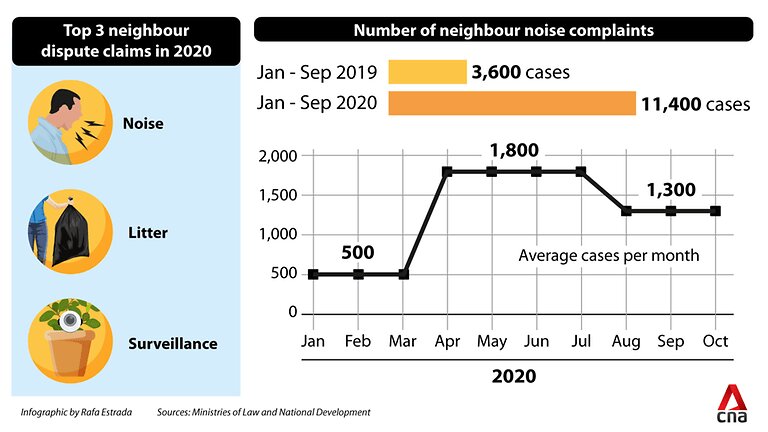
And guess what? You’re not alone. Based on official numbers by the Ministry of Law and National Development, neighbourly disputes rose significantly last year compared to 2019.

Have a look:

neighbourly disputes Singapore

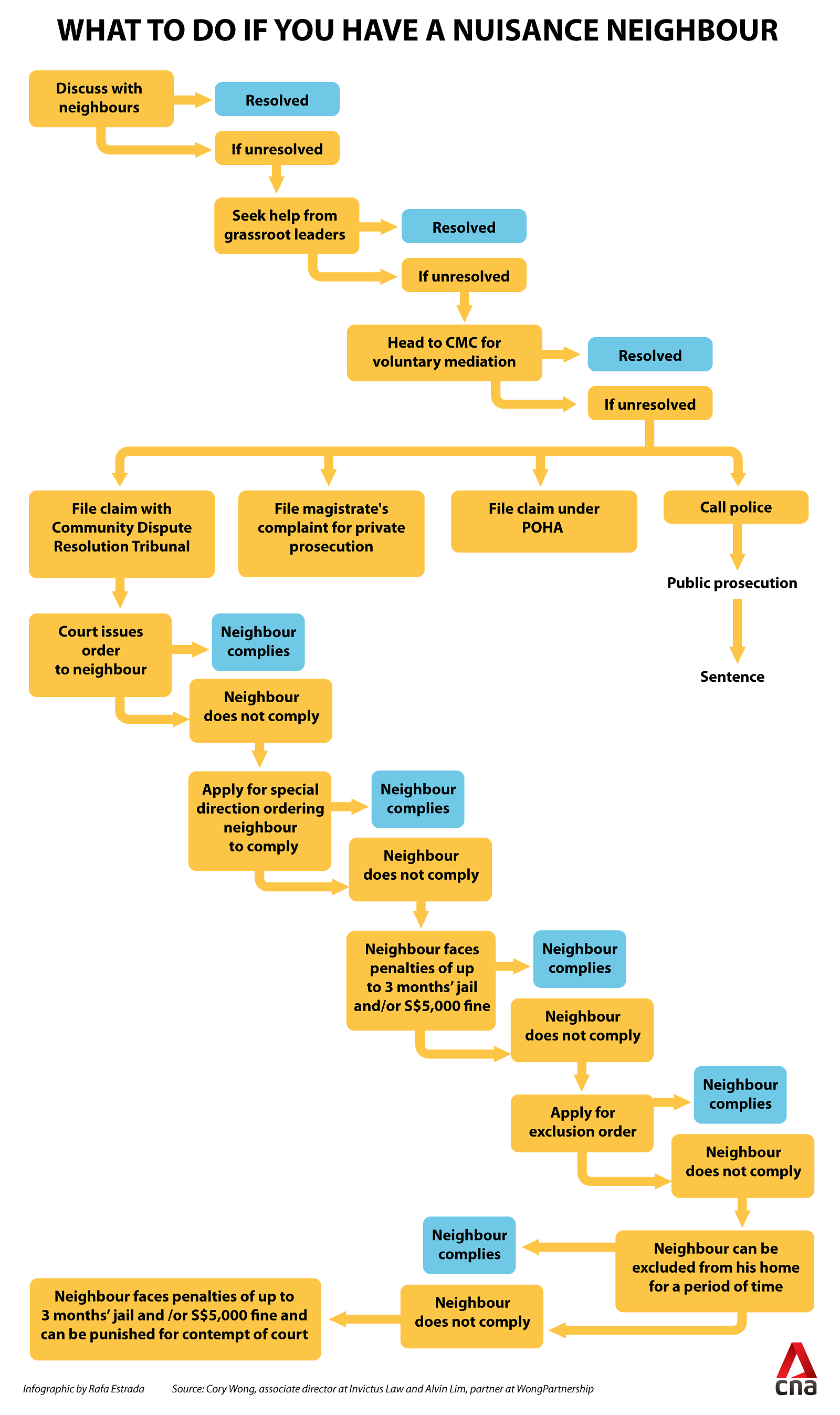
Want to know the “proper” way to get back at your neighbours? Here it is, but just remember it’s going to be a long and tedious process:

flow chart on how to solve neighbourly disputes

Maybe a more intelligent way is to consider some pocket-friendly solutions to soundproof your home while you seek resolutions from the authorities.

#1: Fill air gaps

Holes and cracks on your walls and floor could be the very reason for your restless days and sleepless nights. Check that you’ve covered them with sealant or gap fillers so noise won’t be able to enter. It’s also a relatively straightforward operation to do on your own so you can save your money on labour costs.

#2: Install wall panels

We’re sure you’ve been to studios and noticed the thick panels stuck to the wall. Yes, those will help absorb sounds both from noise disturbances from outside and within the confines of your walls. You can easily purchase them online from Shopee, Lazada, or Amazon and self-install them using spray glue or double-sided tape.

#3: Put up dense curtains
soundproof curtains

Image Credits rollingstone.com

Maybe it’s about time you give your home curtains a new look. But this time around, don’t go for the standard types you can buy from the supermarket. You want to invest in a soundproof curtain that is dense enough to reduce noise. Unsure of how to get those? Head down to the stores and ask to be introduced to curtains made from triple-weave fabric.

#4: Buy sound-dampening door strips

If you have the budget to spare, go ahead and replace your doors and windows. But since we’re looking at pocket-friendly solutions in this article, a better way is to purchase sound-dampening foam or rubber door strips. A one-metre long piece is usually under S$10, and you can cut it accordingly to fit your home doors.

#5: Add rugs and carpets

As we come to a close, do you know that sound waves can bounce off walls and floors? Sometimes, it may seem like the noise is coming from your neighbours above, but the primary source could from the apartment below you. Hence, an excellent way to counter it is to buy furry rugs or those with frays to help absorb unnecessary noise. Get them from Ikea; they won’t cost a lot.

Read More...

Use the SQ3R method to read more effectively

a person reading a book

Have you heard of the SQ3R method? It’s an acronym for this five-step process: survey, question, read, recite, and review.

There are many learning methods out there, and you’ve probably heard of a few during your school days. But live long enough, and you will realise learning doesn’t stop even as we graduate.

In fact, there are multiple situations at work where we have to speed read documents and reports to draw up presentations. For folks who often have to research and comprehend, the SQ3R method will come in handy to help you read more effectively.

#1: Survey

The SQ3R method was first mentioned more than 70 years ago in a book by education psychologist Francis P. Robinson. If you want to study any written content the intelligent way, start by surveying the text.

In short, do a quick scan before you jump right into chapter one. Whether it’s a physical book or an e-publication, check out the table of contents to get an idea of the outlines, chapters, and layouts. Then run through the pages to note any imagery or words emphasised in bold and italics.

#2: Question

Once the foundation is laid, it’s time to ask yourself some questions. It would be wise if you have your goal written down somewhere visible. In other words, the reason behind you reading a particular research paper.

When you have your purpose all set, return to the contents table and take a good look at the chapter titles. Grab a pen or pencil and turn those titles into questions. Examine your knowledge of the stated topics by jotting down what you already know.

This step will allow you to understand the author’s intent. When you have a good idea of what the book wants to convey, you can choose the sections you need to read to gain relevant information for your tasks ahead.

#3: Read
A woman taking notes on a book

Image Credits: unsplash.com

Now’s the time to get started. A standard method for many is to take a highlighter and ink the important parts as they go. But a more ingenious plan is to read actively by penning down additional questions by the margin. Then, diligently find those answers to your questions.

When you keep up with active reading, your brain goes through a systematic cycle of processing information. This will help your mind to segregate the chunks of content into Q&As. You will then find it easier to recall information at a later stage.

#4: Recite

Let your voice be heard at this phase, even if you’re alone. The idea here is to return to step two’s questions and try your best to answer them. Instead of regurgitating from the text, use your own words to explain.

Another way to check your understanding is to try explaining it to someone or an imaginary person. For those who find it awkward to talk to themselves and have the time to spare, you can attempt to write a summary of what you’ve read instead.

#5: Review

We’ve finally arrived at the last step of the SQ3R method. It is recommended that you revise a day after you’re done completing the first four steps. Give your brain some time to let the information sink in before you review it.

You may also think of this step as a memory challenge. Unless you’re a genius, no average person can retain information forever by just reading any content once. Keep referring back to the Q&As you’ve built in step 3 or the summary you’ve written in step 4.

Final thoughts

Beginnings are always tricky. But with consistent practice, you will quickly master the SQ3R method and be well on your way to read more effectively in the future! Time is precious, so be sure to optimise it whenever you can.

Read More...