What On Earth Is A Buyback?

Highlights

  • A buyback occurs when a company purchases its own shares in the stock market.
  • A repurchase reduces the number of shares outstanding. Thus, it inflates earnings per share.
  • A buyback can demonstrate to investors that the business has sufficient money set aside for emergencies.

WHAT IS A BUYBACK?

A stock buyback occurs when a company purchases shares of its own stock. It either retains the stock for resale to the market in the future or permanently removes the stock from the circulation.

This process reduces the total shares of stock outstanding and increases ownership stake that each remaining share of stock represents. It increases the value for the shareholders.

HOW DO BUYBACKS WORK?

Stock buyback plans are usually authorized by the company’s board and proposed by its executives. However, a planned buyback does not always occur. In some cases, the target share price a company chooses may not be met or a tender offer may not be accepted.

WHAT ARE THE DIFFERENT TYPES OF BUYBACKS?

The diverse types of buybacks include the on-market and off-market buybacks. The former refers to when a company buys its own shares on an exchange in the ordinary course of trading.

In contrast, the off-market buybacks occur when the company makes its offer directly to the shareholders.

Image Credits: unsplash.com

WHAT IS AN EXAMPLE OF A BUYBACK?

Company XYZ had one million dollars in earnings and one million outstanding shares before the buyback. Thus, it equates to earnings per share of S$1. Trading at a S$20 per share stock price, its P/E ratio is 20.

With all else being equal, one hundred thousand shares would be repurchased and the new earnings per share would be S$1.11. To have the same P/E ratio of 20, shares would need to trade up 11% to S$22.22.

WHAT ARE THE ALTERNATIVES TO BUYBACKS?

Buyback programs have come under scrutiny over the past few years. So, alternatives are important to know when understanding buybacks.

Other options include:

a. Using capital to acquire other companies or securities,
b. Returning cash on hand to investors in the form of dividends, and
c. Re-investing the capital in research and development.

Sources: 1 & 2

Read More...

6 Nerve-wracking Lessons From Squid Game

Since its release in the latter half of September, Squid Game has been the talk of the town. Squid Game is a 2021 Netflix Thriller created by Korean director Hwang Dong-hyuk. Its story follows the lives of 456 cash-strapped players who accepted a strange invitation to compete in a series of children’s games.

A tempting prize awaits inside the Squid Game. However, all these come with deadly high stakes.

CAUTION: SPOILER ALERT!

Let us highlight the six important lessons you can reap from the Squid Game.

#1: THE PRESENT AFFECTS THE FUTURE

The decisions you make now shapes not only your present, but also your future. The lead character, Gi-hun, showed his imperfections throughout the show. All his past actions (e.g., gambling problems), came to bite him in the present.

His broken marriage, losing his child due to financial constraints, and his seriously ill mother took a toll on him. The mistakes he made in the past led him to enter the Squid Game.

#2: BE CAREFUL WHO YOU TRUST

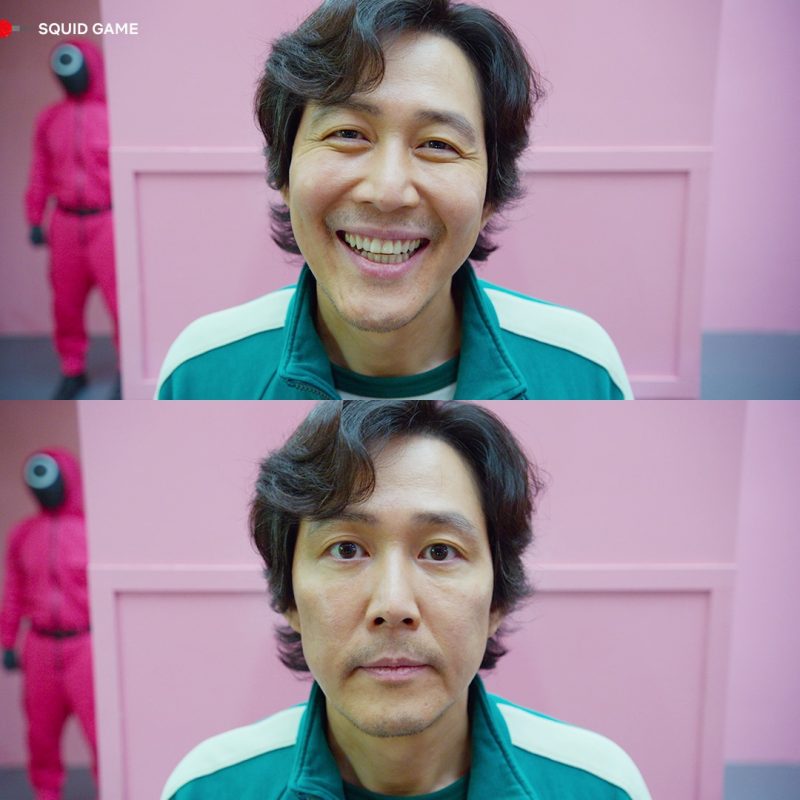
Be careful when it comes to trusting someone. Remember that a person’s smile does not always mean that he or she is your friend. Of all the betrayal that happened in Squid Game, I was heavily hurt when disgraced banker Cho Sang Woo betrayed Pakistani worker Abdul Ali.

Throughout the show, Ali showed pure kindness and admiration to his Hyung Sang Woo (i.e., hyung – term of endearment meaning older brother). Sang Woo also helped him in the outside world by giving him money. During an important game of marbles, Sang Woo tricked Ali to win the game. At the last-minute, Ali realizes that his marbles have been switched with stones. He was brutally killed. His death showed us that the world around us is not as kind as it seems.

Image Credits: facebook.com/netflixph

#3: MONEY CANNOT BUY HAPPINESS

Several articles and films showed how money cannot lead to happiness. In the Squid Game’s final episode, we find out that Player 001, Oh Il Nam was the mastermind of it all. I had grown fond of this old man who continued to have fun in the face of imminent death. I, too, was deceived.

It was mastermind Il Nam’s way of entertaining his extremely rich clients who had grown bored of their lives. Money is important, but it is no substitute for doing something fulfilling.

#4: GAMBLING IS NEVER THE ANSWER

On his daughter’s birthday, Gi-hun used his mother’s money to gamble. He should have bought a special meal or a special gift instead. If you look closely at the character, he enjoys the thrill of the uncertain.

Gambling never gives you the assurance of a better life. It may be a way to win cash quickly, but it is never guaranteed.

#5: INSURANCE CAN SAVE LIVES

The best time to get insurance is when you do not need it yet. In episode two, he urged his mother to get her foot treated only to realize that he stopped paying for the health insurance years ago. His weakened mother had no choice but to walk out of the hospital because they cannot afford it.

Having insurance helps you to cushion unforeseen expenses such as the ones brought by critical illnesses. Shop around to see which fits you best.

#6: KINDNESS COMES FROM THE PEOPLE YOU LEAST EXPECT

The first episode is a special one. “Red Light, Green Light” displayed that the players came from tricky situations and were shocked by the deathly risks of the game. The innocent child game escalated into a bloodbath.

Image Credits: facebook.com/netflixph

Gi-hun came close to being eliminated. Fortunately, Ali’s strong helping hand saved him. He did not have to do it, but he did despite risking his own life. He was selfless. Being selfless means caring about others, without the desire for compensation.

You will meet both selfish and selfless people throughout your life. The choice is yours!

Sources: 1 & 2

Read More...

What you should do if you have a seemingly lazy colleague

a man slacking at work

Do you have that one colleague you can’t stand because they just don’t seem to be doing work? Maybe it’s arriving late at work, taking an unreasonably long lunch, or clocking off way too early before 6pm?

If their sluggish actions aren’t directly affecting you, it’s good to let go. However, if it’s slowly eating into your workload, maybe it’s time to raise it to the management. But before you make your way to the higher-ups, try to see if you can keep it low-key. Here’s what you should do if you have a seemingly lazy colleague.

Schedule for an honest talk

Humans are quick to judge. To save you from embarrassment, it’s good to schedule an honest talk with your coworker.

Putting emotions aside, enter the conversation in a neutral stance. Let the other party know that their work habits have been affecting you trying to complete your tasks. Then, ask if there are any reasons behind their actions. Chances are, you might find out a thing or two about their circumstance.

Guide, don’t do it on their behalf
guiding a colleague at work

Image Credits: inclusiveemployers.co.uk

Maybe you’ve spoken to your colleague and realised that they are just pure lazy. Should that be the case, don’t do their work on their behalf.

Such workers can be very skilled in persuading people to take on their responsibilities, so the last thing you want to do is fall into their trap. For example, if your coworker doesn’t seem to know how to do basic editing via Photoshop, suggest courses for upskilling. Or, if you have extra time on your hands, record a video and provide step by step instructions to aid them.

Distract yourself from distraction

Lazy colleagues can become a huge distraction if you allow them to. That is, you authorise their behaviours to take your focus away on the urgent tasks at hand.

Instead of spending the entire day’s energy complaining or being frustrated at how they chitter chatter or aimlessly scroll through their social media accounts without doing much, distract yourself from that distraction. You can choose to work somewhere else where they are not in sight or put on your noise-cancelling earbuds to tune them out.

Be explicit on what you want to be done
colleagues having a conversation

Image Credits: moneycrashers.com

As we come to the end of this article, know that there are people out there who constantly require pushy nudges. You want to be clear on what needs to be done with such personalities.

Tell them exactly when you need the task to be completed and make sure your team is in the loop on the matter. When there are more eyeballs on the situation, this will at least point that particular colleague to get up and get moving to meet the deadline. It’s also a great chance to see if your coworker is genuinely lazy or simply lacks the initiative to get started with work tasks.

Read More...

Self-doubt: How Impostor Syndrome Can Hold You Back At Work

You are suited up and ready to impress!

On your way to a job interview for a company that you care about, you brought a C.V. that highlights how perfectly you fit in the position you applied for. You are more than qualified for the position, and the team would be lucky to have you. The hiring manager said so himself!

However, you start questioning whether you are capable of the job as you meet the company’s supervisor. Self-doubt can cripple you and hinder your success.

WHAT IS IMPOSTOR SYNDROME?

Impostor Syndrome is the overwhelming feeling that you do not deserve success. You become convinced that you are not talented, attractive, intelligent, or capable as you may seem. You suspect that your achievements are due to luck, good timing, and other external factors.

Particularly in male-dominated environments, impostor syndrome has been thought to affect women more than men. However, recent study showed that it affects both genders equally.

A person with impostor syndrome (impostor) has a sense of being a fraud, a difficulty internalizing his or her success, and a fear of being discovered. Usually, the stressor triggering impostor syndrome involves getting a new opportunity such as a new job or an advanced degree.

“The person who achieved this level of success begins to have negative thoughts that the success was not really earned. These negative thoughts, which are often referred to as ‘cognitive distortions,’ are based on fear and anxiety and not based in objective facts.” – Ms. Cara Maksimow, LCSW

HOW CAN IT AFFECT WORK?

An impostor may procrastinate or put off assignments due to the fear of being unable to complete the necessary ambitious standards. On the other hand, the imposter may over-prepare by spending too much time on the task. If his or her behavior creates a successful outcome, it will be written off as luck or fluke in the system.

Image Credits: unsplash.com

Success can create a cycle of self-doubt for imposters. Even when they achieve important milestones, they are unable to recognize their own achievements. Instead of celebrating these, the impostors are worried that others will discover the “truth” about their abilities. This is an irrational thought.

HOW CAN YOU MANAGE IT?

There are many ways to manage the impostor syndrome. Here are just some of them:

a. Create a list of your strengths and prior accomplishments at work. Refer to this list when you are questioning yourself.

b. Talk to mentors who are more experienced in the field, when you feel like you do not belong in the situation.

c. Set realistic goals. Often, a fear of failure and a need to be the best can lead to overachievement.

d. Acknowledge what you are feeling. Do your best to keep a journal. Whenever you experience feelings of self-doubt or inadequacy, write your thoughts down. Be specific about why you are feeling this way.

e. Handling with Impostor Syndrome takes long-term effort. You need to employ strategies to deal with it at particularly stressful situations. When the negative self-talk takes over your mind, try to confront it by distancing yourself from the “emotional power” of the voice.

Sources: 1, 2, & 3


Read More...

6 Heart-warming Lessons From Hometown Cha-Cha-Cha

Hometown Cha-Cha-Cha is a Korean drama available on tvN and Netflix. It is a hilarious, heart-warming, and healing love story that surrounds a dentist from the city and a man who can do everything. The show has displayed a myriad of life lessons.

From its leads to the stories of the people in the community, here are 6 remarkable lessons you can learn from Mr. Hong Du-Sik (Kim Seon-Ho) and Dr. Yoon Hye-Jin (Shin Min-Ah).

Image Credits: facebook.com/groups/938482076948075/media

“Do you know what it means to be a good parent? It is staying healthy for a long time. They should not endure pain to save money for their children. They should take care of themselves.” – Dr. Yoon Hye-Jin

Health is wealth. Dr. Yoon’s parents sacrificed themselves to provide the best life for their daughter. We only see the products of the sacrifices without thinking of its effects. How will the sacrifices you make affect the people whom you will leave behind?

“Life isn’t so fair for all of us. Some spend their whole lives on unpaved roads, while some run at full speed only to reach the edge of a cliff.” — Mr. Hong

We all have different struggles and have been brought from diverse circumstances. Each of us has a distinct timeline in life. Mr. Hong reminds us that just because we have not experienced what others are going through, does not mean that their feelings are not valid. Let us keep our minds and hearts open to understand others.

“If you cannot pick up spilled milk, you should at least apologize to them for spilling the milk, rather than avoiding them.” — Mr. Hong

Escapism is often an easier route than taking responsibility for our actions. Some people tend to escape from the mistakes they have made towards others. Remember that there is nothing wrong with admitting a mistake and saying sorry.

“You’re bound to meet unexpected situations in life. Even if you use an umbrella, you will end up getting drenched. Just put your hands up and welcome the rain.” — Mr. Hong

Image Credits: facebook.com/netflixph

Much like the pandemic, unexpected situations happen all the time. Despite how ready you are, you still need to adjust to the current situation. Appreciate the circumstances coming your way to see the beauty in life.

“La-la-la-la-la-la-la-la-la,
Romantic Sunday,
La-la-la-la-la-la-la-la-la,
It’s a beautiful and shining day.” — OST

The OST is such an earworm! It is impossible not to sing the OST as you watch the entire series. This song highlights the beauty of life and the importance of love.

“Money and success aren’t the only valuable things in life. Happiness, self-contentment, world peace, love… Anyway, life is not a mathematical situation. It does not have a clear answer. There is no right answer either. You’re just given a problem and it’s up to you how you solve it.” — Mr. Hong

Indeed! There life’s problems do not have clear solutions. It is up to us to solve these problems as they come along. There is no right way to lead your life. It is in your hands to take responsibility for the decisions you make.

Source: 1


Read More...