How much does tuition cost in Singapore?

Tuition (both private as well as the centers) are highly in demand among parents in Singapore compared to tuitions in the neighboring states as found by a survey conducted by an international news agency where they have found that more than three-quarter of the parents do invest on such academic agencies despite the fact that they cannot expect the best grades by just providing them a tutor. It was also that in Singapore, parents prefer to send their kids for extra classes even before their formal schooling has officially started in order to brush their English as well as their Math’s skills.

Here in this piece of writing we will be talking about the tutoring services available for children of all ages here in Singapore and how much would it cost you to send your child in one of them.

Pros and Cons of the Different Tuition types

1. Private Tuition

  • Advantages
  1. Home tutors engaged from a tuition agency can give one-to-one attention to students that is most desired by parents. Students do have different learning styles and the private tuitions can be designed in order to suit the exact learning style which are not possible in large classrooms or tuition centers/group tuitions.
  2. They can work out at the student’s pace.If the student did not understand something in the class then he/she can consult with the tutor later on at home and clear the problem they are facing in that particular chapter .
  3. Private tutors do take on the responsibility of doing the children’s homework given by the school. Homework of children of Standards 6-12 can be sometimes complicated for several parents with complex arithmetic and science chapters to deal with and this is when private tutors come to the rescue as they have become experts by teaching those subject for a long while.
  • Disadvantages
  1. Private tuitions are generally  expensive compared to other tuition types which is why not everyone can afford them.
  2. It is often very difficult to find a good private tutor that does meet the children’s needs.
  3. Most parents are also concerned about the safety of their children with the adults they do not know for sure, henceforth it is highly recommended for them to refer to a tutor agency that do screen its private tutors and have accurate reference.

2. Group Tuition /Tuition Centers

  • Advantages
  1. More affordable compared to private tuitions
  2. Students do receive materials that help them to understand the topic in a better sense.
  3. Students are able to discuss to share their knowledge and solve their problems      with other peers in the group/class.
  4. Helps with enhancing on social skills
  5. As the tutors in group tuition or tuition centers are working full time therefore it is seen that they are extremely committed to teaching.
  • Disadvantages
  1. As there are many tuition centers available, students are often sketchy which was to choose among the lot that would *actually* work hard on enhancing their skills.
  2. Also sometimes these centers do charge exceptionally which makes them unaffordable to many like private tuitions.

Some Famous Tuition Centers in Singapore

  1. The Learning Lab – This is a very popular and well trusted brand to parents in Singapore for the last 15 years with several branches spread across the country for preschoolers as well as college going teens. Their teaching style comprises of the following factor-knowledge, skills to pass the exams, develop the interest of learning within children.
  2. Mavis Tutorial Centre – This is another popular and yet affordable option to send the kids to if they are studying somewhere between the primary school level and A ‘levels. This, too like the Learning Lab, have branches all across the country.
  3. True Learning Centre –  It employs NIE (National Institute of Education) ,exclusive school that trains teachers-to -be here in Singapore. As they have already held important positions and won several teaching awards in their careers before they joined the center-the curriculum of the center is being exclusively designed by them that ensures the students are receiving the best help possible.

Reliable Tuition Agencies

At first glance, it appears that tuition agencies tend to offer the same service. However, from our experience, some companies go above and beyond and offer more than others. Our personal recommendation is SmileTutor. They are among the best and the most trusted private tutor agency here in Singapore. Here are the reasons why it is the best

  1. Tuition coordinators work around the clock to make sure that the assignments are being fulfilled on time by the pool of active home tutors from the whole range starting from Kindergarten to Junior College.
  2. The tuition matching system does ensure that the tutor being chosen does fulfill all the criteria demanded by the parents of the children.
  3. The highly qualified private tuition assignment coordinators do select the home tutors based on the home tuition rates and fees as requested by the parents.
  4. There is no contract being signed between the two parties which gives the parents the flexibility to change the tutor if they think the tutor is not appropriate for the child. Also the fees are being paid when the classes are being conducted hence no extra agent fees.
  5. The tutor contacts the parents within 6 to 24 hours after the request is being made.


Financial Comparison between Private Tutors and Tuition Centers

There is an average difference of not more than 10 SGD between the private tutors and tuition centers. The median range of the tuition fees for primary section is about 30 SGD per hour, 40 SGD per hour for the Secondary section and more than 55 SGD per hours for Junior College Section.

However for the private tuition, the rate depends on the qualification of the teacher. For a degree holder the rate is usually 30 SGD per hour for the primary section 40 SGD for the lower secondary section, 50 SGD per hour for the upper secondary section and 60 SGD for the Junior College. ,

The rates are however different if the private tutor has been trained from a MOE affiliated institute ,compared to the degree holder teacher who has not trained from NIE all the rates rise by 20 to 30 SGD for each section


Ending  

Parents do always the best for the children expecting them to excel in every stage of life. Therefore tuition or extra classes are not an exception when they notice their kids lagging behind in their academic pursuit. If spending an extra few bucks apart from the usual schooling fees can push up the grades from B to A for instance, they would not think twice to enroll their kids for extra classes. But as there is famous saying, “cut your coat according to your cloth”-an idea about the financial expenses of enrolling them for extra classes would help them decide the type of tuition that suits their economic budget.
 

Read More...

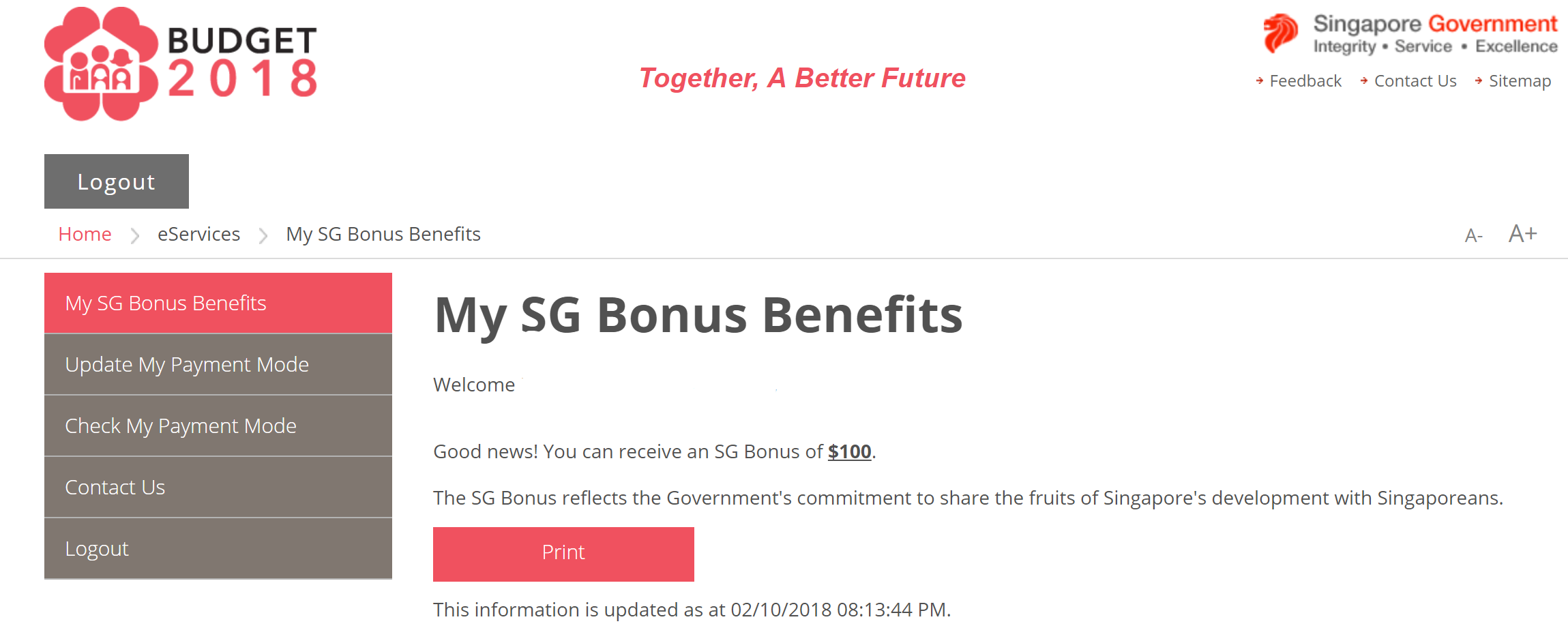
Are you getting $100, $200 or $300? You can now go online to check your SG Bonus, update your payment mode and more.

The SG Bonus was announced in Budget 2018 to share the fruits of Singapore’s development with Singaporeans. All eligible Singaporeans will receive hardcopy letter notifications on their SG Bonus benefit from 2 October 2018. Those who have registered their mobile numbers with SingPass will also receive SMS notifications.

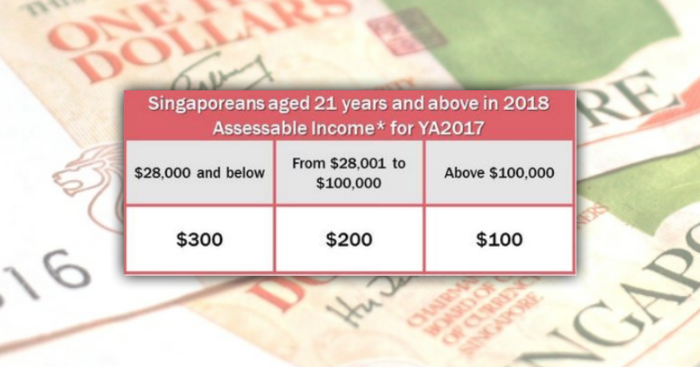
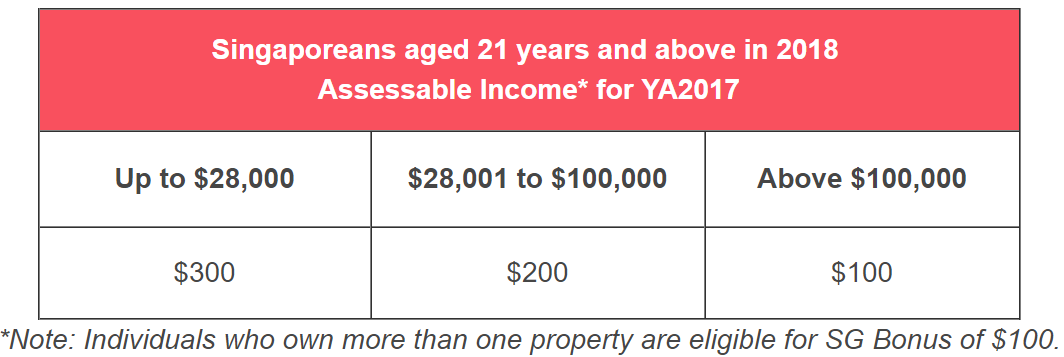
The amount of SG Bonus is tiered according to income, with more for those earning less:

SG Bonus will be paid to eligible Singaporeans in end 2018.

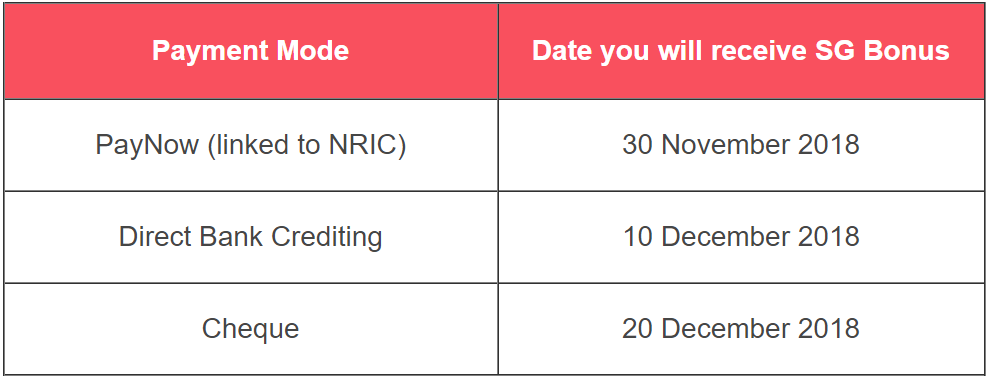
Citizens are encouraged to register their NRIC on PayNow by 7 November 2018 to receive their SG Bonus earlier (see payment dates below). They may do so via their bank’s mobile banking or Internet banking platforms.

Log in to the SG Bonus e-Service (SingPass login required) to sign up for the SG Bonus, update your payment mode, or make a donation:

Click here to be redirected to the SG Bonus website www.singaporebudget.gov.sg/sgbonus.
Example:

Read More...

Budgeting 101: Taking Over Your Financial Life

Have you created a budget in the past? Were you able to firmly follow through? What were the obstacles that you have experienced?

It comes as no surprise that budgeting is no easy feat! It is a strategic task that encourages cutting down of your expenses. Furthermore, you must find a way to still enjoy the money you earn. Striking a balance between your needs and wants can be stressful for some.

So, where must you start?

Start accept your accountability over the choices you make. Every action has an equal reaction towards your wealth. Regularly subscribing to designer shoes can take a toll on your income. While, decreasing your trips to the coffee shop can help save cash. With this form of thinking, you will practice financial self-awareness.

Financial self-awareness comes the observation of thoughts, feelings, and actions surrounding money. For instance, you will be more aware of temptations such as the “cheap” 24-hour marketplaces.

TYPES OF BUDGETING

A. Traditional

A Traditional Budget maps out a plan for how you expect to spend your money. It indicates the amount of money you allot during a specific period of time for a specific financial obligation. How much will you set aside for rent, entertainment, or insurance?

B. 50/20/30 Rule

The 50/20/30 rule is a proportional guideline that helps you establish good habits through the alignment of saving goals. 50% of your income shall go to essentials, 20% of your income shall go to savings, and 30% of your income will be spent on the unnecessary personal expenses.

C. Envelope Method

Envelope method is a simple way introduce you to budgeting. Begin by track the last month’s spending. Highlight your fixed and variable expenses. Then, devise a plan that will consist of different categories. Segregate each category into various envelopes. You must strictly follow through the allocation of each envelope. Do not get money elsewhere.

D. Event-based Budgeting

The last type of budgeting revolves the life events such as weddings, funerals, vacations, and special holidays. Tweak your budget in accordance to these events.

Image Credits: pixabay.com

Budgeting lies at the foundation of each and every financial plan. It is about understanding how much money you have, where it goes, and how to allocate those funds. Best of luck! 🙂

Sources: 1 &2

Read More...

“Your Financial GPS” – Your Personalised Digital Financial Advisor Planner at Your Fingertips

Many of us know the importance of personal financial planning, but do not know how or where to get started. Some of us are hesitant to approach a financial consultant for advice, in fear of being pressurized to commit to a financial product. Some of us may seek out advice or recommendations from our friends, family members, and colleagues, but the advice may not always be suited to our personal needs. Many of us are put off, or even intimidated, by hearing all the unfamiliar financial jargon.

These are just a few of the many difficulties that we encounter in personal financial planning. What if we could remove these challenges and get free, easy to understand, and personalised financial advisory at our fingertips?

Introducing Your Financial GPS

Here’s introducing NAV -Your Financial GPS, a digital financial advisor that helps people like you and me navigate through personal financial planning effortlessly. Your Financial GPS makes the principles of personal finance easy to understand using the acronym ‘SAIL’, which stands for Saving, Assurance, Invest and Life Goals. Starting with Life Goals as the destination for our journey, the other ‘SAIL’ components act as the mainsail, lifebuoy and hull of the boat to help us move towards our destination. For the boat to weather through storms and successfully reach its destination, all ‘SAIL’ components must be looked after, and well-balanced. Thus, this helps to simplify the process of financial planning for many.

Your Financial GPS At A Glance

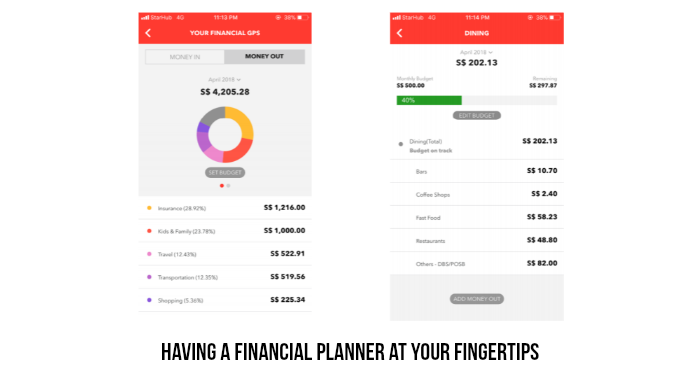
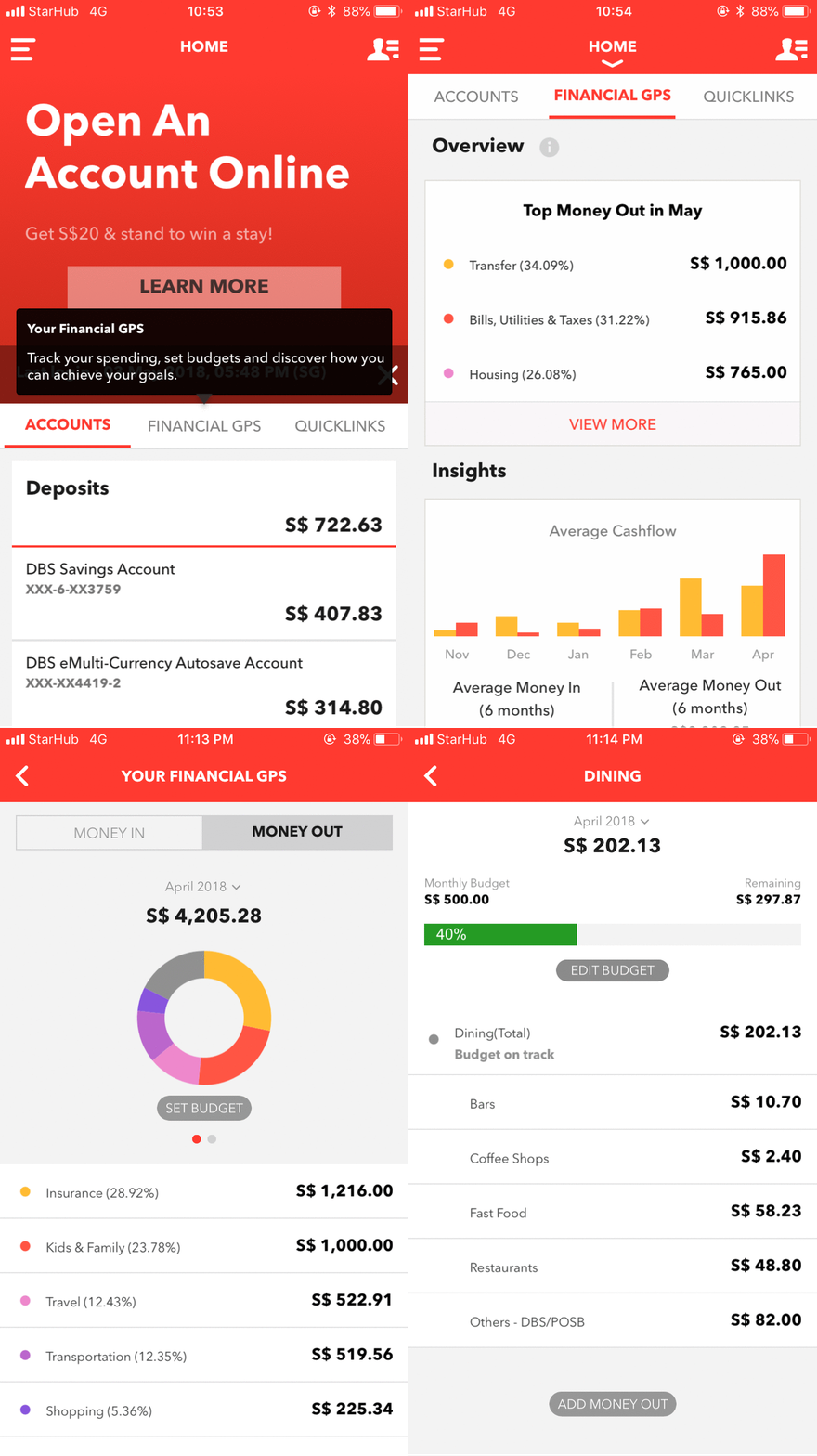
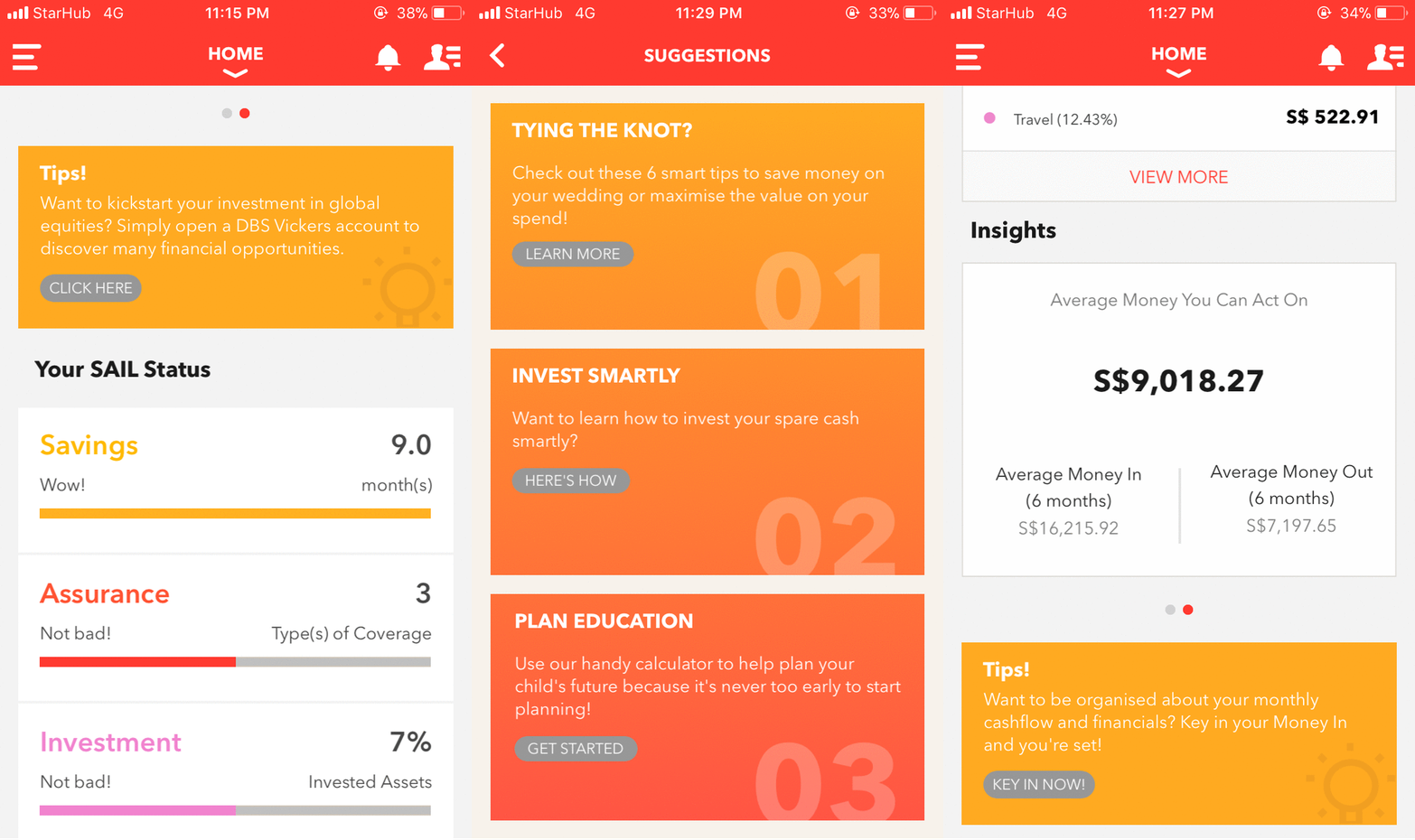
Your Financial GPS is available to all DBS and POSB customers through the DBS/POSB iBanking and digibank app. When you log into your DBS/POSB iBanking or digibank app, you will see a tab for Financial GPS, which provides a personalized snapshot of your financial health. Your Financial GPS allows you to check your monthly spending across different categories, set budgets, and provides personalized insights based on your saving and spending information.

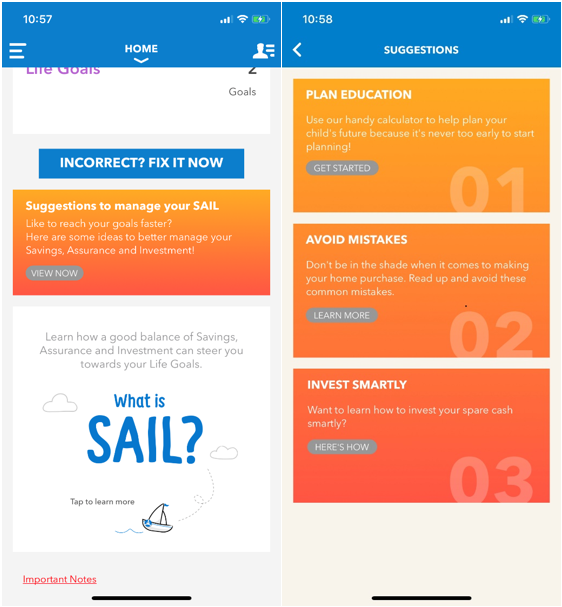
As a digital financial advisor, Your Financial GPS also provides a snapshot of your current SAIL status. It provides insights on the areas in which you can work on, and suggestions on how to work on these areas to achieve your life goals.

For me, personalizing Your Financial GPS for myself was a breeze. Most of my spending was linked to my DBS Live Fresh card, which was automatically categorized into different categories under spending. For spending that I have incurred using cash or on other banks’ credit cards, I could easily add in the amount as expenses so that Your Financial GPS has a comprehensive picture of my total finances.

I also set up my first Life Goal, which was to pay off my home down-payment of $300,000 by age 40. Your Financial GPS immediately calculated the amount of money which I would need to set aside monthly to achieve this goal. This helped me realise how unrealistic my goal was, which was similar to key insights of how many do not know how much they need for their goals. This was one of the insights that DBS had learnt from its intense and rigorous research to understand customers’ financial planning needs. Besides that, Your Financial GPS also came up with a list of suggestions tailored to my life goals, one of which was very relevant advice on how to avoid common mistakes as a first-time home buyer.  

DBS NAV Hub: Free Personalized Financial Consultations 

Want to do even more for your personal finance? Book an appointment with the dedicated NAV Crew at the DBS NAV Hub for a free personalized financial consultation. During the private one-on-one session, the crew will help you to assess your financial health and answer any money-related questions you might have. You will receive a free report on your financial health, with absolutely no product or sales pitches involved.  

Ready to Sail?  

Here are three ways how: 

Your Financial GPS
DBS Nav Hub
DBS Nav Website
Available on DBS/POSB iBanking
and Digibank

Click to download the DBS
Digibank SG app on iTunes or on Google Play

Free personalized financial consultation

45 Tras Street
Singapore 078984

Click here to book an appointment

  • Resources on personal financial planning
  • Get updated on NAV classes

Click here to visit the NAV website

Read More...

5 Steps In Building A Financial Plan

Generally speaking, a financial plan is a comprehensive evaluation of an individual’s current and future financial state. Crafting a financial plan involves using known variables to predict income, asset values, and withdrawal plans. Thus, you have to go through a series of steps to adjust your savings and spending habits.

Here are just some of the steps:

STEP 1: KNOW WHERE YOUR MONEY GOES

Your top priority is to develop a detailed list of where your money is heading to. It does not matter if you are using a legal pad, a smartphone app, or a computer software! The only thing that matters is that you have a working system. An organized system lets you identify the expenses that occur each month (fixed expenses) and those that change (variable expenses).

Do not forget to input seasonal expenses such as the Labor Day staycation or Valentine’s Day present. Calculating your cash flow may seem like a hassle, but it will help you determine the amount of money that you can commit to your goals.

STEP 2: SET YOUR MONTHLY SAVINGS GOALS

Much like a road trip, you must set a route to stay in the course of your financial plan. Select a path which you want to reach in a specific amount of time. For instance, you may want to start saving for retirement as early as aged 25. Set a monthly savings goal upon knowing your time-frame and how much you need to save. Fit your monthly savings goal within your budget.

If you cannot save as much as your goal requires, you can trim down your monthly spending. Alternatively, you may look for ways to increase your income or to extend your completion date.

STEP 3: CELEBRATE THE MILESTONES

Why do you think corporate incentives exist? Well, they are deemed to keep you motivated while in the process of achieving a company or a cooperative goal. The same goes for your finances. The only difference is…you have a personal goal to fill.

Image Credits: pixabay.com

Image Credits: pixabay.com

Create milestones after completing your monthly savings goal. Celebrate in a simple and satisfying fashion (e.g., eating your favorite Korean dessert). You do not want to blow up your credit even more!

STEP 4: CONQUER YOUR DEBT

As tough as this may sound, you must attack debt while avoiding further debt. Start by listing down your outstanding debt including two columns for balances and interest rates. There are two main strategies that you can choose from. You can either start with the highest interest rate or employ the “Snowball Strategy”.

The latter refers to eliminating all the smallest items first before working your way to the highest items. Both can be effective as the most important thing is to pay more than the minimum. Seeing your debt diminish one after another can be good for your self-esteem.

STEP 5: STOP PROCRASTINATING AND START SAVING

The perfect time to start saving is at the present. Take a look at your guilty pleasures. Notice where you can make some adjustments, but do not be too harsh on yourself. Aim to control your entertainment expenses and not eliminate them entirely (unless these items are unhealthy)! This will free up some cash to put in your monthly savings goal.

If an emergency comes along and forces you to dip into your savings, do not fret. This is what financial cushioning is for. Just make it a priority to replenish your fund as soon as possible.

Image Credits: pixabay.com

Image Credits: pixabay.com

Financial plans aid in creating a strategy for paying off your debt, in determining where your money goes, and in achieving your other savings goals. I wish you all the best when crafting your own plan.

Sources: 1, 23 & 4

Read More...