What you need to know about protecting yourself if you encounter an accident in a public space like a cinema or mall

ventilation duct collapsed during a movie at Shaw Theatres in NEX shopping mall

Slightly more than a week ago, we read in the news that two people got injured after a ventilation duct collapsed during a movie at Shaw Theatres in NEX shopping mall. In all honesty, this incident could have happened to anyone.

It got many people thinking about insurance claims, the legality of personal and protection claims, and what one has to do if they were to encounter such an unfortunate accident. If that is you, here’s what you need to know about protecting yourself should you encounter an accident in a public space.

#1: Make an insurance claim immediately

Justin Chan, Head of Dispute Resolution at Tito Isaac and Co, shares that as soon as an accident in a public space happens, an individual should inform their insurer(s) immediately. Also, it’s advisable to engage a solicitor who can point you and your claims in the right direction.

In the case of the injured cinema patrons, lawyers would most probably advise the affected parties to inform the mall. This way, the mall can then inform their respective insurers. Mr Chan adds that a similar letter will be written to the cinema operator, where they would have some sort of policy which would cover accidents within the cinema for their patrons.

#2: Know where accountability lies

Police and SCDF at Shaw Theatres in NEX shopping mall

Image Credits: AsiaOne

A question to consider is the location where you got the injury. Mr Chan said that in this particular case of the injured cinema patrons, the cinema is the occupier of that particular space. “The occupier owes a duty of care to their cinema-goers,” he adds.

But if you’re at a common public space in the mall like staircases, corridors, or open waiting areas, the responsibility will fall back on the mall. 

Mr Chan also stated that every able-bodied person should have insurance at this point in time. “But if you don’t have your own personal insurance, then you would leverage on the occupier’s insurance.”

#3: Other useful actions to take

If you do not need to make a trip to the hospital immediately, Mr Chan advises the public to take pictures of the accident site. Also, see if you can spot any closed-circuit televisions (CCTVs) on the premises.

“Last but not least, get medical attention,” he said. Mr Chan reveals a personal experience where a simple headache experienced by his client grew into a multitude of physical ailments. While you may not feel the health effects immediately, there may be underlying issues so seek advice from a medical professional.

Key takeaways

Inform your insurers, contact the public space’s management, and engage a lawyer.

About Tito Isaac and Co

Tito Isaac and Co team

Image Credits: Tito Isaac and Co

Tito Isaac & Co is a homegrown, Singapore law practice founded in 1999. The law firm advises, plans, and executes legal solutions to help individuals and enterprises preserve, protect, and build on their strategic interests and business positions.

They provide a full suite of services ranging from litigation, arbitration and dispute resolution, specialist & private client interests to corporate advisory and transactional work. 

If you need legal advice, phone them at +65 6533 0288 or drop them an email via [email protected].

Read More...

4 Costly Investment Mistakes To Avoid During Pandemic

Investment is defined as the money committed or property owned that is acquired for future income. It has two main classes namely: fixed income (e.g., bonds or fixed deposits) and variable income (e.g., property ownership). The choices you make when investing your money can influence your future.

Most of us are unaware of the investment mistakes and other financial missteps that can affect our short-term and long-term financial goals. However, the pandemic has given us no choice but to face our financial nightmares head-on. On that note, please do your best to avoid making costly investment mistakes.

#1: SELLING OFF INVESTMENTS OUT OF FEAR

2020 hit us hard. Many people are maxing out on their credit cards and are breaking their savings to pay for rent, groceries, and other essentials. The market crash triggered a global panic as people are selling off investments, losing billions in the bear market.

Let us be honest. It is impossible to know when another market crash will happen. The market’s recovery has been based on the idea that the pandemic has become more manageable. The reality is that the COVID-19 cases continue to spike each day. The numbers may continue to get worse as the global economy reopens. In Singapore, new closures and safety restrictions have been employed by retail stores and other commercial establishments.

It is tempting to sell off your investments given the current situation. Think about it. You should not sell something due to relatively short-term market conditions. You are in this for the long-haul. Unless your investment beliefs and strategies have changed, you must consider keeping those stocks. Building an emergency fund by investing money can be a lifesaver.

#2: BELIEVING IN MARKET GURUS

Some people eagerly listen to “money gurus” that are believed to predict the market. Media gurus make their money from discussing about investments, selling their advice or charging fees to manage other people’s money. But, their followers are not all rich. If you could predict the market’s future, wouldn’t you shut your mouth and make money for yourself?

Forget about the money gurus, what will help you is to diversify your portfolio. Knowing the right companies to allocate your money to takes guts, wits, and luck.

#3: FOLLOWING YOUR PORTFOLIO ON A DAILY BASIS

The market is volatile and people are more concerned about the stock market than before. There is a lot of noise surrounding this. The noise may brew fear inside of you, which can lead to bad decisions. Try not to follow your portfolio on a daily basis.

Do not let fear consume you as many people are screaming voices of gloom and doom. As was mentioned a while ago, you are in it for the long-haul. You are not invested for today or tomorrow. Markets will fall and crash, but good companies will eventually recover as history showed us.

#4: WAITING FOR A BOTTOM TO BUY STOCKS

In theory, you can buy good stocks at a discount when the market crashes. However, it is nearly impossible to purchase something at a perfect price and a perfect time. Do not try to time the market as it can cause you to miss glistening opportunities.

Image Credits: unsplash.com

No one knows when a crash will come or where the bottom is exactly. Consider purchasing stocks from good companies at all-time highs. If you are planning to be in this journey for a long time, you can buy shares from the businesses you believe in. Just be strategic and realistic!

Source: 1


Read More...

Tennis superstar Serena Williams’ outlook on money: Be responsible and manage your spending

Serena Williams

Serena Williams, a notable tennis player, has earned millions during her dazzling career. The former world number one in women’s single tennis says her outlook on money has not changed: Be responsible and manage your spending.

Know the difference between needs and wants
needs vs wants

Image Credits: Medium

“My family wasn’t wealthy, but we were always taught that when you work hard, you reap the benefits as a result,” Williams told NBC News via email.

“I think it’s important for young people to really understand how to spend money — including how to better self-evaluate needs and wants — to make truly informed decisions versus spending from pure emotion.

This is still something that’s true for me, and an approach I believe is incredibly important for parents to teach and model, as well.”

The importance of savings
importance of savings

Image Credits: Value Research

“At a young age, it was instilled in me that I shouldn’t splurge,” Williams said. “I remember going to parks and playing tennis with my dad and he’d say, ‘Athletes always lose their money.’ He made it clear that as an athlete, there was a risk of losing what you earned.”

She added, “I think this idea rings true no matter what you do. As a result, the concept of saving money stuck with me throughout my career. Even early on, I remained focused on the fact that when I earned money, I needed to be mindful of how those dollars were either spent, invested, or saved.”

“When I received my first bit of prize money, I knew right away I needed to put it in the bank,” Williams, who has earned another $90 million in endorsements over her career, said.

Learn to manage money for the future
managing money for the future

Image Credits: Freepik

“Though I had the money, what I didn’t have was the understanding of how it works. For example, what happens if you put money into a savings account, invest it, or just deposit it in a checking account? I didn’t learn those things until later in my career.

However, as I matured, I realized that earning money is a reward, and those rewards have to be treated with the utmost care and consideration, and it is important to keep more of what you earn and make it grow for the future.”

“Learn! Think about new skills. Innovate. Get creative with your time. And in all of that, think about how to make the most of any money coming in,” she said, adding, “the earlier we learn how to manage what we earn and save, the more ready we are to face life’s ups and downs.”

Read More...

3 Reasons Why Uptown @ Farrer Is A Good Investment Property

Uptown @ Farrer is an integrated development by Low Keng Huat, a reputable developer listed on the main board of SGX. This project is estimated to receive its Temporary Occupation Permit by 1Q 2021. Being so close to its completion date, so there only remains a small window of opportunity to gain a foothold into this unique development. Here are 3 main reasons why Uptown @ Farrer is a good investment property.

1. City Fringe Location

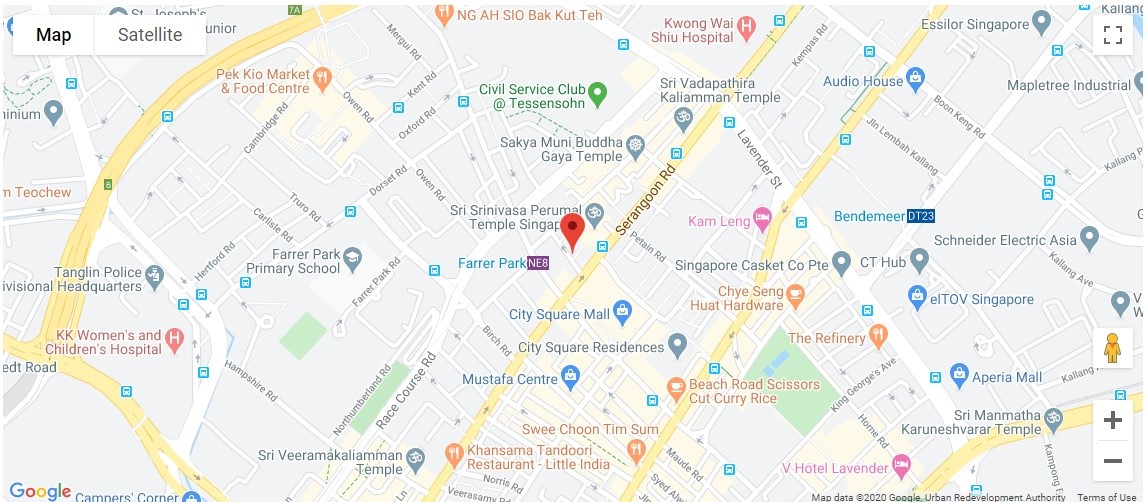
Uptown @ Farrer is located in an enviable city fringe location in prime district 8. It takes only 1-minute walk from Exit G of Farrer Park MRT station to reach the development. From there, you are only 2 MRT stops to Dhoby Ghaut MRT station, Singapore’s most connected MRT station with 3 interweaving lines. Because of its proximity to the MRT and city fringe location, it takes less than 15 minutes by public transport to get to Raffles Place and Orchard Road. This is the ultimate accessibility that one can enjoy!

Furthermore, the condominium is situated just opposite City Square mall, a large shopping mall catered to young families. It has a comprehensive mix of retailers such as Toys”R”us, MindChamps, Decathlon, Don Don Donki and NTUC to cater to every family’s needs.

In addition, it sits adjacent to the Ophir-Rochor road Corridor, a key district identified by URA to be a key area for growth and rejuvenation. Key plans include installation of key infrastructure to transform the entire area into a car-lite and lush green zone packed with lifestyle offerings. Uptown @Farrer is a beneficiary that stands to capture any positive spill-over effects from this massive government undertaking.

2. Easy to rent

This is a rare opportunity to invest in an integrated development that will be popular with renters. The entire project consists of a single residential tower with an exclusive number of just 116 units. Retail shop units nearby offer direct and easy access to F&B offerings (eg: Michelin star-rated Putien) and lifestyle services. These are key amenities that potential tenants will definitely come to expect and appreciate. In addition, the serviced apartment will be operated under Ascott’s co-living brand, lyf, targeted at millennials. With its social kitchen and modular spaces catering for gigs and events, it adds a whole new vibrancy to the entire development.

With fewer units located within the building adding to the exclusivity, as well as an established transport infrastructure and numerous retail offerings a stone’s throw away, this condominium will appeal heavily to renters. Positive examples such as City Square Residences are testament to the popularity of this location. The ease of renting your residential unit signals strong potential capital appreciation in the future.

3. Rare Loft Units That Double Up

A significant effect of Covid-19 is that working from home may soon become the new normal. Therefore, it has become very important to find a conducive place within the house where one can conduct Zoom meetings to work in peace or have their children able to do home-based learning if needed. This is why loft units have increasingly become the apartment type of choice. Uptown @ Farrer offer several types of loft units with ceiling heights reaching 5.9m! The voluminous space allows a home-owner to craft out an extra place for a work office or a study room. In addition, the developer will be providing the loft decking when the unit is completed which is normally not the case. This is an efficient and cost-effective way to carve out more space for your home!

Here are 3 key reasons why Uptown @ Farrer makes a very compelling and good investment property. Simply make an appointment online or via your preferred property agent beforehand to view the showflat and make your purchase.

Read More...

Save or invest? 3 questions to ask yourself as advised by certified financial planners

Save or invest

So you’re currently at the crossroads between saving and investing? CNBC Select spoke to a couple of certified financial planners regarding this issue.

According to Gordon Achtermann, a Virginia-based certified financial planner, you have to ask yourself these three questions and give a solid yes before you decide to start investing.

#1: Do I have an adequate emergency fund?

Take a good look at the amount of cash you can fall back on if the need arises. According to experts, it’s generally wise to build short-term savings and then invest with the extra cash you have left.

You have to also be aware that your money can fluctuate depending on the daily changes in the market. So, there is much more risk to bear than compared to a savings plan.

Adequate emergency fund varies from person to person but Achtermann provides these guidelines to determine the amount you should have:

  • 3 months of expenses: For couples with two incomes and very secure employment
  • 6 months of expenses: For couples with two incomes but less secure employment or one partner not working
  • 1 year of expenses: 1 year of expenses for one income that is less than very secure
#2: Am I committed to leaving the money in place for 2 to 5 years or longer?

investing for years

“Investing the cash in a diversified portfolio will usually yield a higher average return than leaving it in a savings account,” says Sebastian Rollén, a senior investing researcher at Betterment.

But to do so, you should be prepared for some shifts in your balance and expect your money to remain invested for more than a couple of years before you withdraw.

#3: Can I weather the ups and downs of the market?

Here, we’re talking about risks. You must be confident enough to handle the rapid and unpredictable changes in the market.

According to Scott Cole, an Alabama-based certified financial planner, what you want to avoid is having your money subject to risk when you actually need the money.

If you think you will need the money within less than two to three years, then avoid investing it. Instead, use whatever you have to build up savings that offer more security. But if you do not require the current funds in the next 10 years, then put that money in the market.

What were your answers?

At the start of this article, we mentioned that you have to give a solid yes before venturing into investments. If you’re sitting on the fence for even one of the questions stated above, then you’re clearly not 100% ready to get your head into the whole investment game.

But that doesn’t mean all hope is lost. First and foremost, focus on your savings. Without it, you will never ever get to invest. Maybe a year or two later, you can recheck your financial status and take a step into low-risk investment portfolios.

Read More...