What it really takes to thrive in startups

group of people using laptops

So you want to work in a startup?

It’s easy to be enamored by the idea of a more flexible workplace, the chance to be more creative, and the allure of joining a company on the rise. But startups are not for everyone.

In this post, we will take a look at the different working characteristics you need if you want to thrive in startups. We will also dispel some of the myths that often keep people from venturing into the startup scene. Let’s get started!

You’re flexible

If you want to work for a startup, you need to be flexible. Things change quickly in startups, and you need to be able to roll with the punches.

That means being willing to take on new tasks and assignments, even if they’re not in your job description. It also means being open to change, and not being afraid of new ideas or ways of doing things.

You like wearing many hats

Do you have a wide range of skills and a willingness to try new things? Then you will fit in perfectly at a startup. In startups, the team is small and everyone wears many hats. That’s just the reality of the situation. So being adaptable is a vital skill to have.

But it’s not just about being able to wear many hats. It’s also about being able to work long hours and be okay with ambiguity. Because in a startup, things are always changing and evolving. There’s no room for ego or complacency. You have to be willing to go with the flow when necessary.

You need to be a self-starter

a lady drinking tea while using her laptop

Image Credits: unsplash.com

If you want to work for a startup, you need to be a self-starter. That means you can’t be someone who needs constant hand-holding or someone afraid to take risks.

You need to be comfortable working in a fast-paced, constantly changing environment, and you need to be able to hit the ground running. In other words, it’s best if you’re not someone who needs a lot of training or someone who can’t work without clear-cut directions.

Startups are all about innovation and creativity, so if that’s not your thing, then it’s probably not the right place for you. But if you’re up for the challenge, then startups can be an incredibly rewarding place to work for.

You need to be okay with change

In a startup, the rules are always changing. The company is growing and evolving at such a rapid pace. Things are always moving and shifting, and you need to be okay with that.

You also need to be okay with chaos. Because in a startup, there’s always disarray. It’s part of the process. You have to not get too attached to any one idea or way of doing things.

If you can’t handle change and disruption, then a startup likely isn’t a suitable place for you. But if you’re okay with those things and you’re ready for a challenge, then a startup could work out to be a great place for steep growth.

You need to be able to respond to swift feedback

When you work for a startup, you need to be comfortable with giving and receiving feedback. This means being able to respond quickly and decisively to any change that comes your way.

In a fast-paced startup environment, there’s no time to waste. Things are always moving quickly, and you need to be able to keep up. If you’re not able to respond to swift feedback, then you’re going to find it challenging to succeed in a startup.

To thrive in startups, you need to be comfortable with ambiguity, enjoy wearing multiple hats, and be okay with a constantly changing environment. You also need to be proactive and take the initiative to make things happen, rather than waiting for someone else to tell you what to do. If you can embrace these working traits, you are likely in good shape to work for a startup and help it grow.


Read More...

COVID-19 updates for those planning a trip to Japan, Taiwan, and South Korea

back view of women wearing hanboks

From mask-off in most indoor spaces to allowing non-vaccinated travelers to do away with the seven-day SHN (Stay Home Notice) quarantine period on arrival in Singapore, countries around the globe have also begun lifting measures slowly.

Here’s what you need to know if you’re heading to Japan, Taiwan, or South Korea soon.

Japan
street of Japan

Image Credits: timeout.com

Japan has maintained stringent border controls for a longer period than many other major markets, and only in June did it start to let visitors enter on the premise that they did so in tour groups and with guides.

Beginning 7 September, travelers from all nations will be permitted to enter the nation as part of package expeditions without the need for tour guides. Japan will also increase the daily limit of visitors to the nation from 20,000 to 50,000. Additionally, visitors who have received the necessary vaccinations will not require pre-departure COVID-19 testing.

Taiwan
Tea houses on the Juifen mountain in Taiwan

Image Credits: traveltalk.dk

Taiwan is expected to loosen its border restrictions by the end of September, or at the latest, early October, according to the chief of the Central Epidemic Command Center (CECC), who remarked last month.

The CECC also eliminated the pre-flight COVID-19 PCR test requirement as of 14 August. On-arrival PCR testing, a three-day quarantine, and a four-day self-initiated epidemic prevention period would still be required, though. Additionally, those who acquire COVID-19 overseas will not be permitted to travel by air to Taiwan within seven days of their positive test results.

South Korea
Busan in South Korea

Image Credits: traveldailymedia.com

The majority of South Korea’s pandemic-related restrictions were lifted in the first half of 2022, similar to Japan, but the country has continued to impose some of the strictest border controls, necessitating the proof of a negative coronavirus test result obtained before departure from all incoming travelers.

However, beginning from 3 September, visitors entering the nation will no longer be required to take the pre-departure COVID-19 test. However, as a minimum precaution put in place to stop the entrance and spread of any variety from abroad, travelers are still required to undergo a PCR test within the first 24 hours of their arrival in South Korea.

At Incheon Airport, Gimhae Airport, Jeju International Airport, or a medical facility close to your lodging, you may undergo your PCR test. Travelers are urged to stay in their accommodations until they obtain a negative PCR test result, according to the embassy. After that, record the results of your on-arrival PCR test on the Q-code website.

A seven-day quarantine is necessary if the results of the on-arrival test are positive. Short-term visitors will complete their quarantine at a designated quarantine center. You can call the Korea Disease Control and Prevention Agency (KDCA) at +82-2-2633-1339 if you have any inquiries about quarantine.

Bon voyage!

Editor’s note: All information published at the time of writing is accurate.

Read More...

What to do when your colleague won’t admit they’re wrong

colleagues frustrated with each other

You’ve had it. You’ve tried being patient. You’ve tried reasoning with your colleague, but they just won’t admit they’re wrong. What do you do now?

While it can be challenging, stay professional. Don’t let your emotions get the better of you, and don’t stoop to their level. Here are a few tips on how to handle the situation.

Understanding the situation

It can be frustrating when someone you work with won’t admit they’re wrong. Maybe they’re defensive and always have to be right, or maybe they just don’t want to take responsibility for their actions.

But whatever the reason, it can be tough to get anywhere when they’re not willing to listen. You might feel like you’re constantly banging your head against a wall, but don’t give up! There are a few things you can do to try and get your colleague to open up and admit their mistakes.

First, try to understand why they’re finding it so hard to admit they’re wrong. Maybe they’re afraid of looking bad in front of their peers, or maybe they just don’t want to be seen as incompetent. Once you understand where they’re coming from, you can start to build a case for why admitting their mistake is the right course of action.

Then, ask them how they would like to fix the situation. This shows that you’re willing to work with them, and it also takes the pressure off of them. Finally, stay calm and persistent. It might take a while, but eventually, your colleague will see that admitting their mistake is apt for everyone involved.

How to have a conversation
colleagues conversing

Image Credits: thomasnet.com

So you’ve tried to talk to them, but they just won’t listen. Or worse, they act like they don’t know what you’re talking about. It’s infuriating, right?

Well, there’s a way to have a conversation with this colleague, and it starts with assuming that they’re not trying to be difficult. The next time they do something that bothers you, wait until they’ve finished what they’re doing and then approach them.

Calmly say “I need to talk to you about something.” They may be taken aback at first, but give them a moment to collect themselves. Then, start by describing the situation and how it made you feel. Use “I” statements as much as possible.

Next, ask them for their point of view. Be prepared for them to give you a runaround at first, but ultimately, they will give you an answer. Once you have their answer, express your opinion and see if they’re willing to listen. If not, well, at least you tried.

When to involve your HR manager

If you’ve tried to talk to your colleague about the issue but they just won’t listen, it’s time to involve your HR manager. Remember to stay as calm and factual as possible in your report. After all, you don’t want your manager to think that you’re the one with the problem.

Here are a few points you can make:

  • Explain the situation and how it’s been affecting your work
  • Point out that your colleague is refusing to admit they’re wrong
  • Say that you’ve tried talking to them a few times but it’s not working
  • Suggest a formal meeting with your HR manager so they can help resolve the situation

Your manager will likely want to talk to your colleague privately, to get their side of the story. They may also try to mediate between the two of you. If your colleague still won’t admit they’re wrong, leave it to your manager to take any disciplinary action.

Next steps after speaking with your HR manager
jotting down on a notebook

Image Credits: unsplash.com

So you’ve talked to your manager about the situation, and they’ve agreed to speak with your colleague first before setting up a meeting. Great! But is there anything you can do in the meantime?

Well, here are a few suggestions:

  • Stay professional. Even though it’s frustrating, it’s crucial that you maintain a respectful relationship with your colleague. This means no yelling, no sabotage, and no name-calling.
  • Continue to document everything. Keep a record of all the times your colleague has made a major mistake, as well as the times they’ve refused to admit they were wrong. This will help your manager build a case against them.
  • Speak up if they continue to make mistakes. If your colleague continues to make the same blunders after your manager has talked to them, voice out. Let them know that you’re keeping track of everything and that their behavior is inappropriate.

It can be incredibly frustrating when one of your colleagues won’t admit they’re wrong. Not only are they refusing to own up to their actions, but they’re also preventing the team from moving forward. In this post, we’ve looked at the steps you can take to resolve the issue. Give it a try and see if it works for you.

Read More...

Satisfy Your Bubble Tea Cravings in These 5 Stores

Did you know that Southeast Asians spend about US$3.66 billion (i.e., S$5.1 billion) on bubble tea annually?

The Singapore-headquartered venture outfit Momentum Works and digital payments solution firm qlub’s report showed that the average price of bubble tea in Singapore is double that of the other countries in the region. The Lion City has the highest spending power despite its relatively small population.

The study gave valuable insights on the business dynamics behind bubble tea in Southeast Asia. It highlighted its largest market in the region, which is Indonesia. Indonesia had about US$1.6 billion annual turnover. Thailand came in second with US$749 million across more than 31,000 bubble tea stores and other retail channels. Vietnam ranked third with US$362 million. While Singapore came in fourth place at US$342 million. Lastly, the study found that Taiwanese and homegrown brands have “long dominated” the Southeast Asian bubble tea market.

Food trends may come and go, but our craving for sweets remains. There is a good chance that you have tried at least a couple of drinks from bubble tea stalls in Singapore, especially because of its convenience and prominence. Happy hormones sure know how to become more active when they encounter bubble tea.

On that note, here are some of the most delicious bubble tea offerings in town. Apologies in advance if you get addicted to bubble tea.

#1: THE ALLEY

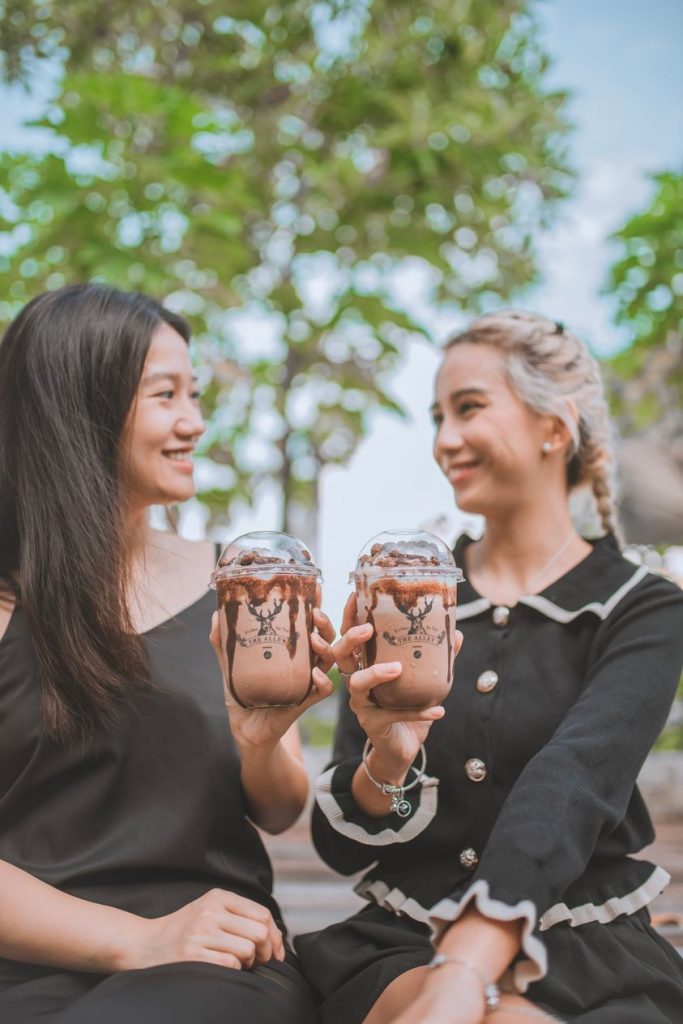
Fans of brown sugar can search no further than The Alley. The Alley offers flavorful drinks with its matcha and cocoa options. If you prefer fruit teas, you can try the Lulu series of strawberry or orange infusions. Alternatively, you may opt to take an IG-worthy shot with its Aurora line of vibrant goodness.

Image Credits: facebook.com/singapore.thealley

The Alley is available in multiple locations including Jewel Changi Airport and Clementi.

#2: HEYTEA

Experience the appeal of sweet and savory mixtures once you taste Heytea’s cheese foam and tea options. Heytea also sells an array of fruit teas and unique ice cream flavors such as salted egg yolk.

Image Credits: facebook.com/HEYTEASG

Heytea is available on multiple locations including Westgate and ION Orchard.

#3: PLAYMADE

Playmade offers contemporary teas and the classics such as green tea lattes and Earl Grey milk teas. Aside from your regular tapioca pearls, Playmade introduces quirky toppings such as pearls in pink cactus, black sesame, burnt caramel and chrysanthemum varieties. As the name suggests, Playmade plays with flavors and creativity to bring twists to the bubble teas.

Image Credits: facebook.com/playmadeonezo

Playmade is available on multiple locations including Chinatown Point and Tiong Bahru.

#4: GONG CHA

When you crave bubble tea and you need instant gratification, Gong Cha is one of your best bets. With its several locations scattered in the country, Gong Cha brings familiarity with taste and consistency. Its bestsellers include Earl Grey milk tea, mango green tea and alisan milk tea, among others.

Image Credits: facebook.com/gongchasg

Gong Cha is available on multiple locations including Funan and Bugis Junction.

#5: LIHO

Homegrown brand Liho offers cheese teas and other varieties of bubble tea. It still draws in a regular crowd and keeps things fresh with its limited-edition drinks and collaborations.

Image Credits: facebook.com/lihosg/photos

Liho is available in multiple locations including Raffles City and Suntec City

Sources: 1 & 2

Read More...

What Do We Expect to See from the iPhone 14 Models

Apple is set to unveil the newest iPhone models during its event on 7 September 2022. Analysts and Apple fans have been buzzing about this launch event dubbed “Far Out”. For those of you who are in the market for a new phone, should you buy a new device right now or wait for the iPhone 14?

THE RUMORED IPHONE 14 PRO MAX

It is expected that Apple will add another 6.7-inch iPhone to its lineup this year. This phone will reportedly be a bigger version of the standard iPhone 14. Adding another 6.7-inch phone to the lineup could diminish the iPhone 14 Pro Max’s appeal. Is it necessary? Keep in mind that consumers are cutting back on spending.

To make the iPhone 14 Pro Max stand out, it is rumored that it will have a higher resolution camera, a new processor, and a redesigned camera module on the front. However, those who love bigger displays won’t have to splurge on the Pro Max as Apple is expected to release a 6.7-inch iPhone 14 Max as well this year.

With inflation putting a dent in smartphone shipments, companies like Apple may have to work harder to convince its consumers to spend more money on high-end models.

DISTINCTIONS BETWEEN STANDARD AND PRO MODELS

If the rumors are true, iPhone 14 will have a new hole-punch and pill design for its camera module. This will be the first time Apple moves away from the iPhone X front-camera module look. The new design will be exclusive to the Pro models since the standard models will likely remain the same notch that iPhone 13 has. Analyst Ross Young also verifies this report.

A15 BIONIC CHIP FOR IPHONE 14 MODELS

Respected analyst Ming-Chi Kuo said Apple might steer away from tradition this year by releasing some iPhone 14 models with the same A15 chip as the iPhone 13. The A16 chip is believed to be reserved for the more expensive models such as the iPhone 14 Pro and iPhone 14 Pro Max. As of now, it is unclear whether Apple will rebrand the A15 Bionic chip for the standard iPhone 14 phones or instead use the more powerful version found in iPhone 13 Pro.

UPGRADE ON THE FRONT-FACING CAMERA

Bloomberg’s Mark Gurman claims that Apple’s iPhone 14 Pro will get a significant camera upgrade with the smartphone’s main sensor being improved to 48-megapixels. If this is accurate, this would be one of the biggest upgrades Apple has made to the iPhone in years.

Image Credits: unsplash.com

However, Gurman says that only the Pro models will get the 48-megapixel camera upgrade, while the standard iPhone 14 models will have the existing 12-megapixel main sensor. This is the same 12-megapixel main camera sensor since the release of iPhone 6s in 2015.

Sources: 1, 2, & 3

Read More...