Effective Methods To Sleep Train Your Baby

DEFINITION

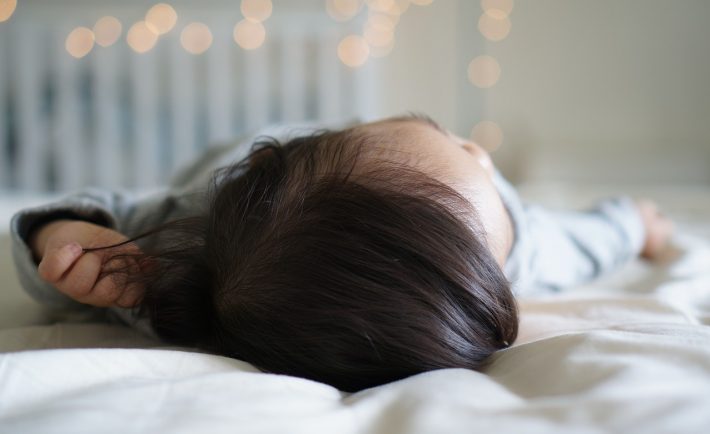
Sleep training refers to the methods that parents or caregivers use to adjust their child’s sleeping behaviors. Sleep training helps your child to fall asleep with little to no help from you. It also teaches the child how to fall back to sleep when he or she wakes up overnight.

Experts recommend to start sleep training when babies are 4 to 6 months old. This crucial period is when babies are able to last for six to eight hours overnight without needing to be fed.

COMMON METHODS USED

Parents use different methods to train their babies to fall asleep. Here are some of the efficient ways that you can apply on your home. Let us start with the Cry It Out Method.

The Cry It Out Method involves putting your child to bed and letting him until he dozes off. It is also called the extinction method as it entails letting your child fall asleep without any comfort or help from you. You need to ensure that your baby was put to bed with a full stomach and in a safe sleeping environment.

It is the most controversial sleep training method as it may seem harsh. If it works for your child and his developmental stage, do it. Consistency is the key. Your baby should begin falling asleep on his own within day four, give or take.

The next method is called the Ferber Method. If you are not a fan of letting your baby weep for hours, you may employ the graduated extinction or check-and-console sleep training or the Ferber Method. It allows your child to cry for a period of time before checking up on him. These timed intervals get longer by a few minutes within each interval until the baby falls asleep.

Image Credits: pixabay.com

Reassure your child with statements such as: “Mommy loves you” or “I will pat you”. You will gradually reduce your presence in your baby’s room until there is no need for constant comfort check-ins. Eventually, your child will learn how to self-soothe.

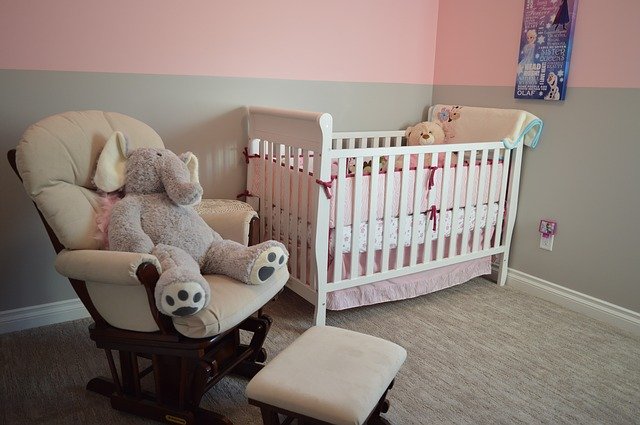
The Chair Method is an interesting method as it works for older babies. Sit in a chair next to your baby’s crib until he falls asleep. Do not pick him up. Move the chair farther away each night until you are near the door. At some point, your baby will be able to fall asleep without you being there. Out of sight, out of mind.

The Bedtime Routine Method involves creating a routine that will ease your child’s mind and prepare his body for quality sleep. Include soothing techniques such as reading books, singing lullabies, and warm baths. Steer away from stimulating items such as electronics and loud toys. Following a consistent routine can help your child develop an internal body clock.

The last method is called the Pick Up & Put Down Method. It refers to putting down your baby to bed drowsy, but awake. When and if he cries, wait for a few minutes and see if he settles down by himself. If not, you may go inside the room to pick your baby up and soothe him. You may put the baby back to the crib or the bassinet when he calms down. Repeat the process until your child falls asleep. This method requires a great deal of patience.

CONCLUSION

Sleep training helps your child to fall asleep with little to no help from you. It is recommended to start it when your child turns 4 months old. There are different methods that you can employ to train your child to fall asleep. It is important to do your research or talk to your doctor during the process of sleep training. This will help you find a method that will best suit your child’s needs.

Sources: 1 & 2

Read More...

Here are 5 preschools offering full-day infant care services under S$1,500/month

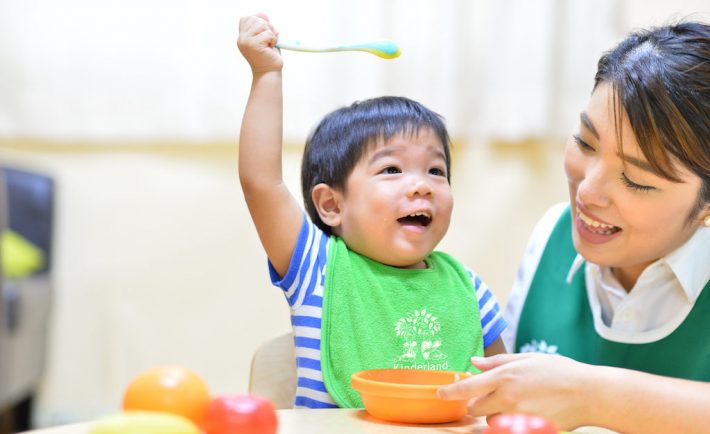
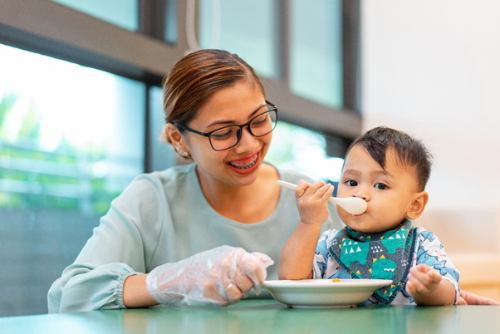
infant with a teacher at mealtime

Are you planning for your first child? Or got a baby on the way and you’re arranging to have the little one spend their days at a childcare centre?

We’ve heard many parents feeling bad about leaving their newborns at infant care. But if you prefer not to trouble your parents or in-laws and don’t want to get a helper, then infant care might be the to-go option.

We’ve put together 5 preschools offering full-day infant care services under S$1,500/month. Read on!

#1: E-Bridge Pre-School

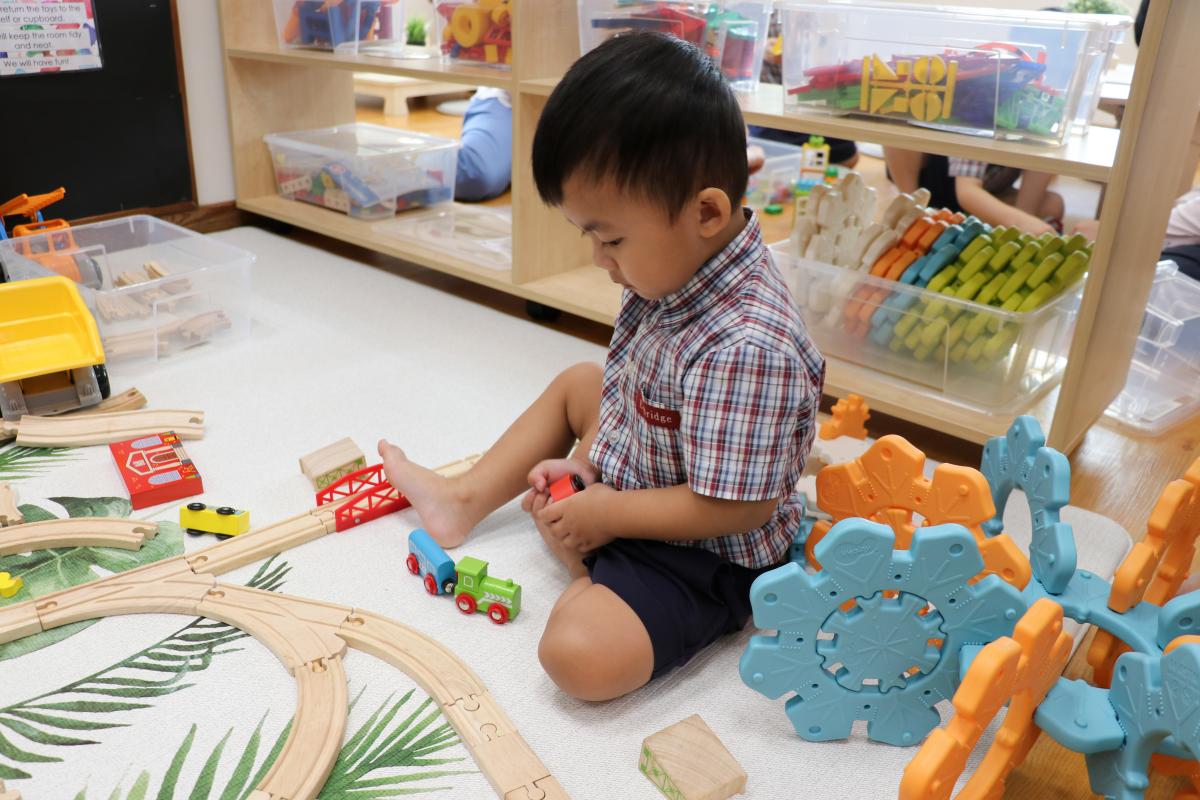
E-Bridge Pre-School

We will start the ball rolling with E-Bridge Pre-School, which is a member of EtonHouse International Education Group founded in 1995. There are centres throughout Singapore in the North, North-East, East, and the West.

Their full-day infant care programme runs from 7am to 7pm and costs S$1,275 (before GST) for Singapore citizens. However, there are also other fees to pay – non-refundable registration fee, student insurance, and a one-month refundable deposit.

#2: Skool4Kidz

Skool4Kidz

Skool4Kidz is part of Kinderland Educare Services. Their unique Integrated Thematic Curriculum is planned out by Dr Jane Ching-Kwan, an early childhood expert with a PhD in Child Development & Family Studies (specialization in Children and Technology).

You can expect your child to undergo an age and needs-appropriate infant care & toddler programme at their centres. The cost of infant care is at S$1,360 (inclusive of GST) for Singapore citizens. Also, the standard registration fee, deposit, cost of insurance, and uniforms will apply.

#3: PCF Sparkletots

PCF Sparkletots

Next, we have PCF Sparkletots by PAP Community Foundation in third place. They claim to be Singapore’s largest preschool operator with over 360 preschools islandwide. You can easily locate a PCF Sparkletots early years centre near you by clicking through the link.

Catered for infants from 2 months old, PCF Sparkletots early years centres operate from 7am to 7pm (full day) from Monday to Friday, and 7am to 2pm (half day) on Saturday. The monthly fee for Singapore citizens is S$1,364.20 (with GST). Other payments include registration fee, annual insurance, and cost of uniforms.

#4: My First Skool

My First Skool

My First Skool is the pre-school arm of NTUC (National Trades Union Congress) First Campus Co-operative. Opened since 1977, they have more than 140 preschools in Singapore. If you’re interested in their new Early Years Centres (EYC), there are three within the Punggol region at the moment.

Similar to PCF Sparkletots, they open from 7am to 7pm on weekdays and 7am to 2pm on Saturdays. Sundays and public holidays are non-operational days. Singaporeans will only need to pay S$1,364.25/month (before subsidies) to have their infants enrolled. Other fees like registration, insurance, uniforms, and mattress cover costs will apply.

#5: Agape Little Uni

Agape Little Uni

Did you know that Agape means “unconditional love” in the original Greek language? Established in 1995, Agape Little Uni joined the Early Childhood Development Agency (ECDA) scheme in January 2016. Currently, their preschools at Cecil Street, Compassvale Crescent, and Upper Serangoon Crescent offer infant care programmes.

As part of the infant care curriculum, your child will be exposed to storytelling, songs & rhymes, and sensorial games. The full-day price is at S$1,498/month for Singapore citizens. By now, you should be aware that other enrollment fees may apply.

Parents who currently have kids enrolled in the abovementioned preschools, do share your experience in the comments section so new parents in our community can all benefit. Many thanks in advance!

Read More...

Surefire Ways To Convince Your Kid To Wear A Face Mask

Wearing a mask on a regular basis is unheard-of in the yesteryears. Helping your child understand why he or she needs to wear a mask is essential to reduce the discomfort, fear, or worry. Consider these efficient tips to convince your child to wear a face mask.

#1: HELP YOUR CHILD UNDERSTAND

Get your point across through age-appropriate explanations. Pre-schoolers learn through play. Allow your child to role-play by putting a mask on their stuffed animal or doll. You may also let your child make his or her own mask or decorate it with stickers and paint.

Children from ages 5 to 12 learn best through knowing the purpose of their actions. Usually, they do not just want to be told what to do. They want to understand why. The typical questions that you may get are as follows.

Question: “What’s Coronavirus?”
Answer: Coronavirus is a new type of sickness — like a stomach flu or cold. Because it is new, doctors and scientists do not know a lot about it. We need to be extra careful to keep everyone safe. Let us do this by wearing a mask.

Question: “Why do I have to wear a mask?”
Answer: Covering your mouth when you sneeze or cough helps to avoid the spread of germs. Wearing a mask can help avoid the spread of the virus. Some people may get really sick because of this new virus. When you put your mask on, you are becoming a special helper that keeps the people safe.

#2: LET YOUR CHILD CHOOSE HIS OR HER MASK

Put value to the opinion of your child by letting him choose his own mask. Your child may want put his favorite character on his fabric mask. Let your child’s imagination run while by providing art materials. They will be more eager to wear a mask that they like. Do check for comfort and ensure that the straps are not too tight or too loose.

#3: BECOME GOOD ROLE MODELS

Practice wearing a mask with your child at home and when you go outside. Be good role models to your child by wearing your mask correctly at home and in public places. You can even make a fun game out of it. Whoever wears his or her own mask first will win! Keep your expectations reasonable and gradually increase expectations as your beloved child gets used to the way a mask feels on his or her face.

#4: GIVE POSITIVE REINFORCEMENTS

Whether you want to give a tangible token or an encouraging praise to your child, you can provide positive reinforcements that will help your child wear a mask. You do not need to break the bank for this!

You may also let your child hear statements like: “I love wearing my mask. It keeps other people safe. You can try it too.” Your child will appreciate the positive attention. You may also let your child watch videos that emphasize on the power of wearing a mask. See for yourself:

Sources: 1 & 2

Read More...

All You Need To Know About The S$3,000 Baby Support Grant

Parents of Singaporean children born from October 1, 2020 to September 30, 2022 can get a one-time Baby Support Grant to help them alleviate the costs of raising a child amidst the pandemic. The Baby Support Grant will supplement the existing Baby Bonus cash gift. The former is worth S$3,000, while the latter can go as high as S$$10,000. These will be deposited to the bank account that the parents have nominated.

The giving out of funds will start from April 1, 2021 or within one month of enrollment into the Baby Bonus scheme. It will depend on the situation.

Ms. Indranee Rajah, a Minister in the Prime Minister’s Office and a Second Minister for Finance and National Development, highlighted that the Government has allotted some budget to provide support to more Singaporean parents. Lower-income parents with babies on or after October 1 were already eligible for the grant, while those with babies born before that date can benefit from other existing schemes.

She said: “The Government will spare no effort to help couples meet their marriage and parenthood aspiration.” The pandemic has not been easy on all of us and most people have postponed their wedding and family plans.

Image Credits: pixabay.com

A recent survey commissioned by the National Population and Talent Division (NPTD) and the Ministry of Social and Family Development (MSF) found that about 30% of respondents will likely delay marriage or have a child later on because of the pandemic and its effects on the economy and the healthcare system. About 80% of the married individuals stated that they plan to delay having children. The survey collected information from about 4,100 Singaporeans ranging from ages 21 to 45. There is a lot of uncertainty surrounding us as of the moment.

This is why, Ms. Indranee Rajah encouraged the community and businesses to cultivate an environment that is family-friendly.

“We also hope that more businesses and community groups will play their part to support couples juggle work and family, provide affordable goods and services for young families, and ultimately, create a Singapore that is made for families.”

Some companies have answered this plea and are offering special deals to families with young children. For instance, Mothercare will offer its VIP membership to all Singaporeans who are giving birth over the next 12 months to be eligible for their special discounts.

Nonetheless, the Government has asked for the understanding of everyone due to the given duration of this grant. According to them, the specific start dates are necessary for any new measure or enhancement. May this grant aid many Singaporean families, especially those who need it the most!

Sources: 1 & 2

Read More...