Singapore’s first luxury confinement centre has opened with packages from S$12,000

Kai Suites

The birth experience is beautiful and miraculous for many mothers, their babies, and families. However, it is also a profoundly exhausting and even medically traumatising journey.

After giving birth, many mothers need extended rest, recovery, and healing to recuperate from the delivery and begin to adjust to a new life together with their newborns.

This is where confinement centres come in handy because they can create a holistic and full-service experience for both the mother and baby.

Have you heard of KAI Singapore? KAI Singapore is Singapore’s first luxury confinement centre that’s specifically designed to heal and help a new family in every way possible.

Kevin Kwee, executive director of Laguna National Golf and Country Club, is the co-founder of KAI Singapore. He shared that it is common for new mums in Taiwan, South Korea, and China to recuperate in residential confinement centres in an interview.

the co-founder of Kai Suites

“After 18 months of market research, and finding many such places more clinical than comfortable, I thought I’d improve on the concept by co-founding KAI Singapore. Singapore’s ready for it; I already have local and foreign friends asking to reserve spots,” he added.

The Kai Experience

The centre provides a bespoke embrace to the concept of Japanese hospitality, also known as omotenashi. Kai symbolises restoration and recovery, the two most important factors for a new mother’s health and wellness.

They have a full spectrum of maternity care for families, from prenatal and nutrition advice to postnatal food, and body rejuvenation. The complete guidance is all done in an indulgent environment that rehabilitates every member of the family.

Location

Kai Suites Exterior

At KAI Singapore, every mother and child receives their suite in a hotel-like facility, one that’s both private and inviting while still being centrally located to town.

Have we not mentioned that they are located at 26 Dunearn Road? You will find yourself a less than 10-minute drive to Orchard from the confinement centre.

Not to mention the list of hospitals within a 3km radius:

  • 1.8km from Thomson Medical (3-minute drive)
  • 2km from Novena Mount Elizabeth Hospital (4-minute drive)
  • 2km from Orchard Mount Elizabeth Hospital (6-minute drive)
  • 4.1km Mount Alvernia Hospital (7-minute drive)
  • 2.8km from Gleneagles Hospital (8-minute drive)

Facilities & Services

Private mothers’ lounge

nursery offering camera surveillance

Mothers will be thrilled to know that there’s a private mothers’ lounge that allows mothers to rest and socialise while their babies are asleep in a nursery offering camera surveillance. Stay connected to your child at all times by viewing them through a mobile app.

Integrated wellness haven

Kai Spa

KAI Singapore is the first in Singapore to take the confinement experience and add luxury and elegance to it. You get to access a spa, salon, and aesthetics clinic during your stay!

Take advantage of the complimentary daily warm herbal baths and weekly breast massages to promote postnatal healing.

Their Kai Spa also has a range of facial treatments and therapy sessions for you to be pampered:

  • Age repair facial or essential rose facial
  • Prenatal massage using both Malay and Swedish techniques
  • Breast lactation massage to remove soreness and boost milk production
  • Head & shoulder massage which uses essential oils to soothe the tension away
  • Jamu massage & bengkung wrap to restore the abdomen to its original state

There’s also a relaxation lounge for mummies to get their pretty manicures and pedicures done!

24-hour professional care

Kai Suites reception area

As valued guests of KAI Singapore, you will be taken care of by a 24-hour expert care team. These are highly trained and supervised medical staff so you will be assured the best attention. There is also in-room dining, housekeeping, security, and concierge services.

Nourishing foods crafted by chefs & nutritionists
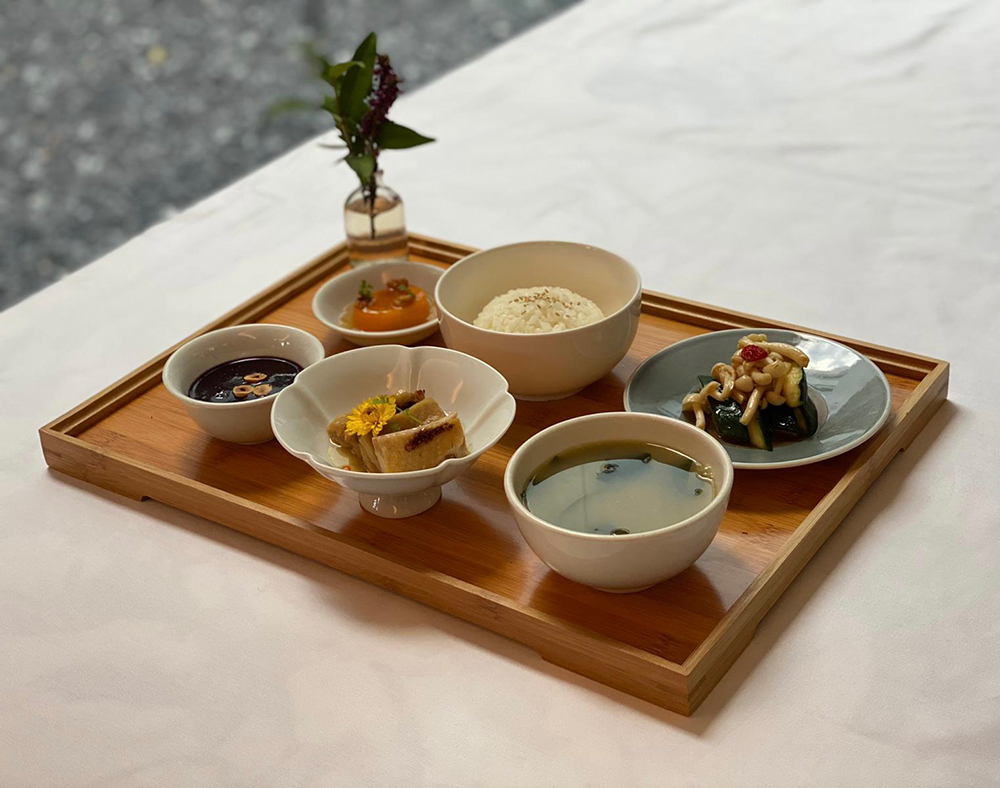
Kai Cuisine

Your daily meals are catered by a state of the art kitchen that uses fresh, local ingredients and traditional cooking. The menu tailors to the individual recovery needs and requirements of the mother.

Using Traditional Chinese Medicine (TCM)  principles of 一休二排三调四健养 (the process of healing, detoxification, restoration and nourishment), you can expect pure, natural, and wholesome foods with no added MSG or artificial additives.

Kai Cuisine is also all about using the best, natural herbs such as black dates, and sulphur-free ‘dang gui’ or angelica root. They even make their sauces, seasonings, and condiments from scratch in controlled batches in-house.

Every top-notch service is designed with Asian cultural values and heritage in mind, treating childbirth as a richly time-honoured tradition that provides rest and critical bonding time between mother and baby.

Package Prices

One of the Kai Suites

The standard package at KAI Singapore begins at S$12,000.

It comes with an extensive three-month prenatal program that teaches valuable mothering skills and wellness techniques, a seven-day stay after the baby is born, and a three-month postpartum program that helps mothers adjust to life with their new baby.

Guests can alter their stay-in periods and use the KAI Singapore’ intensive recuperation program for as long as their budget allows.

Final Thoughts

KAI Singapore is an innovation in luxury maternity management that provides top-tier services that address both mother and baby care components. There’s no better place to do it than at KAI Singapore for mothers who are preparing to welcome their new infant.

For more information, please head to kaisuites.com.sg.

Read More...

Financial Responsibilities Of Newly Married Couples

Managing your finances together is one of the most important roles you partake on in a marriage.

Differing views and attitudes towards money can pose issues to a relationship. For instance, you may seem frugal to others and stingy to her. If you both live beyond your means and spend lavishly on each other, you might find yourselves trapped in debt. There is time to change. Planning ahead as a team can help you build a strong foundation for your marriage.

1. GETTING TO KNOW EACH OTHER

Get to know each other’s financial beliefs and spending habits. Understand where your partner is coming from and adapt if necessary. If your partner is a spender, agree on establishing some limits. If your partner is prudent, agree on the things you would like to prioritize. Make your expectations clear to arrive on the same page.

“The handling of finances is one of the major emotional battlegrounds of any marriage. Lack of finances is seldom the issue. The root of the problem seems to be an unrealistic and immature view of money.” – David Augsburger, The Meaning of Money in Marriage

2. DELEGATING FINANCIAL DUTIES

Assess the differences in your income and money management strengths to determine how to divide the financial duties. Delegate the person who is financially savvier to take the role of managing your family’s investment options. While, the person who is better at budgeting can take charge of managing the household bills. Take advantage of each other’s strengths and fill the gaps in between.

3. PROVIDING SOLELY FOR YOUR FAMILY

For families with a sole breadwinner, it is practical to maintain an adequate emergency fund to withstand unexpected financial woes. Please consider the number of dependents when finalizing the amount of money to be set aside.

Single income couples should consider helping each other in terms of their CPF responsibilities. You can top up your spouse’s CPF account, especially if he or she has low CPF balances. You can transfer your CPF Ordinary Account savings after setting aside the Basic Retirement Sum in your own CPF account.

4. SHARING BANK ACCOUNTS

There is no one size fits all! Your household arrangement depends on your marital assets, income levels, and financial commitments. Think about which expenses you want to keep separate and which you want to share. You open a joint account for their household bills. Set aside a specific amount monthly to grow your joint account together. Meanwhile, you can keep your own individual accounts to fund your own spending.

5. AVOIDING FINANCIAL INFIDELITY

Financial infidelity refers to hiding financial information behind your partner’s back. Failing to mention a significant expenditure to your spouse may cause problems in the long run. Top money lies include under-declaring one’s income or hiding one’s debts. Such dishonesty can diminish the level of trust between a couple.

6. WORKING ON SAME FINANCIAL GOALS

Find a way to work on shared financial goals. Agree on the amount of personal contributions depending on your income.  Some of the common themes that most financial goals share are having a budget, living frugally, getting out of debt, and having a good credit score. Do not forget to save for your emergency fund and retirement plans.

Image credits: pixabay.com

You are in this (wild ride) together!

Sources: 1 & 2

Read More...

Stuck At Home Valentine’s Day Ideas

Romance does not have to fade just because you are at home. Considering the impact of the pandemic and the need to practice social distancing, you have probably struggled to keep your indoor dates exciting. Fret not! There are a myriad of creative date activities that you can enjoy right in the comfort of your own home.

Spend Valentine’s Day with your special someone with these fun ideas.

#1: DO YOGA TOGETHER

Stretch the night away by practicing couples yoga with your partner. Now is the time find your inner Zen. Poses suitable for couples are more intimate and challenging. It is a shared experience focused more on the connection with one another, rather than just yourself.

#2: MAKE DELICIOUS PIZZA

Add spice to your Netflix and chill by making your own pizza. Try different recipes such as baguette pizza and Marinara pizza.

#3: TEST YOUR SINGING ABILITIES

Do you have a favorite love song? Challenge your partner to a melodious night of karaoke. Sing your hearts out by searching karaoke videos on YouTube. Singing some of your favorite tunes is guaranteed to boost your spirit.

#4: TRY A VIRTUAL MUSEUM TOUR

Whether you are a fan of Vincent van Gogh or cultural art, you can find a virtual museum tour for both of your interests. I recommend watching the National Museum of Singapore’s Zoom Into History Video series. It is an insightful look at the artifacts and everyday objects that have defined our nation’s past. You can also watch the virtual tours streamed on the National Gallery of Singapore’s Facebook Live.

#5: CREATE FUN COCKTAILS

Show off your bartending skills in the comfort of your own space by making a cocktail together with your loved one. Make the Love Potion #9. It is made with gin, lemon juice, simple syrup, and pomegranate juice. Enjoy!

#6: START A BOOK CLUB

Encourage your friends to join your book club. Bring your partner along too. Choose a book to read together with the group and then pick an evening to discuss it over wine and cheese on Zoom or Skype.

#7: HAVE A PHOTOSHOOT

Spare a few hours for an at-home photoshoot. Ensure that your pictures have backdrops and decorations that fit your theme. You can have these photos printed and gathered into an album.

#8: SET THEMATIC NIGHTS

Whether you want to indulge on a game or movie night, you can set February 14 as your “best day ever”. You can forgo dinner by turning the lights out and preparing snacks that can boost your movie night experience. If you cannot agree on a movie you both want to watch, consider the first movie you ever watched together. Alternatively, you can play video games. Your partner can either be impressed by your mad skills on screen or will think it is adorable to see you consistently losing.

#9: INDULGE IN A SPA DATE

Drop in your nearest Lush outlet or create your own DIY bath bombs to enjoy a spa date. Have a bath together with bath salts and bath bombs. Afterwards, you can give each other massages with aromatherapy oils. Lastly, you can give your partner a manicure or a pedicure. Complete the experience with matching robes!

Image credits: pixabay.com

Sources: 1 & 2

Read More...

Some answers to your questions about safe sex during pregnancy

asian-young-pregnant-woman-with-her-husband

Being pregnant is tough.

But it’s even more challenging to keep up with the sex drive, for both you and your partner. Whether you’re a first-time dad looking for some answers to your questions on sex during pregnancy or a mum-to-be looking to spice things up while expecting, this article might help.

Here are some common questions and answers about safe sex during pregnancy.

#1: Is it safe to have sex during pregnancy?
man waiting for a woman to enter the bedroom

Image Credits: unsplash.com

In short, yes. But if you’ve been advised otherwise by your doctor, heed the medical professionals’ opinions.

We’re glad to have Aleece Fosnight’s opinion on this. Fosnight is a physician assistant and sex counsellor in urology, women’s health, and sexual medicine. She shares that the uterus may shift a little during penetration, and the mum will feel it.

Now, don’t freak out. Think of the uterus as a mobile home for your little bean. “The baby is super protected and has its own filter system that’s really selective about what goes in and comes out,” Fosnight highlights.

Sex during pregnancy is safe unless the lady has incompetent cervix or placenta previa and need to let the pelvic rest. Read more about pelvic rest here.

#2: Will pregnancy sex cause miscarriage?
a pregnant woman in despair

Image Credits: tag24.com

Many believe that having sex and orgasms might lead to early labour or cause a miscarriage. This is not true. A study done in 2011 on sex in pregnancy reveals that sex doesn’t induce premature labour in low-risk pregnancies.

According to the NHS, your partner’s penis cannot penetrate beyond your vagina. Thus, this means that the penis will not hurt the baby. However, it may lightly bump onto the baby protected behind the cervix, uterus, and amniotic fluid. But it’s no massive cause for concern.

Stephanie Buehler, an author, psychologist, and certified sex therapist adds that some couples have intercourse up until the woman goes into labour. Parties can do as they please if they are comfortable with it.

#3: Is bleeding after sex normal?
pregnancy-and-early-bleeding

Image Credits: wehavekids.com

Most of the time, post-sex light spotting or bleeding shouldn’t be a concern. It could happen because of an increase in the superficial veins and capillaries in the cervix and vaginal area. These capillaries are often very delicate, and even the slightest friction can cause them to rupture during sex.

But if there’s one thing you can do, it is to journal down the blood colours – whether it is bright red, deep red, brown, or a mixture of it.

With that said, expectant mothers who are spotting blood over days or weeks after sex should consult a doctor. It could be a case of placenta previa. Mayo Clinic identifies this phenomenon as a situation where the “baby’s placenta partially or totally covers the mother’s cervix — the outlet for the uterus”.

“It’s always best to talk with one’s physician regarding any concerns,” Buehler advises.

#4: Should sex hurt during pregnancy?
an expectant couple sitting on a bench

Image Credits: unsplash.com

By right, sex should not hurt during pregnancy. “Sex should never hurt, and it’s best to talk openly,” Buehler says.

But by left, it can occur due to certain conditions. Julie Lamppa, a certified nurse-midwife at Mayo Clinic, notes that bladder infections, yeast infections, or bacterial vaginosis are some culprits leading to painful intercourse.

If it hurts too much, know that intimacy doesn’t always mean intercourse must happen.

Dennis Sugrue, PhD, past president of the American Association of Sex Educators, Counselors and Therapists, sheds light on the issue. “Stroking and caressing, and sometimes just getting naked together and sharing the way that vulnerability feels, can help keep bonds of intimacy strong between partners – even if intercourse isn’t occurring.”

#5: Is there anything sexual that’s unsafe?
holding a rose in handcuffs

Image Credits: unsplash.com

Some of you parents-to-be must be wondering about BDSM.

For folks who aren’t exactly sure what BDSM is, Cosmopolitan describes BDSM as a term used to describe these sex elements: bondage and discipline, domination and submission, sadism and masochism.

While light BDSM may be okay, using rope or any tight forms of constraints around the abdominal area should be avoided. 

Dr Corey Babb, an OBGYN and Professor at Oklahoma State University, tells us that some couples should avoid aggressive nipple play as nipple stimulation can cause the release of oxytocin (a contraction-causing hormone) from the brain. This is especially so for women who are between 34 to 39 weeks pregnant.

You may want to read more about BDSM during pregnancy here.

#6: What are the best sex positions to try out?
pregnancy sex positions

Image Credits: babycenter.com

Even without BDSM, intercourse can still feel wonderful if both of you engage in positions that help maintain the belly’s pressure and weight.

Here are 12 pregnancy sex positions to try as advised by medical professionals.

First Trimester
  • Scissor
  • X-Files
  • Cross Buttocks
  • Edge-of-Couch Missionary
Second Trimester
  • Doggy Style
  • LeapFrog
  • The Hot Seat
  • Cowgirl
  • Spider
Third Trimester
  • Spooning
  • Reverse Cowgirl
  • Table Top

Want a visual illustration of how to work the above moves? Click here to view the positions.

Sex drive changes during pregnancy are normal
expectant parents

Image Credits: unsplash.com

The ebbs and flows of your sex drive during pregnancy is normal. On days you might get the full steam ahead while at times you just want to lie in bed and be alone.

Yes, hormones are to be blamed in this case. For those who are engaging in more sex than ever, great for you! But expectant mothers with a lack of libido should not feel guilty at all. Have an honest conversation with your partner about it and read up on ways to keep sex alive while preggers.

This too, shall pass. Here’s wishing all expectant mothers a joyful pregnancy journey and a smooth delivery to come!

Read More...

10 lessons to teach kids about money and abundance

a kid with money jars

Dear parents, guardians, and caregivers, this is written specially for you. Are you looking for some resources on how to teach kids about money and abundance? New York Times best-selling authors Dr Wayne W. Dyer and Kristina Tracy have a book for you to share with the little ones.

Its Not What You've Got book cover

If you think you haven’t been a good role model in money management, you might want to rewrite the situation by introducing some money-related life lessons for your children. Especially with the upcoming Chinese New Year, teachable moments from “angbaos” will present itself.

Here are 10 lessons from the book titled “It’s Not What You’ve Got!: Lessons for Kids on Money and Abundance”. Share with your children to help them cultivate positive perspectives on money and life in general.

#1: You’re not what you’ve got!

It’s easy to fall into the cycle of comparison. While having more toys and beautiful clothes matter, remind your child that they are not defined by the things they possess. Without that latest remote control car or that lovely barbie doll, they are still precious little beings on earth!

#2: Live within your means

As much as these are tips for kids, we would like to believe that there are learning points for everyone too. Some adults struggle with difficulties living within their means. The authors wrote this essential takeaway in their book:

“Don’t spend more than you make. Using money that’s not yours can be a big mistake.”

Isn’t this a potent reminder to have no matter the age? However, even more so for kids, you must instil in them the practice of spending within their limits from a young age. Let them know it’s okay to dream big and have goals, but encourage them only to buy what they can afford and work towards the rest.

#3: It doesn’t matter what others have

One will never be happy by yapping on non-stop about what others have. The truth is that there will always be people who have more and others with much less. Jealousy gets nowhere! Getting mad entertaining such recurring thoughts is probably a waste of time and energy.

#4: You have the power to get what you want

Instead of squandering valuable time away being sour, highlight to your kids that they hold power to get what they want. Are you curious as an adult too? Well, it all boils down to the power of the mind.

Do you know that an average person has 6,000 over thoughts a day? Thoughts can become actions, and actions can give way to results. Don’t underestimate an optimistic opinion because it can turn into something huge!

If you’ve heard your children telling you that they want to be wealthy when they grow up, don’t just dismiss it as a silly idea. Tap into their imagination and let them tell you the steps they need to take to become rich. It’s never too early to delve into the finest of details.

#5: Money does not create happiness

Adults who’ve had the chance to interact with the younger generation may come across some “money-minded kids”. Some adults are like that too. While money is necessary to live in this expensive world, it cannot buy certain unmeasurable luxuries like family love and genuine happiness.

Tell your children that mountains of money may bring temporary happiness but not deep-rooted joy. Even households with a little money can still lead fulfilling lives. Money is not the main contributing factor to happiness, and the little ones need to know that.

#6: Every job is important

How you treat people around you can reveal a lot to your kids. Do you respond respectfully to the server at the restaurant? Or do you yell at the customer service representative over the phone when something goes wrong?

Children are like monkeys because they see and do accordingly. As responsible adults, you want to pave the way for kids to understand that every job is important. While some may not be as glamourous, they still have an influence on our economy.

#7: Follow your dreams

To walk the talk, you have to be a parent who believes. We’ve seen many adults who scoff at their kids’ dreams after hearing it firsthand. Those who do it at family gatherings ought to reflect on the impact of their actions.

A dream is never too big or too small. But it’s definitely personal! Whether your child aspires to be a pet groomer, a celebrity, or a lawyer, don’t be a wet blanket. As the authors rightly point out, what your child does to earn money is their choice to make. It’s their life to live after all, and you can’t always be with them every step of the way.

#8: There is plenty enough for everyone!

The writers are talking about abundance here. When a kid sees another kid having more than they have, they may start to wonder if there’s enough to go around. Let them know that there’s plenty of life’s gifts for everyone! And there will be even more for those who work hard for it.

#9: Enjoy what you’ve earned

Hard work and rewards often go hand in hand. Parents and guardians who want to use this as a teachable moment can do so in terms of giving extra pocket money. Let the kids help out with household chores and provide them with a dollar to add to their piggy banks if it’s a job well done.

If your child decides not to add it to their piggy bank, don’t sweat over it. They’ve worked hard to earn the little reward so let them decide how they should spend it. But of course, there’s no harm in sharing with them the benefits of having savings over the long term. Just don’t nag at them.

#10: Abundance means more than money

Abundance is not a word associated just with money. Sometimes, the greatest treasures on earth are those that money can’t buy. Richness can come in the form of excellent health, loyal friends, and loving family members!

Have a closure to the reading session

We’ve come to the end of the list of 10 lessons. Hope you’ve found them thought-provoking. The book ends with several questions you can use to follow-up with your kid’s reading session. Here’s a glimpse of it:

  • Why do you think it’s important to save and use your own money for something you want? How do you feel when you use your own money to buy something?
  • To get what you want in life, it helps to picture it clearly in your mind—down to the littlest detail. Describe something you want to do, be, or have. What does it look like? How will you make it happen?
  • What is something important that you’ve learned about money from reading this book? Do you see now how money is not something that is good or bad but will always be a part of your life? Do you understand what money can and can’t do? Knowing these answers will help you have a healthy relationship with money throughout your whole life!

Get the book on Amazon if you want your child to benefit from the abovementioned lessons: “It’s Not What You’ve Got!: Lessons for Kids on Money and Abundance”.

Read More...