
3 speech & drama academies you can enroll your child into to nurture their acting skills

kids posing on stage

Do you see your child’s potential in acting?

Are you eager to explore a little further with your kid?

You’ve landed at the right page for we’ve curated a list of speech and drama academies that will help nurture your child’s acting skills and unleash their inner dramatic potential.

Let’s dive right in!

Wild Rice Academy


View this post on Instagram


A post shared by Wild Rice @ Funan (@wildricesg)

Website: wildrice.com.sg/children

Wild Rice Academy’s drama classes release children’s creativity and self-expression through holistic drama classes taught by passionate and experienced teachers.

Kids aged 5 to 8 explore storytelling, improvisation, and role-play in a guided environment that develops confidence and social skills, while 9 to 12-year-olds focus more on critical thinking, performance, and self-expression. Using drama as a medium, the classes aim to develop the whole child—body, voice, imagination, and emotions—through a blend of creative play.

A month of 4 to 5 classes costs $600 (early bird price excluding GST), giving your child an opportunity to discover the joys of performance and public speaking in a supportive space.

Centre Stage School of the Arts

kids having fun acting on stage

Website: centre-stage.com/home

Founded in 1999 by two passionate actors, Center Stage School of the Arts has spent over two decades nurturing young talent through imaginative drama classes.

Their creative drama program for children ages 3 to 12 aims to develop confidence, communication skills, and an appreciation for literature through play-acting, improvisation, and storytelling.

Little ones as young as 3.5 to 4 start with exploring stories and drama through play, while 4 to 7-year-olds learn preliminary drama skills and gain an appreciation for literature. Kids 8 to 12 work on scenes, monologs, and improvisation to develop physical, vocal, and mental abilities, helping them shine on the real stage.

Whether your child dreams of Broadway or just loves make-believe, this drama academy provides an environment for creativity to blossom through the power of performance. An hour of creative drama class costs $60/session.

Young People’s Performing Arts Ensemble (YPPAE)


View this post on Instagram


A post shared by 青少儿广播演艺组 (@yppae_sg)

Website: yppae.org

For kids who live for the stage, the Young People’s Performing Arts Ensemble has them covered.

This rare Mandarin theater company gives children a chance to shine through their Voices of Children program. Kids ages 4 and up learn Mandarin through creative drama classes set by age group. They develop linguistic skills, creativity, and self-expression through Confucian-infused theater arts education.

Whether it’s a year commitment or their 2-year program for ages 7+, young thespians gain confidence as they learn to bring stories and characters to life through movement, voice, and imagination, all in Mandarin. Children discover joy and purpose through performance, cultivating artistic souls that will prove useful for years to come.

Term fees start from $250 (9 sessions/term; 4 terms/year).

By enrolling your child in one of these speech and drama academies in Singapore, you are opening the doors to one more career possibility. Whether they dream of entering the local scene or standing under the spotlight overseas, these academies will lay the foundation for a successful acting career. And even if they don’t, watch their confidence and language fluency skyrocket after a series of such classes 😉

Read More...

3 innovative brain training centers for kids in Singapore that are neither Heguru nor Shichida

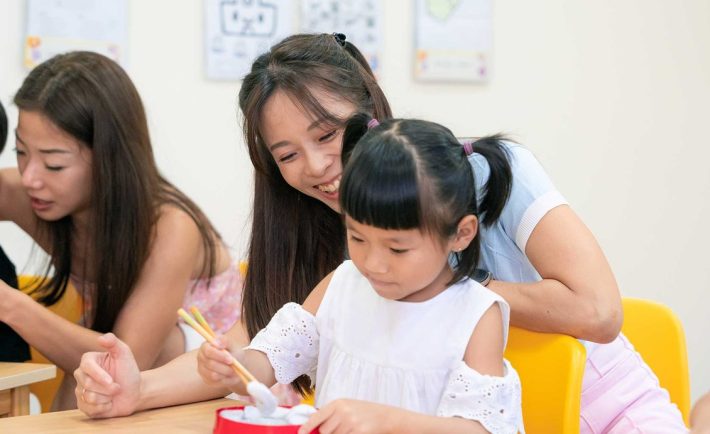
parent and child activity

When asked about brain training, the majority of parents would suggest trying Heguru and Shichida, right?

Well, we’re not talking badly behind their backs but our little red dot has other options too. There are power brain training centers for your little ones that are not just those two well-known names.

And we’re about to share with you 3 in this post. Keep reading!

Brainy Moves

Brainy Moves featured in the Straits Times

Website: brainymoves.org

Address: 90 Goodman Road, #02-53, Block M, Singapore 439053

Founded by James Tang, a formally trained PE and mathematics educator, Brainy Moves utilizes a pedagogy founded on principles of neuroscience, psychology, behavioral, and sports science to help students through novel activities and movements. 

Keeping a structured curriculum with low student-to-trainer ratios, Brainy Moves has successfully helped thousands since 2013 experience improvements enhancing academic results and quality of life, for those with different brain types or medical conditions.

Endorsed by Dr. John Ratey from Harvard Medical School, this program utilizes purposeful activities at a maximum 8 students to 1 coach ratio, for individualized training tailored to each student’s needs. Now in its 10th year, Brainy Moves continues empowering students through specialized exercises grounded in the latest research.

ThinkersBox

Website: thinkersbox.com

Address: North Bridge Centre & Tampines SAFRA

ThinkersBox takes a revolutionary approach to developing young minds. This isn’t your typical cram-and-memorize learning—it’s fun, ingenious brain training designed by experts. Kids work with an actual brain coach to build cognitive skills through engaging modules and activities, not repetitive drills.

Whether your child needs an attention boost or simply thrives on challenging the status quo, ThinkersBox offers programs to match. From their online brain booster to attention-boosting classes and more, they make learning exciting.

Not sure whether to commit the money? Why not give your child a 1.5-hour trial session and see their eyes light up as they strengthen neural connections in new ways? At ThinkersBox, kids don’t just get smarter—they become thinkers.

Don’t settle for the average when you can ignite your child’s mind. This is learning as it should be: challenging, rewarding, and designed to foster a lifelong love of thinking outside the box.

Happy Train


View this post on Instagram


A post shared by HappyTrain (@happytrainsg)

Website: happytrain.com.sg

Address: Chye Sing Building (Bugis) & CPF Tampines Building

Give your little one a head start on the road to success with Happy Train’s enriching early childhood programs. This premier learning center boosts the development of the right brain in young children, building the cognitive and social skills that will serve them well in life. 

Happy Train’s carefully crafted curriculum engages memory, attention, motor skills, and more through fun, hands-on activities. Their bilingual and immersion programs unlock the benefits of multilingualism, while specialized programs—including a pure Japanese enrichment course—promote learning in a stimulating, culturally rich environment.

With experienced teachers and a proven approach, Happy Train is your trusted partner in giving your child the developmental tools to thrive. Trial lessons are available at $70 to experience the magic of Happy Train firsthand. Why wait? Early childhood is a joyous journey, and Happy Train will guide your child to a brighter future.

As we close, we hope this post gave you more clarity on the other brain training centers in Singapore that are not Heguru or Shichida. Now, you’ve got a couple of more options to make your little ones even more garang in their studies, yeah? So check out those names mentioned above and see which one best suits your kid. It’s time to step up your parenting game.

Read More...

7 Common Money Mistakes New Parents Make

Managing family finances is an essential skill for young couples to master, especially those who are pregnant and parents for the first time. In fact, financial management not only affects the spousal relationship, but also directly affects the future of the children.

1. Splurging on Children’s Activities

Parents are often thrilled when their children find an activity that they both love and excel in. However, don’t make the mistake of letting your child’s newfound interest turn into your personal identity. While you may relish the role of hockey dad or dance mom, don’t put yourself on financially unstable ground to support your child’s endeavors. It’s one thing to spend thousands of dollars on your kids’ activities, but when you make a late credit card payment because of it or you carry a balance, you can be hit with additional thousands of dollars in interest.

2. Not Creating a New-Baby Budget

One of the most dangerous financial traps parents-to-be can fall into is underestimating the costs of having a baby. That includes the costs incurred before the birth, such as doctor visits and new-baby gear, the costs of the birth and delivery itself, and the expenses that come after, like diapers and baby essentials.

3.Lack of Agreement on Spending Habits and Plans

If a couple does not agree on spending habits and plans, one will always feel “upset” and “frustrated” with the other’s spending. You also can’t save money if your husband is always spending beyond his means. Therefore, the first thing to do is that you two need to agree on your expenses and the family’s savings funds. For example, if you plan to have children, you need to plan an emergency fund specifically set up for them, such as a life insurance package that will accompany your children from the womb to adulthood.

4.Buying Everything New
For some of you, it’s hard to imagine putting your pure, precious newborn into a hand-me-down stroller. But by the time that infant is a few months or years old, you may be kicking yourself for buying new gear.

“I definitely started out buying everything brand-new that I needed,” says Suzanne Brown, author of Mompowerment and a mom of two from Austin, Texas. “Over time I realized I could have borrowed some of the items, like a bouncer or a bathtub to bathe baby, or bought them second-hand. I wish I had started that approach earlier because many items you buy for age 2 and under are used very little.”

5.Thinking You Need Every Baby-related Gadget
Just because a baby item exists doesn’t mean you need it. When you see other parents’ gear, it can be tempting to get your baby the same developmental toy or play mat.

However, your kid really won’t know what they’re missing. While baby blogs and parenting sites may sing the proverbial praises of having a jumper, a play gym, and so on, most little ones are happy chilling on a blanket outdoors or on your living room rug. Save your funds for the toddler years.

6. Failure to Educate Your Children About the Value of Money

Children need to know about the value of money and how to save money from an early age. Depending on your child’s age, you can turn this into a fun game, so that he/she can understand and form the following ideas: Why do I have to save money? How can I save money?

7. Forgoing Available Tax Breaks
Having a child can offer some advantages at tax time for parents who are eligible to claim certain tax credits or deductions. Some of the tax benefits available to new parents include:

If you are a parent, you may be eligible to claim the Parenthood Tax Rebate of $5,000 for your first child, $10,000 for your second child, and $20,000 for your third and subsequent child. The child must be a Singapore Citizen at the time of birth or within 12 months thereafter.

Image Credits: unsplash.com

Parents with Singapore Citizen children enrolled in licensed childcare centres can receive a Basic Subsidy of up to $600 per month for full-day infant care, and up to $300 per month for full-day childcare.

Sources: 1, 2, 3, & 4

Read More...

Smart strategies to ease your child back to school after their week-long September holidays

primary school kids in a classroom

It’s mid-week already and that means the September school holidays are coming to an end and your kids have to go back to school soon.

Are you having a headache worrying about how your little ones can wake up early again and sit still in class?

After a fun-filled week of sleeping in, playing games, and watching cartoons, going back to school can be a rude awakening for any child. But no fear as we’ve got some tips to help ease your kid back into the school routine, minus the drama.

The importance of routine

To get the kiddos back into their school routine after a week of “all hell broke loose,” stick to their usual weekend schedules. Don’t let them stay up late and sleep in, or else you will surely kena war on Monday morning. More on that at the end of the article 😉

Another tip is to plan some activities over the weekend to keep them occupied. If you’ve been letting your kids just binge-watch shows and play games all day long, it’s time to arrange some meetups with school friends, do a craft project together, cook a meal as a family, or maybe play sports together. Keeping their minds and bodies active will make school feel normal again.

Also, it’s good to be positive about going back to school. Kids often take cues from their parents, so if you’re dreading the end of the holidays, they will too. Talk about seeing friends again, learning new things, and getting back into the swing of things. Your good attitude will rub off on them!

Creating a post-holiday plan

Come up with a structured plan for the first week back (this can be tweaked from their usual schedule). Cover homework time, after-school programs (if any), and rest time in the schedule. Let them know what to expect so they feel more at ease.

Keep bedtimes and wake-up times consistent. Enforce the usual school day routine so their body clock can adjust back. If they’ve been staying up late and sleeping in during the holidays, start shifting their schedule back a few days before school reopens. The earlier you start, the better it is.

Give them something to look forward to. Promise a small reward like playing at the playground or watching their favorite shows if they go through the first day back without issues. This little motivation can help make the transition less daunting.

Organize school supplies
primary school kids

Image Credits: sassymamasg.com

Go through your child’s school supplies (pencil case etc.) and make sure everything is in place. Having a well-stocked backpack will give your child confidence on the first day back.

You should also check if your child’s timetable or subject needs have changed. Some teachers may want students to bring additional stuff for the new term. Buy any necessary items ahead of school reopening so your child feels fully prepared.

Helping your child get into the habit of packing their bag the weekend before will make the transition less rushed. Make sure they have everything needed, like homework, workbooks, or stationery. Establishing good organizational skills from a young age will benefit them for life!

Help them get enough rest during the weekend before the first day back
  • Give them extra sleep

Allow your kids to sleep early this weekend before school starts. Having extra rest will energize them for the first day back and the rest of the week.

For primary school-going kids, aim for at least 10 hours of sleep per night. For teens, encourage them to go to bed by 10 pm so they can get 8 to 9 hours of shut-eye. The more ZZZs they get, the less cranky they will be on Monday morning.

  • Limit screen time and stimulation

In the evenings before school starts, reduce screen time, loud music, and rough play. Having a relaxing pre-sleep routine like taking a warm shower or reading a book will calm their minds and make it easier to hit the sack.

With some prep and planning, getting the kiddos back to school after their week-long break doesn’t have to be so painful. Start adjusting their body clocks a few days before and plan some fun back-to-school activities to hype them up. But be realistic, yeah; the first back-to-school day or two will still be rough, but if you’ve eased them back in small steps, things will be back to normal sooner or later. Jiayou, mummies and daddies!

Read More...

5 Training Tips When Hiring a Transfer Maid

happy mother and daughter

With the bustling pace of modern living in Singapore, maids have become an invaluable addition to many households. Maids are trained to handle a list of household responsibilities, from managing household chores to providing excellent childcare, allowing families to balance their professional commitments with the demands of daily life.

To ensure that the specific needs of every household are met, Singaporeans would often hire a maid through a reputable agency. These establishments don’t only have a large pool of foreign domestic workers, but they can also match their clients with highly skilled maids that fit their preferences. Moreover, maid agencies in Singapore will present their clients with a list of new and transfer maids. Each option has its own set of advantages, but transfer maids have been a popular choice for several compelling reasons.

Simply put, transfer maids are foreign domestic helpers who are looking to change employers. The reason behind this is usually because they are nearing the end of their current contract or their previous employers no longer require their services. What makes transfer maids appealing to many employers, however, is that they’ve already acclimated to life in Singapore. The total cost of hiring transfer maids is also quite lower than that of hiring a new one, because the expenses that are associated with their recruitment and relocation (e.g., airfare and agency fees) have been covered by their previous employers. Moreover, their prior work experience makes them knowledgeable about common household tasks, so they require less training. As such, they offer a smoother transition and quicker integration into the new household.

While hiring a transfer maid from a transfer maid agency in Singapore offers numerous advantages, you also need to be aware of potential challenges that can arise during the integration process. Even though transfer maids have experience working for Singapore employers for several years, they can still face adjustment issues that can affect their productivity and effectiveness. Fortunately, you can use the following training strategies to ensure that your transfer maid can get used to working in her new environment and satisfy your household’s needs.

Provide a Comprehensive Orientation

Conducting a comprehensive orientation will allow your transfer maid to familiarise herself with your household’s layout, daily routines, and specific rules. This initial training ensures that she will understand her responsibilities and can confidently navigate her tasks. A well-informed maid is more likely to adapt quickly and make meaningful contributions to the household’s operations. Moreover, a thorough orientation sets the foundation for a smooth integration process, reducing the chances of misunderstandings or mistakes.

Establish Clear Communication

You need to establish open lines of communication with your maid right from the outset. Encourage her to ask questions and provide feedback on her experiences as well. Regular check-ins also help maintain a comfortable atmosphere where concerns can be addressed promptly, leading to improved task execution and a sense of inclusion within the household. Moreover, effective communication builds trust, which is crucial for a positive working relationship and mutual understanding.

Include Task Demonstration with New Instructions

When delegating tasks, verbal instructions might not be enough for your transfer maid to understand her new responsibilities. As such, you should offer hands-on demonstrations to show your transfer maid the specific techniques and standards you expect them to perfect. A visual demonstration can also be especially helpful for tasks that require a certain level of precision or adherence to specific guidelines. This approach eliminates ambiguity and ensures that tasks are carried out to your satisfaction.

Set Boundaries

Set clear expectations regarding privacy and personal boundaries within the household with your transfer maid. You should tell her which areas are off-limits and teach them the importance of respecting family members’ spaces. This clarity helps prevent any potential discomfort and fosters an environment of mutual respect between your transfer maid and everyone in your household. Such boundaries also contribute to maintaining a harmonious household dynamic.

Consider an Employment Trial Period

Before you decide on hiring a transfer maid, you can initiate a trial period to assess her compatibility and performance. This period allows you and your transfer maid to evaluate if the arrangement aligns with your expectations and needs. During this time, you can provide your maid with consistent feedback and communicate openly about any adjustments required. A trial period mitigates the risk of committing to a long-term contract before both your household and your transfer maid are certain about your compatibility.

Thanks to their work experience and years of living in Singapore, transfer maids make excellent candidates for Singapore households looking for dependable foreign domestic helpers who can assist with and maintain the smooth flow of their daily routines. However, even though transfer maids are accustomed to the Singaporean way of living, they can still experience problems during the integration and adjustment periods. With these tips, you can help your transfer maid overcome these challenges and create an environment of mutual respect and understanding for a strong, positive, and long partnership.


Read More...