
How To Finally Stop Spending

Unfortunately waving a wand will not help you to cut down your spending. Instead, here are some practical tips that you may start with!

#1: THE 30-DAY RULE

When you spot a tempting item from the mall, wait until 30 days before purchasing it. Write it down on a list of pending items. When a month has passed, cross out the items that you are willing to skip on. The only exceptions to this rule are groceries and other fixed expenses.

#2: WORKING HARD IS NOT AN EXCUSE

How many times have you purchased an item that you “deserve”? Yes! You may be using your hard-earned money to enjoy finer things in life. However, hard work should not be an excuse to spend. Income does not automatically increase as your workload expands! Your budget must outweigh your work stress.

#3: PLASTIC IS NOT FANTASTIC

Leaving your credit cards at home is one of the easiest ways to stop spending. Equip yourself with the amount of cash that you are willing to spend in a grocery store or a shopping centre. You can only bring your card with you if you are planning to pay off an item through an installment plan.
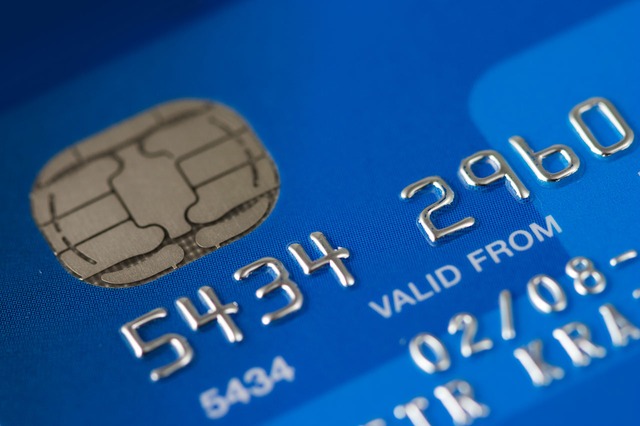
Image Credits: pixabay.com

Leaving these plastics behind will help you avoid the temptation of impulse purchases.

#4: SETTING SHORT-TERM FINANCIAL GOALS

As you alter your spending habits, setting realistic short-term financial goals is a great way to stay motivated. Having these goals will remind you of the reasons why you are making several sacrifices at the moment. It is important to be specific when it comes to thse goals as it will be easier to aim for. Instead of saying that you want to decrease your coffee budget, you may say that you will “decrease your monthly coffee costs from S$200 to S$100”.

#5: THE OPPORTUNITY COST

Lastly, re-frame your thoughts by looking at the brighter side of your goals. The technical term for this is opportunity cost. Opportunity cost is defined as “the loss of potential gain from other alternatives when one alternative is chosen.”

Image Credits: pixabay.com


Saving money and cutting back will give you an opportunity to reach your goals!

Sources: 1 & 2

Read More...

What Happens To Your Finances When You Die In Singapore?

Technically speaking, all the monetary value that the deceased left behind belongs to his or her estate. This estate includes bank accounts, investments, and properties. The only exceptions are the assets held in the trust and the individual’s CPF money.

All the assets will be frozen once a person passes away. The professional assigned to go through the departed’s Will is known as an executor. An executor is usually a family lawyer or a trusted relative. He or she applies to be granted probate, which is a court order empowering the executor to settle all the remaining assets.

Say that the deceased did not make a legitimate Will and has an estate of about S$50,000. The surviving family members may go to the Public Trustee for them to divide the assets according to the Intestate Succession Act.

Image Credits: pixabay.com

This is why it is recommended to write your own Will while you are still alive. In fact, a straightforward online tool that can help you with that is called the WillMaker. It costs about S$89.

WILL YOU BE LIABLE FOR THE DECEASED’S DEBTS?

After the funeral costs are sorted out, the executor will liquefy the estate to pay off the deceased’s outstanding debts. Outstanding debts encompass the unpaid taxes, mortgages, credit card bills, utility bills, and so on. When the court is satisfied with all the debt payments, the remaining assets can be distributed to the beneficiaries according to the Will.

You are fortunate to know that the surviving family members are not legally responsible for the debts left behind by the deceased in Singapore. A surviving family member will only be held liable for the debts, if they have a joint loan account with the deceased.

Image Credits: pixabay.com

Now, let us move on to the HDB flat left behind. HDB homeowners have a signed a mandatory insurance known as the Home Protection Scheme (HPS). This insurance protects families from losing their HDB flats in the event of death, total permanent disability, and terminal illness. HPS insures members up to age 65 or until the housing loans are paid.

Sources: 1 & 2

Read More...

Apple Company’s Most Expensive Fails

Despite how devoted you are to Apple and its products, your beloved company has its flaws. It is far from perfect! Even the most luxurious iPhone of all time has its decent share of criticism from its first buyers. Thus, this list will shed a light to its darkest paths.

1980: APPLE III

Imagine being instructed to lift and drop your computer about 6 inches to reset the chips that are coming out of the circuit board. It sounds ridiculous to perform this task at a time where Genius Bars exist. However, Apple III users were madly disappointed in the 80’s. You see, Apple III was plagued with hardware issues including faulty circuit boards and heating issues. The company had to recall every existing machine on the market (about 14,000 units). Then, the machine was re-marketed with new parts a year later.

1983: THE LISA

Every possible list of Apple flops will include “The Lisa”. Released in 1983, the Apple Lisa was known for being the first commercial computer to be sold with a graphical user interface and a mouse. The main drawback of this machine is its insane price-tag of US$9,995 (about S$13,700).

The steep price proved to be unreachable for many customers! It only sold 100,000 units before the model was discontinued. Furthermore, Apple released one of its most iconic products in 1984. This product is none other than the first Macintosh computer.

1993: MACINTOSH TV

The Macintosh TV was a failed product attempt that launched in 1993. On paper, combining a computer hardware with the experience of watching a television sounds like a great idea. However, they were not able to execute it well.

The Macintosh TV resembled a Macintosh LC 500 series computer with a TV tuner card. Users were able to hook it up to a cable line or an antenna. The major problem is: you cannot use the television while using the computer. As expected, Apple only sold 10,000 Macintosh TVs. The product was discontinued in three months time.

1993: NEWTON MESSAGEPAD

When your product gets mocked by a cartoon as popular as The Simpsons, you will realize what type of impact you evoke on your users. Take Apple’s Newton MessagePad as an example. The company’s take on the PDA was innovative, but it was pretty expensive. It retailed for S$700 (S$960) in 1993. Moreover, its handwriting recognition feature rarely works!

Image Credits: pixabay.com

When Steve Jobs returned in the late 90’s, he focused much of his energy on phones and tablets. You will see this pan out throughout the years.

Sources: 1 & 2

Read More...

Hottest Trends In Millennial Home Hunting

By year 2020, half of the global workforce will consist of Millennials. As they transcend to the top of the chain, it is important to know how they will spend their money on properties.

#1: IN WI-FI WE TRUST

Above all the hierarchy of needs, technology shines as a newcomer. It comes as no surprise that Millennials value convenience and connectedness. In fact, they are willing to pay more in order to secure their homes with smart technology. Smart technology includes electronic access, key-less locks, security cameras, voice-activated assistants, and so on. Having the ability to control your home from a smartphone is something that appeals to many buyers of this generation.

#2: HOME IS WHERE THE GREENS ARE

Eco-living has been trending nowadays as many people encourage zero waste. Vast majority of Millennials identify themselves as environmentally-conscious individuals who prefer to lead a sustainable lifestyle. This philosophy extends to their homes.

Image Credits: pixabay.com

For instance, they may opt to use Nippon Paint Odour-less or Nippon Paint Aqua Bodelac for its low volatile organic compounds (VOCs) content. VOCs are believed to cause many physical reactions to one’s body. Aside from this, they may opt for energy-efficient appliances.

#3: VERSATILITY IS KEY

Open interior layouts with less walls or partitions attract the Generation Y. You see, these open layouts allow them to socialize and to live freely. Moreover, they use one room in a variety of ways. The living room can double as a dining or a gaming room. They redecorate whenever possible.

#4: SIZE DOES NOT MATTER

When it comes to purchasing their nests, size does not matter for Millennials. Since they prioritize convenience over space, they are willing to sacrifice by living in small flats. They prefer locations closer to their offices or the public transportation modes.

#5: HERE FOR THE LONG RUN

People from Gen Y tend to purchase properties later in life. Flexible long-term payment schemes are seen as a safer option rather than paying upfront. You see, they want to live a life in their own terms.

Image Credits: pixabay.com

They do not want the responsibility to hinder them from pursuing their passions!

Sources: 1, 2, & 3

Read More...

Surefire Ways To Avoid Maximizing Your Credit Card

Though created differently, all credit cards have a limit. The credit limit dictates the maximum amount an issuer allows a borrower to spend on a single card. Ideally, your balance should fall below the limit. You see, maximizing your credit card can hinder you from making additional charges.

Employ these tips to ensure that you spend less than your credit card limit.

#1: TRACK YOUR SPENDING

It goes without saying that awareness of your spending habits will help you control your credit card usage. Monitor your billing statements by checking your balance in the bank’s online app or website. Staying on top of your spending will help you foresee any event leading up to going beyond your limit. Thus, you must adjust your expenses accordingly.

#2: CHECK YOUR BALANCE REGULARLY

Before making a purchase, check your available credit balance using your bank’s mobile app. If your credit card issuer does not have an online app, call the bank instead. You can find the contact details at the back of your plastic card.

Image Credits: pixabay.com

Doing so lets you determine whether you should postpone your purchase or to pursue the checkout counter on the spot.

#3: DO NOT INCREASE YOUR LIMIT RIGHT AWAY

Say that you have been constantly spending beyond your credit card limit. You may think that the logical step to take is to ask for a limit raise. However, asking for a limit raise within six months of receiving it can indicate that you are having financial difficulties. Issuers may be less willing to trust you with more credit.

Waiting for bank to automatically increase your credit limit is the best option. This way, you will be able to employ strategies dedicated to spending within your means.

#4: STICK TO THE THIRTY PERCENT

The easiest way to stay within your credit card limit is to provide a cushion. Keeping a cushion of about 30% of your actual credit card limit helps you avoid going overboard. For instance, Mary has a credit card limit of S$5,000. She must not swipe her card after hitting the S$3,500 mark.

Image Credits: pixabay.com

This threshold must apply to all of your credit cards and not just the banks you owe huge money too.

Sources: 1 & 2

Read More...