
4 Tips to Deal with Debt When Married

“Home life ceases to be free and beautiful as soon as it is founded on borrowing and debt.” – Henrik Isben

One of the most common issues that individuals bring into a marriage is debt. Money is high on the list of topics that couples fight about, and it is the among the top reasons why couples get divorced. Financial issues increase marital discord and stress.

If you are worried about marrying someone with debt, you must realize that you can help each other out. You are a team!

#1: BE TRANSPARENT ABOUT YOUR DEBT

Be honest about your debt situation. Hiding debt from your spouse before the wedding is simply a horrible idea. Your partner needs to know your economic situation and vice versa. You can only make shared decisions after talking about money.

#2: CREATE DECISIONS AS A TEAM

Married individuals have many financial arrangements to make. After discussing your pre-existing debt, decide how you will move forward together. Consider the following questions:

a. How will each partner contribute to the household bank balance?
b. Are you going to combine assets by opening a joint account?
c. What kind of investments will you make?
d. How do you plan to tackle previous debt?

#3: SET A MONEY DISCUSSION NIGHT

The key to surviving marriage and debt is to set a budget as a team. Find a quiet place and sit down for a discussion before next month begins. It may seem like a simple solution, but it is the answer to many money issues in marriage.

#4: NEVER PLAY THE BLAME GAME

Once you are married, you must work together to eliminate your debt. “My” debt turns to “our” debt. Having this perspective creates a significant difference.

an asian couple arguing

Image Credits: Asia Wedding Network

#5: CONSIDER PERSONAL LOAN TO RELIEVE SOME FINANCIAL BURDEN

Prudent use of personal loans can save you more in the long run, especially if you’re currently saddled with severe credit card debt or are facing a financial emergency that could wipe out your savings. Ultimately, the only way to prevent bad debt from snowballing is to have the discipline to control your spending until your loan is repaid. If you find yourself in any of the above situations and are looking for a personal loan to help relieve some of your financial burden, be one of the first 2 applicants daily to have your 1st year’s interest (up to S$550) covered by SingSaver. Click here to learn more. Offer until 21st Mar 2022. T&Cs apply.

Stick to the plan and motivate each other. Living without debt is not easy, but it is worth it.

Sources: 1 & 2

Read More...

6 Savvy Financial Tips for Young Adults

Managing finances can be challenging, especially when you are navigating through different conflicts such as budgeting with an entry-level salary or carrying a hefty student loan debt.

Focusing on the fundamental financial strategies will enable you to strengthen your financial position. Work towards achieving your goals and financial success with these savvy tips.

#1: ESTABLISH YOUR EMERGENCY FUND

The importance of building an emergency fund has been the subject of many financial articles. After all, it is one of the most vital financial tasks that you can accomplish as a young adult. An emergency fund is a pool of money that you can earmark for unforeseen expenses.

When unexpected life events occur, the emergency fund acts as a cushion for your finances. For instance, you can use your emergency fund to pay for expenses that come with sudden job loss or appliance breakdown. The amount that you will save depends on the stability of your job, the debts you have, and your income. Experts recommend saving about six months’ worth of living expenses. You can allot at least 2% of every paycheck to accumulate this amount.

#2: GET BASIC HEALTH AND LIFE INSURANCE

Financial literacy involves understanding how to prevent and manage financial issues as they arise. To help you deal with unexpected expenses, you may get yourself insured. Educate yourself about the different insurance products available on the market right now.

Get yourself insured while your premiums are low (i.e., mainly due to your age). If you have dependents, consider getting term insurance to protect them in the event that you become permanently disabled or you pass away.

#3: KNOW WHERE YOUR MONEY GOES

Stay on top of your budget plan by knowing where your money goes. Ensure that your expenses do not exceed your income. As you may be earning with a starting salary, keeping your recurring monthly expenses low can save you significant money over time.

Once you see how the cost of your morning coffee or take-away dinner adds up, you will realize that making small changes to your daily expenses can have a big impact on your financial situation.

#4: PAY OFF THE CREDIT CARD BALANCES

Searching for the lowest interest rates when comparing loan terms can help you save a substantial amount of money over time. You can pay off your credit card balances each month, so you do not get trapped by the interest charges. You can look for a credible expert such as a credit counselor if necessary.

#5: MAKE INFORMED FINANCIAL DECISIONS

Examine your personal needs and goals. Make informed financial decisions by studying the potential outcomes of your options. There are trade-offs between your short-term and long-term goals. For instance, purchasing a car can impact your savings for retirement.

Therefore, you must invest in items that will improve your earning abilities. You can invest in a good suit, an educational advancement, and a set of electronic devices to help you in your job hunting.

#6: LEARN SELF-CONTROL

As a young adult, learning the art of delayed gratification is easier said than done. However, personal finances are easier to manage when you have self-control.

Effortlessly purchasing an item on credit is possible, but the best step is to wait until you have saved up enough money for your purchase. Do you really want to pay interest on a pair of designer shoes?

Image Credits: unsplash.com

Please do not carry more cards than you can keep track of. This savvy tip is crucial for creating a healthy credit history.

Sources: 1 & 2

Read More...

6 Cheap and Entertaining Daytime Activities in Singapore

Living like a Crazy Rich Asian in Singapore can be exhausting, especially for your wallet. While it does not hurt to indulge in the luxuries of life occasionally, you can pay close attention to budget-friendly activities that will bring you excitement.

From eating for cheap to going on nature trips, here are some daytime activities* that you can explore without breaking the bank!

(*As a friendly reminder, please visit the website of these places first before heading down for a trip because the COVID-19 restrictions are ever-changing.)

#1: UNLEASH YOUR INNER SKATER

It may be hot outside, but it is ice-cold wonderland inside the Rink. Get your skate on with your friends or your date in Singapore’s first and only Olympic-sized ice-skating rink!

Apart from opening its doors to the public, The Rink hosts events and international tournaments. These tournaments include figure skating, ice hockey, and ice curling. As a beginner, you may want to use their skating aids such as the Bambi. This experience will only set you back by S$18 for two hours for adults and S$16 for two hours for children.

Image Credits: facebook.com/therink.sg

Address: JCube, 2 Jurong East Central 1, Singapore 609731
Website: therink.sg

#2: ROW YOUR BOAT

Pasir Ris Park is a peaceful stretch of coast with thriving flora and fauna. You and your loved ones can buke along the designated pathways or rent kayaks from the Ohana Beach House. The rates in Ohana start from S$12 per hour for sit-on-top kayaking and S$14 per hour for sea kayaking. People who love to highlight their balancing skills can opt for the stand-up paddleboards, which start from S$15.

Image Credits: facebook.com/Adventurepaddlers

Address: 131 Pasir Ris Road, Singapore 519148
Website: adventurepaddlers.com.sg

#3: GO ON NATURE WALKS

One of my favorite places to visit for nature walks is the MacRitchie Reservoir Park. Its pleasing aerial walkway called the Treetop Walk will give you a bird’s eye view of the forest canopy.

Image Credits: nparks.gov.sg

With so many scenic spots, MacRitchie is an excellent destination for people who love the outdoors.

Address: MacRitchie Reservoir Park, Singapore 298717
Website: nparks.gov.sg

#4: APPRECIATE DIGITAL LIGHT ART

Embrace the boundaries of physical space as you enter the Digital Light Canvas in Marina Bay Sands. Witness a school of fish gathers in the ocean beneath you or paint calligraphy as you watch flowers blossom before your eyes.

What’s more? You can celebrate special occasions with your family or significant other by requesting a display of personalized messages. This message will appear on the LED floor in beautiful calligraphy.

Image Credits: marinabaysands.com

This digital art event is open daily from 11 am to 9 pm with tickets being sold for about S$5. Children under 2 years old and “Future World: Where Art Meets Science” ticketholders can visit this for free.

Address: 10 Bayfront Avenue, Singapore 018956
Website: marinabaysands.com

#5: TAKE FEED-WORTHY PICTURES AT MUSCAT STREET

Amp up your feed by taking Instagram-worthy pictures at Muscat Street. This vibrant neighborhood has more to offer than its stretch of cafes and bars. You see, the back alleys of Muscat Street double as an outdoor art gallery. You will come across mural artworks and paintings by local artists.

Image Credits: asiaphotostock.blogspot.com

Feel free to either get in front or behind the camera as you take artful snaps!

Address: Muscat St, Singapore 198833

#6: SAVOR THE FLAVORS OF HAWKER FOOD

Maxwell Food Centre is lauded by both locals and tourists as the place to go to if you want to taste the magnificent flavors of Singaporean food. Home to a myriad of food stalls that champions different dishes from Nasi Lemak to Hainanese Chicken Rice, Maxwell Food Centre remains to be a favorite for the lunchtime CBD crowd.

In fact, celebrity chefs Gordon Ramsay and Anthony Bourdain were impressed by the Tian Tian Hainanese Chicken Rice. Fill your stomach with this dish and other dishes that cost less than S$5 a pop.

With these budget-friendly and exciting activities around the island, your date or family will surely have an amazing day to remember!

Address: 1 Kadayanallur St, Singapore 069184

Sources: 1, 2, & 3

Read More...

Have You Heard About the Debt Snowball Strategy?

WHAT IS THE DEBT SNOWBALL STRATEGY?

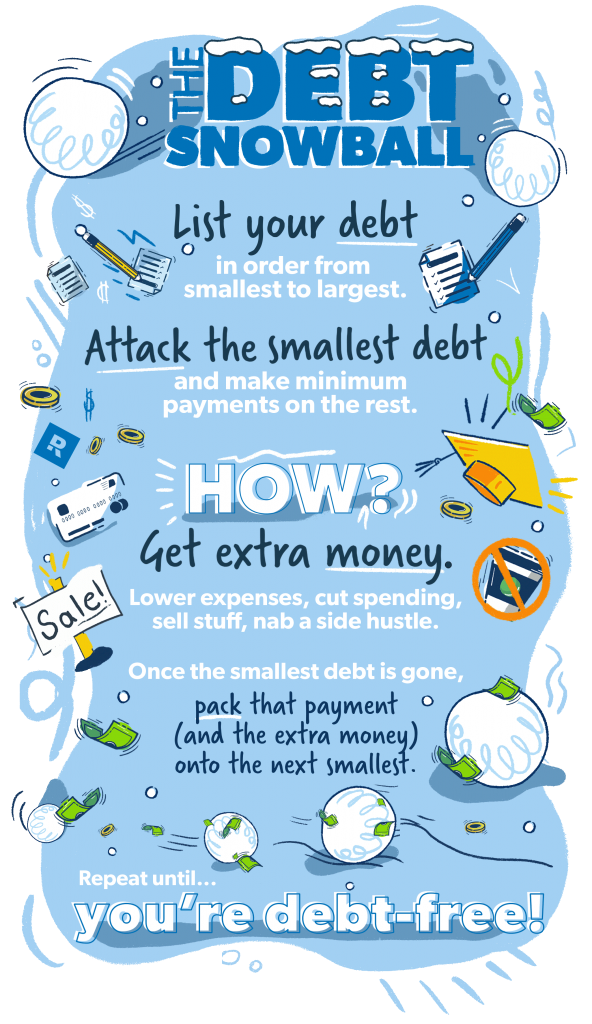
Popularized by personal finance author Dave Ramsey, Debt Snowball is a strategy used for paying down debts. It focuses on paying off your smallest balance first before moving to the larger ones. The person lists down all his or her debts and categorizes these debts from smallest to largest. Money will then be allocated to pay off the smallest debt first, while making only minimum monthly payments on the other debts.

This strategy would not save you as much interest as the Debt Avalanche, but it can help you stay on track in your debt repayment journey.

HOW CAN YOU GET STARTED?

List down all your debts to get started. Then, gain momentum as you knock out each remaining balance. When the smallest debt is paid in full, you will move your efforts toward the next smallest debt on the list. To illustrate, here are the steps:

Step 1: Write down all your debts from smallest to largest, regardless of its interest rate

Step 2: Make minimum payments on all your debts except for the smallest debt on your list.

Step 3: Pay as much money as you can on your smallest debt. This is going to be your priority.

Step 4: Repeat the process until each debt is paid in full.

HOW CAN I APPLY THIS STRATEGY?

Let us imagine that you can afford to put aside S$1,000 every month to pay off your three sources of debt: S$30,000 worth of student loan debt (minimum monthly payment of S$500), S$5,000 worth of car loan debt (minimum monthly payment of S$100), and S$2,000 worth of credit card debt (minimum monthly payment of S$50).

Using the Debt Snowball strategy, you would spend a total of S$650 to cover each debt’s minimum monthly payment. You would then put the remaining S$350 toward the credit card debt because it is the smallest on your list.

Once the credit card debt has been fully paid, the extra payment will go towards your second-smallest debt. At some point, you will be able to clear up your car loan and focus all your money on eliminating your student loan. Like a snowball, each paid-off debt frees more cash to get rid of the remaining ones.

WHAT ARE ITS ADVANTAGES AND DISADVANTAGES?

Its advantages include increasing your motivation and easing your implementation. Paying off three or more debts can seem more manageable if you break it down into smaller pieces. You see, you can get frustrated with the repayment plan if you focus all your efforts on the largest debts. Furthermore, this strategy is easy to implement. You do not need to compare the annual percentage rates (APRs) for all your debts or to tackle deeper into the terms and conditions. You simply need to know the balance owed and its minimum monthly payment to categorize each debt.

On the other hand, its disadvantages include issues in time and interest. Since this strategy focuses on repaying debts according to the balance, it may take you longer to pay off your debts. Interest can be another factor because you are prioritizing balances over APRs. Remember, you could end up paying more money in interest over time.

WHAT ARE THE KEY TAKEAWAYS?

The Debt Snowball Strategy helps you pay off debts by focusing on your smallest balance before moving on to the remaining ones. You will always pay the minimum on each of your debts, except on your smallest debt. This strategy cannot save you as much interest as the Debt Avalanche, but it can help you stay motivated.

Prudent use of personal loans can save you more in the long run, especially if you’re currently saddled with severe credit card debt or are facing a financial emergency that could wipe out your savings. Ultimately, the only way to prevent bad debt from snowballing is to have the discipline to control your spending until your loan is repaid. If you find yourself in any of the above situations and are looking for a personal loan to help relieve some of your financial burden, be one of the first 2 applicants daily to have your 1st year’s interest (up to S$550) covered by SingSaver. Click here to learn more. Offer until 21st Mar 2022. T&Cs apply.

Image Credits: ramseysolutions.com

If you need professional help when it comes to managing your debt, you can seek assistance from a credit card counselling organization such as the non-profit organization called Credit Counselling Singapore (CCS).

Sources: 1, 2, & 3

Read More...

Why are IKEA stores designed like a maze?

You start off with good intentions and a robust shopping list in your hands. You walk in with a purpose and determination to beautify your home. However, it only takes a few minutes, and you are distracted with other items that you can put inside your shopping bag. You feel lost in the maze of IKEA. And this happens every time!

Budget furniture giant IKEA lets its shoppers experience the journey of walking into labyrinth of furniture and home décor, and typically they walk out with more than what they anticipated.

Why is this so?

#1: TO ENCOURAGE IMPULSE SHOPPING

IKEA’s confusing layout delays the completion of the shopper’s list. It is designed to stop you from leaving. This emotional process disorients and dissociates shoppers from the outside world.

When they eventually figure out the space and start buying, shoppers feel licensed to treat themselves. By the time you find the stool that you are looking for, you will end up being so impressed by how cheap the table lamp is and end up getting it too. Alan Penn, a professor at University College London, said that this results in impulse buying.

#2: TO CREATE A WALK-THROUGH CATALOG

IKEA said goodbye to its printed catalogs after seven decades of publishing, but it does not mean that you cannot witness its pages in real life. Apart from delaying the completion of a shopper’s mission with its confusing layout, IKEA found a way to spend more time with its shoppers through its interactive spaces.

“Historically, we wanted the flow of our stores and presentation of the products to appear in the same way as they would in a catalog,” said Mr. Marcus Engman, the Chief Creative Officer for Ingka Group.

Image Credits: unsplash.com

#3: TO OVERWHELM YOUR SENSES

Consumer Psychology expert Paul Harrison highlighted that IKEA’s layout overwhelms the senses to stop shoppers from thinking about time and space. According to him: “We’re not very good at imagining. We look to others for ideas and IKEA’s store layout helps you imagine your ideal life, how life could be.”

Cognitively, shoppers are not able to control their behavior and responses because they become more emotional. These emotions cascade to the process of building its products. You see, the furniture’s self-made concept provides shoppers with a sense of achievement.

#4: TO TRY NEW THINGS

Despite its popular maze-like layout, IKEA tried out other store formats last year. It tested two new formats to explore how physical locations can remain relevant in the age of e-commerce and amidst the pandemic.

Ingka Group, which operates most IKEA stores, reopened a location in Shanghai to test its new format. This format provides shoppers with other activities aside from shopping. Showrooms were introduced alongside a theater-like space where shoppers can hangout, a restaurant with sustainable food, and a Maker’s Hub where staff can help shoppers repair old items. This store represented its second test store.

Image Credits: unsplash.com

Can IKEA still amaze its shoppers even without its signature maze? Let’s see what the future of IKEA holds!

Sources: 1, 2, & 3

Read More...