Johor chief minister says they will put in “more effort” to reduce COVID-19 cases for Singapore to consider border reopening

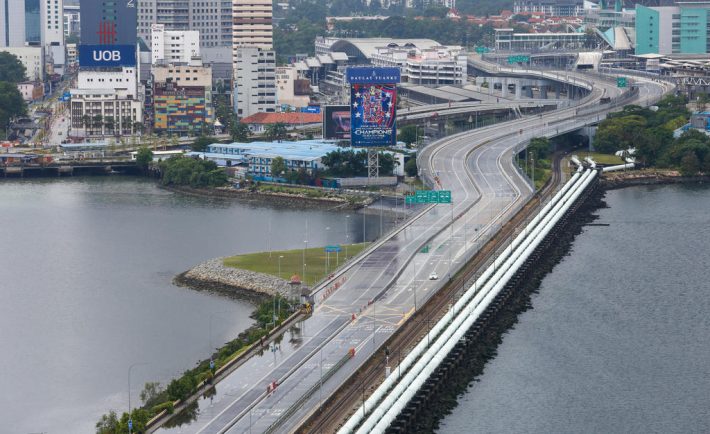
Empty Singapore Johor border

Johor chief minister Hasni Mohammad has noted on 31 May that Singapore and Malaysia have put talks to reopen cross-border travel on hold. This is due to the pandemic situation in Malaysia.

Following the recent news report, our neighbouring country has also entered a two-week “total lockdown” from 1 June.

“This decision was made after taking into account the current situation of COVID-19 transmission in Malaysia with daily case numbers exceeding 8,000 and active cases exceeding 70,000,” read a statement issued by the Prime Minister’s Office (PMO).

“More effort” needed to reduce Johor’s COVID-19 cases

Mr Hasni remarked that Johor has always been a city contributing to Malaysia economy. Thus, activity in the capital of the Malaysian state of Johor must resume as soon as possible.

“We just have to make sure that more effort is being put towards reducing the number of cases in Johor. And I believe once the number is reduced to an acceptable level, Singapore will consider our request to reopen the borders again,” adding that the ball is in their court now.

Vaccination priority: Malaysian “economic frontliners” in Singapore

The Johor state government is planning to tackle the COVID-19 numbers by accelerating the vaccination of its residents.

According to the ImmuPlan Johor initiative, 100,000 residents will be on the priority list for vaccination. These chosen ones would be “economic frontliners” working in Singapore and individuals intending to resume cross-border work commuting.

It seems like Johor is on track in their initiative, with around 70,000 people qualifying. This group of people will likely receive their Pfizer-BioNTech COVID-19 jabs next month onwards.

Johor eager to acquire vaccines from our tiny red dot

COVID-19 vaccines

Image Credits: health.harvard.edu

The chief minister also said that Johor is in talks to secure their vaccines through various channels, including Singapore.

“I was made to understand, from some vaccine suppliers… about their willingness to supply (to us). But they are tied to the understanding they will have to give priority to the country’s requirement first,” commented Mr Hasni.

He has also expressed keenness in working with Temasek Foundation again to up the supply of vaccines in Johor. As most of us already know, Temasek Foundation is a Singapore-based non-profit organisation. 

Previously in March this year, Temasek Foundation had planned to distribute 7.5 million face masks across 260 vending machines with a total worth of RM 25 million (S$8.04 million), to aid Johor in its COVID-19 fight.

“So, maybe from the foundation’s perspective, it is more of charitable work. But I suppose if it is on an understanding that can be developed to manage, control or reduce the number of positive COVID-19 patients, then why not?” Mr Hasni asserted.


Read More...

3 critical characteristics why Elon Musk is where he is now

Elon Musk giving an OK sign

Do a quick search on Elon Musk, and you will find all his significant achievements:

  • Co-founder of PayPal
  • CEO, founder, and chief engineer at SpaceX
  • CEO, product architect, and early-stage investor of Tesla

The 49-year-old, who will turn 50 on 28 June, is one of the world’s wealthiest persons. Putting aside his settlement violations of tweets not yet approved by his company lawyers, there are good things we can learn from this man.

Here are the three critical characteristics of why Elon Musk is where he is now.

#1: Not taking “no” for an answer

Do you know that Musk once challenged his professor to change his score to 100 after receiving 98 for one of his tests? Most of us wouldn’t even bother doing so since 98 isn’t that bad a scorecard and wouldn’t make much of an overall difference.

But to Musk, it was all that mattered. To cut the long story short, he managed to convince his professor and got what he pursued. Not taking “no” for an answer was all that led him to get that perfect result.

Remember, ask, and you shall receive. Seek, and you will find.

#2: Having an undying focus

Cambridge dictionary defines focus as “careful attention that is given to something such as a task, or the ability to give your full attention to something”. The adjectives “careful” and “full” highlight what it means to focus.

Musk’s undying focus had him sleep under his desk and go through 75-hour work weeks just to solve a specific problem during Tesla’s founding stage. He placed distractions aside, gave his urgent tasks clear-cut attention, and we all get to see where Tesla is at right now.

#3: Allowing his passion to fuel

Have you ever walked into an interview where the interviewer told you that passion is everything? Yes, that could be a justification for the low starting salary they are offering. But there’s some truth to the interviewer’s statement.

Most of us will find it hard to sustain a project if we lack interest. Musk’s passion in his field was what fueled him to work late-night shifts and clock long work weeks. Think you can’t find a job that motivates you to wake up early each day? Think again.

Final thoughts
a stressed woman in front of her laptop

Image Credits: health.harvard.edu

We know success doesn’t come by easy. To be as triumphant as Elon Musk? Even way more challenging. If you’ve read the above vital characteristics, you will probably realise that they are pretty intense.

The last thing you want to do in your entrepreneurship journey is to suffer burnout and call it quits. Or worse still, force your team members to leave. Learn to find that right balance and co-live with stress and anxiety so you can continue running the race for a long time to come.

Read More...

Try meditating to beat stress and anxiety

a woman meditating

Way before the pandemic started, stress and anxiety have been around for a long time.

People from the past may have led simpler lives, but that doesn’t mean the absence from pressure. That is why meditation is said to have originated from around 1500 BCE in India.

All of us cope with stress differently. For some, it may be engaging in a physically exhausting activity and just sleeping it off. While for others, maybe it is to draw away from the crowd to find some quiet time.

If that is you, how do you spend your quiet time? Do you tend to overthink things and get more anxious with every passing minute? Perhaps you have heard of meditation but haven’t gotten started yet. The good thing is that it’s not that difficult to begin.

“You don’t need equipment, you can do it from your home, you don’t need anyone else,” said Luke McLeod, the founder and teacher at Soul Alive. Ready to kickstart your journey to relaxation? Allow us to share with you these five simple steps.

#1: Find your safe space

While your home can be the quickest place to get started on meditation, it’s not the only option. This is the case especially with noisy neighbours or crying kids at home. But wherever that safe space might be, put on your noise-cancelling earbuds with meditation music and close your eyes to relax.

#2: Release tension

Tension and relaxation aren’t best friends. Peeps who find it hard to keep your eyes closed, it’s time to release stress from your body. If you’re lying down on a mat, you can do so by rolling your shoulders back and turning your head from side to side slowly.

#3: Focus on breathing
a shirtless man meditating

Image Credits: mensvariety.com

The idea here is to take three rounds of long and deep breaths. The cycle can start with a steady rush of air to your lungs for eight counts. Then, hold your breath for another eight counts before releasing it for another eight.

After you’re done with the three rounds, breathe normally. Now’s the time to focus on your next breathing exercise. By that, we mean every slight minor sensation from the moment the air enters your nostrils to the temperature change as it goes into your lungs. Feel your belly expand and repeat this routine eight times.

#4: Shift your focus

As you continue to breathe normally after the previous routine, shift your focus from your breathing to the different parts of your body.

You can start introducing energy to your body by wiggling your toes, contracting your calve muscles, and your butt. Then begin to move your fingers, shoulders, and turn your head from side to side to warm up your neck.

#5: Take time to be thankful

Your body should be recharged as we enter the final stage. But before you get up and go about your daily routine, take time to be thankful. With your eyes still closed, think of someone or something you are grateful for.

Put on a smile as you slowly open your eyes. If you’re lying down, roll to your left side and place your right hand on the floor as you push yourself up with the help of your left elbow. Lefties can feel free to roll onto their right side.

Take a little stretch before you get moving, and remember to schedule your next meditation session!

Read More...

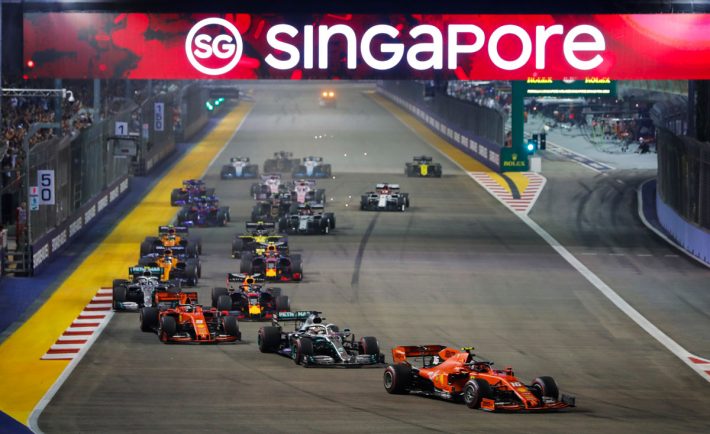
Should Singapore stop hosting the F1 Grand Prix amid COVID-19?

F1 Grand Prix Singapore

About 13 years have passed since Singapore first hosted the Formula One (F1) Grand Prix in 2008.

Do you know that it took about S$150 million for Singapore to host the first night race? The government paid about 60% of the total amount in hopes that the three-day event would bring in S$100 million in tourism receipts.

Though the inaugural race has welcomed high-profile attendees like the former heads of Sony, Lenovo, and Royal Bank of Scotland, the question remains – should Singapore stop hosting the F1 Grand Prix amid COVID-19?

Not as financially glamorous

According to the Singapore Tourism Board (STB), the race attracted 450,000 international visitors and was potentially exposed to 780 million worldwide by 2017.

However, the overall financial figures aren’t that promising. Averaging out the S$1.4 billion in incremental tourism receipts over the past 11 races, Singapore has only managed to secure S$130 million a year. In other words, the spending outweighs the “income”.

Furthermore, interest in the sport has also seen a downward trend. To give you an idea, it had dropped from 600 million global viewers in 2008 to 350 million in 2017. The latest numbers stood at 433 million in 2020.

Our sunny island’s not alone
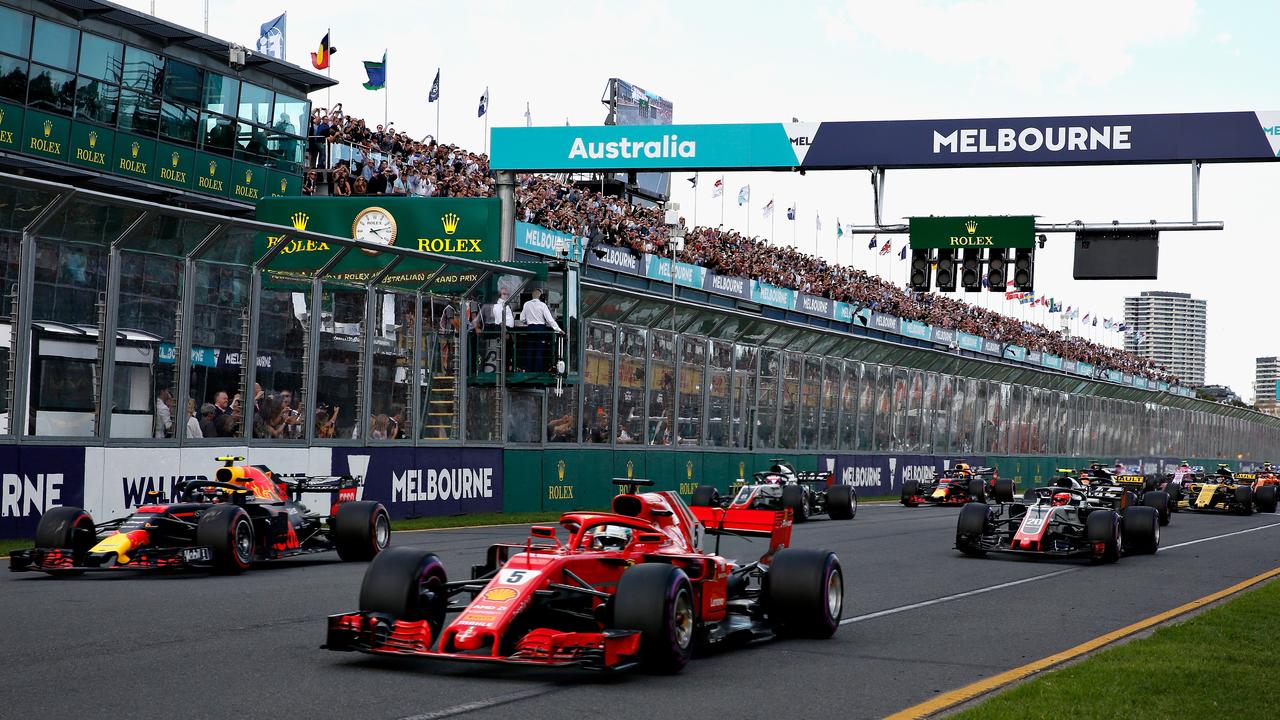
F1 Grand Prix Melbourne

Image Credits: heraldsun.com.au

Other than Singapore, other host cities aren’t benefiting financially, too, from the F1 Grand Prix. India and South Korea opted out after hosting for three and four years respectively in the 2010s. Our neighbour, Malaysia, the second Asian nation to host the race in 1999, stopped in 2017. 

Honestly, who wouldn’t, considering the high costs to organise the event but declining attendees?

Even Melbourne, which has hosted the race for 14 years, faced a loss of A$41.3 million (S$42.46 million) in 2007. But still, the visibility and tourist arrivals have kept the coastal capital going for over a decade.

Hosting amid COVID-19

Bringing our focus back to Singapore, what are your thoughts on Singapore hosting the F1 Grand Prix amid the pandemic? Based on the circuit schedule, the next race in Singapore will be on 3 October this year.

If you’ve been following the news, you would have known that significant events have been cancelled recently. This includes the Singapore open badminton tournament, the annual Shangri-la Dialogue, and the World Economic Forum. Would the F1 Grand Prix follow suit?

Maybe it’s a good time for the authorities to weigh the benefits of any tourism receipts compared to the potential risk of another wave of COVID-19 infections if more visitors are allowed into our tiny red dot because of the night race.

A luxury sports entertainment event during uncertain times? Is it really a good idea?

Read More...

Quick time management tips for 9 to 5 workers looking to run a side business

a woman working from home

So you want to run a side hustle or maybe already in the process of starting one?

A 9 to 5 life can be tiring if you’re bogged down by tasks from the moment you clock in for work to the second you sign off. But for those who are not so busy during weekdays, you will probably find it easier to allocate time on earning extra income outside of your full-time job.

But still, without proper time-management routines, it is possible to side-track to do something else after you knock off from work. If that is you, keep reading for some quick tips to find time to run your side business.

#1: Seek helping hands

Most start-up owners would rather begin the journey doing everything by themselves. Yes, it helps save on costs but ask yourself if you can do so for the long term. Chances are, you might get burned out while holding onto a 9 to 5 job.

Weigh the consequences over the long run, and you will see that it makes sense to find helping hands to run your business. Whether it’s a freelance graphic designer or a part-time IT personnel, outsource if you want to keep running this race.

#2: Group existing tasks

No, we’re not referring to multi-tasking. For folks who have ever multi-task or at least attempted to, you will quickly find that your mind is all over the place. Rather than doing five things at one go, a more intelligent way is to group existing tasks.

For example, if you’re cooking porridge for the family on Sunday, why not go for a bigger pot so it can last you till the end of the new work week? Also, instead of mindlessly scrolling via social media, listen to some business-related podcasts on your way to work.

#3: Set work appointments

When you set work appointments, be sure to pen it down somewhere. For individuals in the early stage of their side hustle and just working with one other person, maybe you can stick to Google calendar to map out your schedule.

But if you’re working in a team, maybe an application like Asana would help set and track work tasks and projects. The idea here is that you schedule specific blocks of time to complete your to-do list rather than postponing it indefinitely.

Final thoughts
a man drinking coffee in front of his laptop

Image Credits: unsplash.com

You’ve often heard people telling you to push your limits. While it’s good that you work hard towards success, remember that you’re only human. Having a full-time job comes with responsibilities, and it’s okay to take time off your side hustle when necessary.

If you’ve stayed on schedule during weekdays, then why not take a “half-day leave” on weekends to refresh your mind? While earning that extra money is essential, it’s not everything in life. Balance is crucial so learn to rest up if you need to.

Read More...