The S$1 Million Dream: Can You Retire at 50?

For some Singaporeans, the dream of financial independence is not just a distant fantasy but a tangible goal. A recent survey conducted by CIMB Singapore in collaboration with the Nanyang Centre for Marketing and Technology reveals that 63% of respondents aim to achieve financial freedom between 40 and 60 years old. More than half believe that reaching at least S$1 million would free them from financial worries, and nearly three-quarters consider this target realistic. Yet only 43% feel confident in their ability to manage finances effectively to reach this milestone.

The study, which gathered insights from over 500 residents aged 26 to 60 in December 2024, also highlighted the anxieties that accompany these aspirations. Among those aged 40 to 50, 47% report feeling often or always anxious about their financial future. The obstacles are familiar: high living costs, family responsibilities, and limited income streams. Surprisingly, gaps in financial literacy persist. While insurance ranks among the top three tools for building wealth, alongside savings and stocks, 39% of respondents remain unsure of its effectiveness as an investment vehicle.

Image Credits: unsplash.com

Financial analyst Albert Tan suggests that early and disciplined planning can turn this dream into reality. A 25-year-old aiming to retire at 50, investing $1,000 monthly with annual increases of 3%, could potentially accumulate over S$1 million by their target age, assuming a 7% annual return. Tan notes that this approach does not account for other life priorities such as property purchases or family expenses, and relies on consistent wage growth, which is not guaranteed for everyone.

CPF savings remain a critical pillar in the retirement plan. Securing the Full Retirement Sum in a CPF Special or Retirement Account by age 55 could provide a reliable monthly payout of around S$1,700 from 65, supporting long-term financial stability.

Image Credits: unsplash.com

Ultimately, achieving financial freedom by 50 may be ambitious. However, with consistent investing, income growth strategies, and prudent CPF planning, it is far from impossible. For Singaporeans willing to map out their financial journey early, what once seemed like a distant dream could become a carefully planned reality.

Sources: 1,2, & 3


Read More...

CPF Changes in 2025: What Young Singaporeans Should Know

As Central Provident Fund (CPF) marks its 70th anniversary, several key policy changes are being rolled out in 2025 to strengthen long-term financial security for Singaporeans. While many of these updates target older workers and retirees, younger adults are encouraged to understand these changes early to plan effectively for the future.

CPF CONTRIBUTIONS FOR SENIOR WORKERS INCREASED

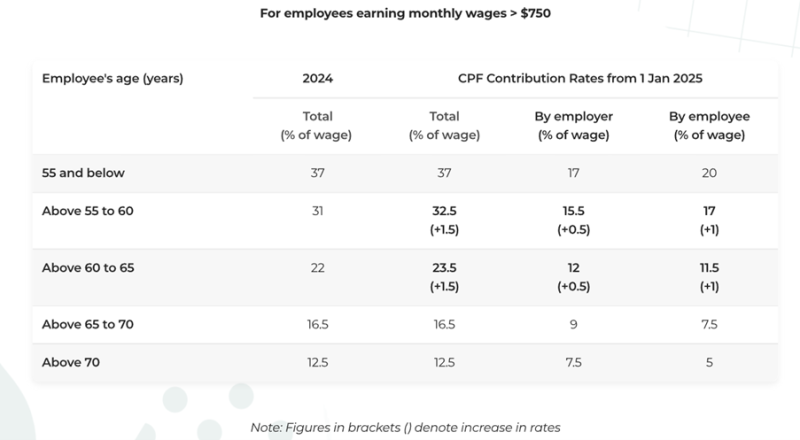
Since earlier this year, CPF contribution rates for employees aged above 55 to 65 have gone up by a total of 1.5 percentage points. This includes an additional 1% from employees and 0.5% from employers. The aim is to help senior workers build stronger retirement savings as more choose to work beyond age 55. For younger workers, this underscores CPF’s commitment to retirement adequacy for all age groups.

Image Credits: cpf.gov.sg

CPF SALARY CEILING HAS INCREASED

The CPF monthly salary ceiling has increased to S$7,400, up from S$6,800 previously. This change means that a larger portion of higher earners’ wages is now subject to CPF contributions. The ceiling will be raised again to S$8,000 in 2026. Although this change primarily affects those with higher salaries, it benefits long-term savings by increasing CPF contributions over time. This is something younger professionals can factor into their career and income growth.

SPECIAL ACCOUNT CLOSURE AT AGE 55

CPF members turning 55 this year will see their Special Account (SA) automatically closed. Funds are first transferred to the Retirement Account (RA), up to the Full Retirement Sum (FRS), where they continue to earn attractive long-term interest. Any remaining withdrawable balance is moved to the Ordinary Account (OA) and earns a lower interest rate.

Members can still transfer OA savings to their RA, up to the Enhanced Retirement Sum (ERS), to enjoy higher CPF LIFE payouts. Investments under the CPF Investment Scheme-Special Account are not affected and can be retained. Upon maturity or sale, the proceeds will first go to the RA, and any excess will be credited to the OA.

ENHANCED RETIREMENT SUM NOW S$426,000

The Enhanced Retirement Sum (ERS) has been increased to S$426,000, or four times the Basic Retirement Sum. Members who top up to this new limit at age 55 could receive CPF LIFE payouts of approximately S$3,300 per month from age 65, compared to around S$2,500 previously.

Even for those still far from retirement, it’s useful to understand how topping up early can maximize compound interest. CPF’s online tools like the Retirement Payout Estimator and Retirement Dashboard help members plan based on their age and financial goals.

EXPANDED MATCHED RETIREMENT SAVINGS SCHEME

Improvements have also been made to the Matched Retirement Savings Scheme (MRSS). There is no longer an age cap, and eligible members can receive government matching grants of up to S$600 per year for five years, totaling S$2,000.

Young adults can also support older family members by topping up their RA, helping them qualify for these matching grants while enjoying personal tax relief.

70TH CELEBRATION OF CPF

At CPF’s 70th anniversary celebration on July 5 and the launch of its commemorative book “Save & Sound: 70 Years of CPF”, Senior Minister Lee Hsien Loong reflected on CPF’s key role in every Singaporean’s life (i.e., from home ownership and family support to retirement). He also noted that Singapore’s CPF system is internationally recognized as one of the most effective in the world.

Image Credits: unsplash.com

For younger Singaporeans, this is the time to stay informed, track contribution limits, plan top-ups early, and help family members maximize their CPF benefits. To learn more, visit cpf.gov.sg or follow CPF’s official platforms.

Sources: 1 & 2

Read More...

Beginner’s Guide to Saving Money in Singapore

Living in Singapore isn’t cheap. With rising costs and temptations everywhere, it can feel tough to set money aside. But whether you’re saving for a rainy day, your BTO, or a well-deserved holiday, getting into the habit now can make a big difference.

Read this simple guide to help you get started.

#1: SET A CLEAR GOAL

Don’t just say “I want to save more.” Be specific! Are you saving for an emergency fund, a new laptop, or a holiday?

Once you have a clear goal, break it into monthly targets. Open a separate savings account to track progress. Naming it something fun like Japan Trip Fund can keep you motivated.

#2: LET YOUR MONEY WORK

Put your savings in an account that earns interest. Local banks like DBS, OCBC, and UOB offer savings accounts that reward you for crediting your salary or paying bills.

Every little bit of interest adds up, and your money grows even while you sleep.

#3: EAT OUT LESS

Eating out often can burn a hole in your pocket quickly. Cooking at home a few times a week can save you serious cash and help you eat healthier.

Image Credits: unsplash.com

Even simple home-cooked meals cost less than most hawker or café food. Plus, you’ll waste less and stretch your grocery dollar further.

#4: USE THE SAVINGS BUCKETS

Organize your savings into three buckets namely:

a. Emergency fund: For unexpected expenses like medical bills or home repairs

b. Short- to mid-term goals: For things like education, weddings or travel

c. Long-term goals: Retirement or financial independence

Having separate goals helps you stay focused and on track.

#5: BE CAREFUL WITH CREDIT CARDS

Credit cards can be useful for rewards, but only if you pay off the full amount every month. Otherwise, interest charges add up fast.

If you find yourself carrying a balance, switch to cash or debit to stay in control of your spending.

#6: PAY BILLS ON TIME

Late payments lead to extra fees and can hurt your credit score. Set reminders or automate payments to avoid unnecessary charges.

If you can’t pay on time, contact the provider early. They might offer an extension or payment plan.

IN A NUTSHELL

Image Credits: unsplash.com

Saving money doesn’t mean you have to give up fun. Start small, stay consistent and track your progress. Even saving an extra S$50 a month puts you on the right path. Small habits today build a more secure future tomorrow.

Sources:1,2, & 3

Read More...

Spending Less is as Important as Earning More

Earning more money is undoubtedly appealing, but it’s only part of the equation. What many people overlook is that controlling your spending is equally essential, if not more so, for achieving financial stability and success.

Let’s explore why spending less is just as crucial as earning more and how this simple approach can significantly improve your financial situation.

#1: EMPHASIZE SAVING

Developing the habit of spending less than you earn is a powerful financial strategy that should become an integral part of your lifestyle. By doing so, you create the opportunity to have extra cash at your disposal, allowing you to save and invest for your future. Moreover, it acts as a safeguard against accumulating unnecessary debt, which can burden you for years to come.

Image Credits: unsplash.com

If you find yourself unable to implement this habit immediately due to your current situation, don’t fret. As soon as you become capable, make it a priority to pay off any outstanding debts, freeing yourself to focus on saving money for the future.

#2: UNDERSTAND THE VALUE OF DOLLAR

One essential aspect of spending less is recognizing that every dollar you earn is not entirely yours to keep. Taxes and other expenses take a considerable bite out of your income. In fact, to have one dollar in your pocket, you may have to earn closer to $1.30. This means that approximately 30 cents of every dollar you earn goes towards taxes and various costs.

#3: MIND YOUR SPENDING HABITS

Imagine trying to fill a bucket with water while it has holes in the bottom. No matter how hard you work to pour water into it, the effort would be futile, and the water would simply leak away. Similarly, focusing solely on earning more money without addressing your spending habits is counterproductive. Before pursuing ways to increase your income, it’s crucial to plug those spending leaks, ensuring that your efforts bear fruit.

#4: GIVE EVERY DOLLAR A PURPOSE

Doubling your income might sound like the ultimate financial goal, but it won’t guarantee success if you lack a proper financial plan. Whether you choose to cut back on expenses or boost your earnings, it’s vital to give every dollar a designated purpose before the month begins. Creating a budget and allocating funds for specific goals will guide you towards financial prosperity.

Image Credits: unsplash.com

By following this approach, you’ll find that dreams like traveling the world, saving for a new car, or buying a house become attainable realities. So, take the reins off your finances, strike a balance between earning and spending wisely, and watch your financial aspirations come to fruition faster than you can say “budget!”

Sources:1 & 2

Read More...