
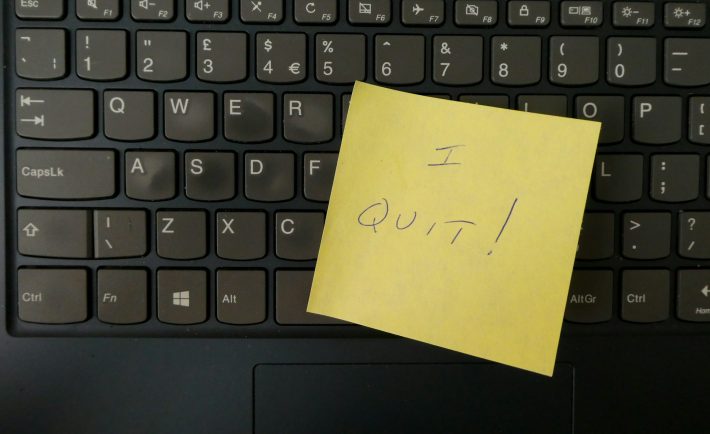
Gracious Exit: How to Quit Your Job Professionally

It’s been over a decade since I submitted my first resignation letter, and I’ve written a few more since then. As I transitioned between roles and even shifted careers, one lesson became clear: how you leave a job matters just as much as how you start one.

Maintaining a good relationship with former colleagues and employers can open doors down the line. Whether you’re seeking references, networking, or even returning to a company in the future, your professional relationships can have a lasting impact. So how do you quit gracefully, without creating rifts or awkward goodbyes? Consider this practical guide to leaving on a positive note.

#1: HAVE A FACE-TO-FACE CONVERSATION

If possible, request a meeting with your manager to share the news directly. A personal conversation, whether in the office or via video call if you’re remote, shows respect and professionalism. It gives both of you a chance to talk openly about your departure and ensure a smooth transition.

If you already have a timeline in mind, schedule the meeting at least two to four weeks before your intended last day to give your team ample time to prepare.

#2: BE CLEAR & HONEST

Start the conversation by clearly stating your decision to resign. Don’t beat around the bush. Your manager will appreciate your directness.

You don’t have to share every detail behind your decision, but it’s helpful to offer a general reason. For example, you might be pursuing a new opportunity or changing career paths. Emphasize what you’ve learned in your current role and how it’s helped shape your next steps.

#3: RESPECT THE NOTICE PERIOD

Check your employment contract for your required notice period. Usually, it is two weeks, though some roles may ask for a month.

Clearly state your intended last day in both the conversation and your written resignation letter. Providing adequate notice gives your employer time to plan for your departure and shows your professionalism.

#4: OFFER TO HELP

Once you’ve shared your plans, show that you’re committed to a smooth exit. Offer to help train your replacement, document processes, or wrap up any outstanding projects.

Image Credits: unsplash.com

If you’re unable to complete certain tasks before you leave, outline the next steps and key contacts so your team isn’t left guessing.

#5: EXPRESS GRATITUDE

Before you walk away, take time to thank your manager and team for the opportunity and experience. Reflect on the highlights. These could include a meaningful project, strong mentorship, or skills you developed along the way.

Ending on a grateful note reinforces goodwill and helps ensure your last impression is a positive one.

#6: SEND A FORMAL RESIGNATION

After your conversation, send a formal resignation letter to your manager and HR. This letter should confirm your intention to resign, your last working day, and your commitment to fulfilling your notice period. Keep it concise, polite, and professional.

#7: PREPARE FOR QUESTIONS/EXIT INTERVIEW

Your manager may have follow-up questions about your departure, especially if it’s unexpected. Be honest yet tactful in your responses.

If your company conducts exit interviews, participate in good faith. These are often used to gather feedback and improve the workplace for others. Your constructive input could make a difference.

#8: TRUST YOURSELF

Quitting can be nerve-wracking, especially when you value your team or fear the unknown. But remember, growth often starts with discomfort. This decision likely stems from your desire to challenge yourself, learn more, or reach a new milestone in your career.

Image Credits: unsplash.com

Friendly reminder: take pride in the courage it took to make this move. Lean into your growth mindset and trust that you’re stepping into something better, even if it feels uncertain now. With the right approach, you’ll leave behind not just a job but a strong, respectful connection.


Sources: 1 & 2

Read More...

Why Are Gen Zs Hopping from Job to Job?

A whopping 97% of Gen Z workers say work is an integral part of their identity, yet 83% consider themselves job hoppers, according to a recent ResumeLab report. But here’s the twist: for Gen Z, job hopping isn’t a red flag of instability. Instead, it’s a calculated move to diversify their skills, embrace fresh challenges, and seek out environments that genuinely align with their values and aspirations.

Why Do Gen Z Workers Quit?

While they value purpose and alignment, money still talks. For 70% of Gen Z workers, a competitive salary is a deciding factor in staying with a company. But it’s not just about the paycheck as many are leaving their roles due to burnout from excessive overtime, clashes of values with employers, dissatisfaction with job happiness, low pay, or poor management and toxic bosses. In fact, over 70% of Gen Z workers say they would quit if the work environment was toxic, development opportunities were lacking, or their work-life balance was compromised. Perhaps the boldest statistic of all is that 75% of Gen Z employees are willing to leave their jobs without having another role lined up.

Image Credits: unsplash.com

What Do Gen Z Employees Want?

Attracting and retaining Gen Z talent requires companies to meet them where they are—value-driven and ambitious. This generation values flexible work schedules, comprehensive healthcare packages, regular pay raises, and opportunities for personal and professional growth. They also seek remote work options and mental health days off, reflecting their holistic approach to work and life. For them, the “perfect boss” embodies strong decision-making skills, a commitment to employee growth, and the ability to inspire and motivate.

Is Their A Shift in Priorities?

Unlike older generations, Gen Z places less emphasis on financial compensation alone. According to McKinsey & Company (2024), younger employees rank adequate pay two levels lower in importance compared to their predecessors. Instead, they are drawn to meaningful work and shared values, with a lack of alignment being the second-highest reason for leaving a job. To attract this generation, companies must clearly communicate their values to prospective employees, foster a culture that reflects the morals and priorities of emerging talent, and build diverse and inclusive leadership teams that resonate with younger workers.

Is Job Hopping for You?

Personally, I’ve hopped from one job to another every two to three years, especially during the pandemic when stability and income took precedence. But with time, I found myself toggling between roles in academia and HR, exploring what truly gives my career meaning and direction. Writing, however, has always been my constant companion. Sometimes, it’s not just about finding a job; it’s about crafting a career narrative that resonates with your passions and purpose.

Image Credits: unsplash.com

So, is job hopping for you? It’s not about the label. It’s about finding the work that fuels your growth and feeds your soul.

Sources: 1 & 2


Read More...

Why quitting your stable but stagnant job might be the best thing for you

happy resignation

You’re stuck in a job you don’t love, but it’s stable. And that’s the problem.

You want to make a change, but you’re afraid of leaving your current position. You might be worried about the unknown or what others will think. But what if quitting is the best thing for you? What if it opens up new opportunities that you never would have had otherwise?

In this post, we will explore why quitting your stable but stagnant job might be the best thing for you. We will also provide tips for making the transition easier.

Let’s start with the fear

You go to work, do the same thing day in and day out, and come home feeling unfulfilled. You know you need a change, but you’re scared to leap.

We get it. Quitting your stable job can feel like a huge risk, especially if you’re not sure what you will do next. But here’s the thing: staying in a job that’s no longer right for you is even riskier. You’re not growing, you’re not learning, and you’re not happy.

Think about it this way: by quitting your stable but stagnant job, you’re opening yourself up to new possibilities. You might find a position that’s a better fit for you, or maybe you can work towards starting your own business. The world is your oyster!

Dealing with the fear of quitting
unhappy with work

Image Credits: unsplash.com

Lately, you’ve been feeling like you’re in a rut. You know you’re capable of more, but you’re afraid of leaving your stable job position. Here are some practical tips for dealing with the fear of quitting:

  • Do some research on the industry you’re interested in
  • Talk to people who have made the switch to a new career
  • Practice speaking about your career goals with confidence
  • Make a list of your skills, ambitions, and accomplishments
Why quitting your stable but stagnant job can be sensible

It can be tough to decide to leave a stable job position, especially if you’ve been at the same job for a while and can navigate through your routine work tasks with your eyes half-closed.

However, if you’re not learning or growing anymore, then what’s the point of dragging yourself to work every day to go through the motion? Folks who find themselves not pleased, fulfilled, and challenged enough at their jobs should reconsider their career status. The fear of quitting might be daunting, but remember that you’re not alone in this journey. And the payoff could be well worth it in the end.

It can be hard to leave a stable job position, but if you’re feeling stagnant or unhappy in your current role, it might be time to take the plunge. Folks who are feeling hesitant about quitting their stable job position can start by brainstorming ways they can make the switch less risky. For example, start by applying for jobs that are in the same industry but offer a more challenging and exciting work environment. And most notably, remember that it’s normal to be intimidated – but it’s also brave to take the leap and chase after a better tomorrow.

Read More...