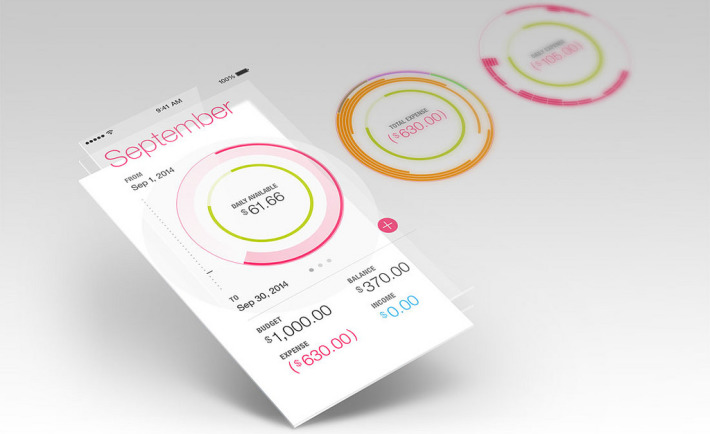
5 Free Money Management Apps to Increase your Savings

Money Tracker App

In order to decide on how much you shall save, first you must be aware of how much you are spending.

Expenses can be categorized as either fixed or variable. Fixed expenses remain the same every month or year due to Singapore’s laws and Company service-provider terms (e.g. Hand Phone Plan, or HDB Rent). Variable expenses include food, entertainment, clothing, and other expenses that may change every month or year. The challenge now is for you to choose on which expenses you can reduce.

Recording all your expenses, no matter how big or small they may be, can help you plan your budget wisely. This is why; here are the 5 Money Management Apps for all your devices. Best of all? These are handy and FREE!

  1. EXPENSIFY
    (Available on IPhone, IPad, Android, and Blackberry)

    Expensify app helps you record your daily transactions, hourly rate, mileage, and generate expense reports. Its SmartScan feature allows you to upload photos or capture your receipts for easy bookkeeping. It also helps you minimize information errors that you may encounter when writing everything down.

    expensify

    Photo Credit: Expensify App via TechTudo

  2. EXPENSE MANAGER
    (Available on Android)

    Another top rated money tracker in Google Play store is the Expense Manager app. It is raved to be simplistic and very easy to use. You may record the type of purchase, the type of payment, the purchasing price, the company the item was purchased from, and the date. The app also allows you to manage multiple accounts in various currencies, to email account activities, and to save it on your SD card.
  3. MONEYWISE
    (Available on Android)

    MoneyWise app combines minimalist design with powerful functionality. It may seem minimal but it can do a lot! It allows you to generate charts or graphs, track budgets or spending, and create regular account backups. Conveniently, you may export data in CSV or HTML formats that you may send to others via email.
  4. POCKET EXPENSE PERSONAL FINANCE
    (Available on IPhone and IPad)

    Pocket Expense Personal Finance app combines all your financial accounts together so it can track all your bills and set your budgets. This app lets you categorize your transactions through its calendar view. It is the perfect way to organize your income and expense because of its user-friendly and simplistic interface. But most importantly, it is password protected.
  5. MINT
    (Available on IPhone, IPad, and Android)

    Mint app manages your personal finance accounts (credit cards, loan and investment) on one place through your fingertips. With Mint, you can track your spending, develop a monthly budget, receive bill reminders, and save more money. It is also accessible online through its website. What’s more? It sends online alerts if you’ve gone over your budget.

    With all these awesome money management Apps, the power to budget and save money is in your fingertips! Make wise money tracking a habit! You won’t regret it. 

Read More...

Singaporean execs struggle to make ends meet

Singapore's execs struggle to make ends meet

In an article published by Singapore Business Review, it was found that almost half of the Singaporeans holding executive position struggle to make ends meet every month.

The statistic was first published on Jobstreet and it’s surprising to know that 44% of the Singaporean executive does not have excess saving after paying off their mortgage, car loan and credit card.

25% of them claimed that paying for insurance premium was their biggest monthly commitment.

That is a worrying trend for Singapore’s ageing population.

What this also means is that half of these executives will not be able invest or grow their savings to the effect of compounding interest. Without adequate savings to supplement their CPF payouts at their retirement age, this group of people at are the risk of outliving their retirement funds.

A study conducted by NUS draws the conclusion that the CPF is sufficient for the current group of young income earners of the 30th to 70th income percentile based on three important caveats: choice of HDB flats must be within their means, any CPF above the Minimum Sum they withdraw must be invested and they must continue to remain in the workforce for as long as possible.

The few key issues surface here are:

Carrying too much debts

For most of us, it’s impossible to live debt-free as we need to purchase our house and support our family. But before it gets out of hand, it is important to differentiate between good and bad debts.

Good debts are debts that create value to you and getting you what you need. Mortgage loan, for example, is a good debt to take on as it create value to you, considering the low interest rate. It can be bad if you leverage too much and cost you to be unable to afford the monthly mortgage payments.

Whereas, credit card and vehicle loan is a bad debt as the interest is exorbitant and the item you bought is of depreciating value – take car, for example.

Of course, it is not smart either to avoid debts at all cost if it means using up all your cash reserves for emergencies.

Not saving enough

As compared to our parents, the younger generation is simply not saving enough. For what Singapore has become today and being bred in a society where everything is provided for has denied them the opportunities to understand the importance of money.

We spend all that we earn, often lacking restraint in spending money.

As the saying goes:

A dollar saved is a dollar earned.

Save the extra dollar so that you can multiply them into many folds.

Making wrong financial decisions

Many young working adults are not savvy enough to manage their own finances. Taking on too much debts without knowing the long term effect, speculate in the stock market and dumping all their savings to purchase a car are some of the mistakes made by these group of people.

A quarter of these people spent too much on insurance. Insurance should be used as tool to hedge your risk of financial liabilities to you and your dependants – should untoward events happen to you. It should not be used as a tool to grow your money, as it is inefficient due to the high cost and fees charged. Being insured for around 10 years of your income using term insurance should be sufficient for most people and it will cost you only less than 5% of your income.

Read More...

How to travel Europe on a shoestring budget

Paris Eiffel Tower

When preparing to travel, lay out all your clothes and all your money. Then take half the clothes and twice the money” –Susan Heller

Travelling to Europe is a dream destination for most people. With its rich cultural heritage from castle to prehistoric landscapes, it is obvious why Europe is the most travelled place in the world.

However, for many the cost of air ticket alone is going to put away the idea of travelling aside.

If you are willing to get a bit out of your comfort zone and do some planning, there are a few simple ways for you to travel without breaking the bank. Try these methods and you will be bringing half the money. Here are our tips:

1. Look out for cheap airfares

First and foremost, you’ll need a flight to bring you to Europe and that’s when airfares could contribute up to 20% of your budget should be bought with careful planing and research. There are many flights comparison website, and you will be shortchanging yourself if you do not utilise them.

Read also: 6 tips to save on your air ticket

2. Plan your mode of transports

Once you reached your dream destination, you will not be sticking your butt at the Eiffel Tower for the entire week. Find out the cheapest way to bring you to The Louvre or the Notre Dame de Paris. If you stay within the district, walk and embraces the place like a tourist. If not there is bus, metro and RER at your service. If Google is not your best friend, make it yours.

If you are travelling to other parts of Europe, besides taking a flight all the time which may bust your budget, your next best alternative would be train. Countries in Europe are connected by high-speed trains which could take you between destinations in hours. Consider buying a Eurail pass if you plan to hop around different countries. Work the number out using the trip planner by RailEurope and see if it is more worthwhile to purchase individual tickets or a rail pass. Do note that for certain trains (night and scenic train) might need additional reservation fee to make a reservation.

Good news (and good excuse) for those under 26. They have a youth pass which you can to enjoy up to 35% discount off its Eurail Pass.

3. Plan your accommodation

The next item on your list would be accommodation which contributes to a significant amount of cost to your budget. You don’t need to stay in five star hotels to enjoy your Europe trip. Most of the time should be spent exploring the scenic and tourist attractions rather than having a spa in your bathroom or a view from your balcony that overlook the entire cityscape.

If you are a student with not much budget, hostels and backpackers would do just fine. You can also rent someone’s room temporarily using airbnb.

Otherwise, budget hotels and motels such as IBIS or Formule 1 could be in your consideration.

Again, this requires careful planning and your best friend would be more than willing to help.

There are aggregators sites like Trivago, Agoda and Booking.com which will compare and show you the available accommodation at your check in and out date and you can filter and sort them according to your budget.

If you want to further save on your accommodation, you can consider booking an overnight train and sleep while you travel to your next destination. You not only save on hotel cost, you save valuable time.

4. Food

Eat like a local. If you visit touristy areas, expect yourself to dig deep into your wallet. Follow the locals’ lead for cheap eats. Ask around to find out affordable restaurants. Of course, there are times when you should indulge in their delicacies, so occasionally pamper yourself a bit.

As a Singaporeans, we are not used to tipping, but in Europe if you plan to tip, around 10 percent is the norm.

Some of your accommodation may include breakfast, so take advantage of it. Croissant and Coffee? I will take that.

5. Entertainment

Find free entertainment. Visit the parks, concerts and cathedrals and you can’t deny that exploring Europe by foot together with a camera is by itself – entertaining. It don’t cost much to have a photograph with an Eiffel Tower or the Colosseum in the background. Visit their national heritage sites and immerse in their culture and diversity without busting your budget.

Read More...

How much does it costs for a wedding? Let’s do the maths

How much does it cost for a wedding?

“A wedding is a party, not a performance. If at the end of the day, you are married to the one you love, then everything went perfectly.”

After going through thick and thin together with your significant other, both of you decided that the time is right and it’s time to hear the wedding bell. Whilst this could be exciting for most but could be daunting for some.

With increased cost of living in Singapore, it would be wise to plan your wedding ahead.

Let’s breakdown the costs

Engagement Ring

For the guys, you will need to set aside this budget for an engagement ring. Ask De Beers and you’ll be looking at setting away with 2 months of your salary. Let’s set the figure as $2,000 for now.

Pre-wedding photography

This is optional but for those who are interested, it costs around $2,000 per package.

Bridal Packages

This could range from anywhere from $2,500-$5,000 and it will usually include gown for the bride and suit for the groom, bridal cars and make-up services.

Photographer and Videographer

If you are looking at professional photographers/videographers, $3,000-4000 should be quite reasonable. Look around and see if you have any friends who are professional photographers and that should help you save a few grands.

Wedding Band

Wedding ring can go from $500 to $4,000. Again, let’s set it at $2,000.

Wedding Banquet

If you want a lavish weekend dinner at a five-stars hotel, be prepare to set away around $1,500/table. 30 tables would cost you $45,000. If everyone gives you a red packet at $100 each, you’ll be looking at recouping $30,000. That will then cost you $15,000.

Honeymoon

This is highly variable and it depends on the places you plan to go and how long the trip will be. For a one to two week trip to a neighbouring Asian country, you will be looking at around $5,000. If you are planing to go for a Europe trip, be expected to spend more than $10,000.

The table below sums it up which include other miscellaneous costs.

BRIDE GROOM TOTAL
Engagement ring $2,000 $2,000
Pre-Wedding Photography $1,000 $1,000 $2,000
Bridal Package $2,000 $2,000 $4,000
Photographer/Videographer $1,500 $1,500 $3,000
Wedding Band $2,000 $2,000 $4,000
Wedding Banquet $20,000 $20,000 $40,000
Honeymoon $5,000 $5,000 $10,000
Lunch Catering $1,000 $1,000
Emcee & Coordinator $88 $88 $176
Bridesmaid/Groomsmen Dress $200 $200 $400
Red packets for Bridesmaid/Groomsmen $500 $500 $1,000
Bridal Car $500 $500
Bouquet & Corsages $75 $75 $150
Gatecrash Red Packets $500 $500
Total $33,363 $35,363 $68,726

Don’t forget that you will be recouping some of your costs from the red packets you received from your guests. For a setting with 300 guests, and assume $100/red packet and equal share between the bride and groom, you will be getting back $15,000 each.

The figures above are estimated and feel free to adjust the figures according to your budget!

Read More...