Experts share what the arrival of COVID-19 vaccines in Singapore would mean for ‘normality’

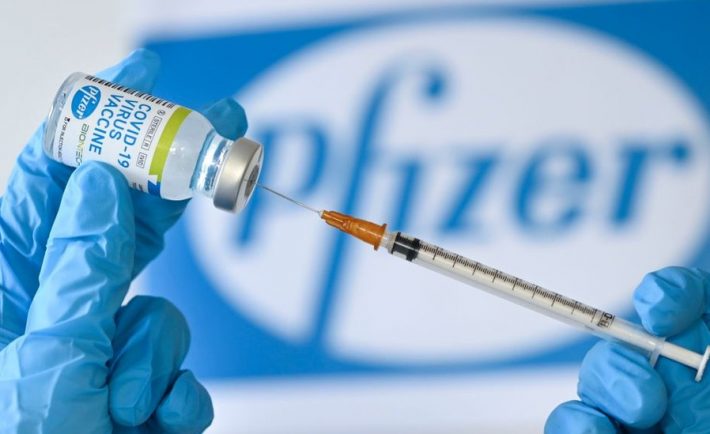
Pfizer-BioNTech vaccine

On Dec 14, Prime Minister Lee Hsien Loong announced that the Health Sciences Authority (HSA) had approved the COVID-19 vaccine developed by United States pharmaceutical giant Pfizer and German firm BioNTech. The first shipment was also due to arrive in Singapore by the end of December.

Fast forward to a week after the statement; the long-awaited COVID-19 vaccines arrived yesterday (Dec 21) evening! Transport Minister Ong Ye Kung was there to receive the gift, and the vaccines were later to transported to SATS’ cold-chain facility for storage.

Mr Lee said that relevant task force handling the COVID-19 outbreak would announce details of the roll-out in due time. “It’s been a long and arduous year. I hope that this news will give Singaporeans cheer this festive season, and reason to be optimistic for 2021,” he added.

Returning to ‘normality’ will take time

Christmas crowds at VivoCity

Image Credits: The Straits Times

While we’re one of the first few countries to get COVID-19 vaccines, experts shed light on what this means for ‘normality’. It will most likely take months to return to ‘normality’ as Singapore builds herd immunity with the ongoing study of the effects of the vaccine.

Vice-dean of research at the National University of Singapore (NUS) Associate Professor Alex Cook suspects that the first few groups to receive vaccines will still need to keep to current measures. This includes wearing a mask and keeping to the permitted group size gatherings. This will continue until enough people receive the vaccine to achieve herd immunity.

Singapore possibly to be the last few countries to reach ‘normality’
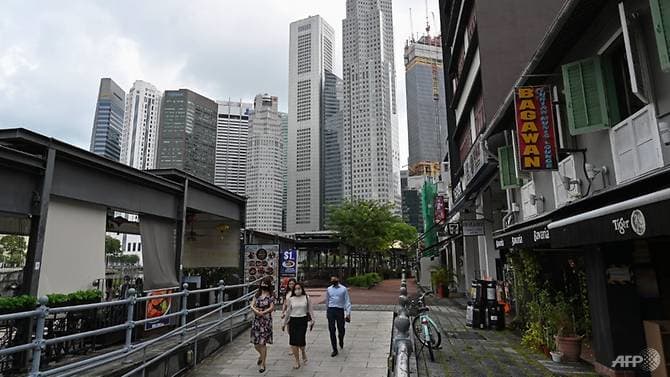
office-workers-wearing-face-masks-are-seen-in-the-financial-business-district-in-singapore

Image Credits: CNA

President of the Asia Pacific Society of Clinical Microbiology and Infection Dr Paul Tambyah states that Singapore is likely to be among the final few countries in Southeast Asia to return to normal. This will also probably be months after the report of the last cases of COVID-19 in the world.

“If, and it is a big if, the vaccine is successfully rolled out all across the world and if it works, there is a good chance that the incidence of the disease may drop dramatically worldwide, and then the WHO (World Health Organization) can declare the pandemic over, and we can slowly get back to normalcy,” he mentioned.

No massive change in restrictions for months
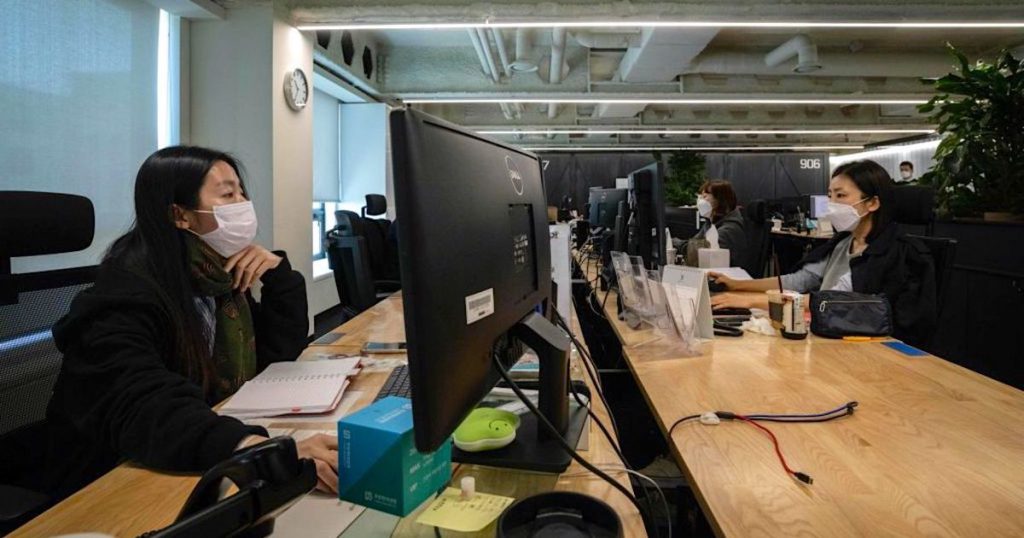
people wearing masks in an office

Image Credits: Vulcan Post

Professor Dale Fisher, the senior consultant at NUH and Chair of the WHO Global Outbreak Alert and Response Network, shares that there will be no significant change in restrictions in Singapore for months. But as more receives the vaccines in 2021, and we slowly approach herd immunity, preventative measures may be eased.

More on establishing herd immunity
singaporeans in masks

Image Credits: TODAYonline

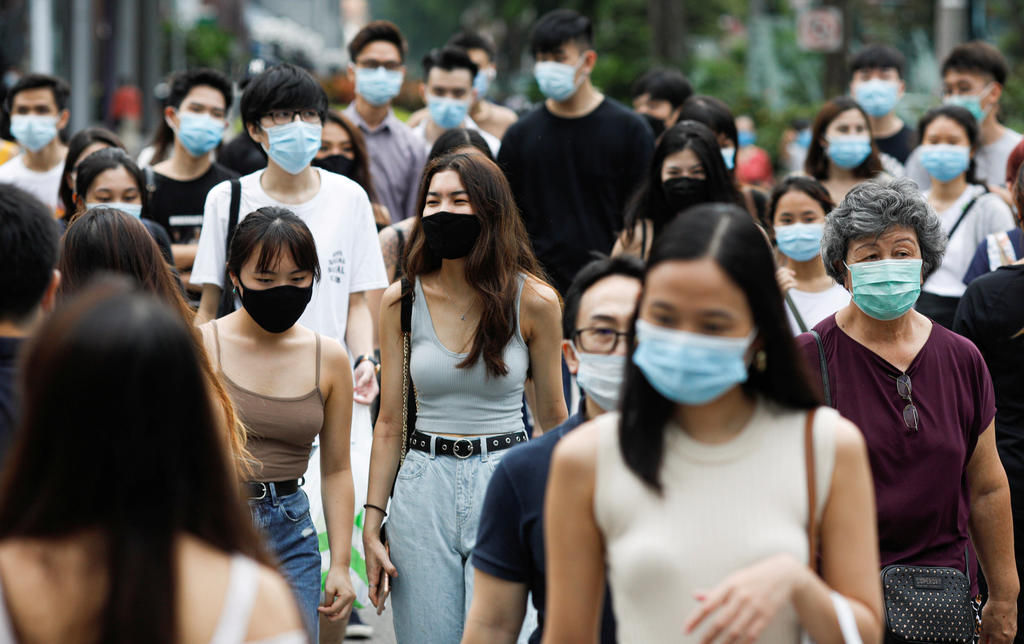
Assoc Prof Cook remarked that until enough people get the vaccine, we cannot protect our society as a whole. The mollifying of mask-wearing, social distancing, and closed borders can take place only when a critical mass of people receives the vaccine.

Dean of the NUS Saw Swee Hock School of Public Health Teo Yik Ying highlights for us the objective of mass vaccination. The main aim is to achieve herd immunity to protect individuals from an insufficient number of people who remain vulnerable to infection.

“If there are enough people that have been vaccinated, then even if someone is infected, the vast majority of the people that this infected person interacts with will already be vaccinated and not be infected. This is why mass vaccination with an effective and safe vaccine remains a very powerful public health measure to protect against an infectious disease,” he added.

Assoc Prof Cook further explains that in the early stages, only those with the vaccine will be in safe hands. Once enough people have it, they would have direct protection. In turn, those without the vaccine will develop indirect protection because of the others in the population who have the vaccination.

Continuous study of the vaccine still in place
studying of vaccines in a lab

Image Credits: sciencemag.org

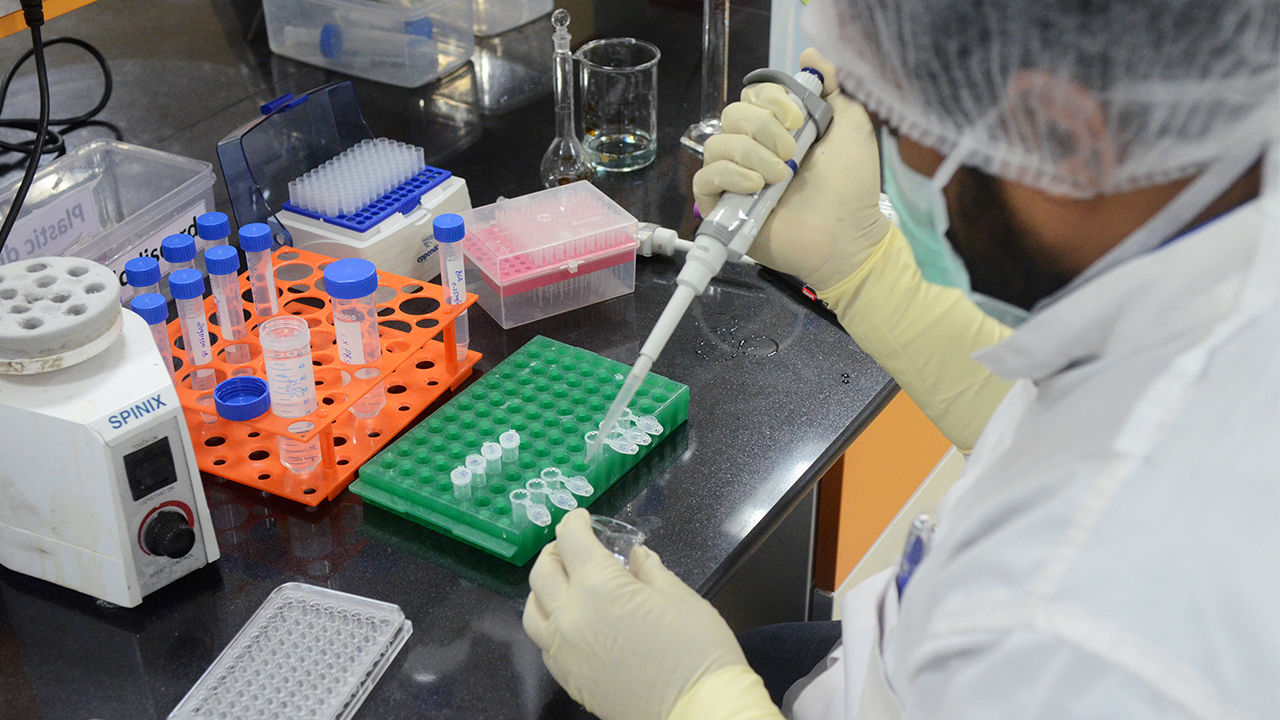
Infectious diseases expert Dr Leong Hoe Nam spotlights that experts have yet to identify the immune marker used to measure sufficient protection from COVID-19. “We aren’t sure if the immunity conferred by the vaccine is long-lasting and permanent,” he noted.

Experts also shared that though there is evidence that that the vaccine can prevent disease, more study is required to find out if the vaccine has protection against the transmission from the person who is vaccinated to another person.

According to Prof Teo, what we know for sure is that people who have the vaccine will unlikely showcase symptoms of COVID-19 infection, including severe complications. He also adds that Singapore will be performing post-vaccination monitoring. This will allow the authorities to modify measures according to the extent of protection the vaccination offers.

Prof Fisher also brings to light some concerns on whether the vaccines can prevent transmission from asymptomatic cases. There are also remaining questions on its effects on the elderly and immune-suppressed. At this point, more study is necessary.

With that said, we are aware that the vaccine works at least in the short term. “There is really no reason to not take the vaccine with our current knowledge,” he commented.


Read More...

6 Last-Minute Shopping Ideas

Christmas falls on the same each year, but it still manages to sneak up on us. Many people prefer to do last-minute shopping by rushing to the mall or by clicking “add to cart”. While you can always give your loved one a gift card, these last-minute gift ideas feel way more personal.

#1: BATH TOWEL – S$15

Muji creates high quality items at affordable prices. Add posh to your friend’s house by gifting a set of Muji bath towels. You may add a personal touch by stitching your friend’s initials on these towels.

#2: LAVENDER SOY CANDLE – S$18

As your loved ones deal with the copious amounts of work or school stress, they will need a trip to the spa or two. Help them unwind in the safety of their owns by gifting soothing candles. Lavender helps the person to relax and calm down. You may purchase a Lavender soy candle at naiise.com.

#3: VANITY TRAYS – S$9.90

Find a gift that is perfect for organizing all smaller items in the bathroom or in the desk. Look no further than IKEA’s SAXBORGA. This set of 2 cork trays make it easy to organize makeup, jewelry, and other small accessories. Help your friend keep her space neat and tidy with this handy organizer.

#4: SPORTS BRA – S$39-45

If your significant other loves to keep fit, then athleisure is her ideal present. A reliable sports bra keeps you supported and comfortable during a workout. You will strike a jackpot by gifting the Anta or Under Armour sports bra at zalora.sg.

#5: FOREO FOFO CLEANSER – S$130

If your sibling enjoys skincare as much as I do, consider purchasing a waterproof facial cleansing device such as Foreo. Foreo uses T-Sonic pulsations to assist deep and gentle cleansing over the skin. It is a cleansing device that helps absorb the skincare products better. Sephora Singapore carries the Foreo Fofo for S$130.

#6: FITBIT VERSA 2 – S$258

The most expensive item on this list suits both men and women. The Fitbit Versa 2 is a smartwatch that helps create bedtime reminders, set alarms, and check the weather with its voice-activated technology. You can also receive insight into your health necessities such as your sleep schedule and your heart rate. Moreover, you can connect it to Spotify and play songs from your watch. It is available for a discounted rate at Lazada Singapore.

Image credits: unsplash.com

It helps to know what your recipient’s interests and hobbies are. Find an ideal gift that suits his or her preferences. Afterwards, add a touching written message to brighten his or her Christmas.

Sources: 1 & 2

Read More...

How To Master The Art Of Giving Speeches

For some people, merely thinking about public speaking can cause their palms to sweat. It is one of the most common fears out there. However, there are many ways to overcome your fear and deliver a memorable speech. Here are some useful tips.

#1: DO YOU KNOW YOUR AUDIENCE?

Know the reason why you are asked to talk in a room full of people. Identify your audience. It is important to identify your audience to know what they want or need to take away from your speech. If you are speaking in front of your friends at a wedding, entertain them. If you are speaking in front of your co-workers, inspire them.

#2: HAVE YOU REHEARSED?

Make time to practice your speech. Write down your goals and the content of your speech ahead of time. This will ensure that your muscle memory will work while you deliver your speech. Try practicing despite having different distractions to mimic real-life situations.

#3: WHICH STYLE WORKS FOR YOU?

While others may benefit from having their script memorized, some may perform better with a few notes on a paper. Different events will usually require a different style. Know which style works for you.

#4: HAVE YOU TESTED ALL THE EQUIPMENT?

Nothing is more frustrating than last-minute technical difficulties. Avoid adding more stress to your day by testing all the equipment and audio visual presentations ahead of time. It is best to have backups too.

#5: HOW DID YOU USE YOUR BODY LANGUAGE?

The right physical or non-verbal communication can have a profound impact on how your message is interpreted and received. Be aware of your body language! For instance, you must make eye contact. Face your audience and stand straight. Avoid crossing your arms or putting your hands in your pockets.

#6: DID YOU GRAB ATTENTION?

Grab attention by refraining from starting a speech with what today’s talk is about. Instead, use an interesting anecdote or a shocking statistic to kick things off. Conclude your speech with a summary and a strong statement that your audience will remember.

#7: HAVE YOU TRIED ENJOYING THE EXPERIENCE?

Image credits: unsplash.com

Fake it until you make it. If you look bored, then the audience will think that you not interesting. Exude confidence by adding a little humor (i.e., as long as it is appropriate) and interesting anecdotes. This will help you and your audience relax. Remember to eliminate sentences that does not clearly support your purpose. Remember that it is not about you, it is about your audience.

Sources: 1 & 2


Read More...

A closer look at an artificial eye that costs about S$2,000 for Singaporeans

nuh-ocularist-eye-prostheses

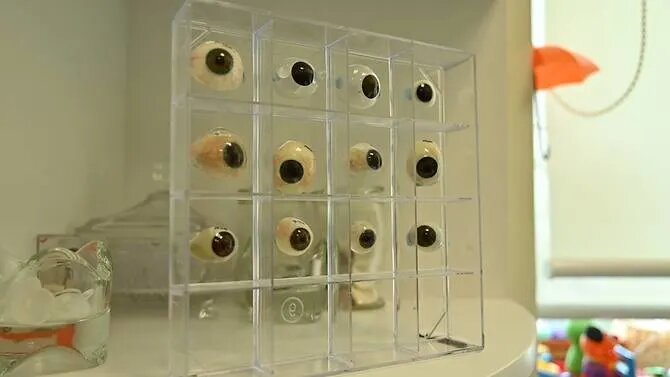
Slapped with a price tag of about S$2000 for one artificial eye, also known as ocular prosthesis, it gives hope to Singaporeans who have lost one or both of their eyes. This is made proudly by Ms Suriya Abu Waled, the only ocularist in National University Hospital (NUH).

“I love the job because I can help patients to regain their confidence and also to get trust (from others) and lead their normal lives,” she said.

Ms Suriya has 14 years of experience as an ocularist in NUH. While she was previously an imaging specialist with the ophthalmology department, she went for training in India for two months to become an ocularist. All in all, she makes these artificial eyes for about 15 new patients every year.

An art and a science
NUH ocularist Suriya Abu Waled with an artificial eye

Image Credits: CNA

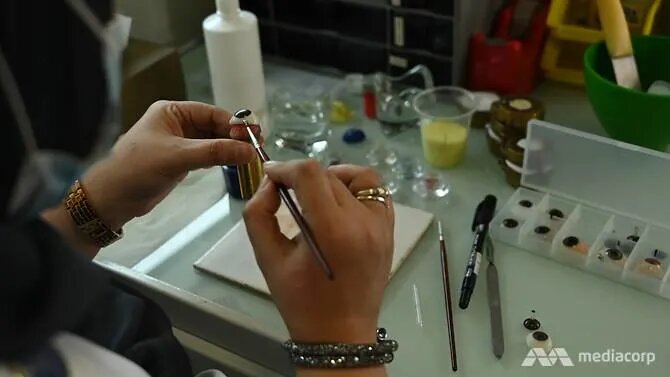
According to Ms Suriya, the creation process for the ocular prosthesis is both an art and a science. Each piece takes approximately four days to make and it’s essential to come up with a few models with delicate hand painting to replicate the finer details of the eye.

“They usually want to look their best for them. We understand because as a provider, I want them to be happy and feel comfortable wearing the prosthesis so that when they walk out of my door, they feel happy to meet people and to see themselves (look) so natural. That is our aim,” she remarked.

The process of making an ocular prosthesis
nuh-ocularist-work-station

Image Credits: CNA

The patient has to be present for the entire process of making the prosthesis. It usually starts with creating an impression mould. To do so, Ms Suriya injects an alginate solution into the eye socket using a syringe and removes it after it hardens.

Next, some wax is poured into the impression mould and inserted into the patient’s eye after it solidifies. Ms Suriya then makes fine-tunings by placing markings on the wax model to identify the position of the patient’s iris. Adjustments according to the patient’s natural eye movements are also taken into account.

After all the measurements are in place, the crafting of the actual prosthesis takes place. This includes painting the iris button and the building of an acrylic shell around the iris button (as eye whites). Some filing and buffing are also involved.

Once the first version is ready, the patient will attend a fitting session. At this point, Ms Suriya will check on the comfortability and note down any modifications needed.

To ensure it looks as natural as possible, she hand paints the iris to match the patient’s other eye. Thin red threads are also added to imitate the look of blood vessels in the eye whites. Once finishing touches are out of the way, polishing begins.

“If the outcome is nice, is good, and the patient is comfortable and happy with it, of course, it makes you so happy when you see the patient and (you’ve given) them self-confidence,” Ms Suriya said.

Replication of movement of a real eye
close-up photo of a person's eye

Image Credits: unsplash.com

Dr Gangadhara Sundar, head and senior consultant of orbit and oculofacial surgery in NUH’s department of ophthalmology, mentioned that a well-fitted prosthesis in the socket could even replicate some of the movement of a real eye.

“When the eyes are removed, the eye socket is replaced with an implant which is usually attached to the patient’s eye muscles. Thus when the other eye moves, the implant moves, this, in turn, transfers the movement to the eye prosthesis, although not as perfectly or equally as the normal eye,” he sheds light on the issue.

Who needs it?
doctors in surgery

Image Credits: unsplash.com

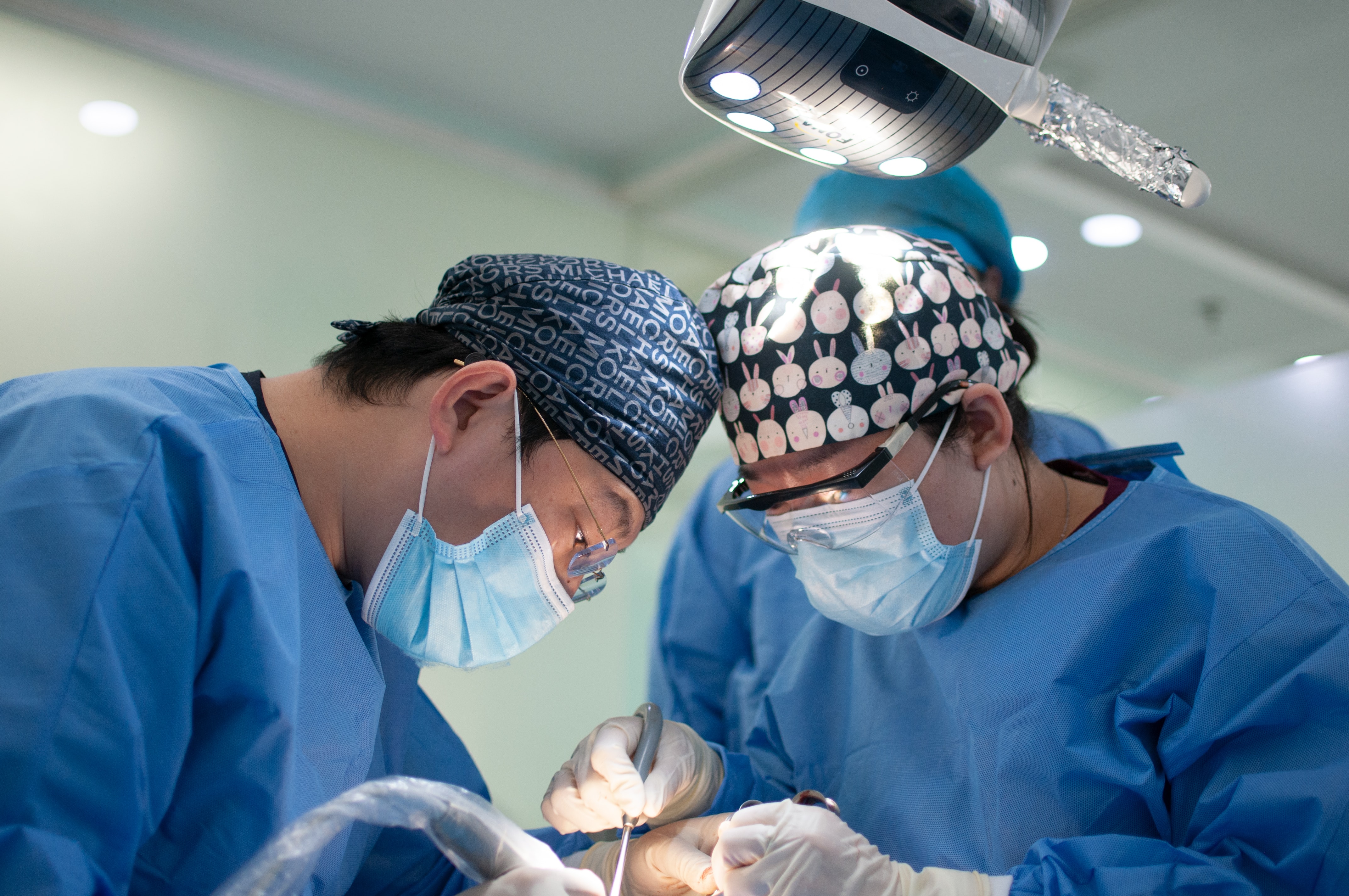
People may lose their eyes through reasons like eye cancer, eye injuries, and even failed eye surgeries. When that happens, the removal of eyeballs and replacement with an implant in the eye socket can be a solution.

As Dr Sundar accurately puts it, the placement of ocular prosthesis can restore patients to their structural, aesthetic, and psychosocial status quo. It also helps prevent sunken deformities in the socket area after the eye is removed through enucleation.

A real case scenario
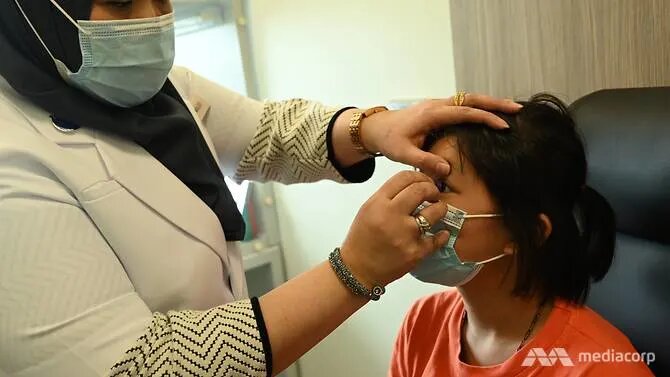
nuh-ocularist-removing-eye-prosthesis

Image Credits: CNA

10-year-old Claire Lim is one who has benefited from the works of Ms Suriya. While she was in pre-school, she was diagnosed with persistent hyperplastic primary vitreous. It’s a condition where a random or sporadic developmental abnormality usually appears in just one eye.

Dr Sundar stated that Claire’s condition could result in other complications if not treated early and aggressively. Since it was not easy to restore her vision, the doctors at NUH settled for an artificial eye.

Narrating her experience of getting fitted with a prosthesis by Ms Suriya, Claire said, “It was really painful when she had to push the eye in. It feels like stepping on Lego. A few hours later, it was ok, but it was painful for a few minutes later. And I cried.”

Claire also added that the artificial eye drops out at times, and she has to use eyedrops three times a day.

While observing his daughter’s condition, Mr Lim Sze Liat shares that the fake eye had improved Claire’s confidence. Before she had the prosthesis, stares from classmates and teachers were common.

“But when she got her prosthesis and walked about in school, people found that Claire looks normal. So everybody tried to play with her. Teachers also noticed she was more confident (after that) in kindergarten, which was where she suffered the most,” he commented.

Read More...

Holiday Shopping Safety Tips During Pandemic

Stating that this year has been filled with surprises is an understatement. As 2020 ends, our Yuletide experience is expected to look different. Online shopping has been more popular than ever. Furthermore, more and more shops have imposed strict COVID-19 guidelines.

Whether you are purchasing your holiday gifts online or offline, it is important to stick to a strict budget. We are all experiencing financial set-backs during these uncertain times. On that note, here are some holiday shopping tips to keep you safe during the pandemic.

#1: CHOOSE A STORE WITH FREE RETURNS

Shopping online is challenging because you cannot see the items in person. To make things easier for you and its recipient, choose stores that offer free online returns. This will allow you to avoid wasteful purchases.

#2: OPT FOR USEFUL GIFTS

Many people find value in receiving gifts that meet their current needs. People are spending most of their time at home. Think about the gifts that can help your friends and relatives relax. You can search for silk pillowcases, fancy candles, and a fragrant bath bomb set. Treat your loved ones to something that makes their home feel peaceful and bright.

#3: DO NOT SKIP ON THE PACKAGING

My mother recently bought ribbons and paper bags from Daiso. She does not want to forget about the gift’s packaging and presentation. The exterior packaging of a gift is usually the first thing they will see. Choose a fun packaging that will make the recipient feel special.

#4: ADD MEANING TO YOUR GIFTS

Buy a gift that makes the person hope and plan for the future. For instance, a 2021 goal planner has been popular among my circle of friends. Pair a meaningful gift with a heartwarming card. Even a classic tie can be more personal when paired with a fancy dinner date. Take time to think about a gift that can add meaning to the recipient’s life.

#5: SIGN-UP FOR SALE ALERTS

Snag the best deals by signing up for sale alerts from popular retailers. Many shoppers go back to a store to reap the benefits of deals on kitchen appliances, home décor, furniture, and more.

#6: GET CASH BACK FOR PURCHASES

Some credit cards have a higher percentage of cash-back rewards than others. Be mindful of that. You will find great deals at popular retailers when you pay with the right card. Shop and save this holiday season!

#7: SHOP LOCALLY

You will be able to save more money and help more people when you shop at small, local stores. Support small businesses. You can tailor your gift to the person’s personality. It is another way of making your gift personal and special.

Source: Business Insider


Read More...