Man sentenced to four weeks’ jail after stealing Budget 2020 grocery vouchers

Budget 2020 grocery vouchers

Aggravated upon knowing that he had not secured any Budget 2020 grocery vouchers, a 47-year-old man stole 60 of the vouchers that were supposed to cover underprivileged Singaporeans’ household costs.

This is not the first time Singapore has seen such cases. Last October, the news reported that more than 20 people were investigated or arrested concerning such thefts.

Took them from unsecured letterboxes

Letterboxes in Singapore

Image Credits: AsiaOne

Alvin Law Choon Huat sieved envelopes from unsecured letterboxes in Marine Terrace housing estates and subsequently used them to purchase groceries and a vacuum cleaner, along with his coupons that eventually reached. The balance of the unused certificates was burned as sacrifices to his late wife.

On Thursday (Jan 7), Law was issued four weeks in prison. He pled guilty to two counts of theft, with two other offences taken into account.

Upset that he did not receive the vouchers

Law, who is unemployed, knew about the voucher availability after hearing about it from social media. The vouchers were allocated for Singaporeans living in one-room and two-room HDB flats. These vulnerable adults who did not own more than one residence could use the coupons to cushion the impact of the pandemic’s economic downturn.

When Law searched his letterbox and saw no incentives, he became angry. He then dug into other mailboxes at Block 51 Marine Terrace. After pursuing letterboxes without fastened flaps or those with broken openings, he collected four victims’ sealed envelopes. Each of which held 15 vouchers priced in S$10 denominations.

Police reported a suspected case of mischief

Suspects were escorted by police officers at the crime scene

Image Credits: SPF

Police reported a possible case of mischief related to stolen vouchers when stumbling upon an open letterbox. Law was then caught red-handed on closed-circuit television recordings.

On Oct 29, 2020, he was apprehended, and the vacuum and two packets of chicken franks obtained with the vouchers were confiscated from his home.

The offender has previous convictions

Law has had prior convictions for theft and blackmail.

The prosecution demanded at least a month in detention, arguing that the voucher scheme’s specific policy goal was to support the disadvantaged. Deputy Public Prosecutor Jane Lim said Law’s crimes resulted in considerable damage to affected people and the state, which has to help fund the voucher costs.

Law, who didn’t have a defence attorney, said that he knew he had committed a wrong and pleaded for leniency. He shared that he has high blood pressure and had a spine operation in 2015, which requires him to consume strong painkillers frequently.

He further explained that he didn’t think he was getting any vouchers. Also, he did not know how to process the stolen vouchers after receiving his own set. He figured that he would be investigated if he had taken them to the authorities.

He also appealed to start serving his sentence after Chinese New Year because his teenage daughter had no guardians, claiming that it was just the two of them in the family. To that, a postponement of his prison sentence to Feb 15 was issued by the court.

Law may have been sentenced to prison for up to three years, fined or both, for each count of theft.


Read More...

34-year-old man jailed and fined S$1,000 for cheating unlicensed moneylender

man in hand cuffs

What a bizarre event. The news reported that a 34-year-old man who deceived a loan shark by claiming to intimidate debtors but did not fulfil the activities was jailed for 11 days and fined S$1000 on Wednesday (Jan 6).

Muhammad Khairul Ismail pled guilty to one charge of fraud and another of gambling via a smartphone app, with two other offences taken into account for cheating the unlicensed moneylender.

A job offer by the loan shark

The jury heard that in November 2019, Khairul came across a work offer from a loan shark named Lucas. In return for cash, the agreement was for Khairul to lock the gates of Lucas’s debtors.

Khairul approached him intending to make quick cash, despite recognising that Lucas was a money lender. They decided that Khairul would lock Lucas’s debtors’ gates, paste notes on their doors, and send Lucas videos of these activities as evidence.

In return for each job done, Lucas offered to pay amounts of money varying from S$100 to S$120.

Instructions sent to Khairul via WhatsApp
whatsapp icon

Image Credits: thenextweb.com

Lucas issued instructions via WhatsApp to Khairul in December 2019. He asked Khairul to lock up a borrower’s unit with a chain and paste a sign on the door.  As ordered, Khairul headed to the address but had already intended to deceive Lucas by tricking him into thinking that he had completed the harassment.

Khairul secured the gate with two bicycle locks and placed a message on one of the locks to prevent damaging the gate. He then took a video and sent it to Lucas, misguiding him into thinking that the act had taken place.

S$120 was transferred to him by Lucas, but Khairul removed the locks and notice from the gate before fleeing. Khairul replicated this action on two other instances towards Lucas.

Offences came to light after authorities alerted

When Lucas forwarded the footage of the harassment to the debtors, the activities came to light and the police were notified.

Khairul also pleaded guilty to another charge of making bets on a smartphone gaming platform amounting to around S$1,120. For the fraud, the prosecution called for at least two weeks in prison and a penalty of S$1,000 for the gambling offence.

Not an average innocent member of the public
loan shark harassment

Image Credits: The Straits Times

Deputy Public Prosecutor Krystle Chiang admitted that an unauthorised moneylender and not a regular helpless member of the public was the subject of cheating. However, “this does not absolve the accused of wrongdoing and should not distract from the fact that the accused had sustained wrongful gain by his deception”, she said.

To claim that crimes conducted against those individuals should not be prosecuted will be a dangerous path to take. She added that over the three cheating incidents, Khairul had earned S$340. He was also the one who facilitated conversations with Lucas.

A unique case in its entirety

The court said this trial was a little unusual because Lucas wasn’t ever supposed to have given Khairul the money to carry out loan shark intimidations.

Khairul responded in remorse that he had learnt from his wrongdoing and felt repentant for his actions. He also promised the court that his actions would not be repeated.

For cheating, Khairul could have been fined and imprisoned for up to 10 years in this case.

Read More...

3 strategies for creating less stressful brainstorm sessions from ex-vice president of innovation and creation at The Walt Disney Company

asians having an office meeting

It’s the first mid-week of 2021. Have you had an awesome start to the first work week of the new year? Or did you just receive a calendar invite titled “brainstorm” from your team leader?

A look at this term can bring about nervousness for some individuals. Especially for those who have been through uncountable brainstorms that have not ended up productive, it’s easy to assume that the next brainstorm will conclude with negligible outcomes.

A great brainstorm needs a strong basis to succeed, much like building a home.

“During my tenure as head of creativity and innovation at Disney, I conducted countless brainstorms. As a result, I developed a series of tools that I now use working with my clients to ensure every brainstorming session I facilitate ends with a handful of truly innovative ideas, which are achievable and your team can eventually execute,” writes Duncan Wardle.

Wardle is the founder of creative consulting company iD8 & innov8 and ex-vice president of innovation and creation at The Walt Disney Company. Let’s learn three strategies for creating less stressful brainstorm sessions from the man himself.

#1: Help your team get into the right state of mind
brainstorming in masks

Image Credits: unsplash.com

Ponder over the word “brainstorm.” To others, with a few ideas jotted on a whiteboard, this may invoke the idea of inefficient and disorganised discussions. It doesn’t signal the right state of mind, which means you’re unlikely to receive the best ideas from your team.

Your actions show your co-workers how to respond in return. You want to trigger a new way of thought by not entitling it as a brainstorm. By modifying your brainstorming session’s name, you can dramatically shift the thought patterns of the people involved before you even begin.

“I ran with this concept while at Disney, where I developed the “ID8” (or “ideate”) room, which later became the name of my company. Everyone stepping foot into the ID8 room knew that they were attending an “expansionist” session, which meant that the meeting was meant to generate and grow ideas,” Wardle shared.

#2: Foster brilliant ideas with the force of “Yes, and…”
the importance of teamwork

Image Credits: unsplash.com

Have you ever met a negative person so much so that the person’s response is always “No, because..”? Such reactions take large thoughts and render them lightweight, ultimately making them meaningless.

But flip it to “yes”, and perhaps it will take you to places. By reacting to suggestions using an open-minded approach, you demonstrate that you listen and prohibits joint discussions from crashing due to a lack of traction.

#3: Your golden key – a “naive expert” out of your department
woman having discussion with her colleagues

Image Credits: unsplash.com

When Wardle was heading brainstorms at Shanghai’s Disneyland for restaurant architecture designs, he searched for a way to inspire his team of Disney Imagineers (mostly males over 50 years old) to begin thinking creatively.

“So, I invited a young Chinese female chef to participate in a session as our “naive expert,” or in other words, an outside individual whose criteria for success were not tied to our team,” he noted.

An ideal “naive expert” is one who has no direct involvement and prior work experience in your department. Thus, such individuals are more likely to pose concerns and suggestions that your squad has never contemplated.

In the wake of the pandemic, we may not often be gathering for in-person discussions and brainstorms. But it shouldn’t be an excuse to hold you back from conducting fruitful sessions! Tap on digital platforms to create an online environment that promotes positive involvement, interaction, and teamwork to develop fresh ideas.

Good luck!

Read More...

A new charitable organisation to be founded and named after late opposition party leader JB Jeyaretnam

ate opposition party leader JB Jeyaretnam

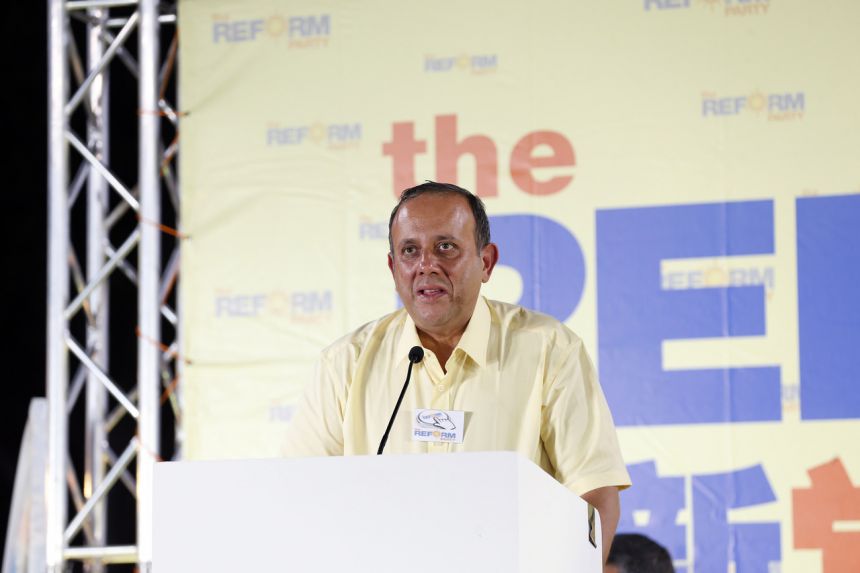
Mr Kenneth Jeyaretnam, son of the late opposition party leader JB Jeyaretnam, revealed on Tuesday (Jan 5) that a new charity will be set up in his late father’s name. His father was the creator of the Reform Party and former chief of the Workers’ Party.

In a press release, Mr Kenneth Jeyaretnam, the Reform Party secretary-general, said that the new JB Jeyaretnam Foundation would alleviate poverty among oppressed communities. It was an area close to the heart of JB Jeyaretnam.

A glance at the late JB Jeyaretnam’s life

JB Jeyaretnam was the first opposition party candidate to be nominated Member of Parliament during a by-election for the Anson constituency in 1981. At the time, he was also a professional attorney and the secretary-general of the Workers’ Party.

He was repeatedly sued by People’s Action Party (PAP) officials for his relentless critiques of the government. Eventually, he became bankrupt via court proceedings.

In 2001, due to bankruptcy, he was forbidden from engaging in elections. Later, he was released from bankruptcy in 2007 and founded the Reform Party in 2008. Subsequently, at the age of 82, he died of heart failure in the same year.

Second charity to be set up after a veteran opposition icon
veteran politician Chiam See Tong

Image Credits: todayonline.com

After a prominent opposition figure, the charity which has to be accepted by the government is the second to be established. The first is the Chiam See Tong Sports Fund created in 2017 to help disabled athletes. It was set up by Mr Chiam See Tong, former head of the Singapore People’s Party.

Charity will support the older generation and more

Mr Kenneth Jeyaretnam mentioned that the initiative would help the aged, the homeless, and students from families in hardship.

The aim is to support them by allowing them access to amenities or resources and removing or reducing poverty’s drawbacks. Students from low-income families can be offered assistance through free or low-cost tuition, and not just by cash or food staples.

“However, we are still at a very early stage and one of our first official activities will be to conduct research and an audit of (clients’) needs,” he added.

A significant announcement on his father’s birthday
Kenneth Jeyaretnam

Image Credits: The Straits Times

The news of the proposed charity drops on the date of Mr Kenneth Jeyaretnam’s father’s birthday. “Though he can no longer be with us, his legacy lives on to be preserved for future generations,” he commented.

As soon as it is registered, fundraising will commence for the charity. Amid the pandemic, though some donations for charities had plummeted, he decided to launch the foundation this year. This is because more people are suffering and the need for charity support is considerably higher than before.

“Despite the pandemic, I decided to coincide this announcement with JBJ’s (JB Jeyaretnam) birthday this year and not to delay any longer. We are all very excited and looking forward to getting to work for our communities,” Mr Kenneth Jeyaretnam remarked.

Anyone curious to know more about the charity or plan to donate in the future can contact them at [email protected].

Read More...

Should you let a robo-adviser dictate how you invest your money?

UOBAM robo-adviser

Several consumer-facing Financial Technology (FinTech) companies, from digital payments to insurance and transfer payments, have arisen to support Singaporeans’ personal finances. You may have heard of robo-adviser companies such as StashAway, Syfe, and AutoWealth that help with investments.

What are robo-advisers?

To optimise investment portfolios according to the risk profile of the customer, Robo-advisers rely on algorithms. In reaction to market changes, portfolio readjustment is performed automatically.

As such, there is little need for active monitoring by the investor with all these automatic features. As seen from various posts and comment threads on local financial platforms, the low fees paid in relation to human investment advisors have further raised interest in robo-advisers.

A Statista study forecasts that assets under watch by local robo-advisers and user numbers are estimated to rise by over 50 per cent in 2021 to hit US$1.06 billion and 105,000 users accordingly.

Robo-advisers help break barriers to entry
asian-man-using-mobile-phone

Image Credits: Freepik

The perceived difficulty of gaining financial expertise and the scarcity of time for investment and fund management are two widely quoted reasons for not investing.

With technology assistance, robo-advisers eliminate these hurdles, making them a fantastic way to kickstart investing, particularly for beginners. This is not to mention that the procedure of signing-up is reasonably straightforward.

In 15 minutes, a profile can be registered. To propose an appropriate portfolio concerning the investor’s financial targets and risk aversion, one only needs to answer some preliminary questions.

Standard considerations include age, gender, marital status, salary, investment horizon, and priorities, such as funding for a house versus retirement planning. At the same time, risk evaluation focuses on experience with multiple financial instruments and gain and loss perception.

Once that is in place, algorithms based on current financial models will handle the portfolio. Easy peasy, isn’t it?

Advantages of using robo-advisers

The isolation of feelings from investing using robo-advisers is a gain. Investors are far less likely to respond irrationally to disruptive market developments and exit from the market out of panic, with investments using advanced automated trading.

Robo-advisers often foster healthy financial habits by encouraging clients to add to their investments on a routine basis. This induces investors to take advantage of the dollar-cost averaging (DCA), which has been proven to be a successful method for allowing the long-term accumulation of capital by novice investors.

A look at the downsides
having a discussion

Image Credits: fa.com.sg

No one thing in the world is perfect, and this applies to robo-advisers too. Given their emphasis on ease and effectiveness, robo-advisers cannot make investment decisions precisely personalised to each user’s financial condition.

Instead, they enable clients to pick from pre-selected portfolios from a restricted menu. They deal only with personal finance’s investment facets and miss the human touch of actual financial advisors.

Human financial planners devote much more time to identifying the needs of their customers. Thus, they can provide numerous solutions that cover various holistic financial management elements, including savings and coverage.

Is investor passivity harmful?

The low percentage of investor participation needed is one of the principal selling points of robo-advisers. But is the lack of investor involvement a cause for concern?

Investor indifference may foster a laid-back approach towards other areas of financial planning. Since computers and algorithms can assign this seemingly cumbersome task, this may lead to a refusal to gain financial expertise going forward.

Although robo-advisers cater to tech-savvy, passive, and limited-capital investors, automated investment does not appeal to active investors. This is especially so for those who want to have portfolio ownership and may be dissatisfied with having a bot controlling their assets entirely.

According to an HSBC survey done last June, only one-quarter of Singaporeans had used mobile banking to invest. This hesitation in handling digital capital shows the real lack of investment expertise or trust. It also highlights the need to empower Singaporeans with financial knowledge.

Lack of financial knowledge can be devastating
investment-stock-photo

Image Credits: City Nomads

Dr Gordon Tan Kuo Siong, Faculty Early Career Award Fellow at the Singapore University of Technology and Design, shared how a lack of financial knowledge can be devastating.

Using the story of Alex Kearns, he brings out the importance of financial literacy. Last June, the news reported the death of the 20-year-old trader by suicide. After Kearns mistakenly thought he lost hundreds of thousands of dollars on Robinhood, a free-trading app, he took his own life.

For sound investment and financial planning, the acquisition of knowledge is necessary. As the term “caveat emptor” indicates, consumers’ ultimate responsibility is to perform proper research when making a transaction. Buyers should request information on the details of the items they purchase.

In short, consumers should arm themselves with the information they need on the investment products that robo-advisors suggest. As for the businesses who promote these services, it is vital to ensure adequate resources on how their products operate.

Some deets on local robo-advisers

Several local robo-advisers have also launched educational initiatives to develop more educated investors. A set of courses covering personal finance and trading on its app, as well as frequent newsletters and market insights, have been made freely available by StashAway.

Syfe posts short articles and conducts online seminars to provide the public with financial information. These programs are praiseworthy and should not be treated as unnecessary supplements.

In conclusion, if robo-advisers boost their customers’ financial literacy and consumers make an effort to consider what they are investing into, buyers will have much more interest in creating machine-enhanced financial decisions and endow their money to a robot.

Read More...