Can You DIY Your Wedding to Save Money?

When it comes to wedding planning, it is all about knowing your priorities and allocating your money wisely. Making a list of your priorities and setting a budget should be the number one step of wedding planning. Apart from this, here are other ways you can save money.

#1: LEAD YOUR GUESTS TO A WEDDING WEBSITE

When it comes to your wedding invitation, you can save money by directing your guests to your wedding website instead of printing out multiple invitations. You can create free websites through platforms such as Wix and WordPress.

Do not forget essential information such as the welcome party or rehearsal dinner details as well as the transportation and map to your ceremony.

#2: SELECT THE “OFF-PEAK” MONTH

The wedding off-peak season typically runs from November to March. If you want to get the most bang for your buck, you can host your wedding during this period. Considering having a celebration in November or March can help you save money in your venue rental fee. Just ensure that you have a Plan B for inclement weather!

#3: CUT DOWN YOUR GUEST LIST

It goes without saying that a smaller guest list is easier on your budget and sanity. Reducing your guest list from 300 to 150 can be overwhelming, but manageable.

Image Credits: pixabay.com

Intimate ceremonies require less money and less effort. Moreover, you will be able to have quality interactions with the people who mean most to you.

#4: CONDUCT THE ENTIRE WEDDING IN ONE PLACE

Avoid worrying about the coordination/logistics and the extra expense of transportation by having your entire wedding at one venue. Everyone will be on time for your ceremony and reception.

#5: EMBRACE THE ALL-IN-ONE PACKAGE

If you are maximizing your wedding budget, you must keep an eye for the words: “all inclusive”. There are venues that provide all-in-one packages that cover amenities, catering, staff, cake, guest accommodation, host, and more. Bundling all these services in one roof can help you save money and reduce your stress!

#6: ORDER YOUR WEDDING GOWN IN ADVANCE

Ordering your wedding gown at least eight or nine months before the ceremony can help avoid the rushed delivery fees. Last-minute alterations that are costly can also be prevented.

Image Credits: pixabay.com
Sources: 1 & 2

Read More...

Should you still wear a mask on the plane if it’s not required by law?

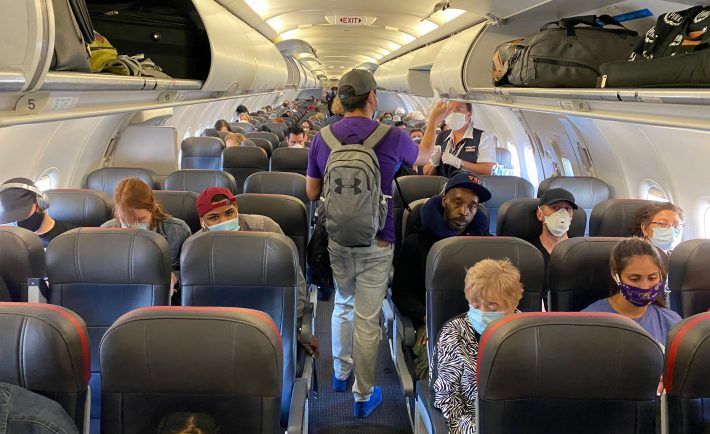
majority of people wearing masks on a flight

Singapore Airlines said that unless they are flying to or from a place that requires masks, travelers would not be obliged to wear them on flights. This policy on the use of masks while flying adheres to the most recent regulations.

But should you still wear a mask if certain flights don’t need it? Many people who are flying soon are debating whether to wear a mask. Allow us to discuss the safety concerns and more if you are also sitting on the fence. Hopefully, this will give you a slight peace of mind.

Safer than you think

Experts in infectious diseases observed that aircraft ventilation requirements are stringent and that no significant COVID-19 clusters have been linked to flights thus far. In essence, flying commercially is significantly safer than most people realize.

This is because a three-minute air exchange occurs repeatedly in an aircraft. More than 50% of the air entering the cabin is entirely outside air, while the rest is passed through hospital-grade HEPA air filters, which remove more than 99% of airborne particles. Therefore, it is nearly impossible for virus particles to be wandering through an aircraft, strictly speaking.

Levels of risk vary among people
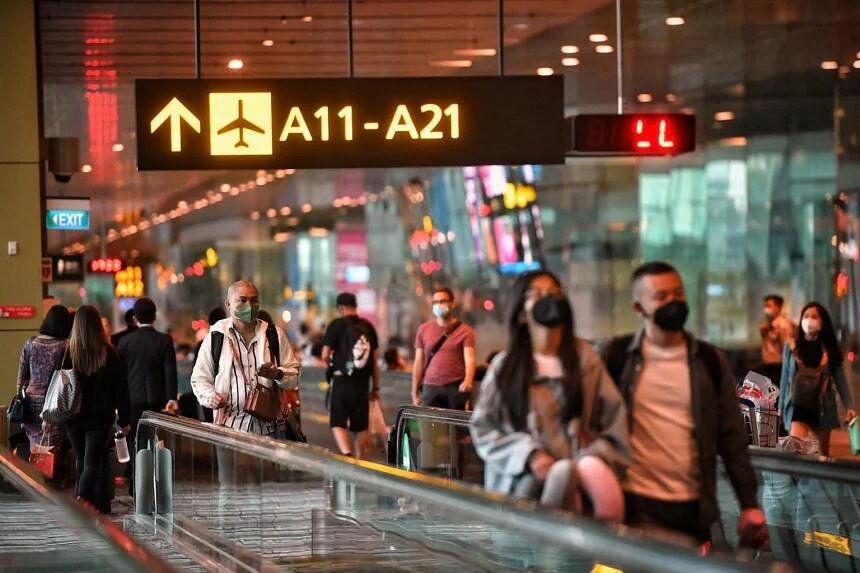
travelers at Changi Airport

Image Credits: straitstimes.com.sg

Nonetheless, the risk that different people face from contracting COVID-19 may affect their choice to wear a mask on a flight. People who are younger or who have just recovered from COVID-19, for instance, are at lower risk.

It would probably be a good idea for those who are immunocompromised or who have never been infected before to wear a mask the whole journey. This may apply to transplant recipients or cancer survivors who are on diverse immunosuppressive medications.

How to take safety precautions pre- & in-flight

There will always be two teams—mask-up and mask-off. For those who want to better protect themselves by wearing a mask, go ahead. Or if you’re feeling uncomfortable sitting beside passengers who are not putting on masks, there are safety precautions you can take.

A mask that comfortably covers your nose and the sides of your face is what you want to wear. An N95, a KN95, or a layered cloth mask can be suitable choices. Bring additional masks, sufficient sanitizers, and disinfectant wipes in case you need to change your mask or sterilize your hands or surrounding surfaces.

Try to arrange shorter flights and have your meals settled before you get to the airport to prevent having to take off your mask unnecessarily. Before boarding, steer away from congested places to get a short snack or drink some water if feasible.

Have a lovely holiday but don’t forget to still keep up with your hygiene habits. Stay safe, everyone!

Read More...

How to vent about work without making enemies

colleagues gathered together

It’s natural to need to vent about work sometimes. You’re under a lot of pressure, and sometimes it feels like you just can’t take it anymore.

But venting to your coworkers is risky business. One wrong move and you can find yourself with no friends at the office. So how can you do it without making enemies?

The key is to be respectful and to keep your complaints focused on the work itself, not on the people you work with. Complaining about the boss or your co-workers is only going to make them defensive and less likely to want to help you out.

Also, if feasible, try talking to a friend outside of work or writing in a journal. That way, you can get your frustrations out without putting your work relationships at risk. Continue reading for more deets.

Choose the right audience before venting

We’ve all been there—you’ve had a bad day at work, and the first thing you want to do is a vent to your coworkers. But do you know that venting to the wrong people can make things worse?

When you vent to someone who’s not in a position to do anything about your situation, you’re just wasting your breath. So before you go running off at the mouth, stop and think about who might be the best person to talk to.

Is there someone on your team who has been through something similar? Or is there a manager you can go to for suggestions? Venting is natural, but it’s wise to do it in a way that doesn’t hurt your career.

Pick your words carefully and be aware of your tone
two coworkers in a serious discussion

Image Credits: themuse.com

When it comes to venting about work, choose your words carefully. You don’t want to say something that you will regret later. And be aware of your tone—you want to avoid coming across as hostile.

Instead, try to focus on the positives, and find a way to communicate constructively. Let your colleagues know that you’re frustrated but still committed to finding a solution.

It can be helpful to have an outlet for your frustrations—something outside of work that you can do to vent. Maybe you can go for a quick run or talk to a close friend over weekend brunch. Just make sure that you’re not taking out your frustrations 100% on your coworkers.

Have a plan to deal with the situation that you’re venting about

You’ve had it with your boss. You’ve had it with the commute. You’ve had it with the clients. But before you let loose at work, think about how that’s going to make you look in front of your coworkers.

It might feel good at the moment to rant and rave about your job, but chances are you’re just going to make yourself look bad. Not to mention, you’re going to make it difficult for people who have to consistently cross paths with you.

Before you start venting, have a plan for how you’re going to deal with the situation that’s driving you crazy. Maybe that means talking to your superior about your concerns or looking for a new job. But whatever it is, have a plan so you’re not just shooting from the hip.

Sure, everyone needs to vent about work sometimes. But if you’re not careful, you could end up alienating your coworkers—or worse, getting yourself in deep trouble with the management. As we’ve mentioned in this post, there are a few key things to keep in mind when venting about work. Make sure you’re talking about work. Avoid openly criticizing your boss or coworkers. Remember that your coworkers are people too, and they don’t deserve to be the target of your venting sessions. If you can keep all of these things in mind, you should be in good shape to vent about work without making enemies.

Read More...

Why you should make time for quiet moments every day

sitting alone by the beach

You’re always on the go, and you barely have time for yourself.

But what if we told you that making time for a few quiet moments every day is crucial for your health and well-being? You might not believe us, but it’s true.

In this post, we will look at the importance of including some calm moments in your daily routine, and share some tips on how to make that happen.

Set intentions for the day ahead

What do you want to achieve? What do you want to get done by tomorrow? When you have time to yourself to set these intentions, it’s easier to stay focused and avoid getting sidetracked.

During these moments, you can also review your intentions and brainstorm steps to make things happen. So make time for yourself, even if it’s just for a few minutes each day.

Help connect us with our inner thoughts

When we take a few minutes to ourselves, we’re able to connect with our inner thoughts. This is a time when we can reflect on our day, set goals for the near future, or just unwind and de-stress. It’s a time when we can do some self-reflection and figure out what’s essential to us.

Quiet moments can be anything from taking a walk in the park to sitting in silence in your favorite spot or designated meditation room. The key is to find something that works for you and stick with it. And don’t forget to set recurring alarms if you tend to forget.

Help us to appreciate the little things in life
a woman staring out of the window

Image Credits: unsplash.com

There is a lot of noise and chaos in the world, but that’s precisely why it’s crucial to take some time for yourself each day. During those quiet moments, you’re able to look back on the time that has passed and appreciate all the little things that you might have missed.

You can sit in silence or listen to calming music while doing so—whatever helps you to relax and clear your mind. Taking some time for yourself each day is a terrific way to recharge your batteries and prepare yourself for whatever might come your way.

Can be used to practice meditation or mindfulness

When you take some time out for yourself, you can use it to practice meditation or mindfulness. These practices can help you focus on the present moment and clear your mind of all the distractions that are constantly swirling around us.

When you’re feeling stressed or overwhelmed, taking a few minutes to yourself can be beneficial. It allows you to center yourself and find some peace amidst the chaos. And that’s something we could all use a little more of in this digital era.

You’re probably busy every day, running from one task to the next. But what happens when you don’t take a moment to yourself, to just breathe and relax? You end up feeling crushed. Adding a few quiet moments into your daily routine is a great way to de-stress and catch up on some much-needed break. Even if it’s just for 10 minutes each day, taking some time for yourself can make a big difference. So set alarms in your schedule this week to chill, and enjoy the serenity that comes with it.

Read More...

4 Things to Consider Before Living Near Your Child’s School

Singaporean parents want to provide their children the leverage in life through providing quality education. Some parents are willing to spend their savings to move to a property within proximity of their chosen primary school.

The question remains, is it really worth it to move near your child’s school to increase his or her chances of getting in?

#1: AMENITIES IN SCHOOL ZONES ARE PRICIER

Living near your chosen primary school is convenient for commuting. However, being near the school zone comes with other inconveniences such as noise and traffic in the morning.

Elite primary schools tend to be situated in prime districts. Properties in the prime districts are expensive. For instance, ACS Junior in Newton is surrounded by private properties amounting to S$3-7 million. Apart from shelling out millions, it is not uncommon for supermarkets or MRT stations to be further away from residential areas. In contrast, neighborhood schools are often surrounded by HDB Developments.

#2: PRIORITY ADMISSION IS NOT GUARANTEED

Staying near your chosen school does not immediately guarantee that you will be given the slot, which is why many parents are hoping to improve their chances by participating in volunteer work. If you cannot get into your preferred school and have no alternative options nearby, that means that you could be facing a lock-in period of at least three to five years as part of the home loan agreement.

On the other hand, if you can successfully secure a place for your child due to proximity, you will need to stay at the address for at least thirty months from the start of the registration exercise as required by the Ministry of Education.

#3: SOCIAL SUPPORT CAN BE A FACTOR

Apart from prioritizing quality education, childcare should also be a factor in planting your roots. Do you opt to live near the homes of your parents and in-laws? If so, you will be able to ask for their support after school hours. For instance, your child can go over to his or her grandparents’ home after school.

#4: ASSESSING PROPERTY MARKET PRICE CAN MAXIMIZE PROFIT

If you found a home within a kilometer away from your chosen primary school, you will reap its rentability and value benefits. Many parents would want to rent a flat near their children’s school.

A study done by NUS found that 1.4% and 6.9% price declines of private and HDB homes, respectively, within 1km of a school that relocates. Apart from your proximity to the school, it is essential to assess a property’s size, age, and nearby amenities to ensure a tidy profit once you decide to rent it out or to sell it in the future.

For owners of private properties, you can seek the help of licensed appraisers who are members of the Singapore Institute of Surveyors and Valuers to determine your property’s valuation. While HDB homeowners should not worry about researching the valuation cost as they can get a valuation report on their unit from the HDB office.

Image Credits: unsplash.com

BOTTOMLINE

Choosing where to live is a personal decision. Consider all the factors that will affect your move. Some people are content with being near any primary school, while others feel that getting a good start in life is tied to an elite primary school. The choice is up to you.

Sources: 1 & 2


Read More...