Should you apply for a credit card? Consider these points first

credit cards in Singapore

So, you’re thinking of applying for a credit card?

It’s a decision that should not be taken lightly. Before you fill out that application, take a step back and assess your financial situation.

Are you in a good place to handle another monthly bill? Do you have a plan for how you will pay off your credit card balance each month? Can you afford to pay the annual fee? These are just some of the questions you need to ask yourself before applying for a credit card.

If you can answer yes to all of the questions above, then applying for a credit card may be a good idea. But if there are any lingering doubts or concerns, it might be best to hold off on submitting that application.

Not everyone should apply for a credit card

If you’re not good at managing your finances, then getting a credit card is only going to lead to trouble.

Are you aware of the fees and interest rates that come with credit cards? Many people get blindsided by these charges and end up paying a lot more than they expected.

Also, think about why you’re wanting a credit card. If it’s just to have another form of payment, then there might be better options out there for you. A credit card is only going to serve you right if you use it responsibly.

You should consider these points before applying for a credit card

When you’re considering applying for a credit card, there are a few things you should take into account:

  • Financial history

You should carefully consider your financial history before applying for a credit card.

If you have a history of trouble paying your bills on time, then you’re not ready for a credit card. Take some time to assess your financial habits and your ability to repay your debts. If you’re not sure, it might be best to hold off on applying for a credit card until you’re ready.

  • Spending habits
paying via credit card

Image Credits: unsplash.com

Are you somebody who likes to spend money freely?

If you answered yes, then you should probably avoid applying for a credit card.

The reason being is that you’re more likely to get into debt if you already tend to spend recklessly.

But if you’re cautious with your spending, then a credit card can be a wonderful way to build up your credit score. Just make sure that you’re always paying your bills on time and that you’re not borrowing more money than you can afford to pay back.

  • Debt-to-income ratio

Debt-to-income ratio is simply a measure of how much debt you have compared to how much money you make.

If your debt-to-income ratio is high, that means you’re already struggling to make ends meet. In this case, it’s probably not a good idea to take on more debt by applying for a credit card. You need to get your finances in order before you can be responsible for another monthly payment.

On the other hand, if your debt-to-income ratio is low, that means you have more room to take on more debt. But this doesn’t mean you should go out and apply for every credit card out there! You still need to be mindful of how much credit you’re using and make sure you can afford to pay your bill each month.

Credit cards can be helpful if used correctly

At their core, credit cards are simply a way to borrow money. And like any form of debt, they should be used with caution.

But if you do your research and find the right card for you, credit cards can be a helpful tool for building your credit history and improving your credit score. They can also provide you with some great perks, bonuses, and rewards.

Just be sure to always pay your balance in full each month, and never charge more than you can afford to pay off. That way, you can enjoy the benefits of a credit card without any of the headaches.

As we close, you should not apply for a credit card if you have any of the following characteristics: a low credit score, a spending addiction, or a lack of financial discipline. If you’re responsible with your money and have a good credit score, then a credit card can be a smart way to earn rewards and build your credit history. Just be sure to read the terms and conditions carefully so you know what you’re getting into.


Read More...

The new manager’s guide to success

woman leading a meeting

You’ve just been promoted to manager. Congratulations! This is an exciting new chapter in your career.

But with great power comes great responsibility, and as a manager, you have tasks and challenges to face.

If you’re new to managing teams, don’t worry. In this article, we will share some tips for how to set yourself up for success as a new manager.

We will cover everything from defining your goals to building relationships with your team. So whether you’re just starting or you’re already feeling overwhelmed, read on for advice.

Define your goals

What do you want your team to achieve? What do you want to achieve as a manager?

Get specific with your goals and make sure they’re realistic. Don’t aim too high and risk becoming overwhelmed. But also don’t aim too low, because that won’t push you and your team to reach their potential.

Once you’ve defined your goals, make a plan for how you’re going to achieve them. This may involve setting specific milestones and creating a timeline. And be sure to communicate your goals and plan to your team members, so they know what’s expected of them.

Get to know your team

Take the time to learn about their backgrounds, their strengths and weaknesses, and what motivates them. This will help you better understand how to manage them.

Another key thing to keep in mind is that not everyone is the same. What works for one person might not work for another. Be open to trying new things and experimenting until you find what works best.

Establish rules and boundaries
colleagues in a meeting

Image Credits: forbes.com

Establishing rules and boundaries will help you create a safe and productive work environment for your team.

Be clear about what is and isn’t allowed, and enforce these rules consistently. This means being respectful of people’s time, not tolerating gossip or toxicity in the workplace, and holding team members accountable for their actions.

The key is to find the right balance between being too strict and too lenient. Rules that are too restrictive can make people feel stifled and unhappy, while rules that are too lax can lead to chaos and dysfunction. It’s all about finding the right balance for your team and company.

Delegate tasks and motivate your team

Delegating tasks means taking the time to properly assess each member of your team and figuring out what they’re good at.

Not everyone is going to be motivated by the same things, so tailor your approach accordingly. Some people might be motivated by rewards while others might be motivated by praise or a sense of ownership.

The key is to find what works for each individual and then encourage them to give their best. You might need to experiment a little at first, but eventually, you will find a system that works for everyone.

Handle conflict effectively and provide solutions

You don’t want any simmering issues to boil over and cause a rift within the team. So how do you go about it?

First of all, stay calm and keep your emotions in check. If you start yelling or pointing fingers, it’s only going to make things worse.

Next, try to understand both sides of the story. Once you have a clear understanding of what’s going on, you can start working on a resolution.

As a new manager, it can be tough to know where to start. Here are a few takeaway tips: make a plan, delegate, and communicate. Successful management is all about planning and organizing. Make a plan for your team and stick to it. Don’t try to do everything yourself—delegate tasks to your team members and let them take ownership of their work. And finally, communication is key in management—make sure you’re clear and concise when giving instructions, and always be available to answer questions. Remember, it takes time to learn the ropes, but with perseverance and a good attitude, you will settle in no time.

Read More...

The best sports for people with weak knees

kayaking in Singapore

You’re worried about your knees.

You’ve been told that you need to take it easy, and that means no more marathons, no more jumping, and no more high-impact sports. What does that leave you?

Don’t worry, we’ve got you covered. There are plenty of sports that are great for people with weak knees, and we’re going to share a few of our favorites with you. Keep reading to learn more.

The best sports for people with weak knees

Dealing with knee pain doesn’t mean you have to give up on exercise altogether.

In fact, there are plenty of sports that are perfect for people with weak knees. The activities we’re about to introduce to you are low-impact and put minimal stress on your joints. Plus, they help you stay in shape and improve your fitness level.

  • Swimming

Swimming is low-impact, which means it won’t put any stress on your joints, and it’s a great workout for your whole body.

Plus, swimming is a really fun way to stay active. You can swim in the pool or hit the beach and go for a swim for a change. If you prefer some company, try water aerobics.

  • Gentle yoga

Gentle yoga doesn’t require a lot of sudden movements and can even act as a therapy for your weak knees.

Plus, yoga is known for its relaxation and stress-relieving benefits. And when you’re stressed, your body releases cortisol, which can aggravate pain. So practicing yoga for the long term can be a wonderful way to help keep your knee pain under control.

  • Rowing or kayaking

Apart from swimming and gentle yoga, rowing or kayaking are great exercises because they put very little stress on the knees.

And since they’re both outdoor sports, it’s a superb opportunity to get some vitamin D under the sunshine. Plus, they’re a lot of fun when done individually or in pairs.

The key is to find an activity that you enjoy and that fits within your abilities. Don’t push yourself too hard or you will only end up hurting yourself further. Just take it slow and easy, and before you know it, you will be feeling better than before!

When you should see a doctor for weak knees
doctor assessing a patient's knee

Image Credits: everydayhealth.com

If you’re experiencing excruciating knee pain, see a doctor and get a proper diagnosis.

Knee pain can be caused by a variety of issues, from arthritis to ligament damage. And if the pain is severe or doesn’t go away with rest and ice, surgery may be necessary.

If you suffer from knee pain, don’t let that stop you from staying active. There are plenty of sports that are gentle on the knees and can help to strengthen them over time. Swimming is a great option for people with weak knees because it’s a low-impact sport. It also strengthens the muscles around the knee, which can provide some relief from pain. Other options for people with weak knees include yoga. It’s gentle on the joints and can help to improve flexibility and range of motion. Or you could give rowing or kayaking a try and see how they work for you.

Read More...

How to score brownie points in an interview by fixing these interviewer mistakes

a lady having a job interview

If you’re looking to score brownie points in an interview, it pays to know what mistakes interviewers commonly make.

Believe it or not, interviewers are human too, and they sometimes make mistakes. Luckily, most of these mistakes are easy to fix.

In this article, we will take a look at common interviewer mistakes, and will provide tips on how to rectify them. So the next time you go for an interview, make sure you know what to watch out for!

Late for interview

Maybe you were scheduled for a 3 pm interview.

You arrived at 2.45 pm and waited until 3.30 pm. The interviewer then checks in and says, “I’m so sorry for being late.” Should you just reply with an “it’s okay”? Well, no, because being late is not a sign of respect. 

A better strategy to advance the conversation would be to politely switch the subject to something positive and say something like, “Hi, it’s nice to meet you,” or “Thank you for taking time off to meet me.”

Misreading your resume
a sample resume

Image Credits: yeswriting.com

It’s normal for hiring personnel to misread a resume. Since they have read so many, they might have confused you with another individual. But the mistake should be corrected promptly.

If you’ve stayed with a company for at least two years, reiterate that—”I’ve only held two jobs in the past four years.” Then explain how those positions significantly aided your development. Showing your growth in each role sends a positive message so don’t forget that.

Not giving you a reply after promising one

Maybe you thought you had aced the interview and were promised a reply soon. But you received none even after a week.

To prevent such scenarios, inquire about the next steps and when you may anticipate hearing from them. Ensure you have a distinct time frame.

If that period has passed and you haven’t heard anything, send a brief email as a follow-up to the interviewer. Or you could try another method of getting in touch with the interviewer. Sometimes, the person may be on urgent leave or the email has gone to spam.

You don’t have to be a perfect candidate to make a great impression on your interviewer. In fact, by fixing some of the most common interviewer mistakes, you can score some bonus brownie points. Interviews can be nerve-wracking, but they’re also a chance to show off your skills and strengths. Put your best foot forward and make a superb impression. Good luck!

Read More...

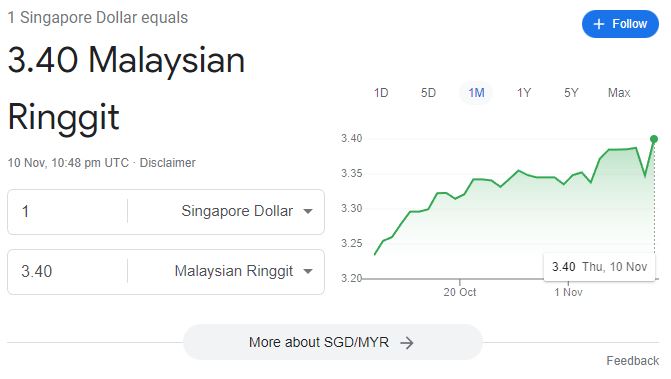
S$1 to RM3.40: Singapore dollar hits record high against the Malaysian ringgit

A new high against the Malaysian ringgit

The Singapore dollar has reached a new record high against the ringgit today, 11 November. According to data from Forbes, the Singapore dollar has reached a new high of 1 SGD = RM3.400738. 

Last week an article by Straits Times shows that analysts project the ringgit to drop to RM3.35 to RM3.45 range against Singdollar due to the ringgit volatility. With strong economic fundamentals, the Singapore dollar has remained resilient and has been one of the better-performing global currencies as compared to its Southeast Asian peers. Given the outlook for inflation, the Singapore central bank uses the exchange rate rather than interest rates to stabilise prices.

MAS reacts to high inflation by allowing the Singapore dollar to appreciate against peer currencies, thereby driving down the cost of imported goods in local currency terms.


We could see long queues at money changers soon. 


Top image via Depositphotos.

Read More...