
Good reasons why you should go Dutch from courtship to marriage

couple figurines on top of coins

Ever felt the tension when the bill comes on a date or wondered if you’re being taken advantage of financially in your relationship?

Maybe it’s time to consider or reconsider “going Dutch”.

Some people might think it’s unromantic, but going Dutch (where costs are split equally) from dating to marriage can actually save you down the road.

Why should you go Dutch while dating?
  • Avoiding financial friction

Very simple – avoid potential arguments over who owes what.

By agreeing to split costs, you remove the awkwardness of one person feeling like they owe the other.

This can prevent resentment over time, especially if you’ve got some income disparity between partners.

  • Establishing equality

This practice shows that both parties are invested both financially and emotionally.

  • Building financial independence

Splitting expenses encourages both partners to maintain their financial independence, which can be very empowering for people who value their autonomy.

By managing your finances, you’re better prepared to make joint decisions about money when the relationship gets more serious.

But it’s good to note that going Dutch doesn’t mean you can’t treat each other sometimes.

It’s up to you and your generosity!

  • Reducing financial pressure

By splitting expenses, neither partner bears the full weight of financial obligations.

Going Dutch also lets you both enjoy date experiences together without one person feeling the strain on their wallet.

As your relationship progresses, this habit can smoothly transition into married life, in the area of managing household expenses per se.

Encouraging mutual investment in the relationship

Going Dutch doesn’t always mean a half-half-split.

Find a % that works for both of you based on your circumstances.

two cups of coffee on a tray

Image Credits: unsplash.com

Modern relationship dynamics
  • Shifting gender roles

Come on, it’s 2024.

As societal norms change, traditional gender roles are being redefined, especially in terms of financial responsibilities.

You may have noticed that the expectation for men to always pay is becoming less common.

  • Financial equality in partnerships

When you choose to split expenses, you’re acknowledging that both individuals in the relationship CAN contribute financially.

  • Empowerment and independence

By deciding to go Dutch from dating to marriage, you’re adopting a modern mindset that values individual financial independence.

This practice can help both partners maintain autonomy while building a life together.

In a nutshell, it allows you to:

  • Preserve your financial status
  • Contribute equally to shared goals
  • Avoid potential resentment over money woes

It’s not about being stingy ya; going Dutch offers an approach that can strengthen your bond. By sharing financial responsibilities, you’re working on equality, respect, and open communication. This practice contributes to a lasting partnership built on support and understanding. So, be it future dates or planning your wedding, why not go the Dutch way?


Read More...

Get up to S$500 cash with DBS/POSB with your salary crediting & card spend

What’s better than payday? Free cash! With DBS/POSB, you can now get up to S$500 in cash rewards just by crediting your salary and spending with your POSB/DBS Credit or Debit Cards.

Here’s how it works:

Step 1: Start with S$300 Cash Reward

Register for the promotion from 7 August to 31 October 2024 and credit your salary of at least S$1,600 for three consecutive months to your DBS account. Once that’s set, you’ll be rewarded with S$300 cash! Just contact your HR department to make the switch.

Step 2: Unlock an Additional S$200

After your salary is credited, spend a minimum of S$500 monthly for three consecutive months on your DBS/POSB Credit or Debit Cards, and you’ll receive an additional S$200 cash reward—bringing your total to S$500!

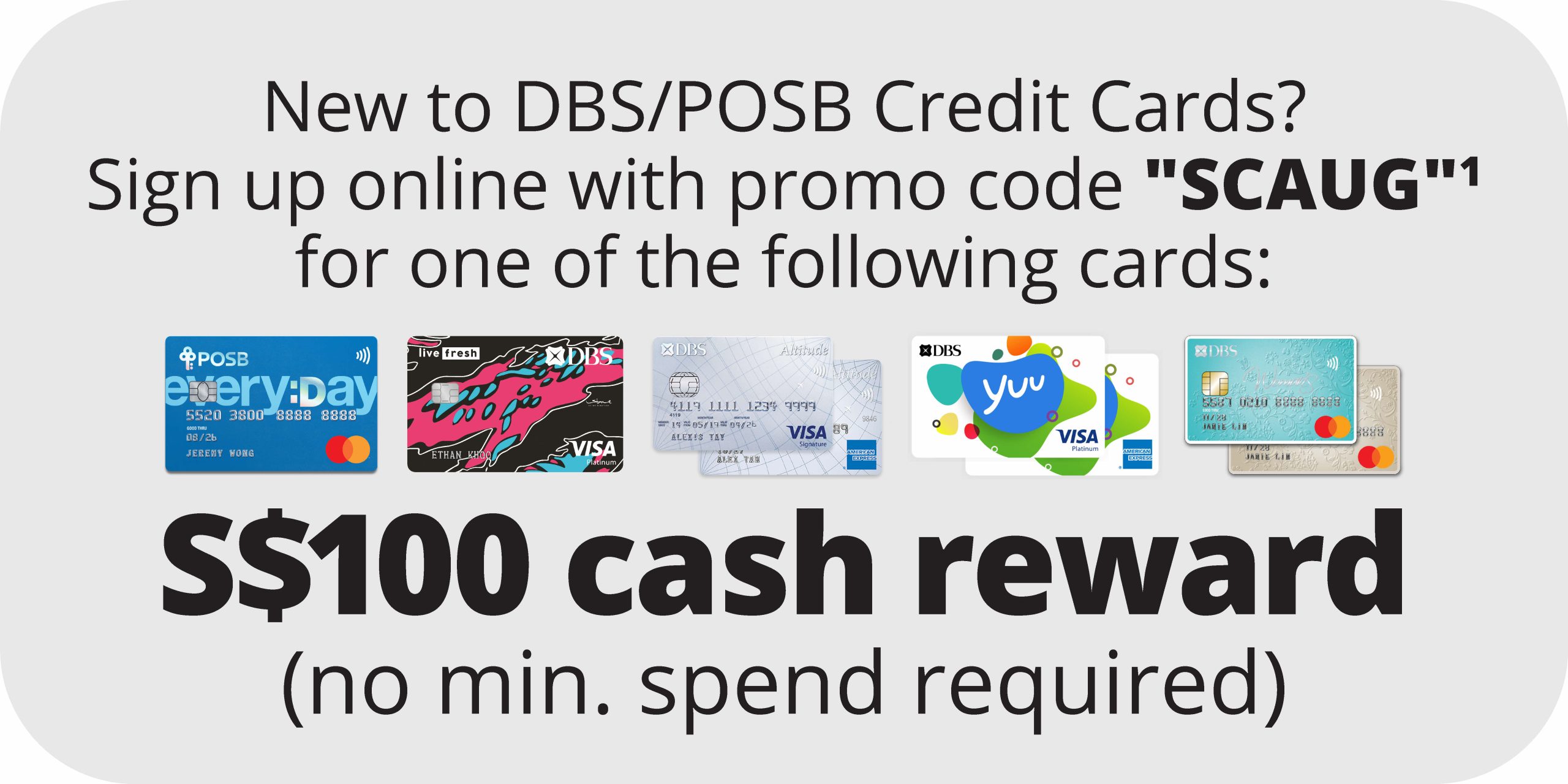
New to DBS/POSB Credit Cards?

If you’re new to DBS/POSB Credit Cards, apply now with the promo code SCAUG and receive an extra S$100 cash reward when you sign up! It’s the perfect way to kickstart your journey toward more rewards.

Reward Payout

Eligible Customers will receive the Cash Reward according to the schedule below:

Don’t miss out—register and credit your salary by 31 October 2024!

Terms and conditions apply.

Switch, spend, and get rewarded with DBS/POSB—because it’s time your money worked harder for you!

Click here to find out more about this offer.

Read More...

How Taxes Affect Your Flexible Retirement Annuity Withdrawals

Planning for retirement can feel like a maze. Each turn brings new financial choices. A key factor is knowing how taxes affect your annuity withdrawals. This knowledge is crucial for optimizing your retirement income and ensuring your nest egg lasts as long as possible.

Read on to learn how taxes affect your flexible retirement annuity withdrawals.

Timing of Withdrawals

The timing of your withdrawals can also play a significant role in the tax consequences. By carefully planning when and how much to withdraw, you may be able to minimize the amount of taxes owed on your retirement income.

Flexible retirement annuity plans allow you to choose when and how much you want to withdraw each year. This flexibility can be beneficial for tax planning purposes as well. For example, if you have a lower income and are in a lower tax bracket for one year, it may make sense to withdraw more from your annuity during that time.

Tax-Deferred Growth

The tax on flexible retirement annuity withdrawals depends on if the funds were pre or post-tax. Pre-tax contributions, such as those made to a traditional IRA or 401(k), are taxed at the time of withdrawal. This means that all your withdrawals from these accounts will be subject to income taxes at the current tax rate.

On the other hand, post-tax contributions, also known as Roth contributions, are not taxed upon withdrawal. Be sure to go to Annuity Rates HQ to see the current rates. This can provide significant tax advantages in retirement, as you will not be subject to income taxes on these funds.

Required Minimum Distributions

Also, consider required minimum distributions (RMDs) when planning your annuity withdrawals. Partial withdrawals from your annuity may satisfy your RMD. But, consult a financial advisor to ensure you meet these obligations.

If you fail to take out the required minimum amount each year, you may face steep penalties and taxes on the amount not withdrawn. Keeping track of your RMDs is a vital part of managing your retirement income and avoiding unnecessary taxation.

Impact of State Taxes

Consider state taxes on your flexible retirement annuity withdrawals, along with federal taxes. Each state has its own tax regulations and rates concerning retirement income, which can vary significantly.

Some states, like Florida and Texas, don’t tax withdrawals. Others tax retirement income at varying rates.

Knowing your state’s tax laws can help you withdraw money more efficiently. It might be worthwhile to consult with a local tax expert to ensure your retirement strategy aligns with state-specific laws.

Social Security Benefits

Another key point in retirement planning is your withdrawal from flexible retirement annuities. They may affect your Social Security benefits. Withdrawing large sums from your annuities could raise your income.

This may increase your tax on your Social Security benefits. This is due to the formula used by the IRS to determine how much of your benefits are taxable, based on your combined income.

Balancing your annuity withdrawals with your Social Security can lower your taxes in retirement. A financial advisor can be invaluable. They should know annuity options and Social Security rules. They can help create an effective withdrawal strategy.

Learning About Flexible Retirement Annuity Withdrawals

Understanding the tax implications of flexible retirement annuity withdrawals is crucial for maximizing your retirement income. By considering factors, you can create a comprehensive plan that minimizes your tax burden and ensures your savings last throughout your retirement years.

Be sure to consult with financial experts and stay informed on current tax laws to make the most out of your flexible retirement annuity.

Visit our website and read more.


Read More...

Unlocking Financial Security: 5 Crucial Benefits of Choosing a Fixed Deposit

graphic showing a couple holding a piggy bank together

To get financial freedom you need to make wise investment decisions. While there are ample investment solutions available in the market, depending on any particular one becomes a tough decision to make.

However, stock trading, currency, commodities, and even crypto trading are becoming popular choices for modern investors. None of these can be considered a long-term investment solution.

However, fixed deposit is a long-term investment solution that comes with- Stability, and Security.

FDs are meant for investors who are willing to make decent money while being more protective than other investment solutions. However, to invest in FDs, you must know what is a fixed deposit account.

However, in the process of FDs, you need to invest a specific sum of amount in your FD account for a fixed period. This is called locking down your investment. In return, you will get a fixed interest rate, which is higher than standard savings account interest.

Also, you will get more benefits with FDs. Let’s find out!

Guaranteed Returns

One of the most compelling reasons to invest in a fixed deposit is the guarantee of returns. Unlike equities or mutual funds, where returns are subject to market fluctuations, fixed deposits offer a predetermined interest rate.

This means you know exactly how much you’ll earn over the investment period, making it a reliable way to grow your savings without worrying about market volatility.

Capital Protection

Fixed deposits are known for their capital protection. When you invest in an FD, your principal amount is secure and protected against market risks.

This feature makes fixed deposits an attractive option for conservative investors or those looking to preserve their capital while still earning a return.

Flexible Tenure Options

FDs come with a range of tenure options, from as short as a few months to as long as several years. This flexibility allows you to choose an investment period that aligns with your financial goals and liquidity needs.

Whether you are planning for a short-term expense or a long-term financial goal, there’s likely an FD term that fits your requirements.

Predictable Income Stream

Fixed deposits can be particularly beneficial for individuals seeking a predictable income stream. Most FDs offer periodic interest payouts, such as monthly, quarterly, or annually.

This can be especially useful for retirees or individuals looking to supplement their regular income. The fixed nature of these payouts ensures you can confidently plan your finances.

Tax Benefits and Special Schemes

In many countries, fixed deposits offer tax benefits under certain schemes. For instance, in India, certain fixed deposits with a tenure of five years or more qualify for tax benefits under Section 80C of the Income Tax Act.

Additionally, some banks and financial institutions offer special FD schemes with higher interest rates for senior citizens, making FDs a favorable choice for elderly investors seeking better returns.

Bag a Steady Income

Choosing the right investment solution is proportional to risk factors. With FDs, you not only bypass the risk factors but also engage in a steady investment solution.

While you are not the only person dealing with investments, making the right decisions is essential. You might be wondering about all investment solutions, especially in a competitive market where everyone is focusing on beating inflation.

Why would you consider FD instead of stocks and bonds?

Well, the answer is simple: You will get a steady return here, which is guaranteed.

Can you give us a particular amount you can assure of getting as a return on other investments? No! But with FDs, you can predict that even before you invest. So, if you want stability with a decent return, FDs are the prime source.

Read More...

10 Tips for Surviving on a Low-Paying Job in Singapore

In Singapore, a low-paying job is generally defined as one where the monthly wage falls below the national median salary. According to the Ministry of Manpower (MOM), jobs with salaries under SGD 2,500 per month are often classified as low-wage. Approximately 10-15% of employed residents are in such positions, equating to around 200,000 to 300,000 people.

Navigating life in Singapore on a low income can be quite challenging. However, with determination and careful financial planning, you can improve your situation. Here are some practical tips to help you make the most of your circumstances.

#1: TRANSPORTATION

Rethink your daily commute. Public transportation in Singapore is efficient and affordable, so consider taking the bus or MRT instead of hailing a cab. If you must ride a car, look into carpooling options with colleagues to share the costs.

#2: LIVING EXPENSES

Living frugally doesn’t mean sacrificing quality of life. It means being mindful of your spending. Cut down on non-essential expenses like dining out frequently or subscribing to multiple streaming services. Instead, cook at home more often and enjoy free or budget-friendly entertainment options like parks and community events.

#3: INTERNET ACCESS

Take advantage of free Wi-Fi available at local coffee shops, libraries, and community centers. If you need internet at home, see if your employer offers any allowances or find bundle deals that include other services you need, such as cable or phone.

#4: DEBTS

Imagine the relief of no longer having to worry about monthly mortgage or credit card bills. Prioritizing debt repayment can free up your finances, reduce stress, and provide more flexibility in your career choices. While it’s easier said than done, start by addressing your smallest debts to build momentum, and then gradually tackle larger ones.

#5: FINANCIAL SUPPORTS

Many low-income individuals are eligible for financial assistance from government agencies. The Singaporean government, for instance, has set S$2,906 per month as a reasonable starting point for a living wage.

Image Credits: pixabay.com

If you earn less than S$2,500 per month and are over 30, you might qualify for the Workfare Income Supplement (WIS) scheme, which provides cash payments and additional contributions to your Central Provident Fund (CPF). See if you qualify.

#6: BACK-UP PLAN

Saving for emergencies can be tough, especially when you are living from paycheck to paycheck, but it’s crucial. If you can’t build an emergency fund quickly, consider having a credit card with available spending power as a backup for urgent situations. Just be cautious with its use to avoid accumulating debt.

#7: UPSKILL

Investing in your education and skills can open up new opportunities and potentially higher-paying jobs. Look for free or low-cost courses online or at community centers. For starters, SkillsFuture Singapore offers credits that can be used for a wide range of courses.

#8: SUPPORT NETWORK

A strong support network can provide emotional and practical help. Connect with family, friends, and community groups. Sometimes, just talking to someone who understands your situation can make a big difference.

#9: HEALTH CONCERNS

Staying healthy can prevent costly medical bills. Regular exercise and a balanced diet improve health and reduce medical needs.

Furthermore, Medisave and MediShield Life provide additional support. Medisave is a savings scheme for medical expenses, while MediShield Life covers up to 80% of hospitalization costs. These schemes, along with government subsidies, ensure affordable access to medical care.

#10: FINANCIAL GOALS

Finally, set achievable financial and personal goals. Try to be as positive as you can while doing so. A positive mindset can make a significant difference in how you handle financial challenges.

Image Credits: pixabay.com

Living on a low income in Singapore can present significant challenges, but with careful planning and a commitment to improving your financial situation, it is possible to manage your finances more effectively and enhance your quality of life. Remember, small steps and a willingness to adapt can make a meaningful difference.

Sources: 1, 2, 3, & 4

Read More...