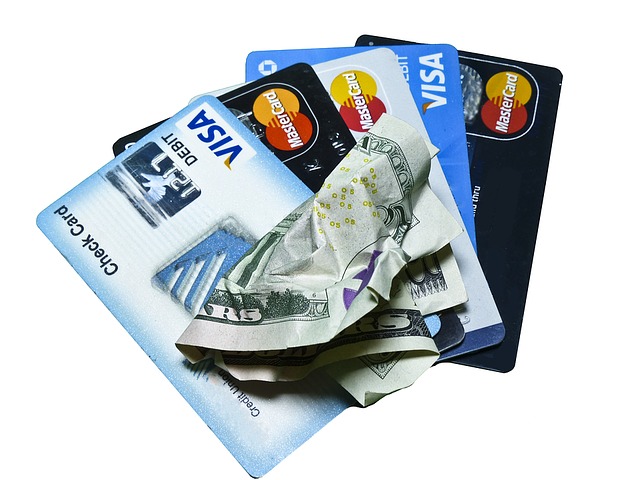
How To Become A Money Magnet

Equipped with a best-selling spirituality book, you realized that there was a secret to cultivating the life you want. I know how bizarre this sounds, but hear me out! Rhonda Byrne, The Secret’s author, claims that our thoughts can influence the world we live in. This concept of manifesting destiny is called “Law of Attraction”. According to this concept, investing positive energy and belief can lead to a desired outcome. In contrast, negative thoughts may attract negative outcomes.

Similar to other philosophies, the Law of Attraction stresses how the universe and its creations are made of flowing energy. Your energy can be used to either attract or repel money. To attract money based on the Law of Attraction, you may follow these steps.

STEP #1: OBSERVE YOUR THOUGHTS

How can you lure money into your life, if you feel negative about it? What goes around comes around. Before changing your thought patterns, awareness of your thoughts on money is important. Be mindful with how you speak about money and wealthy people.

Image Credits: pixabay.com

Do not be quick to diminish your worth. Instead, appreciate what you have. Law of Attraction entails that you train the universe to send you more money by receiving and appreciating it.

STEP #2: RE-FRAME YOUR THOUGHTS

Have you noticed that whatever you do in two weeks straight usually becomes a habit? The act of repetition is essential to reprogram the minds of animals as well as humans. Reprogram your mind to attract money by wishing for abundance.

Law of Attraction encourages you to send positive signals to the universe by dressing the part, by surrounding yourself with money savvy individuals, and so on. Behave in a way that is directed towards your desires.

STEP #3: MAKE A LIST

Visualization is one of the key tools of the Law of Attraction. It allows you to create a path that you can reach for. You are empowered to create a vision for your financial life. Be clear about the amount of success and abundance that you want to achieve. It is recommended to practice visualization on a daily basis.

Dive into the feelings of abundance by either making a financial list or by making a money vision board. Practicing visualization on a daily basis may open opportunities to manifest these items.


Sources: 1 & 2

Read More...

7 Top Tips for Managing Your Personal Finances

How you manage, spend and invest your money has a profound effect on the quality of your life. Proper money management equals financial independence. Plus, it will provide peace of mind, allowing you to use your organized state to save and plan for a bright and exciting future. Although learning how to become financially savvy can take a while, the basics are quite simple and never change. Here are 7 tips for managing your finances.

  1. Set goals

Money affects different areas of your life. For instance, your intent to retire early is entirely dependent on how you handle your finances today. The same applies to begin a family, home ownership and even changing careers When looking to manage your funds, start by writing down goals about what you want to do with your life and money.

Write down your long-term goals, whether it is buying a home or retiring early. Move on to writing your short-term goals like not using your credit card for luxuries or sticking to your budget. After that, prioritize them so that the most important ones come at the top of your list.

  1. Create a budget

This is the most important step of successfully managing your finances. A budget is a plan of the money you expect to receive and how you intend planning to spend it. A budget will show you;

  • How much money you earn
  • How much you spend
  • How much you can afford to pay the debt
  • How you can best plan your spending in the future

The basics of creating a budget

  • Choose a period you want to cover. This can be monthly, quarterly or even yearly, which is highly recommended.
  • Add up all your income for that period and the exact dates it will be coming in.
  • Calculate all your expenditure over that period.

Once you have all this data in place, you may want to make some changes to your finances which may include;

  • Spending less
  • Earning more
  • Spending smart
  • Saving and investing
  • Borrowing

Budgeting makes it easier for you to identify and resolve any financial problems you have.

  1. Make savings non-negotiable

Sometimes, the hardest part of saving is getting started. However, there is a simple and realistic way you can save for your goals, big or small. You can save money by opening up a savings account deposit at least 10% of your monthly payments into it. Also, strive to push all monetary gifts and extra earnings into that savings account as well.

  1. Pay bills on time

It makes sense to monitor all your monthly bills and even set reminders on when they are due. Timely bill payments will help you avoid losing money through late penalties and improve your credit score. One way to ensure you stay on top of your bills is through direct debit. Choose a payment date that suits you and makes sure to include it in your budget to make sure you never miss a payment or incur penalties again.

  1. Prioritize debt payments

Although not all debt is bad, some like credit card debt can make managing money difficult. One way to prioritize your debt is by creating a plan on how to pay it off. After that, prioritize this debt by interest rate and strive to pay the ones with the highest rates first. Also, make sure to include these payments to your budget.

  1. Borrowing

There are times in life when you run short of funds and need some financial assistance. If you plan on taking out a loan, make sure you can comfortably afford to repay it first. Also, take the time to match the repayment period for the purpose of the loan. You do not want to end up repaying Christmas over some years. First, make sure you understand the need for borrowing first.

Are you borrowing for an emergency, something essential, entertainment or traveling? Good money management can prevent you from taking redundant loans. If you choose to borrow, only do what you can afford. Most importantly, always rethink before asking for a loan. There’s a relatively new service available from Badcreditsite.co.uk which allows users to find the cheapest loan provider that will accept them without damaging their credit scoring.

  1. Embrace technology

Managing your finances is already complicated as it is. Fortunately, you can make the whole process a little less complicated by embracing technology. Their hundreds of free tools that can show you how to manage money and do all the complex budgeting and computational work for you. These tools make it easier for you to visualize your financial reality.

Being in a position to manage your money successfully will make life more comfortable and stress-free. It will save you more money, time, and prevent potential worries in the future. So take that first step to map out your financial strategy, and you will be good to go.

Read More...

Is Blockchain a Viable Investment Option?

In truth, cryptocurrencies have dominated the news during the last 18 months, thanks primarily to Bitcoin’s historic price run last year. Altcoins such as Litecoin have also generated significant interest among investors, however, while driving high levels of engagement across social media.

Although the interest in cryptocurrency investment remains largely speculative in the mainstream, there’s no doubt that the blockchain technology behind this marketplace is evolving at a rapid pace and continuing to disrupt a huge array of alternative industries.

In fact, blockchain is now emerging as the fastest-growing digital technology since the evolution of the Internet, with its distributed and immutable qualities promising to revolutionise the social and economic landscape.

In this post, we’ll explore blockchain further while asking whether or not it’s a viable investment option.

What is Blockchain Technology?

A blockchain represents a growing list of records and data, with each individual block linked by cryptography.

The brainchild of Bitcoin innovator Satoshi Nakamoto, blockchain is a decentralised technology that has become synonymous with cryptocurrency and the financial market as a whole. In fact, blockchain is based on the principle of distributing rather than copying digital information, creating far greater security and removing the need for a central authority to manage data sets.

This highlights one of the main benefits of blockchain, namely its ability to provide immutable data records that cannot be manipulated. This, along with the anonymity provided by the blockchain, has created a technology that is tailor made the financial market and entities such as forex.

Is Blockchain a Viable Investment Option in the Digital Age?

Despite being synonymous with cryptocurrency, developers have also created an array of alternative applications for blockchain.

It’s certainly having an impact on the wider stock market, with NASDAQ having launched a ground-breaking LINQ platform based on this technology. This is a digital ledger that leverages blockchain to manage the entire process of issuing and managing private equity shares, creating a comprehensive and transparent set of records while optimising efficiencies.

NASDAQ continues to blaze a trail in this respect, however, with blockchain technology now used to underpin its own transactions and to support external marketplaces that are looking to integrate distributed ledgers into their business models.

This has involved a number of innovative and crucial collaborations, including a number of particularly interesting partnerships involving organisations such as Citigroup. Wealth management brands are also evolving to incorporate blockchain technology, in order to enhance the range of assets and the efficiency of service provided

Beyond this, blockchain is also having a huge impact on the modern supply chain, with distributed ledgers being used to introduce greater transparency into the logistics sector. Not only are these ledgers highly scalable, but they also improve the accuracy of recorded data and make it easier to monitor shipments in real-time.

The Last Word

As we can see, blockchain is an exceptionally diverse technology and one that has a growing number of potential applications available.

Not only this, but the blockchain market is also growing at a considerable pace and set to achieve a market value of $16 billion by the end of 2024.

With this in mind, it’s little wonder that RSM recently suggested that blockchain technology is “too powerful to ignore”, and this is certainly a worthwhile consideration for investors across the globe.

Ultimately, there’s no doubt that this technology offers value from both a short and a long-term perspective, while investing early may well increase your returns over time.


Read More...

To All The Money You’ve Wasted Before

On a positive note, you have started the month with the best intentions at heart. You intend to save money by buying what you actually need and by steering away from from temptation. You have created a seemingly robust plan to watch your spending habits. However, things do not seem to work despite your unwavering efforts. Do not beat yourself up! This happens to many of us.

Taking control of your finances starts with understanding your triggers. Why are your drawn to buying the non-essential items? Analyze the physical, environmental, and psychological triggers that cause you to spend. Managing said triggers will help you to avoid overspending.

Let us start with the physical factors that can affect your spending habits. Dropping by the nearest grocery while you are hungry may not be a practical idea! Your rumbling tummy makes you more susceptible to purchasing more. You are less likely to spend time exploring the isles when you already have a list in mind.

Image Credits: pixabay.com

Environmental factors include exposure to shopping malls, flea markets, and television or online shops. Are you more likely tempted to spend due to the convenience of having an item delivered through your doorstep? There are certain situations that can make you feel obligated to spend. For instance, some people are more likely to spend when they are travelling. These people go on a spree because of a mindset that they will not be able to come back there anytime soon.

Focusing on the the psychological factors will highlight the Money Disorders. Money disorders is a broad umbrella consisting of money avoidance, money-worshiping, and relational money disorders. Compulsive buying is under money-worshiping. Inner conflicts drive compulsive shoppers to overspend. Earlier in life, they often learned that shopping provides a temporary escape from worries and anxieties. The chemical reaction that shopping brings to them can be compared to an addiction that leaves them to crave for more. Is your problem as serious as this?

The second step to financial control is tracking your spending. Keep track of all your purchases for a month. Figure out whether an expense is essential or non-essential. Afterwards, get the total of each category. How much are you spending on the non-essentials? Perhaps, you can cut back at least S$50 per category?

Image Credits: pixabay.com

The final step is to allocate your money strategically. You need to give every dollar a place to stay. I do not intend for you to max out your account! Instead, you must allocate your money to several categories such as: savings, investments, retirement or emergency funds. Having money lying around can lead you to spend it. Do your wallet a favor! Avoid being trapped in this situation.

Sources: 1 & 2

Read More...

The Influence Of Asia On The World Of Cryptocurrencies

Despite being decentralised online payment systems, there are various countries across the globe adopting these cryptocurrencies and sky-rocketing them to the rate of growth and development we’re seeing today. While the USA, South Africa and the UK sit quite prominently within the industry, there are a huge number of Asian countries either catching up, or dominating completely. From China’s ever-changing regulation, to South Korea’s outright ban, the greatest and most prominent countries within the continent are proving time and time again to make quite a substantial difference – the question is, how?

Japan

Japan’s crypto success arguably came when China imposed a ban on cryptocurrency withdrawals. This saw the BTC JPY exchange rate start to raise in a relatively strong upwards curve until the crash in price after the December 2017 high and has since turned more and more businesses within this innovative hub to either utilising blockchain technologies, or accepting Bitcoin and cryptocurrency payments. There has even been recent speculation that future economic booms could either involve, or be thanks to cryptocurrencies and the decentralised technologies that power them. Whether this is ultimately the outcome is a matter of keeping a close eye on changing focuses in the technological and financial industries, but it’s certainly proving an interesting road to take.

 China

China has always been notorious for reducing and restricting the development of anything potentially out of government control and as a digital coin with no centralised system to control, cryptocurrencies were certainly in their line of sight. Despite having initially held one of the biggest markets across the world for cryptocurrency trading and mining, this isn’t so much the case anymore. After the ban of ICOs and the following closure of various local bitcoin exchanges, their stance in the industry plummeted. However, with a focus on ‘blockchain not Bitcoin’, it might not be the end for cryptocurrency use in China just yet.

South Korea

South Korea has taken a similar stance to China, but seems to be offering a far more mixed view than its larger counterpart. Despite its small size compared to China, a simple speculation that bitcoin could be banned was enough to plummet the price of major coins considerably. However, it still remains unclear as to whether this is going to actually be the case. These rumours certainly hold weight behind them, considering the announcement having been by South Korean officials, but have yet to actually be put into place. Instead, we’re simply seeing more and more Korean exchanges and local businesses starting to consider Bitcoin payments as standard, regardless of potential changes to come in the future.

What Could The Future Hold?

Whether we see global bans on cryptocurrency use or global adoption of a ‘blockchain first’ policy, only time will tell for sure. If there is one thing we have quickly learned from the world of cryptocurrencies, it’s that even the slightest movement or speculation can considerably shake up the industry and as a result, Asian countries focused on FinTech and other technologies have an even bigger influence than you may expect.  The future could see unstable governments or economies introducing their very own cryptocurrencies to reap the benefits without the risks, or the simple outright ban and avoidance of all things digital coin.

What do you think?

Read More...