One of the most popular degrees, aside from Business Administration, is Psychology. There are various career paths to choose from including the fields of Forensic Psychology, Sport Psychology, Counseling, Clinical Psychology, School Psychology, and so on. Also, you can choose to work with children, youth, or elderly. All you have to do is search for what you are truly passionate about.
Now, if you desire to earn big in this area, here is the data from 2011-2014 to show the 4 Highest Paying Jobs In The Field Of Psychology…
4. FORENSIC PSYCHOLOGIST
Minimum Requirement: Master’s degree in Forensic Psychology. But, doctorate degree in forensic psychology, clinical psychology, and counseling can get you a better salary.
Forensic Psychologists carry out duties that are related with the law such as examining abuse, providing expert testimony, preparing witnesses of the court, training officers of the law, and profiling criminals.
3. ENGINEERING PSYCHOLOGIST
Minimum Requirement: Master’s degree. But, doctorate degree in Engineering Psychology will find you greater employment opportunities and better salary.
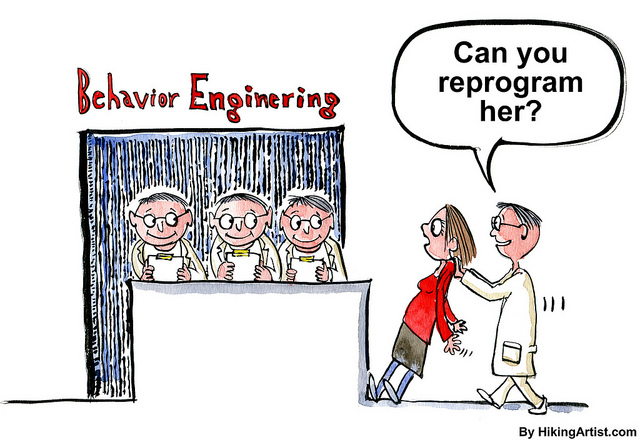
Due to the 21st century technology, there is a rapid growth in the demand for Engineering Psychologists. Engineering Psychologists focus on upgrading the technology, machines, and workplace environment to increase productivity and minimize danger. This in return will enhance the behavior of the employees and the people around.
Image Credits: Frits Ahlefeldt-Laurvig via Flickr
2. INDUSTRIAL/ORGANIZATIONAL PSYCHOLOGIST
Minimum Requirement: Bachelor’s degree in Industrial/Organizational Psychology. But, masters and doctorate degree will find you greater employment opportunities and better salary.
Industrial/Organizational Psychologists usually work in the corporate setting to help improve the performance and efficacy of the workplace. They are involved in examining workplace culture, employee training, human resources, and marketing strategies.
1. PSYCHIATRIST
Minimum Requirement: About eight years of post-undergraduate study with training.
Child Psychiatrists must be trained to treat children and teenagers who have mental disorders. While, General Psychiatrists do not specialize in a specific discipline. There are different kinds of Psychiatrists but one thing is for sure they are usually on the top of the list when it comes to salary.
In 2014, the aspects of work of 5,000 Singaporean employees were studied by Singapore Human Resources Institute. They found that on average, the employees were considered “Under Happy” in the workplace. Creating a happier place to work in is proving to be a challenge especially when “horrible” bosses are the ones who run the organizations.
Horrible bosses do not just intrude in their employee’s personal time; they also cause huge expenses not only for the company but also for the nation’s economy. The loss of money can be attributed from either faking sick leave or having chronic stress due to the workplace dynamics. Also, the recruitment and legal costs due to high turnover rate cannot be missed!
The loss of money due to lack of productivity can be attributed from the employee’s behavior to either deliberately make mistakes out of spite or to be truly unmotivated. In a recent study by Officevibe, a U.S. based startup that offers employee-engaging activities to other organizations, respondents showed that 50% of the employees who felt undervalued are planning to look for another job the next year. In fact, 65% of them say that they would rather have a new boss than a pay hike. Yes! It is that bad.
DISSECTION OF THE LOCAL “HORRIBLE” BOSSES
In 2012, JobsCentral conducted a survey including the responses of 3,299 employees and 256 hiring managers. A whopping 31% of the respondents said that they do not have satisfying boss-worker relationship. This is because of the following reasons: lack of advancement opportunities (87.5%), lack of autonomy (80.6%), and work demands (71.1%).
The bad habits as confessed by the employers were: making the employees work during after hours (75%), regularly contacting employees that are on leave (46%), lengthening the meeting past the working hours (23%), and asking employees to run personal errands (6%).
Image Credits: Vocab Ninja via Flickr
If you do not want to be considered as a horrible boss then, take note of the actions said above. Do the opposite. Aside from that, here are no-cost tips to change your ways…
a. RESPECT YOUR EMPLOYEE’S PERSONAL TIME
Be sensitive with the employee’s personal time. They need this to shake off the stress brought by work demands. Also, they need to restore their energy so, they can be driven and productive the next day.
b. WELCOME EMPLOYEE FEEDBACK
Have a tri-monthly evaluation (i.e., occurring every three months) of the boss and the employees’ performances. Issues such as frequently shortening the deadlines and abusive behavior should be raised in confidence. This transparent culture will increase awareness and encourage necessary action.
c. DO NOT LOOK DOWN FROM A PEDESTAL
You may be the boss but you do not rule the entire world! Having too much pride to the point that you do not give credit, appreciation, or gratitude when it is due can cause dissatisfaction of the employees. As said a while ago, employees who felt undervalued are planning to look for another job. Fortunately, YOU can prevent that from happening!
In Singapore, the literacy rate among women aged 15 years and above is nearly 95 per cent and the female labour force participation rate has more than doubled from 25 per cent in 1965 to close to 60 per cent in 2014, according to Ms Sim, Minister of State for Communications and Information and Education.
However, women still have a long way to go in Singapore in achieving equality.
For instance, despite the high female literacy rate and labour participation rate, the 2015 Hays Asia Salary Guide found Singapore falling behind mainland China, Malaysia and Hong Kong.
Barely a quarter – 27 per cent – of management roles are held by women here, below the Asian average of 29 per cent.
Singapore has plenty of room to catch up with China, the region’s diversity leader with 36 per cent of leadership roles in the mainland held by women.
Mr Adam Garrard, chief executive of Willis Asia, a leading global insurance broker, said women’s career growth and development continue to be stifled in the workplace here despite research showing it is in the financial best interests of firms to promote gender equality.
He cited research by consultancy McKinsey showing that companies in the top 25 per cent in terms of female representation on executive committees performed better than the rest. Furthermore, the financial performance metrics indicated that the return on equity was 47 per cent higher and pre-tax earnings were 55 per cent better than the median.
Traditionally, women have faced more challenges than men as they have child-bearing and rearing responsibilities that can set them back a few years in the corporate climb. And there are lingering perceptions of women being more emotional and mellow, rendering them less effective leaders.
However, in modern times, supporting social infrastructure has sprouted up to replace some of the conventional roles of women. The prevalence of domestic helpers has freed females from the typical duties of a homemaker and enabled women to focus on adding value to the organisation.
This role perpetuates inequity for women. Overcoming these obstacles to societal fairness is a means to achieving proper equality of the genders.
In other words, women should be given more – if not equal – opportunities for career progression to compensate for their “natural handicap”. This promotes equity between men and women, laying the bricks for a more equal society, where both genders can compete fairly and freely.
Many people may associate women with certain feminine traits such as empathy, sensitivity, and gentleness. These stereotypes may effectively dim the women’s prospects for development and promotion at some organisations.
Worse, such outdated views can be counter-productive and inimical to the organisation’s success as they fail to recognise the inordinate value that a diverse range of behavioural traits may offer – such as varied and insightful perspectives.
The significance of gender diversity is no different from racial diversity or religious diversity.
Having a good mix of people is imperative to understanding the real needs and wants of a globalised world through the formation of a microcosm. Businesses become better informed of the cultural and economic realities and make wiser decisions.
Women here are locked in a constant struggle to juggle work and family. Alleviating this situation would encompass managing the expectations of spouses, children, and parents-in-law.
Family members have to lend their collective support to the advancement of a women’s career.
However, this does not mean women should ignore family ties. Being career-driven is a respectable virtue, but women should still find time for quality interaction with their families.
Take the cases of Ms Stella Tan, chief executive of Tenet Sompo Insurance, and Ms Jacquelyn Goh, chief executive of another foreign insurer, RSA, in Singapore.
Ms Tan said the 30-minute car journey to school is vital to fostering closeness between her and her two children through informal conversations. Both women also acknowledged that their husbands are also very supportive of their key positions in their organisations.
Bosses also play a huge role in balancing the gender mix at all levels of their organisations.
From entry level up to the boardroom, bosses can provide more mentoring and networking opportunities to speed up the learning curve, develop critical soft skills, and build contacts for future collaboration and support.
A good example is the “Women at Willis” initiative at insurer Willis Asia, which seeks out and advances talent without restriction. Willis gathers the brightest women across the world every two years at its London headquarters to promote insightful dialogue and stronger links through a series of seminars and workshops.
Implementing gender mix legislation may be one of the best ways to kick-start the move towards greater gender diversity.
Singapore can probably learn from the success story of our neighbour, Malaysia, whose government has achieved the target of making women 30 per cent of the employees at decision-making level in the public sector.
Now, this goal is being extended to the private sector and is expected to be reached by 2016.
Such targets may be controversial. However, they push employers to groom talent, both female and male. This enables the exploitation of their full potential and their different but complementary capabilities and experiences that are required to sustain business growth in a dynamic and fast-changing world.
For all the efforts applied at the individual, corporate and government levels, it is essential to track the progress made to enhancing workplace gender diversity.
Many reports measure the representation of women on company boards, but more should be done to track and measure the number of women taking on senior executive or other management roles.
This would result in a better information flow of any improvements made to the socio-economic status of women and strengthen accountability at every level.
One way is to establish the 30 per cent club here. It already has a presence in the United States and Hong Kong.
The club is steered by a group of business leaders committed to achieving gender balance at all levels through running specific initiatives such as cross-company mentoring schemes aimed at mid-career women with high potential of succeeding to the senior level.
No easy feat
Promoting gender diversity needs universal support from men and women, in the same way as campaigns to promote racial diversity did.
Reckoning the benefits of gender diversity is the first step to changing the outmoded mindset that influences actions and behaviour. It is never too late to recognise and polish the hidden gems hoarded in women.
Have a dose of inspiration about money and success, employees and entrepreneurs of Singapore! Take it from the legendary experts such as Henry Ford, Steve Jobs, and Coco Chanel…
1. CUSTOMERS ARE IMPORTANT
Henry Ford(Founder of the Ford Motor Company): “It’s not the employer who pays the wages. Employers only handle the money. It’s the customer who pays the wages.”
Henry Ford was right, customer’s satisfaction is important, as they are the ones who clamor over your products. Whether you are selling electronics or cosmetics, the consumers are one of your greatest assets. Pay attention to what they need and want through intensive research (e.g., focus groups).
2. HAVE NO FEAR
Coco Chanel(Founder of the Chanel Enterprise): “Success is often achieved by those who don’t know that failure is inevitable.”
Image Credits: CHRISTOPHER DOMBRES via Flickr
Success in business requires experience, discipline, and hard work. But if you are afraid of taking risks, you might miss out a lot of opportunities. Instead of dwelling on failing, dwell on you’re mastering your strengths.
3. DO YOUR BEST AND WIN
Colonel Sanders(Founder of KFC): “I made a resolve then that I was going to amount to something if I could. And no hours, nor amount of labor, nor amount of money would deter me from giving the best that there was in me. And I have done that ever since, and I win by it. I know.”
What Colonel Sanders imparts is the true essence of work: doing your best despite of the amount of hours or money one receives. Each job you take is part of your learning experience. Someday, it will all be worth it.
4. TAKE YOUR TIME TO LEARN
Vera Wang(Well-known Fashion Designer): “Don’t be afraid to take time to learn. It’s good to work for other people. I worked for others for 20 years. They paid me to learn.”
Some of you may be taunted by the idea of working for somebody for more than 10 years because of your deep desire to become your own boss. But, 10 years worth of experience and wages – that is a lot of wealth! You may be at the bottom of the company’s hierarchy now but as long as you give your all that would not be for long.
5. IT IS NOT ALWAYS ABOUT THE MONEY
Steve Jobs(Co-founder and Past CEO of Apple Inc.): “When I was 25, my net worth was $100 million or so. I decided then that I wasn’t going to let it ruin my life. There’s no way you could ever spend it all, and I don’t view wealth as something that validates my intelligence.”
For someone who had it all, Steve Jobs showed that life is not always about having hefty loads of cash. Even B.C. Forbes(Founder of Forbes Magazine) agree as he said: “real riches are the riches [we] possessed inside”. Cultivate what is within!
Sailing through the waves of modern times, companies and bosses must think of creative ways to engage with their employees aside from meeting inside the regular office space. This is because some people do not think that meetings are necessary that even a simple email of the meeting’s summary would deliver the information efficiently than sitting down in a room with one another. But, there are decisions to be made as a whole. More so, the bond of the group is integral to the company’s dynamics.
Some factors that affect the hesitation of some Singapore employees to attend group meetings include: not being able to achieve the desired goals and not being able to go home early as the bosses would stretch the meeting beyond working hours.
To combat these factors contemporary visionaries had an idea in mind: “off-site meetings”. Brainstorming outside the halls of the office may just improve your effectiveness and camaraderie…at least that is what David Barrett(Founder and CEO of Expensify) and Nilofer Merchant(Business innovator, TED speaker, and Author) thinks.
Off-site meetings are held anywhere else aside from the office. The off-site venue is the place where the most important conversations and decisions about the company’s future are discussed. This new environment is believed to stimulate the staff’s creativity.
Here are some venue ideas that you should consider…
1. CAFES
Did you know that morning is the best time to talk about most complex tasks since it is when your body is most alert? So, arrange a breakfast meeting with your team at a cafe nearby. Cafes are inexpensive venues for a relatively small group of people. Furthermore, this will prevent discussing beyond working hours.
2. WILDLIFE RESERVES
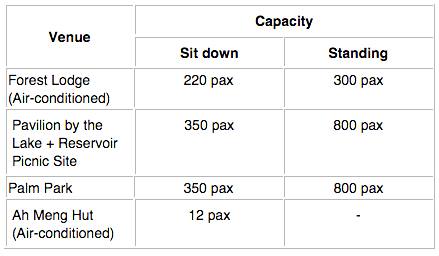
Surround your team with the beauty of nature and the lush outdoors by having a meeting at Singapore Zoo or Night Safari. Here is the illustration of their venues and capacities:
Also, they have seminar packages starting from the price of S$55/person. Check it out here.
3. SENTOSA ISLAND
Sentosa is not only a tourist spot but also a place for unique meetings. You can have an insightful discussion while sitting in the sand or while sitting in the restaurants at the shore. Or you can take the function room route that Resorts World Convention Center offers (visit here for more details).
Image Credits: William Cho via Flickr
Experiment with the meeting venues and timings to keep your staff’s creative juices flowing. It need not be expensive as long as you focus on the quality and the objectives. 🙂