

How To Face The Challenges Of Stressful Deadlines

Love-hate relationship is a perfect description of my affair with deadlines. Deadlines are important because they give you a structured workflow but, it can be very stressful at times. Not to mention, you may encounter several due dates scheduled all at once.

Picture yourself heading towards the end of the day while accomplishing about 30% of your task or project that is due tomorrow. The clock is ticking fast. The real pressure is on. If you feel like panicking – pause! Calm yourself down. You do not want your clients to end your collaborations nor do you want your reputation to be destroyed by your lack of time management skills. Instead, eliminate the distractions and focus on the task itself.

Also, avoid this stressful situation from happening again by following these tips:

1. SET REALISTIC GOALS

No matter how excellent your time management and organization skills are, you will still find yourself in a difficult position if your deadlines are not realistic. If you are a freelancer, clients will typically ask you to assign a deadline by yourself. When this happens to me, I make it a point to have at least 1-2 days in excess in case emergencies arise such as requested revisions. But if you work in the office, ask your boss for at least 1-2 hours in excess to create a high-quality project.

2. ELIMINATE DISTRACTIONS

In a world where the cat videos rule, you must eliminate all the distractions. Close the unnecessary tabs, keep your handphone on silent, and refrain from logging onto your social media accounts. By doing so, you will find yourself to be more productive than ever.

3. TAKE THINGS SERIOUSLY

Beating the deadlines is a serious act. Commit yourself entirely to the tasks by writing them in a piece of paper or in an Excel spreadsheet. Refer back to the list to reduce your procrastinating tendencies.

4. RANK EACH TASK

Before you begin, you must look at your list and contemplate on which project is the most important. Mark it as “high priority”, which you will aim to finish first. After getting passed the time-consuming and complex tasks, you will find yourself accomplishing more as you finish the smaller tasks quickly.

5. REWARD YOURSELF

After a hard day’s work and seeing your clients or boss satisfied, you must reward yourself for a job well done. No other questions asked.

Image Credits: pixabay.com (License: CC0 Public Domain)

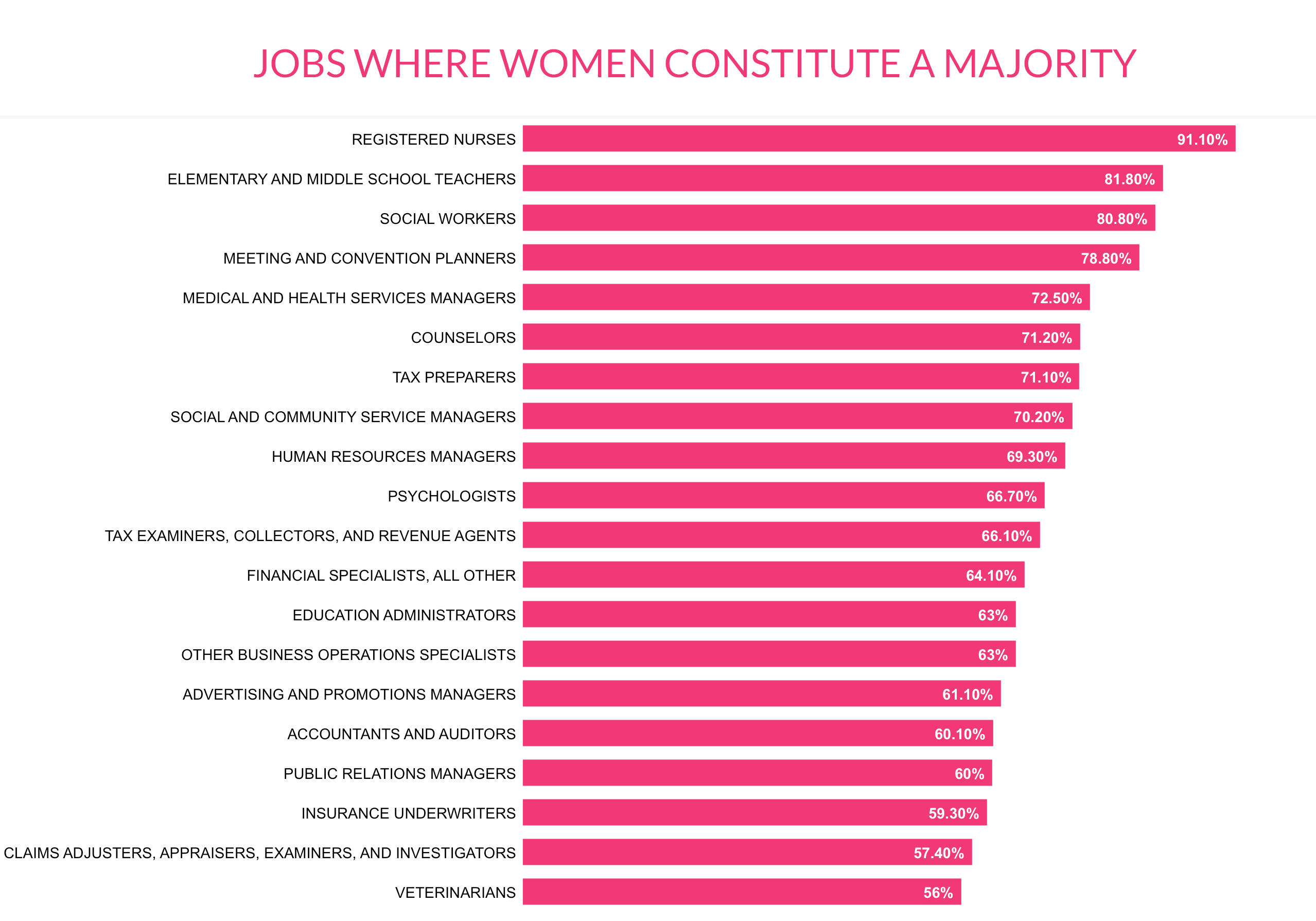
Image Credits: pixabay.com (License: CC0 Public Domain)

Sources: 1 & 2

Read More...

Money Is Not The Motivation For Men In “Pink-Collared” Jobs

Men who work in “pink-collared” jobs are motivated by factors that are beyond money and progression.

Teaching, nursing, social working, waitressing, and counseling are among the occupations that economists call as pink-collared jobs. These jobs are generally female-dominated over the years. In fact, in United States alone, 9 out of 10 registered nurses are women. Alongside this are other professions concentrated with women…

Image Credits: Visual data of the U.S. Department of Labor was created by IdeasFisherman

Image Credits: Data from U.S. Department of Labor, Visuals Created by IdeasFisherman

While more and more men are wearing the pink-collar, they still face the stigma associated with the so-called “feminine work”. However, the people who choose to challenge the stereotypical norms about work and success considered other factors aside from promotion and salary.

A recent study from the United Kingdom interviewed men who worked as primary school teachers and as university administrators. They were asked to discuss their career history, their institutions’ support, and their experience of success. Interestingly, their definitions of success include building friendly relationships with their colleagues and having flexible working hours. Their definition of career development was influenced with the challenges faced by their students.

For Singaporean men, passion may also be a factor to overrule the occupational assumptions. You can either be doing something you are passionate about or do something that will logically lead to the work you love. Only then will you be able to give your 100% without feeling like work is forced upon you.

Passion will certainly give you a sense of fulfillment. Research even showed that people who make regular progress toward something they care about reported not only being fulfilled but also satisfied.

Image Credits: pixabay.com (License: CC0 Public Domain)

Image Credits: pixabay.com (License: CC0 Public Domain)

According to economists, it is important to work towards integration of gender distribution to make the economy more efficient. This way, organizations can find the best suited candidate regardless of gender and its stereotypes.

Sources: 1, 2,3

Read More...

How To Deal With The Infectious Workplace Bullies

Whether you are wrongfully accused or verbally abused by your boss or colleagues, workplace incivility shall be treated with maximum seriousness.

Surprisingly, statistics have shown that 1 in 4 Singaporeans have suffered from workplace bullying with the top aggressors being their bosses (62%) and their clients (21%). To make matters worse, Singapore was one of the few countries with the highest acceptance of workplace bullying (alongside Hong Kong and Taiwan).

With high acceptance for this issue, it only makes sense that fewer people address matters associated with it. Thus, the unacceptable behavior prevails.

A study that surveyed 6,000 people in Sweden showed that being subjected to “rudeness” spreads if the workplace environment did nothing about it. Rudeness in this context is defined as a way of violating the norm of mutual respect. For example, it can be as petty as excluding someone from the informed circle or as greater as taking credits for the work of others. As people often imitate and support the behavior of the dominant, there is a risk that rudeness will spread like wildfire and later on lead to bullying.

This is why it is important to identify and address bullying as it happens.

Here are 3 ways you can deal with it:

1. IDENTIFY WORKPLACE BULLYING

Bullying causes physical deterioration in work performance as well mental distress. It is generally categorized into three, namely:

a. name calling, malicious teasing, or pranks
b. sabotaging the colleagues performance (e.g.,spreading rumors)
c. forcing, causing self-imposed exclusion, or intimidation

Identification of workplace bullying is vital as some organizations may not want to acknowledge its existence while some people may not recognize that it is already happening to them.

2. SPEAK UP MORE

Sometimes the person who bullies you is your boss himself/herself. This is called an abuse of power. In our Asian context, there is an underlying culture of not defying the authorities and simply complaining about the issue in our smaller circles. As a result, any behavior from the boss is considered as acceptable and rarely excessive. However, you can only tolerate such behavior to a certain extent.

Once you have recognize that inappropriate behavior occurs, it is time to talk to the H.R. department or your boss about it. Steps to disclosing bullying shall include stating the observable behavior, describing its subjective impact, and validating the nature of the problem.

3. KNOW YOUR RIGHTS

If all else fails, you can always turn to the law. In November 2014, the Protection from Harassment Act 2014 together with 2 accompanying subsidiary legislation are equipped to protect the rights of every working individual.

It states that:

“No person shall, with intent to cause harassment, alarm or distress to another person, by any means —

a. use any threatening, abusive or insulting words or behavior; or
b. make any threatening, abusive or insulting communication, thereby causing that other person or any other person harassment, alarm or distress”

Image Credits: pixabay.com (License: CC0 Public Domain)

Image Credits: pixabay.com (License: CC0 Public Domain)

More importantly, this Act covers the online world too. So you must not undermine cyber-bullying!

Sources: 1, 2, 3, 4,& 5

Read More...

How To Finally Get A Raise This 2016!

Since the new year is about starting afresh and realizing one’s potentials, evaluating your salary is one of the top priorities. If you are seeking for a higher salary, do not open a discussion with your boss unless you are fully prepared.

Consider these 6 things to help you prepare:

1. SHOW THAT YOU DESERVE IT

Say that an important project is due in a couple of days. Send your boss an email of your progress to avoid constant request for project updates. The simple act of anticipating what is needed before it is asked can show that you are capable of working independently. You not only sent a positive reflection of your working etiquette but also made your boss’ life job easier.

2. DO YOUR RESEARCH

Negotiating your salary is a game with all of its players attempting to dominate each other. Dominate the game by researching all the needed information. Go in-depth about the complete aspects of the job and the company. Also, collect data about the average pay and accurate salary opportunities in your position.

3. DEVELOP A BACK-UP PLAN

If the company’s current situation cannot afford to give you the raise you deserve, consider suggesting alternative options such as commission-based pay (if appropriate) or performance-based bonus.

Image Credits: pixabay.com (License: CC0 Public Domain)

Image Credits: pixabay.com (License: CC0 Public Domain)

4. MAKE A GOOD IMPRESSION

During the discussion, greet your boss in a friendly and light manner by smiling and shaking hands. Say your gratitude as he or she spared some time to arrange a meeting for you. Your boss’ mood can change depending on how you approached the room.

5. ASK FOR MORE THAN YOU ACTUALLY WANT

Your first offer must be slightly higher than what you want to avoid remorse and to give you a room to bargain. It uses the door-in-the-face technique wherein the employee starts with a huge and unreasonable request in order for the employer to settle with a smaller request.

6. COMPETE

Negotiating a salary is a conversation that aims to reach an agreement with someone whose interests are not perfectly aligned with yours. Use persuasion and assertion if necessary as scientific research showed that competition is a successful negotiation strategy!

Image Credits: pixabay.com (License: CC0 Public Domain)

Image Credits: pixabay.com (License: CC0 Public Domain)

Sources: 1, 2, & 3

Read More...

5 Ways To Return To Work And Combat The Post-Holiday Blues

Whether you like it or not, the Holiday Season is almost over.

After a substantial amount of time away from the hustle and bustle of the city, it is time to get back to your “normal” life. Gone are the few days of feast and serenity!

As you return to your regular routines at work, school, or home…you may feel stressed, uncomfortable, and disoriented. This unwanted feeling is called Post-Holiday or Post-Vacation Blues. However, with a bit of conscious planning and other strategies, you can actually ease back to normalcy without feeling its burden.

1. PLAN AHEAD

Instead of having the stress of last-minute preparations, it is best to come back from your overseas trip on Saturday instead of Sunday. The extra day will give you enough time to fix your things, to pick up a few essentials, and to browse your emails. Thus, it will lessen the impact and load of your “first” working day.

2. REVIEW YOUR CALENDAR

Since you have been away for quite some time, you will probably need to be reminded about what is going on. Regularly browse and mark your calendar for the next couple of days to stay updated with the upcoming projects, meetings, and other concerns. By doing so, you will be able to come prepared and avoid the embarrassment of being caught off guard.

3. CLEAN YOUR WORKSPACE

Upon entering your cubicle or desk, you may see stacks of unopened documents, scattered files, and untidy stationery items. Take a few minutes to take it all in. After which have a rubbish bin near you while you filter through the envelopes, emails, and files. Recognize what needs to be junked and what needs to kept. The earlier you complete this, the more time you have for other important tasks.

4. REMOVE DISTRACTIONS

To make your work as quicker and as efficiently as possible, you must remove all the unnecessary distractions such as electronic devices. Turn off your handphone and close your social media accounts for at least 20 minutes.

Use a productive writing tool such as Q10 to allow you to scribe without interruptions from your desktop clutter. Or you may install a free site blocking extension such as StayFocusd. With fewer or no distractions, use your time to focus on the task at hand!

5. SEEK HELP

In the early days of your transition, keeping up with your daily workloads may feel like a circus. Do not fret, as it is unavoidable. Ask for your co-worker or manager’s help. A well-staffed business should be more than capable to assist or even absorb your task.

Image Credits: pixabay.com (License: CC0 Public Domain)

Image Credits: pixabay.com (License: CC0 Public Domain)

Remember, you do not always have to do everything by yourself!

Sources: 1, 2, 3, 4 & 5

Read More...