


Singapore’s Total Number of Monkeypox Cases Grew to Four

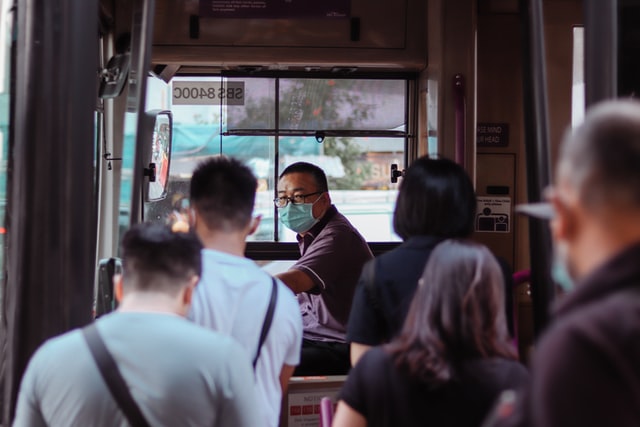
Infection with the monkeypox virus causes the rare disease called Monkeypox. Monkeypox virus belongs to the Orthopoxvirus genus, which includes variola virus (which causes smallpox), vaccinia virus, and cowpox virus. This disease, which can cause serious skin rash, appears to be spreading via direct contact with the skin or saliva of an infected person.

LOCAL SPREAD

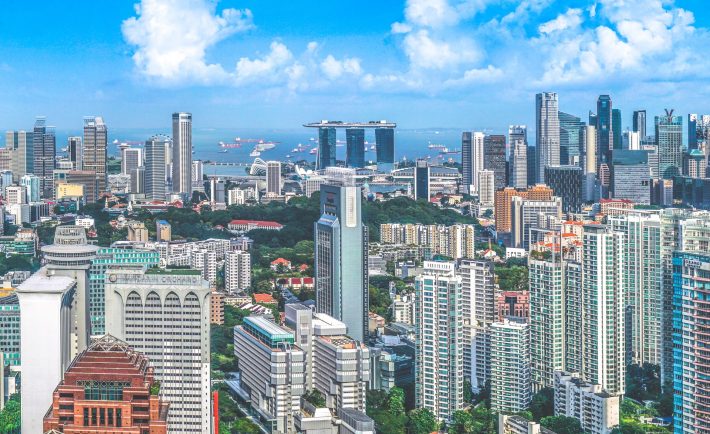
On July 8, the Ministry of Health (MOH) reported one more imported case of Monkeypox in the country. This brings the total number of confirmed cases to four since June. The country’s Monkeypox cases consist of one local infection and three imported ones. The fourth case is a 30-year-old patient who lives in Singapore and had recently returned from Germany.

The man experienced rashes in the groin area last June 30 and had a fever a week later. He sought medical treatment and was taken to the National Centre for Infectious Diseases on July 7. He tested positive for monkeypox on July 8 and is currently in a stable condition, according to MOH. Contact tracing is ongoing.

CURRENT SITUATION IN AFRICA

Health authorities in Africa are treating its expanding Monkeypox outbreak as an emergency. To avoid the immense problems seen during the COVID-19 pandemic, they are exhausting their resources and are asking for other leaders to share the world’s limited supply of vaccines.

Monkeypox has been spreading in parts of Central and West Africa for decades, however the weak surveillance and the lack of laboratory diagnosis contribute to many cases being left undetected. Currently, countries in Africa have reported more than 1,800 suspected cases including 70 deaths with only 109 of them being lab-confirmed.

Ahmed Ogwell, the acting director of the Africa Centers for Disease Control, said:
“This particular outbreak for us means an emergency. We want to be able to address monkeypox as an emergency now so that it does not cause more pain and suffering.”

GLOBAL UPDATES

The World Health Organization said that the expanding monkeypox outbreak was worrying but did not yet warrant being declared as a global health emergency. The U.N. health agency said it would reconsider its decision if Monkeypox continued spreading across more borders, began infecting vulnerable groups, and showed signs of increased severity.
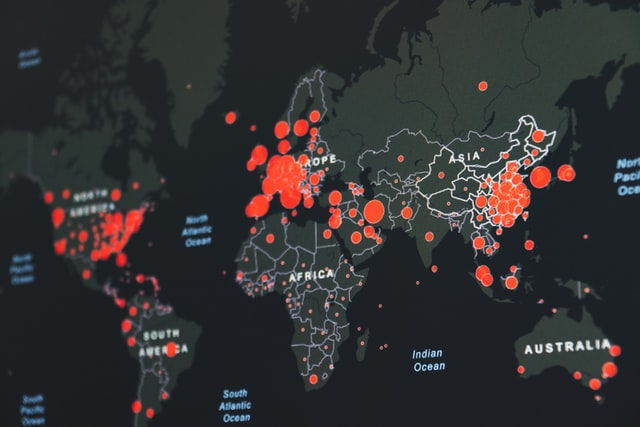
Image Credits: unsplash.com

Worldwide, more than 5,000 cases of Monkeypox have been reported in 51 countries (in time of writing). The majority of these cases are in Europe and no deaths beyond Africa have been reported.
Sources: 1,2, 3, & 4

Read More...

Around 1.5 Million S’poreans will Receive up to S$300 Cash in August 2022

The Government has been investing more resources in enhancing existing schemes to extend more help to Singaporeans amidst the rising global inflation and its surrounding challenges. About 1.5 million Singaporeans will receive up to S$300 cash under a special GST voucher payment in August 2022, according to Deputy Prime Minister Lawrence Wong.

This payment will be made on top of the regular GST Voucher (GSTV) cash payout of up to S$400, which was announced earlier this year. Recipients of GSTV can therefore expect to get up to S$700 in August. This move aims to support about 1.5 million lower-income to middle-income workers, as well as retirees without income.

Apart from this, all Singaporean households will receive a credit of S$100 for utilities by September 2022 to help offset their bills. Furthermore, eligible taxi main hirers and private hire car drivers will also receive a one-off relief of S$150 in August to cushion the higher fuel costs.

The following schemes will be enhanced to support those who are in need.

INCREASED CASH PAYOUT FROM GST VOUCHER SCHEME

To further offset the GST expenses of lower income to middle-income Singaporean households, enhancements to the GSTV scheme announced at Budget 2022 will be made. In August 2022, more Singaporeans will qualify for the GSTV cash payouts as the annual Assessable Income threshold will be increased from S$28,000 to S$34,000.

Eligible individuals will get up to S$400 of regular cash payout this year, which will be further increased to up to S$500 in 2023. Additionally, GSTV cash recipients will receive a Special Payment of up to S$300 in cash as part of the targeted support package announced last month.

JOBS GROWTH INCENTIVE EXTENSION (JGI)

JGI is a salary support scheme that provides employers with 15% to 50% salary support for new employees. It encourages employers to hire mature jobseekers who have not been working for at least six months, as well as persons with disabilities or ex-offenders.

The Government will extend the current phase of JGI from September 2022 to March 2023 as part of the targeted support package.

ENHANCED WORKFARE INCOME SUPPLEMENT

The Workfare Income Supplement aids lower-wage Singaporean workers whose earnings are in the bottom 20% of the working population. Eligible workers will receive support via CPF top-ups and cash to supplement their retirement savings and income.

Enhancements will be made from 2023 to provide higher annual payouts of up to S$4,200 for eligible Singaporean workers. More individuals will qualify for this support too.

PUBLIC TRANSPORT VOUCHERS DISTRIBUTION

To cope with the fare adjustment enacted in December 2021, households with a monthly household income of S$1,600 per person and below are eligible for Public Transport Vouchers.

If you have received a public transport voucher in the previous exercise, you would automatically receive a voucher via post. Otherwise, you may apply online until 31 October 2022 at go.gov.sg/ptv.

Image Credits: unsplash.com

Searching for other schemes that you are eligible for? Do check out SupportGoWhere or go to your nearest Social Service Office.

Sources: 1 & 2

Read More...

How to Start a Budget from Scratch

Congratulations on starting your financial journey! Creating a budget and sticking to it is no easy feat, but it is the best way to manage your finances and ensure that your money is going toward the expenses that matters most to you and your family.

Start by determining why you want a budget. Deciding on a budget can help you make informed decisions. Budgeters are almost twice as likely to report no financial worries compared to spenders. Moreover, budgeters are less likely to struggle with finances. Common reasons to create a budget include: to save more money, to reduce overspending, to eliminate couple financial disputes, to get out of debt, to break the paycheck-to-paycheck cycle, and to achieve goals.

After determining the reasons why, you want to create a budget, you must go deeper into your current spending habits. What are your spending habits as an individual and as a family? If your budget is not realistic, it is useless. Most experts recommend tracking your spending for about a month to get a clear picture of your spending habits.

The next step is to identify your financial goals. A great framework to use is the SMART method. It stands for Specific, Measurable, Achievable, Relevant, and Timebound. For instance, you want to save S$3,000 for home renovation within six months. You will need to save about S$500 per month. Thanks to your budget, you already know that you will have an excess of S$750 per month. This will help you with your goal!

Once you have your financial goals down, decide how much you need to save (per month or per year) for each goal. Bigger expenses such as home renovation and debt repayment can take a longer time to build. You can also incorporate building an emergency fund into your budget.

The basic phases are done, and it is time to make a budget. There are many types of budgets, so you will have to choose the one that suits you best. Options include zero-based budget and 50-30-20 budget.

A zero-based budget is an approach popularized by Dave Ramsey. It involves making income minus outflow equate to S$0. With a zero-sum budget, every dollar you have is assigned a task, with some of those going into savings or other spending categories. This type of budget can be restrictive, which is not ideal for everyone.

Image Credits: pixabay.com

The 50-30-20, on the other hand, divides your budget into different percentages. 50% of income is allocated toward needs, 30% to your wants, and 20% to your savings. Do your research to help you decide which budget method will make sense for you.

Sources: 1 & 2

Read More...

No Cost Ways to Relax After a Long Day at Work

Lately, I have been swamped with work. I switched from having an 8-hour shift to a 12-hour shift. As my body adjusts to the longer hours and the added demands of the workload, I realized how stress can affect my body and mind.

We cannot deny how important work is. With Singapore’s modern go-go-go society, people can be constantly put in the “fight or flight” mode. Relaxation is essential to slow things down and to take care of your overall health and wellbeing.

From gently rolling a ball under your feet to drinking green tea while soaking your toes in a relaxing foot bath, these are some of the no cost ways to relax after a tiring day at work.

#1: STROLL DOWN THE BOARDWALK

A quick stroll around the block combines physical activity with a change of scenery, which can act as your weapon against worries. You can end your day by walking to your favorite park. If Changi Boardwalk or Changi Point Coastal Walk is nearby, you can even enjoy the sunset. The stunning sunset over the coastline is a bonus. Best of all? Admission is free.

#2: TAKE A NAP ON A FORT

Forts are childhood staple for a reason! They are fun to build and are cozy to sleep on. Make an adult version of a fort by arranging your soft blankets, favorite book, and delicious snacks.

#3: SOAK YOUR TIRED TOES

With all the heavy lifting that your feet do all day, it is about time to give it the extra love it deserves. Use your available bath salts, bubbly foot bath, or simply sit on the edge of the bathtub filled with a few inches of relaxing hot water. Finish it off by massaging your feet with lotion.

#4: BE SURE TO DRINK YOUR GREENS

Help reduce your body’s stress responses by drinking green tea to reap the benefits of L-Theanine. Enjoy the earthy colors of your drink as you relax in your couch with your favorite TV show.

#5: MEDITATE IN SILENCE

Forget about spending hundreds of dollars on a week-long silent retreat overseas! You can meditate in five minutes or less with visualization techniques. Give it a go before a nerve-racking meeting or after you end your shift.

#6: STRETCH OUT

Put your head between your knees or stand and hang your head and arms toward your toes. Doing these stretches can lessen your reactivity to the fight-or-flight response and provide restorative effects to your autonomic nervous system (ANS).

#7: TAKE YOUR FRUSTRATION OUT ON A STRESS BALL

It is okay to be angry at times. Stress can bring rage, and what is important is how you manage your fiery emotions. It might be tempting to throw your laptop away but squeezing a stress ball is a less costly and safer option. You can also gently roll the ball under your feet to calm you down.

#8: WRITE IT DOWN

Putting your feelings down serves as an outlet to release what is on your mind. Try journaling about your work problems, pet peeves, relationship conflicts, debt, and so on. You might just get a new perspective upon seeing what you have written down.

#9: LISTEN TO YOUR FAVORITE SONGS

Soothe your soul by creating a playlist of songs that will best calm you down. Listening to music has relaxation benefits. So, try listening to music during your commute back home. If you are not going to bother anyone else, go ahead and sing along. You know you want to!

#10: DANCE AROUND

If dancing is your passion, try dancing to your favorite tunes once you are at home. Losing yourself to the beat can help you take the edge off. Dancing gets the blood flowing for a re-energizing rush of oxygen.

#11: TELL YOUR FAVORITE CHILDHOOD STORY

Relive your happy moments and create new ones by sharing your memorable childhood story with your loved ones. Not only will this bring a smile to your face, but it is a wonderful way to bond with your child before bedtime.

#12: ENJOY SOME MILK AND COOKIES

Image Credits: pixabay.com

Eating milk and cookies is not only reserved for the Yuletide season. It turns out, consuming milk and cookies can help you relax because the carbohydrates in the cookies combine with tryptophan. According to a study published in Nutritional Health, tryptophan is an amino acid found in dairy foods, which can induce a feeling of relaxation.

Sources: 1 & 2


Read More...

Singapore Parents Spend More Money on Children’s Needs than Retirement

Starting a family requires careful planning. With a clear idea of what it entails and the schemes available to help ease new parents’ financial load, you will be able to embrace one of life’s greatest blessings.

As you allocate your budget, you must consider both your childcare expenses and your retirement fund. Prioritizing these two is easier said than done. A 2021 study by AIA Singapore revealed that young families in Singapore have deprioritized planning for their retirement to give way for the monthly expenses on their children.

The participants of the study (i.e., parents) were found to be spending 2.5 times more money on their children’s monthly expenses, rather than taking charge of their own retirement planning. These Singapore parents spend almost 20% of their income on their children’s needs and allocate less than 7% on their retirement fund. Furthermore, 70% shared that they intend to either increase or maintain the amount of income allocated to their children’s expenses. The increase of allocation to the children’s expenses is affected by the higher childcare costs amidst the pandemic.

Apart from this, the pandemic also affected their savings. One in three Singaporeans’ savings was negatively impacted in 2020, with a median amount of between S$251 to S$500 set aside monthly for retirement. It is challenging to find a balance between all the primary categories of your budget, but you must not overlook the importance of retirement planning.

“Retirement planning is an essential part of securing our longer-term financial security, not just for parents, but for the entire family, so everyone can look forward to a brighter future with peace of mind,” said Melita Teo. Melita Teo is AIA Singapore’s Chief Customer and Digital Officer.

As parents, you want to support your children by giving them the best opportunities to secure their future. Hence, you must consider creating a retirement plan to help navigate your seamless transition to the golden years. With this retirement plan, you will not need to fully rely on your children.

Start by reviewing your financial situation and financial plans. Establish a fresh budget for your household that will accommodate both your childcare costs and your retirement fund.

Talk to professionals, your trusted friends, and family members to have an idea of what it costs to pay for your child’s needs and your personal retirement needs.

Image Credits: pixabay.com

Research on various government schemes such as Enhanced Baby Bonus, Enhanced MediSave Grant for Newborns, and other subsidies for center-based infant and childcare. Newborns who are registered as Singapore Citizens at birth are automatically insured under MediShield Life. These schemes and benefits can help free up some of your expenses to boost not only your childcare budget, but also your retirement fund.

Sources: 1, 2, & 3

Read More...