Rude Service Make You Spend More on Luxury Goods

When it comes to designer and high-end goods, we want to have what we cannot afford. And, a sales person with a snobby attitude only adds the extra kick of exclusiveness.

A recent study by the University of British Columbia’s Sauder School of Business showed that customers who are treated with poor service are more likely to buy something as long as the brand is adequately renowned and luxurious.

The study entitled “Should the Devil Sell Prada?” had its participants to imagine that they are interacting with different kinds of sales associates. Then, they rated their feelings (i.e., desiring to buy or not to buy) toward the associated designer brands. Interestingly, participants reported increased feelings of want after being treated badly.

The eagerness to buy the item increases as the desire to be exclusive and to be judge positively sets in. This goes to show that people want to prove that they are capable of buying the luxury item and that they are worth more than the salesperson might think.

Darren Dahl, the co-author of the prior study, said that the outcomes were based on a combination of factors.

1. RIGHT KIND OF STORE

Image Credits: angelo via Flickr

Image Credits: angelo via Flickr

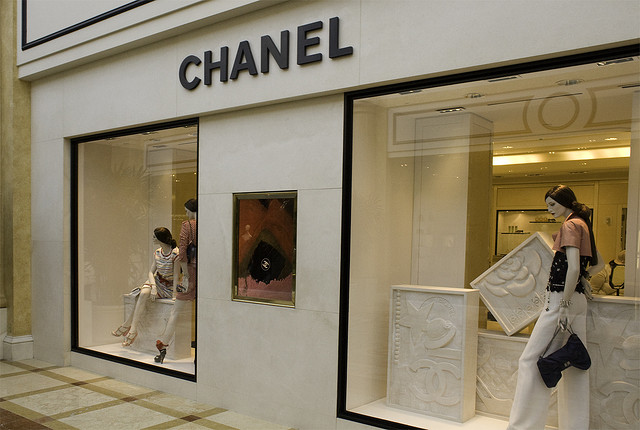
In order for the “snob effect” to work, a sales person must accurately represent an upscale brand. For instance, being arrogant in a Gucci store works more than being arrogant in a 7-11 store.

2. RIGHT KIND OF LOOK

Another factor in whether or not a customer is swayed by a poor customer service is the sales associate’s appearance. The sales associate must play the part of a high-end brand ambassador decked out with their own brand’s product/s.

Image Credits: Steve wilson via Flickr

Image Credits: Steve wilson via Flickr

As the song by Jimmy James called “Fashionista” goes: “you have to show a look, have a look, or give a look.” Faces should be pleasing or attractive.

Hence before buying a designer item, rethink whether you can really afford it, whether you really want it, and whether you are trapped in the service’s “rude spell”.

Source: AOL
Read More...

5 Ways to Save Money on Hand Phone Accessories

The cost of your hand phone accessories range from $2 to $100+, but its expense adds up together. Hence, it is paramount to be savvy in purchasing hand phone accessories to save money.

1. USE A SOCK ON IT

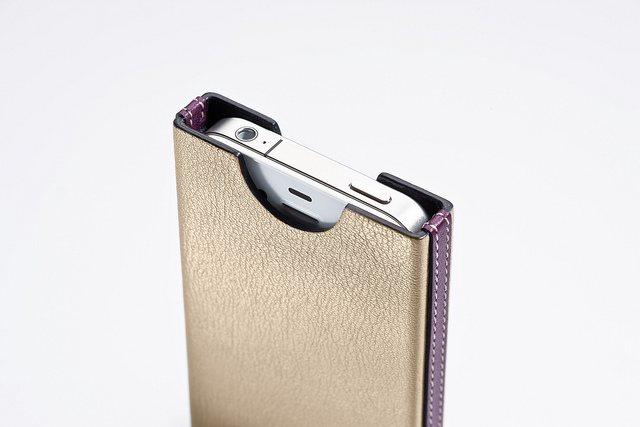
Instead of buying a new phone case, try to buy a new pair of toddler socks. The phone fits perfectly inside the sock and it is easy to see in your purse. It not only protects your phone to serve its purpose but it also has a wide range of cute designs to choose from.

2. BUY HAND PHONE ACCESSORIES ONLINE

Do not rely solely on the gadget shops in the malls that sell hand phone gear, also explore good prices in the Internet such as: Amazon, eBay, and Carousell. Online stores have sales and clearance of their last year stocks where you can save money. It is important to shop around, and compare prices before purchasing to get the best deal.

3. PROTECT YOUR CHARGER CABLE WIRE

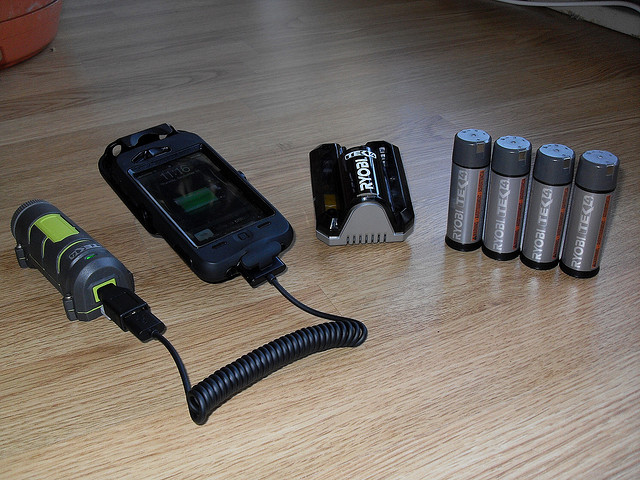
The cable chargers of Apple products usually break and bend. This urges Apple users to buy another costly cable for the Mac store. The solution is simple, take the spring from your old pen and put it on the cable wire. Or, you may buy plastic cable wire protectors for $1.50 to $2 from Carousell.

Image Credits: Raul Gonzalo via Flickr

Image Credits: Raul Gonzalo via Flickr

4. DO YOU REALLY NEED AN EXTRA BATTERY?

Rethink if you really need an extra battery before buying them. Some smart phones do not have an option of replacing the battery by your own. So, it is wiser to invest on an extra charger for your office or your car.

5. STOCK UP YOUR OLD HAND PHONE ACCESSORIES

Do not toss your old hand phone accessories such as your car charger because phone companies may revert back to their old power cord. Instead, clean your silicone phone case in the dishwasher or sell your stuff online to earn more.

Read More...

How Much Will It Cost To Live in USA, Singapore, Australia or Italy?

Cost of living is the total expense of maintaining a standard of living in a certain country. This changes over time and is often operationalized in a cost of living index.

In this chart is the comparison of the cost of living of four countries namely: United States of America, Australia, Singapore, and Italy.


Clothing And Shoes Ave. (in SGD) USA SG AUS ITALY
1 Pair of Jeans (Levis) 54.95 111.92 111.35 129.67
1 Summer Dress in a Chain Store (Zara, H&M, F21, etc.) 47.82 63.24 76.26 53.99
1 Pair of Men Leather Shoes 113.77 136.22 147.41 166.62
Total Clothing: 216.54 311.38 335.02 350.28
Rent Per Month Ave. (in SGD)
Apartment (1 bedroom) in City Centre 1,359.20 3,312.03 1,944.27 928.25
Apartment (1 bedroom) Outside of Centre 1,032.05 2,133.33 1,380.82 709.08
Apartment (3 bedrooms) in City Centre 2,313.77 5,955.30 3,335.58 1,634.16
Apartment (3 bedrooms) Outside of Centre 1,743.47 3,579.49 2,186.44 1,192.56
Total Rent: 6,448.49 14,980.15 8,847.11 4464.05
Ave. Salary After Tax (in SGD)
Monthly Salary 4,103.69 3,875.20 4,732.34 2,439.03


All the data were collated from Numbeo. It is a website that stores the world’s largest database of user contributed information about global living conditions.

Before discussing the variables in the chart, let us first explore a brief introduction of these four countries. United States of America, commonly referred to as U.S., is a federal republic country that is consists of 50 states. According to the International Monetary Fund, U.S. has the world’s largest national economy. It is considered as a developed country.

Australia, or Commonwealth of Australia, consists of the mainland and numerous smaller islands. In 2012, International Monetary Fund ranked Australia as the fifth highest per capita income among the world. It is also considered as a developed country.

Singapore, officially known as Republic of Singapore, is an island country in Southeast Asia. Despite its size, Singapore had the third highest per capita income around the world. It boasts its high regard on education, healthcare, and economic competitiveness.

Lastly, Italy is a parliamentary republic in Southern Europe. Human Development Report highlighted that Italy is a very developed country with its economy being the eighth largest in the world.

In the comparative chart above, Italy was shown to have the highest cost in Clothing and Shoes. Most of the famous chain brands originated from the U.S., which is why the country had the least cost on clothing and shoes. Furthermore, it is the reason why some items are cheaper when you buy it on its online store.

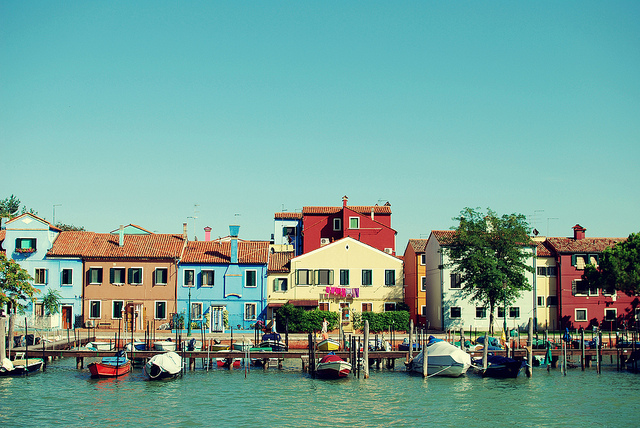
The Average Rent per Month is overwhelmingly dominated by Singapore. Renting a bedroom apartment at the city center will cost you about S$3,312.03 in Singapore. With that amount, a person can already rent two 3-bedroom apartments in Italy’s city center. The higher cost of rent in Singapore is due to the 718.3 km2 total area of land wherein millions of people reside.

Image Credits: Lina Hughes via Flickr

Image Credits: Lina Hughes via Flickr

Lastly, in most of the factors, Australia sits strong on the second place. Although rent and clothing may be costly in Australia, the average salary per month is S$4,732.34. It is the highest among the other four countries.

So, if you are moving to a different country and curious about its cost of living, look it up on Numbeo. It has been mentioned in internationally renowned newspapers and magazines such as BBC, Forbes, The Economist, and New York Times among others.

Sources: International Monetary Fund, Numbeo, and Wikipedia

Read More...

5 Cats That Hit Internet Fame All The Way To The Bank

You can think of countless ways to earn money. With this money, you can buy a pet or two. But, in rare cases it is the other way around. Your pet or pets can earn countless amount of money for you and your family. All you have to do is be equipped with a video recorder or a hand phone.

These cats had become Internet sensations and have been making their owners rich by showing off their adorable or grumpy faces.

5. KEYBOARD CAT

Although he passed away in 1987, this video from 1984 has been earning his owners about $175,800. The YouTube video had gotten more than 38,309,946 views. In this, keyboard cat plays a fast-beat music while in costume.

4. MARU

Maru, a male Scottish Fold cat from Japan, become famous due to YouTube, print, and television. His YouTube videos have an average of 800,000 views each and earns roughly $21,800-$181,600 in total.

Watch Maru’s introduction video with over 20 million views in the present:

3. TWO TALKING CATS

Mossy and Stina are two adorable cats that usually fight with each other. In this rare captured moment of more than 58 million views, the two cats seem to be having a deep conversation.

Both of them are described as female, healthy, and vigorous. They have been earning their owners about $8,500-$70,700.

2. TARA THE HERO CAT

After courageously rescuing her owner’s son, Tara has been making appearances in news and even in the first pitch of a Bakersfield Blaze game. She has been reportedly earning about $55,600-$463,700 for her owners.

1. GRUMPY CAT

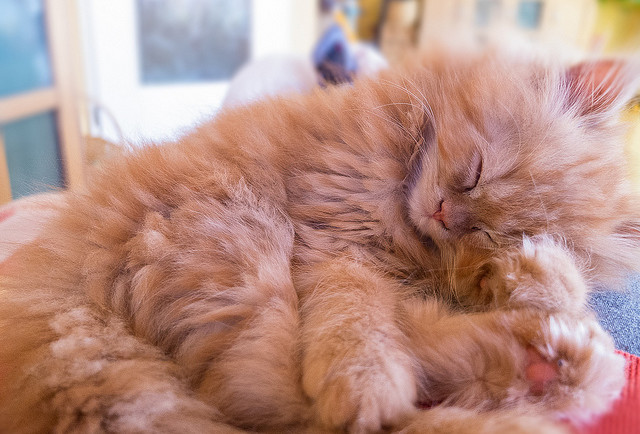
Grumpy Cat or Tardar Sauce is an Internet celebrity that is best known for her grumpy facial expression. Her owner, Tabatha Bundesen, says that Tardar’s face is permanent due to underbite and feline dwarfism.

Image Credits: Neon Tommy via Flickr

Image Credits: Neon Tommy via Flickr

Aside from appearances in Reddit, YouTube, and The Wall Street Journal, she has recently graced the small screen in the Christmas special for the Lifetime network.

According to the Business Insider and Telegraph, Grumpy Cat has earned her owner nearly $100 million!

Sources: Wikipedia and ViralNova

Read More...

5 Ways to Teach Kids About Saving Money

Money gives people, of all ages, the decision-making opportunities they need. Educating your kids to make wise money decisions earlier on will affect their finances in the long run.

The most important thing you must do is to make saving money as fun as can be. Here are 5 Ways to Teach Kids About Saving Money…

1. MONEY INTRODUCTION

Once your children can count and discriminate, introduce them to the different denominations of money. Take a conscious effort in providing them information about money and savings and be ready in answering their countless questions.

Watch this cool way to introduce money and its values:

2. SET UP BUYING GOALS

Setting up realistic goals is the foundation to learning about the value of money and saving. Ask your children what they want to buy with their money. For instance, the toys, video games, and stationery items are the things they shall save money for. These goals will help the children learn to become more responsible.

3. USE A PIGGY BANK OR A MONEY JAR

After identifying the short-term goal, provide your child with a small piggy bank or a money jar where they can fill up their savings with. Have your child draw the picture of the specific toy on the side of the piggy bank or the money jar. Through this, they will be motivated to get what they want.

You may also want to help your child understand that some items will take longer than others to save for. For these long-term goals (e.g., going to Universal Studios), provide them with a bigger money jar.

4. ENCOURAGE SAVING

Be the good example to your children by putting some of your coins into their money jar. Since most young children want to be like their parents, seeing you do it will provide them with inspiration to save.

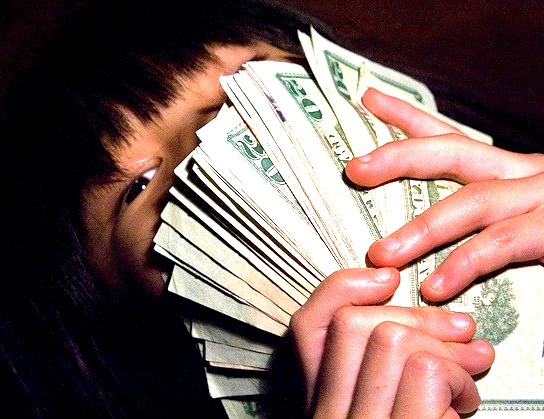
Aside from this, you may give them money in denominations that encourage saving. For example, give your children a $6 allowance that consists of three 2 dollar bills. Tell them to set aside $2 for their money jar.

5. PLAY GAMES INVOLVING MONEY

Image Credits: Rich Brooks via Flickr

Image Credits: Rich Brooks via Flickr

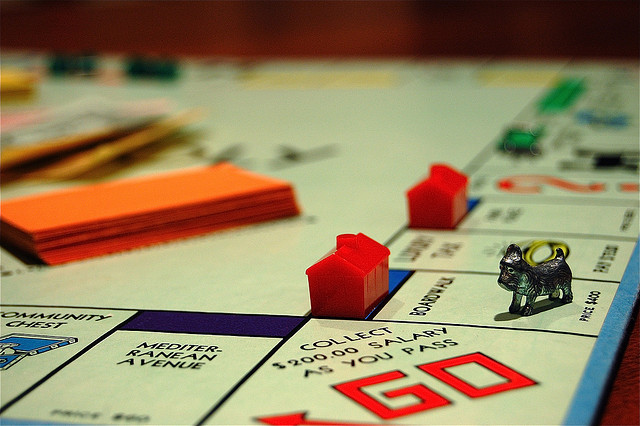
As I said, the most important thing you must do is to make saving money as enjoyable as can be. Play games that teach children about financial concepts. Such games include Monopoly and The Game of Life. They will not only have fun but it will also shape their money management skills.

Sources: Money Crashers and Family Education

Read More...