
What On Earth Is Goal-Based Investing?

First and foremost, we must define what traditional investing is. Traditional asset allocation optimizes the structure of a portfolio based on a generalized approach. Although it typically suits the needs of the institutional investors, it is not necessarily adapted to suit the needs of a private investor. A private investor, such as yourself, tends to create different portfolios corresponding to different needs.

On the other hand, goal-based investing is a relatively new approach in investing where the end justifies the means. Investing is directed to attain specific financial goals throughout an investor’s life.

“Goal-based investing involves a wealth manager or investment firm’s clients measuring their progress towards the specific life goals, such as saving for children’s education or building a retirement nest-egg, rather than focusing on generating the highest possible portfolio return or beating the market.” – Investopedia

Simply put, it re-frames success based on an investor’s needs and goals. Say that an investor’s primary goals are to save for the golden years and to save for the educational fund of his grandchildren. Goal-based investment plan would be more conservative for the former and more aggressive for the latter. As you can see, this approach will help you to withstand most market conditions and volatility.

Apply goal-based investing to your wealth management by following these steps:

Image Credits: pixabay.com

STEP 1: DETERMINE YOUR GOALS

Before anything else, you must identify your financial goals depending on your current life stage. Let us dive into some practical examples. As a young working adult, you may be eyeing on the latest gadgets (e.g., smart glasses, laptops, or smartphones). As a devoted parent, you may be considering the different educational options for your child. As a Singaporean reaching 62, you may be thinking about building your retirement fund. Having multiple goals in mind throughout the course of your life is perfectly fine!

STEP 2: ESTABLISH A TIMELINE

As you list down all your financial goals at the moment, you must keep prioritization in mind. Prioritize your goals by examining which ones you need and which ones you want to have. Afterwards, you must create a timeline for your final set of financial goals.

Do you aim to travel next month? Or, do you need to purchase a flat in the next 10 years? Measure the amount of time needed to realistically reach your short-term and long-term goals.

STEP 3: KNOW WHERE YOU START

How can you plan ahead, if you do not know where to start? Pinning your starting point is important in helping you achieve your financial goals. Administer a simple financial assessment by asking yourself a few questions. Firstly, how much money have you saved up? Secondly, do you have an emergency fund? Lastly, how much are your net worth and cash flow?

STEP 4: CREATE AN INVESTMENT PLAN

You are done with determining your final set of goals, setting a realistic timeline, and drafting your starting point. What is next for you? Well, you must put all of the above information together to create an Investment Plan. Create this by looking at four factors namely: risk profile, investment options, target amount, and asset allocation.

STEP 5: EXECUTE THE INVESTMENT PLAN

Investing for your financial goals does not stop with opening a savings account. You do not need to accumulate a massive amount of money to start investing neither. Instead, you must invest in a consistently as early as possible. As you invest religiously throughout your life, you need to review whether there are on the right path. Are you doing these things to achieve your financial goals? If so, continue on.

Image Credits: pixabay.com

Goal-based investing is a relatively new approach in investing where the end justifies the means. It may seem like an obvious or an oversimplified concept, but it represents a departure from the typical risk-tolerance framework. Will this investment strategy work well with your wealth management practices?


Sources: 1 & 2

Read More...

How To Become A Money Magnet

Equipped with a best-selling spirituality book, you realized that there was a secret to cultivating the life you want. I know how bizarre this sounds, but hear me out! Rhonda Byrne, The Secret’s author, claims that our thoughts can influence the world we live in. This concept of manifesting destiny is called “Law of Attraction”. According to this concept, investing positive energy and belief can lead to a desired outcome. In contrast, negative thoughts may attract negative outcomes.

Similar to other philosophies, the Law of Attraction stresses how the universe and its creations are made of flowing energy. Your energy can be used to either attract or repel money. To attract money based on the Law of Attraction, you may follow these steps.

STEP #1: OBSERVE YOUR THOUGHTS

How can you lure money into your life, if you feel negative about it? What goes around comes around. Before changing your thought patterns, awareness of your thoughts on money is important. Be mindful with how you speak about money and wealthy people.

Image Credits: pixabay.com

Do not be quick to diminish your worth. Instead, appreciate what you have. Law of Attraction entails that you train the universe to send you more money by receiving and appreciating it.

STEP #2: RE-FRAME YOUR THOUGHTS

Have you noticed that whatever you do in two weeks straight usually becomes a habit? The act of repetition is essential to reprogram the minds of animals as well as humans. Reprogram your mind to attract money by wishing for abundance.

Law of Attraction encourages you to send positive signals to the universe by dressing the part, by surrounding yourself with money savvy individuals, and so on. Behave in a way that is directed towards your desires.

STEP #3: MAKE A LIST

Visualization is one of the key tools of the Law of Attraction. It allows you to create a path that you can reach for. You are empowered to create a vision for your financial life. Be clear about the amount of success and abundance that you want to achieve. It is recommended to practice visualization on a daily basis.

Dive into the feelings of abundance by either making a financial list or by making a money vision board. Practicing visualization on a daily basis may open opportunities to manifest these items.

Sources: 1 & 2

Read More...

Microsoft Corporation’s Most Expensive Fails

There is a significant reason why Microsoft Corporation continues to thrive alongside massive tech names such as Apple and Samsung. It taps the global market due to its persistence. Throughout its journey to innovation, it made some incredible moves and a bunch of missteps. Who can forget about Bob and its emergence in 1995?

On that note, here are some of “Microsoft Corporation’s Most Expensive Fails”.

2006: ZUNE

As people bid farewell to the portable CD players, early 2000s embraced the integration of a music player and a downloading service. Apple took advantage of the rich financial potential in the music hardware. In fact, it sold 100 million iPods by 2006.

When Microsoft decided to compete, it was to late! Launched in 2006, Zune was considered as one of Microsoft’s worst product of all time. How so? It not only came with a US$249 (about S$338) price tag, but it also came with an unappealing exterior (e.g., having brown as a color option). Zune’s sales in 2009 were around US$117 million (S$161 million), while Apple’s iPods sold about US$3.3 billion (S$4.5 billion) in the same period of time. Imagine their dismay!

2010: KIN

Spending about US$1 billion (S$1.38 billion) in development and a partnership with renowned designer Danger Inc. were not enough to save Microsoft from the Kin’s downfall! Kin One and Kin Two were released in 2010 as Verizon exclusives. These phones featured touchscreen displays and slider keyboards. Furthermore, it was packed with social-networking capabilities including Facebook, Twitter, and MySpace. So far, so good!

However, the Kin phones did not support downloadable games and applications. Every single Kin phone required a data plan too. Within two months, Verizon stopped selling the Microsoft Kin because of its underwhelming sales. All traces of kin were gone within a year.

2012: WINDOWS RT

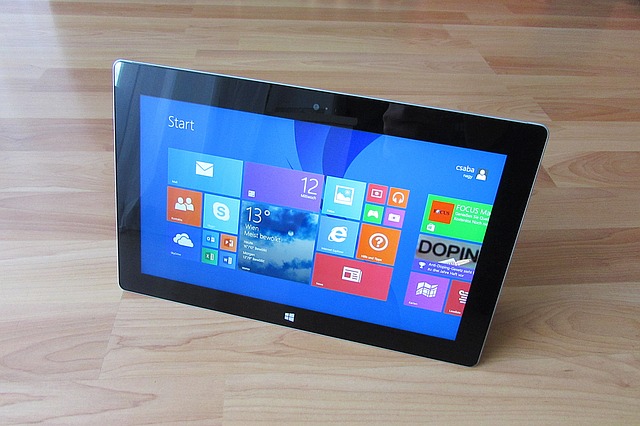
Windows RT is a discontinued operating system developed by Microsoft. Many believe that it was a predictable demise. You see, the Windows RT confused its users as it was launched alongside a superior operating system – the Windows 8. They may look the same, but they do not work in the same way!

Image Credits: pixabay.com

Windows RT was designed specifically for energy-efficiency. It could only run software downloaded from the Windows Store, which was not enough for many people. Selling low-cost products that operate on it were not helpful either. With these reasons, Microsoft Corporation lost about US$900 million (S$1.24 billion) on unsold Surface RT tablets by 2013.

Which Microsoft products did we miss? Feel free to express your thoughts below!

Sources: 1 & 2

Read More...

To All The Money You’ve Wasted Before

On a positive note, you have started the month with the best intentions at heart. You intend to save money by buying what you actually need and by steering away from from temptation. You have created a seemingly robust plan to watch your spending habits. However, things do not seem to work despite your unwavering efforts. Do not beat yourself up! This happens to many of us.

Taking control of your finances starts with understanding your triggers. Why are your drawn to buying the non-essential items? Analyze the physical, environmental, and psychological triggers that cause you to spend. Managing said triggers will help you to avoid overspending.

Let us start with the physical factors that can affect your spending habits. Dropping by the nearest grocery while you are hungry may not be a practical idea! Your rumbling tummy makes you more susceptible to purchasing more. You are less likely to spend time exploring the isles when you already have a list in mind.

Image Credits: pixabay.com

Environmental factors include exposure to shopping malls, flea markets, and television or online shops. Are you more likely tempted to spend due to the convenience of having an item delivered through your doorstep? There are certain situations that can make you feel obligated to spend. For instance, some people are more likely to spend when they are travelling. These people go on a spree because of a mindset that they will not be able to come back there anytime soon.

Focusing on the the psychological factors will highlight the Money Disorders. Money disorders is a broad umbrella consisting of money avoidance, money-worshiping, and relational money disorders. Compulsive buying is under money-worshiping. Inner conflicts drive compulsive shoppers to overspend. Earlier in life, they often learned that shopping provides a temporary escape from worries and anxieties. The chemical reaction that shopping brings to them can be compared to an addiction that leaves them to crave for more. Is your problem as serious as this?

The second step to financial control is tracking your spending. Keep track of all your purchases for a month. Figure out whether an expense is essential or non-essential. Afterwards, get the total of each category. How much are you spending on the non-essentials? Perhaps, you can cut back at least S$50 per category?

Image Credits: pixabay.com

The final step is to allocate your money strategically. You need to give every dollar a place to stay. I do not intend for you to max out your account! Instead, you must allocate your money to several categories such as: savings, investments, retirement or emergency funds. Having money lying around can lead you to spend it. Do your wallet a favor! Avoid being trapped in this situation.

Sources: 1 & 2

Read More...

5 Inexpensive Acne-Busting Products

After a long social hibernation, you are going out on a blind date. You have the perfect outfit that strikes a balance between attractive and elegant. Your threaded eyebrows are on fleek! Not to mention, you bought an irresistibly red lipstick. It seems that you are all set for your date. However, a huge zit suddenly appeared the night before. What shall you do?

Acne and pimple are nightmares to flawless skin. I, for one, have to combat these nasty visitors every hormonal cycle. Throughout the years, I have experimented with products that claim to zap zits. Fortunately for you, this list rounded up some of the best Inexpensive Acne-Busting Products in Singapore.

MY TRUSTED ALLY

One of the acne products that I cannot live without is Oxy Cover. The Oxy Cover Pimple Medication contains Benzoyl Peroxide (BP), which is stronger than other acne-busting chemicals. Its main function is to kill the bacteria and unclog pores. Since it comes in varying dosages, you need to choose a product that suits your case. For instance, Oxy 5 contains 5% Benzoyl Peroxide and treats mild to moderate pimples or acne. While Oxy 10 fights stubborn pimples or acne.

Image Credits: mentholatum.com.sg

Oxy Cover claims to kill bacteria causing pimples, unclog pores, dry up excessive oil, and cover your imperfections. Oxy 5 retails for as low as S$3.50.

THE HEALING ONE

Aside from BP, your skin can highly benefit from aloe vera. This amazing plant is versatile as it can be used on the hair, face, and body. Personally, I use aloe vera gels to tame my heat rashes and to soothe my burns. Its anti-inflammatory and hydrating properties make it suitable for sensitive and acne-prone skin. Use it to help fade your acne or pimple scars.

Image Credits: Nature Republic USA

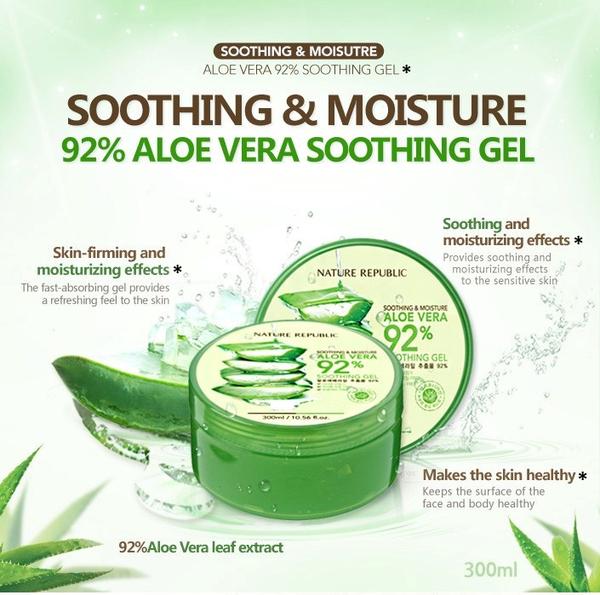
The Nature Republic Aloe Vera Gel is a popular Korean product known worldwide. Formulated with California CCOF-certified organic aloe vera, this gel can be used by all skin types including sensitive skin. It retails for about S$3.10.

NATURE’S BEST OFFER

Some of my friends prefer natural products over modified chemicals. For a more natural option, turn to tea tree oil. Tea tree oil has innate anti-microbial properties that can disinfect your pimples or acne and minimize its inflammation.

Image Credits: thebodyshop.com

Simply pour a few drops of the oil onto a cotton pad, a clean tissue, or your fingertips. Afterwards, gently dab it directly on the affected spots. The oil shall penetrate the skin to unblock the sebaceous glands, disinfect the pores, and dry out the pimples or acne. Try The Body Shop’s Tea Tree Oil, which retails for as low as S$19.90.

THE BLEMISH BUSTER

Whether you like or not, acne or pimple leaves a mark. Maintain your healthy-looking skin by treating these spots. Spot treatments are over-the-counter acne products that can help heal your existing blemishes. Spot treatments containing Salicylic Acid (SA) can resolve and prevent lesions. Unlike BP, it does not have any effect on sebum production and does not have the ability to kill bacteria. Instead, it can be used for milder pimple or acne.

Image Credits: innisfree.com/sg

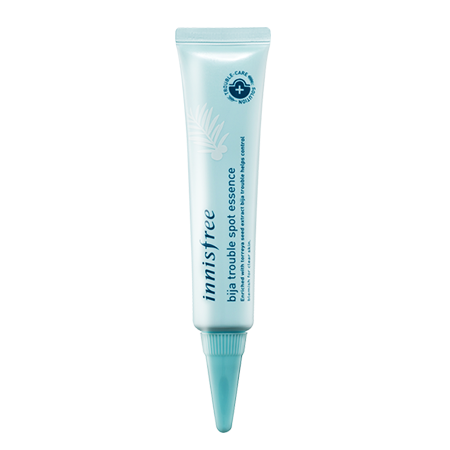
Innisfree’s Bija Anti Trouble Spot Essence contains both Salicylic Acid and Torreya Seed oil. The former helps treat blemishes, while the latter aids in healing the skin. This product retails for about S$25.

HYPED UP EXFOLIATOR

The art of maintaining an impossibly perfect and luminous skin is something that many Koreans have mastered. This is why, the rest of the world have been curious about their skin can routine. What is fascinating about their comprehensive routine is that it covers different areas including acne treatment.

Image Credits: lazada.sg

Exfoliating acids are a tried-and-tested acne-busting staple that completes the K-beauty regimen. A famous exfoliator that lives up to its hype is Cosrx’s BHA Blackhead Power Liquid. It is formulated with SA and Beta Hydroxyl Acid to deeply cleanse your pores. It costs about S$23.90 in Lazada Singapore and S$28.71 in Watsons Singapore. Shop around to get the best deal!

Sources: 1, 2, & 3

Read More...