6 neutral-colored flat shoes from $44+ you can wear for your wedding and beyond

Pearl Bow Faux Leather Espadrilles PS663-3

Heels are not a must for weddings.

Especially more so if you’re not used to wearing them daily. If I were you, I would spend my money on flat shoes so I can wear them for my wedding and beyond.

If you think the same, here are 6 neutral-colored flat shoes from $44+ for your consideration.

Prices reflected are accurate at the time of writing.

Wide Fit Love-Match Bow Ballet Flats – Ivory
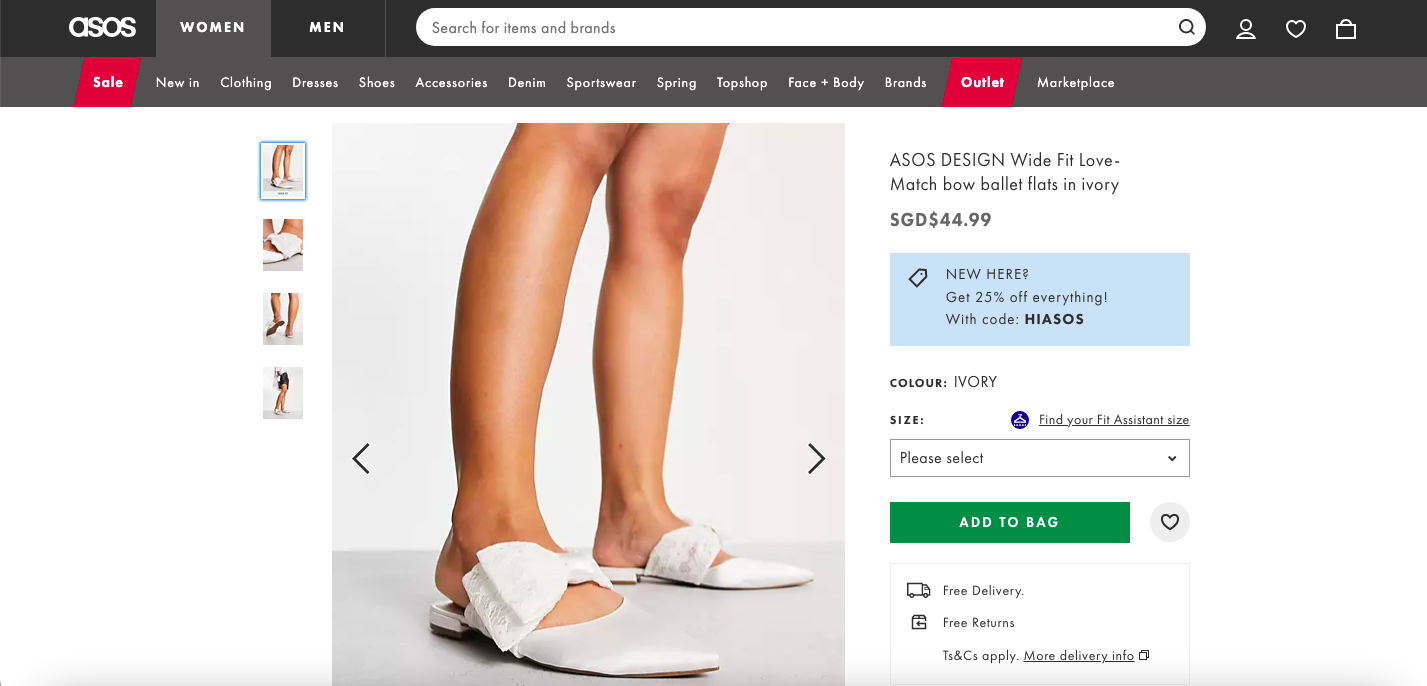
ASOS DESIGN Wide Fit Love-Match bow ballet flats in ivory

Price: $44.99

Step up your fashion game with these stylish Wide Fit Love-Match Bow Ballet Flats from ASOS. With a glossy, satin-style upper and sophisticated ivory hue, plus a sweet lace bow detail, these slip-on flats combine classic chic with modern comfort. And they fit like a dream thanks to the comfy wide fit. Whether you’re walking down the aisle or strutting down the street, you never have to sacrifice style for comfort again!

Metallic Accent Mary Janes – Nude
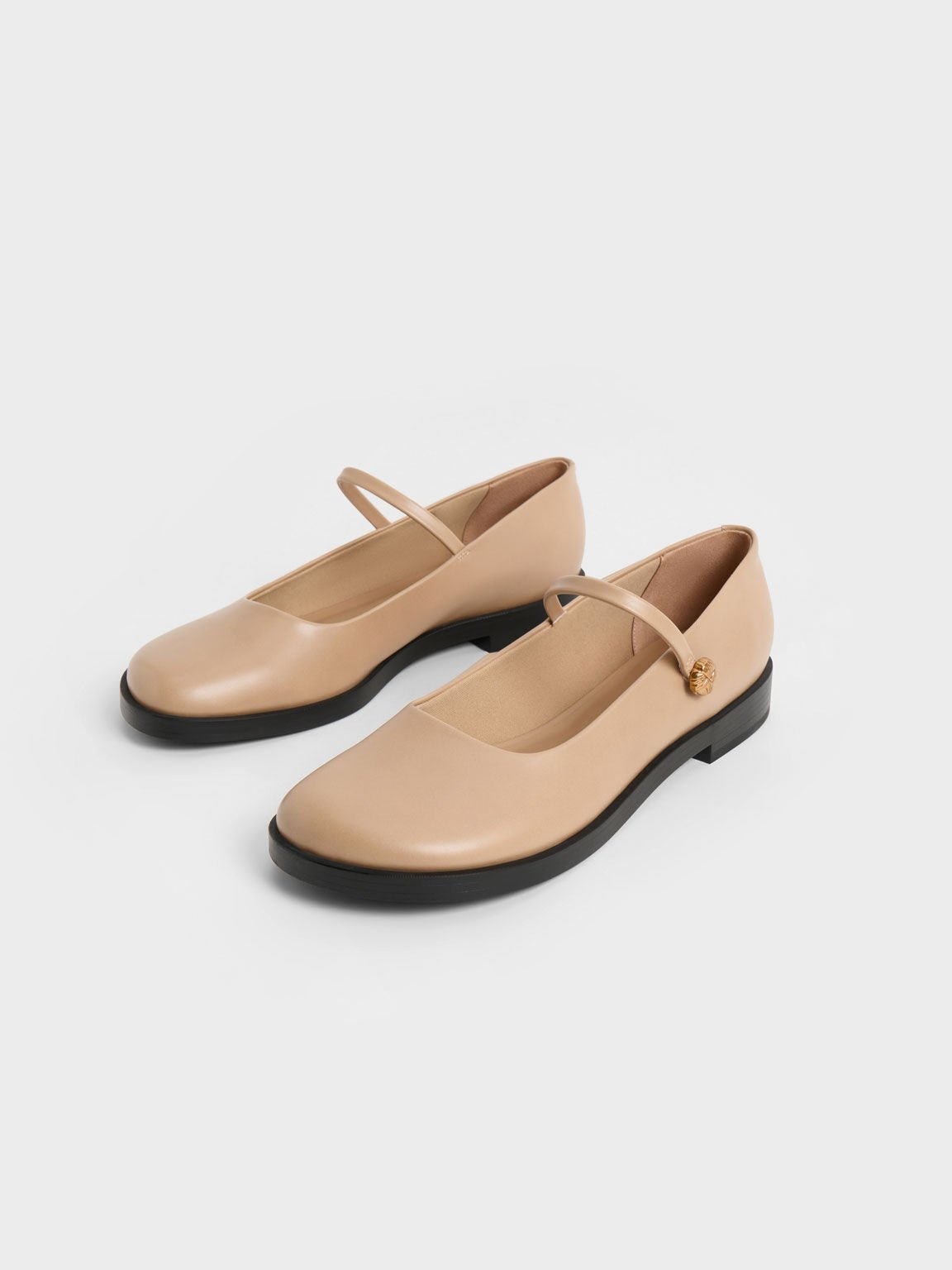
Metallic Accent Mary Janes - Nude

Price: $56.90 or 3 payments of S$18.97 with ShopBack PayLater

A perfect blend of chic and classic, these Mary Janes are an essential upgrade to your fashion lineup beyond your wedding. Showcased in a versatile nude hue, the contrasting black foundation and eye-catching gold-tone detail create a visually gorgeous design. Featuring a subtle heel (still flat enough though) and cushioned insole for all-day comfort and walkability, these shoes are ideal for workdays, weekend brunches, and every event after your big day.

Bead-Embellished Mesh Flat Sandals – Nude
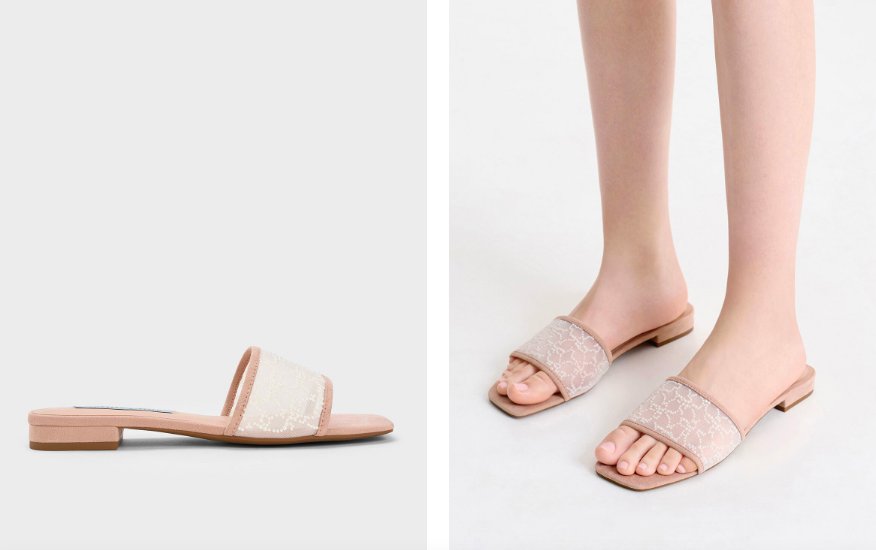
Bead-Embellished Mesh Flat Sandals - Nude

Price: $56.90 or 3 payments of S$18.97 with ShopBack PayLater

Elevate your daily ensembles with these nude-pink flat sandals, providing a touch of refinement to your looks. Boasting wide straps made from premium mesh and adorned with elaborate bead accents, these sandals ensure both style and comfort. The footbeds offer a luxurious experience with plush faux suede at the front and breathable faux leather at the back.

Pearl Bow Faux Leather Espadrilles – Beige
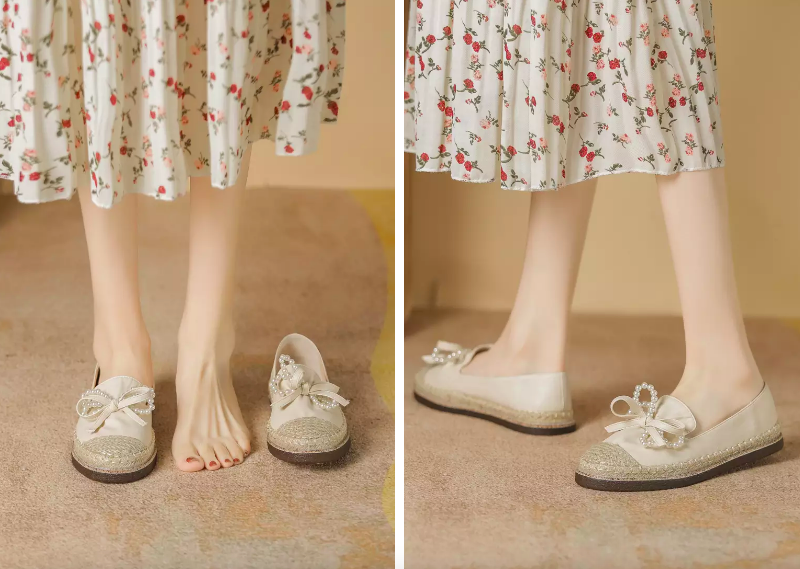
Pearl Bow Faux Leather Espadrilles

Price: $83 (was $96)

Step out into sunshine-filled days in these beautiful Pearl Bow faux leather espadrilles from Twenty Eight Shoes. Carefully crafted for breathability, this footwear provides a soft faux leather upper and a round-toe cap for added comfort. The inner sole is made from moisture-absorbent microfiber leather, while a wear-resistant and anti-skid rubber sole brings lasting durability. Finished with a creative pearl bow and hand-stitched hem, you will love showing off these beautiful espadrilles for your special day and all summer long in sunny Singapore.

Rina Mesh Ballerina Flats – Nude
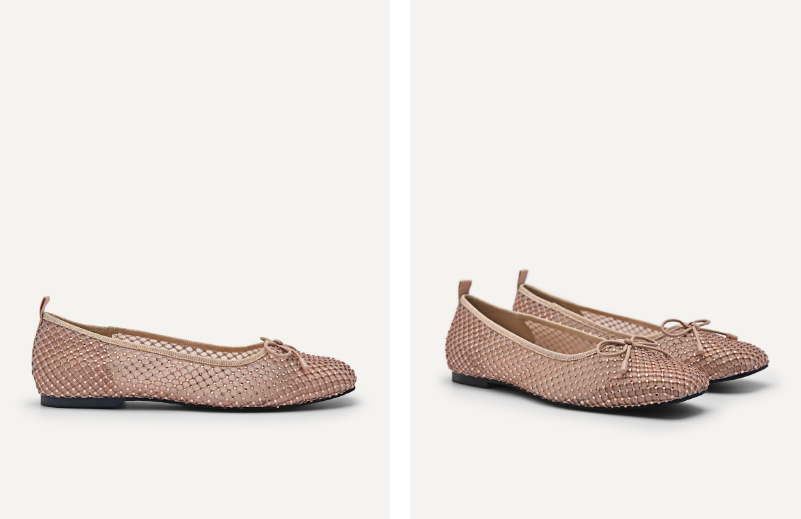
Rina Mesh Ballerina Flats - Nude

Price: $85.90 or 3 payments of S$28.63 with Atome or ShopBack PayLater

Upgrade your everyday look after your big day with this fashionable and adaptable Rina Mesh Ballet Flats in nude. The mesh upper offers a versatile, easy-to-wear design while the playful bow detail adds a touch of whimsy to the silhouette, making these flats an immediate essential in your shoe closet.

Baily Crystal Embellished Leather Point Toe Ballerinas – Beige
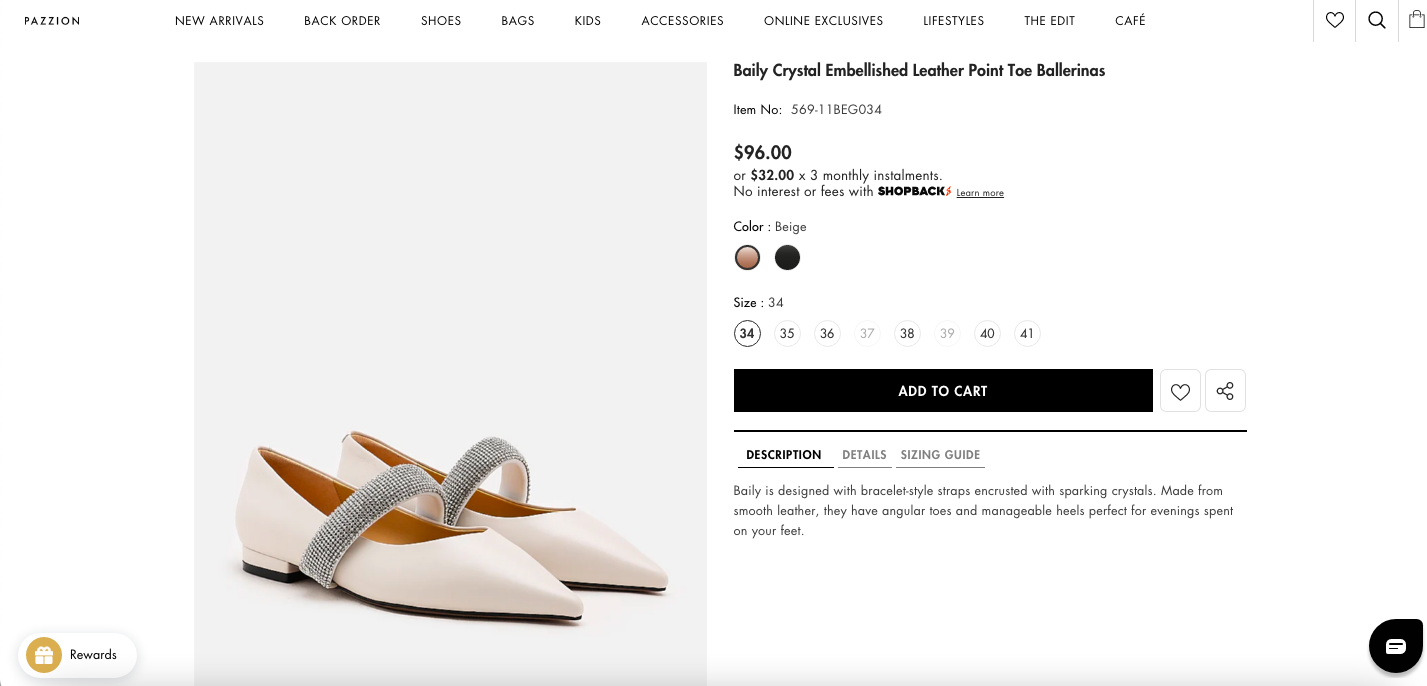
Baily Crystal Embellished Leather Point Toe Ballerinas webpage


Price: $96.00 or $32.00 x 3 monthly installments with ShopBack PayLater

The last on our list are these ballet flats that boast elegant, bracelet-like straps adorned with shimmering crystals. Crafted from supple lambskin and smooth leather, they feature distinct angular toes and not-high-at-all heels, making them perfect for wedding evenings spent standing and socializing.

These neutral-colored flat shoes under $100 offer an excellent blend of style, comfort, and affordability for your special day and beyond. Each of these versatile options can effortlessly transition from your wedding celebration to everyday wear, making them a valuable investment for your wardrobe. With these elegant and timeless designs, you will be sure to make a statement on your wedding day and continue to exude grace and poise in all of life’s future events. So go ahead, indulge in a pair (or two), and dance the night away, knowing you’ve made a stylish and practical purchase.
Read More...

7 children’s books that teach young kids about money

money themed books

Looking for books to introduce to your kids the concept of money or personal finance?

Allow me to present you 7 children’s books you can consider for your next book haul and read-aloud session.

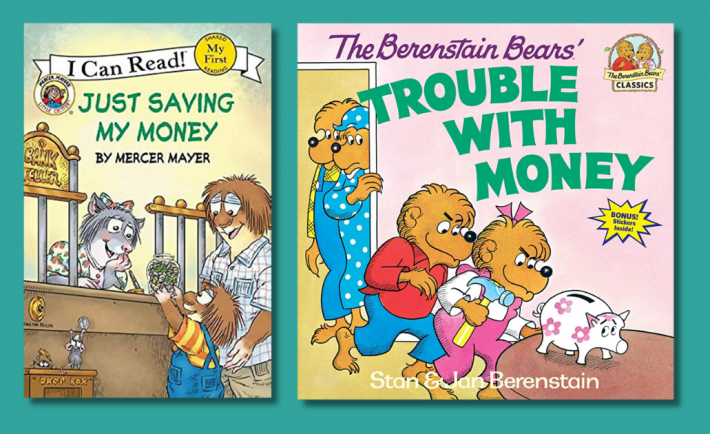
“The Berenstain Bears’ Trouble with Money” by Stan and Jan Berenstain

If your kids spend a dollar when they have a dollar, this book would be apt for them. It also teaches kids about the meaning behind an “allowance” and how they should save money in the bank so it collects interest. Suitable for kids aged 3 to 7.

“Alexander, Who Used to Be Rich Last Sunday” by Judith Viorst

I absolutely love this book! There’s something repetitive about it that makes it very literatur-ish. Ha, but laughter aside, it teaches kids about decisions. Every decision that one makes could result in a loss of money, which Alexander made and lost his cents, which quickly added to a dollar. Suitable for kids aged 6 to 8.

“Lemonade in Winter: A Book About Two Kids Counting Money” by Emily Jenkins

The money used may not be applicable in the Singapore context but I like how it still teaches math and simple calculations. You can also take the time to explain to your child how running a business doesn’t guarantee profit right from the start. Suitable for kids aged 3 to 7.

“A Chair for My Mother” by Vera B. Williams

This is a very heartwarming story in my opinion. I think it teaches kids that saving every little penny counts. It adds up! And if you’re into name and fame, then know that this book is a Caldecott Honor Book awarded by the American Library Association. Quality assured. Suitable for kids aged 3 and above.

“One Cent, Two Cents, Old Cent, New Cent: All About Money” by Bonnie Worth (A Dr. Seuss-inspired book)

Read widely and you will know that it’s hard to get stories written in the Singapore context. There are, but not plentiful. But still, I think this book gives a good look into the history of money in other nations, which can be an eye-opener for our juniors. Suitable for kids aged 5 to 7.

“Bunny Money” by Rosemary Wells

A really adorable illustrated book with the bunny theme at the center of it all. This story serves as an underlying reminder that making a trip out requires money: bus fares, lunch, and unexpected mishaps. Suitable for kids from 3 to 5, this picture book introduces our young ones to early math concepts.

“Little Critter: Just Saving My Money” by Mercer Mayer

This is a fantastic storybook that will explain to your child what a “savings account” is. Using words that are easy to understand, young kids from the age of 3 will get introduced to the concept of money and how they have to “work” for it. Animal lovers will adore this simple read!

These children’s books offer a valuable and engaging starting point for teaching young kids about money. Through relatable characters and captivating plots, children will learn vital lessons about saving, spending and making wise financial choices. By introducing these concepts at an early age, we can help set the foundation for a lifetime of financial responsibility and empower our children to make informed decisions as they grow. So grab one of these books, snuggle up with your little ones, and embark on an exciting journey to financial literacy together. Happy reading!

Read More...

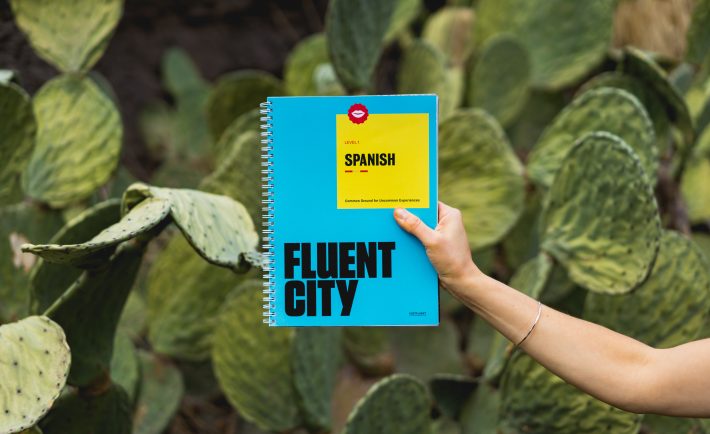
Mastering a new tongue can help boost your income

foreign language book

With the rise of AI and the possibility of AI replacing jobs, have you been thinking of various ways to level up your career?

If you’ve been considering learning a new language as a form of self-upgrade, you’re on the right track.

In fact, I think our sunny island is the perfect place to practice a language given the saturation of nationalities and languages. This means you will have lots of opportunities to meet people, learn, and practice.

Mastering a new language can help boost your income because it opens a world of career opportunities for you. And I’m not just talking about being able to speak; being able to read and write can give you an entire spectrum of advantages in the competitive job market.

And even if you may take some time to be fluent, being trilingual can be a great asset for travel and leisure!

Speaking a foreign language can increase your salary potential

Fluency in a foreign language is a qualification that employers are looking out for.

To back up using stats, research has shown that you can stand a chance to raise your salary by up to 15% with new language proficiency.

A study on bilingualism in the workplace revealed that those who spoke > 2 languages earned an average of 5 to 20% more than those who only spoke one.

But lest you get me wrong, I’m not saying that language fluency is a guarantee of a steep pay raise. I’m just saying that it does put you in a good position to receive one.

And common sense tells you that being multilingual gives you access to a larger job market. Other than international companies in Singapore, you can also search for opportunities abroad.

Knowledge is power, ya.

You will have a competitive advantage

There’s no denying that we’re seeing more foreigners on the streets of Singapore in recent years.

expats in Singapore

Image Credits: todayonline.com

And that’s a sign that many are settling down in Singapore, starting up businesses, and working on our shores.

Being able to communicate in their local language will give you a natural advantage over those who can’t. This can be a huge plus point when it comes to thriving in such workplaces.

In addition, learning a new language can open up a wider range of opportunities, including international roles that pay higher salaries.

Companies are always looking to expand their business globally, and having an employee who can communicate effectively with people in different markets is an invaluable asset.

Furthermore, with globalization and increasing diversity, there is a growing need for multilingual employees.

This means that multilingual candidates have an edge over their monolingual counterparts when it comes to getting hired for certain roles. And that edge often translates into higher salaries and better benefits!

The most in-demand languages for careers

You probably do not need me to say this:

English and Mandarin Chinese are probably the “hottest” languages worldwide.

But apart from those two, which the majority of Singaporeans have a slight advantage over, other in-demand languages include Spanish, French, German, Hindi, Arabic, Portuguese, and Japanese.

But ultimately, I think you do what’s best for you. Because passion will take you to places.

For example, if you take a huge interest in Japan and want to move there one day, then start learning their language!

And the same goes for any country you’re keen on moving to that doesn’t use English or Mandarin Chinese as their main language of communication.

Online resources to master a language

With the pandemic coming to an end, more language schools are offering in-person classes now.

But if you think it’s too much of a hassle, there are online resources you can make use of to start your language-learning journey.

Here are three to get you started:

  • Babbel

With Babbel, you can learn any language from the comfort of your own home! It offers up to 14 languages such as Spanish, French, and Portuguese, with packages starting from S$13.32 for three months.

  • The Open University Learning Space

The Open University Learning Space offers language learning resources that follow the Common European Framework of Reference for Languages (CEFR) suitable for beginner to advanced-level learners. You can check out this short courses page: open.ac.uk/courses/languages/short-courses, where they offer beginner to elementary modules for German, Italian, and more.

  • Duolingo


View this post on Instagram


A post shared by Duolingo (@duolingo)

Duolingo is not only a fun and interactive way to learn new words and phrases quickly, but the app’s bite-sized lessons keep it interesting without overwhelming the learner. I’ve used it to learn Japanese and Indonesian, which is not bad if you’re an absolute beginner.

Investing in mastering a new language can take years, but it can pay off in monetary ways. With globalization and people moving across countries to work and try a hand at entrepreneurship, the modern workplace requires folks with language skills other than their native ones. And if you’re fluent and at a working proficiency level, you can negotiate for a higher salary. So why not take the plunge and embark on a journey of language learning today? You will only stand to win.

Read More...

How to deal with your teenager when they’re spending too much money

female teenager shopping

Is your teenage child asking for extra pocket money recently?

And you’re worried that they might be spending more than they can afford without being financially responsible?

Well, it’s time to set some financial rules and learn how to say no without alienating them.

Monitor spending and look for red flags

Excessive spending in recent months can be a sign of trouble, signaling that your child might have gotten themselves with the wrong crowd or are hiding something.

Maybe they are going for more expensive stuff, spending impulsively, or wanting to fit in with a certain group on social media.

If so, this is a good time to discuss the value of money and ask them what they think responsible spending habits are.

Then, take the chance to explain why money shouldn’t be spent carelessly without giving much thought.

Have an honest conversation about their spending habits

Before pinpointing their spending habits, it’s always good to be vulnerable first.

And by that, I mean opening up about the financial mistakes you’ve made and how that made you pick up healthier spending habits.

Yes, it’s hard to admit our mistakes, but those lessons learned don’t have to be yours only to remember. It can be a learning resource for your kids!

You may also want to walk the talk by modeling good financial behavior, whether that be budgeting or maintaining a savings account.

Also, reinforce the difference between needs and wants in life, so it’s clear what should be in the essential “cart”.

Stop giving additional pocket money until you see change
Singapore money

Image Credits: blog.remitly.com

Yes, you love your child, and giving extra money can be your way of expressing yourself as a busy working parent.

But you don’t want to feed their recklessness in spending decisions.

So a wise way to handle this situation is to stop providing bonus pocket money until you see some improvements in how they are handling their existing allowance within their daily or weekly budget.

And if they have never budgeted before, this is a wonderful opportunity to introduce simple budgeting tips with broad categories such as saving and spending.

Encourage them to get a part-time job during the holidays

If your teen is of legal age to work, why not encourage them to find a part-time job during the school holidays?

Getting out there into the working world is, in my opinion, one of the best ways to teach your child about financial responsibility and independence.

When teens get a taste of what “work” is like, they will likely understand how tough it is to earn money. Unlike spending money given to them, they will probably think twice and thrice before spending that dollar they’ve earned.

When it comes to your teen’s money-spending habits, lay down some boundaries. Telling them “no” in a loving way isn’t easy, and it’s important to explain your reasoning behind not giving in to their requests—so they understand that it’s not just a flat-out refusal. Share that you’re not a fan of irresponsible spending and let them know that they are responsible for setting a budget and sticking to it. With open communication, you will be able to nip money issues in the bud and ensure that your teen has the financial savvy to make it in the real world when they graduate.

Read More...

Why creating memories is more valuable than owning stuff

a family at Hong Kong Disneyland

Money can’t buy happiness?

No, that’s not today’s debate.

Today’s chatter is about how buying stuff is not always the best way to bring joy.

So what else can we do to feel “happy”? I would boldly say, invest in experiences.

When you have stuff, the “happiness” that comes with owning it probably doesn’t last longer than a few days. Okay, maybe a little longer for some.

But when you gain an experience, it somehow becomes a memory that lasts.

Investing in experiences also brings people closer together! See how families and friends who went on a trip or join activities together still reminisce fondly on those moments they shared?

These memories will stay with them for years. There’s no denying it.

Memories fade slower than the thrill of new material possessions

Everyone has their style of spending, right?

Some like to shop and buy lots of stuff, machiam like all are must-haves.

But we all know that these material things one day will go obsolete as new trends replace old ones. So most will probably end up at the storeroom or the karang guni’s.

But for those who prefer to take on vacations and invest in experiences, I would say these people are making a wise investment.

You will cherish experiences more in the long run

I’m sure we’ve all had our moments where we look at past photos taken while on vacation or on activities and still recall how we felt back then.

Maybe it was a video “interview” taken before bungee jumping, a jump shot taken at a beautiful beach, or a strawberry picking session at a farm.

strawberry picking

Image Credits: koreajoongangdaily.joins.com

Whatever it is, looking at those years down the road does bring back fond memories.

That instant satisfaction you get from buying something comes and goes. But experiences? It lasts.

And that’s why I would so much rather spend the money to “do stuff” than spend them on material things.

Experiences define who you are

Let’s not forget that experiences define who you are as a person.

Whether they are good, bad, or neutral, they ultimately shape your thoughts and who you are today.

For instance, I’ve plunged into the ocean while paragliding solo overseas, and that left me with a trauma with water and high-element sports.

Yeah, it’s not a pleasant memory for sure but that incident made me into who I am today. And when people ask me why I’m so afraid of participating in water sports, I live to tell the story.

Ultimately, the takeaway is clear: when it comes to the debate over owning stuff versus creating memories, go with the latter. Investing in experiences is not only far more meaningful but also more likely to bring lasting emotions. Not to mention, memories strengthen relationships and create invaluable connections. So, instead of buying something new you don’t necessarily need, why not plan a special trip/outing with a parent or child, a friend or partner, or even by yourself? That way, you will have a memory you can look back on for years to come. And to me, that’s definitely money well spent.

Read More...