The S$1 Million Dream: Can You Retire at 50?

For some Singaporeans, the dream of financial independence is not just a distant fantasy but a tangible goal. A recent survey conducted by CIMB Singapore in collaboration with the Nanyang Centre for Marketing and Technology reveals that 63% of respondents aim to achieve financial freedom between 40 and 60 years old. More than half believe that reaching at least S$1 million would free them from financial worries, and nearly three-quarters consider this target realistic. Yet only 43% feel confident in their ability to manage finances effectively to reach this milestone.

The study, which gathered insights from over 500 residents aged 26 to 60 in December 2024, also highlighted the anxieties that accompany these aspirations. Among those aged 40 to 50, 47% report feeling often or always anxious about their financial future. The obstacles are familiar: high living costs, family responsibilities, and limited income streams. Surprisingly, gaps in financial literacy persist. While insurance ranks among the top three tools for building wealth, alongside savings and stocks, 39% of respondents remain unsure of its effectiveness as an investment vehicle.

Image Credits: unsplash.com

Financial analyst Albert Tan suggests that early and disciplined planning can turn this dream into reality. A 25-year-old aiming to retire at 50, investing $1,000 monthly with annual increases of 3%, could potentially accumulate over S$1 million by their target age, assuming a 7% annual return. Tan notes that this approach does not account for other life priorities such as property purchases or family expenses, and relies on consistent wage growth, which is not guaranteed for everyone.

CPF savings remain a critical pillar in the retirement plan. Securing the Full Retirement Sum in a CPF Special or Retirement Account by age 55 could provide a reliable monthly payout of around S$1,700 from 65, supporting long-term financial stability.

Image Credits: unsplash.com

Ultimately, achieving financial freedom by 50 may be ambitious. However, with consistent investing, income growth strategies, and prudent CPF planning, it is far from impossible. For Singaporeans willing to map out their financial journey early, what once seemed like a distant dream could become a carefully planned reality.

Sources: 1,2, & 3


Read More...

CPF Changes in 2025: What Young Singaporeans Should Know

As Central Provident Fund (CPF) marks its 70th anniversary, several key policy changes are being rolled out in 2025 to strengthen long-term financial security for Singaporeans. While many of these updates target older workers and retirees, younger adults are encouraged to understand these changes early to plan effectively for the future.

CPF CONTRIBUTIONS FOR SENIOR WORKERS INCREASED

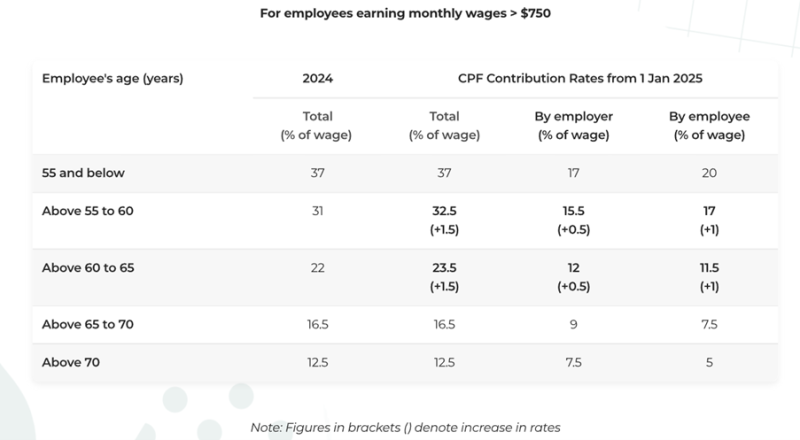
Since earlier this year, CPF contribution rates for employees aged above 55 to 65 have gone up by a total of 1.5 percentage points. This includes an additional 1% from employees and 0.5% from employers. The aim is to help senior workers build stronger retirement savings as more choose to work beyond age 55. For younger workers, this underscores CPF’s commitment to retirement adequacy for all age groups.

Image Credits: cpf.gov.sg

CPF SALARY CEILING HAS INCREASED

The CPF monthly salary ceiling has increased to S$7,400, up from S$6,800 previously. This change means that a larger portion of higher earners’ wages is now subject to CPF contributions. The ceiling will be raised again to S$8,000 in 2026. Although this change primarily affects those with higher salaries, it benefits long-term savings by increasing CPF contributions over time. This is something younger professionals can factor into their career and income growth.

SPECIAL ACCOUNT CLOSURE AT AGE 55

CPF members turning 55 this year will see their Special Account (SA) automatically closed. Funds are first transferred to the Retirement Account (RA), up to the Full Retirement Sum (FRS), where they continue to earn attractive long-term interest. Any remaining withdrawable balance is moved to the Ordinary Account (OA) and earns a lower interest rate.

Members can still transfer OA savings to their RA, up to the Enhanced Retirement Sum (ERS), to enjoy higher CPF LIFE payouts. Investments under the CPF Investment Scheme-Special Account are not affected and can be retained. Upon maturity or sale, the proceeds will first go to the RA, and any excess will be credited to the OA.

ENHANCED RETIREMENT SUM NOW S$426,000

The Enhanced Retirement Sum (ERS) has been increased to S$426,000, or four times the Basic Retirement Sum. Members who top up to this new limit at age 55 could receive CPF LIFE payouts of approximately S$3,300 per month from age 65, compared to around S$2,500 previously.

Even for those still far from retirement, it’s useful to understand how topping up early can maximize compound interest. CPF’s online tools like the Retirement Payout Estimator and Retirement Dashboard help members plan based on their age and financial goals.

EXPANDED MATCHED RETIREMENT SAVINGS SCHEME

Improvements have also been made to the Matched Retirement Savings Scheme (MRSS). There is no longer an age cap, and eligible members can receive government matching grants of up to S$600 per year for five years, totaling S$2,000.

Young adults can also support older family members by topping up their RA, helping them qualify for these matching grants while enjoying personal tax relief.

70TH CELEBRATION OF CPF

At CPF’s 70th anniversary celebration on July 5 and the launch of its commemorative book “Save & Sound: 70 Years of CPF”, Senior Minister Lee Hsien Loong reflected on CPF’s key role in every Singaporean’s life (i.e., from home ownership and family support to retirement). He also noted that Singapore’s CPF system is internationally recognized as one of the most effective in the world.

Image Credits: unsplash.com

For younger Singaporeans, this is the time to stay informed, track contribution limits, plan top-ups early, and help family members maximize their CPF benefits. To learn more, visit cpf.gov.sg or follow CPF’s official platforms.

Sources: 1 & 2

Read More...

The Ultimate Retirement Planning Tool: A Guide to Personal Capital Retirement Calculator


Planning for retirement can feel overwhelming. With so many unknowns and variables, it can be difficult to know where to start.

Good thing, there are tools that can help you make smarter retirement decisions. One of these tools is a Personal Capital Retirement Calculator.

But, what exactly is it? How can it aid you in planning for your future retirement?

Keep on reading as we break down how this tool can help you plan your retirement with ease.

How the Personal Capital Retirement Calculator Works

The Personal Capital Retirement Calculator is a user-friendly tool that helps you determine how much money you’ll need to save for retirement. It takes into account various factors such as:

  • Your current savings
  • Expected retirement age
  • Lifestyle goals

Simply input your information, and the calculator will provide you with an accurate projection of your retirement savings. This way, you can see if you’re on track or if you need to make adjustments.

Benefits of Using the Personal Capital Retirement Calculator

Utilizing the Personal Capital Retirement Calculator offers a number of benefits. This includes:

Accurate Savings Projections

One of the biggest advantages of using this calculator is its accuracy. Unlike generic retirement planning tools, the Personal Capital Retirement Calculator provides personalized savings projections based on your unique financial situation.

This allows you to make informed decisions about your retirement savings. It also gives you peace of mind knowing that your financial future is secure.

Easy to Use

The calculator is designed to be simple and easy to use, even if you’re not a finance expert. Just enter your information, and the tool does the rest. There’s no need to worry about complicated formulas or confusing jargon.

This makes it accessible for everyone, regardless of their financial knowledge.

Comprehensive Retirement Savings Guide

In addition to providing accurate savings projections, the Personal Capital Retirement Calculator also offers a comprehensive retirement savings guide. This guide includes:

  • Personal finance tips and strategies
  • Valuable information on investment options
  • Potential risks to consider

Whether you’re just starting out or nearing retirement, the guide can provide valuable insights to improve your financial planning.

Understanding Taxes in Retirement

When planning for retirement, it’s important to consider how taxes will impact your savings. Different types of income are taxed differently. With taxes in retirement explained, you can better prepare for the tax implications of your retirement income.

The Personal Capital Retirement Calculator takes taxes into account. By factoring in tax rates and potential changes, you can get a more accurate picture of your retirement savings. This will help you make more informed decisions about your retirement planning.

Exploring the Use of Personal Capital Retirement Calculator

The Personal Capital Retirement Calculator is the ultimate tool for individuals looking to plan for a secure and comfortable retirement. With its user-friendly interface and detailed analysis, you can confidently make informed decisions about your financial future.

So, what are you waiting for? Take control of your retirement and sign up for Personal Capital’s retirement calculator today!

Was this article helpful? If so, check out the rest of our site for more informative content.


Read More...

5 Personal Finance Tips for Singaporean Millennials

Navigating personal finance can feel like navigating a maze, especially for Singaporean millennials facing unique financial challenges.

From student loan debts to saving for a home in one of the world’s priciest property markets, the journey can seem daunting. But fear not, with the right mindset and strategies, financial security and success are within reach.

EMBRACE BUDGETING

Budgeting is the cornerstone of personal finance. It empowers you to track expenses, prioritize spending, and work towards financial goals. Start by understanding Singapore’s cost of living and allocate your income accordingly.

Track expenses diligently; even that artisan morning coffee can add up. Utilize budgeting apps and tools to streamline the process and stay accountable. Take advantage of credit card perks responsibly to avoid debt accumulation.

MANAGE LOANS

For eligible Singaporeans, Tuition Fee Loan and Study Loan are available options. To assist those grappling with student loan debts, explore repayment options and loan consolidation programs.

Craft a repayment plan that aligns with your budget and lifestyle. Consider making extra payments whenever possible to expedite debt payoff. Remember, managing student loans is a marathon, not a sprint. Stay disciplined and patient.

TAKE ADVISE WISELY

Image Credits: unsplash.com

According to research, nearly a quarter of Millennials (22%) have turned to family and friends for financial advice. While seeking financial advice from friends and family is natural, be discerning. Advice from unqualified sources could lead to costly mistakes. Listen to advice, but ensure your financial decisions align with your long-term objectives and risk tolerance. Better yet, seek professional advise.

SAVE FOR YOUR HOME

Owning a home is a common goal for Singaporean millennials. Start by setting realistic savings targets and explore government housing schemes like the Central Provident Fund (CPF) Housing Grant or HDB Loan Eligibility (HLE) letter.

Consider alternative housing options like Built-To-Order (BTO) flats or resale flats in non-mature estates to maximize affordability. Boost your home-buying fund by exploring side hustles or investments.

PLAN FOR RETIREMENT

Though retirement may seem distant, it’s never too early to plan. Take advantage of employer-sponsored retirement schemes such as CPF Special Account (SA) or Supplementary Retirement Scheme (SRS).

Consider diversifying investments across asset classes to minimize risk and maximize returns. Automate contributions and regularly review your retirement plan to ensure alignment with your goals.

IN A NUTSHELL

Image Credits: unsplash.com

Navigating personal finance can be challenging, especially for Singaporean millennials. But by adopting proactive strategies like budgeting, loan management, home saving, and retirement planning, financial stability and success are attainable.

With determination and discipline, pave your way to a secure financial future.

Sources: 1, 2, & 3

Read More...

How Can Women Focus on Their Retirement?

Women face greater financial long-term risks than men due to several factors. These factors include having a longer lifespan, needing to pay for medical expenses, loss of spouse, and gender pay gap.

Senior Wealth Advisor Sandy Higgins highlighted: “There are varied reasons for this gap, but what holds true are the statistics and cumulative impact of this on retirement savings.”

While the difference between the wages of men and women do not seem large to many, the results can be substantial over time. Thus, it is important for women to focus on their retirement plan. Consider the following tips.

#1: INCREASE YOUR KNOWLEDGE

Despite having a tendency of being more responsible with money, women were not allowed to open a bank account in their name before the 60s. Today, men are still regarded as the primary financial providers for their families.

Dance with the times by being educated on your finances. Brush up your knowledge on personal finance to get more confident as time passes.

#2: KNOW YOUR SPENDING HABITS

To grow your golden nest in the future, you must become aware of your shopping habits. Tracking your spending allows you to identify where your unnecessary and unplanned purchases happen. This way, you can modify it to achieve your retirement saving goals.

#3: PRACTICE BUDGETING

Always budget the expenses before signing a lease or making a major financial decision. It is important to recognize the full cost of your choices, including your rent or mortgage payment.

Experts say that the most common rule of thumb in housing is that your total housing costs should be no more than 30% of your gross monthly income. Stay as close to this amount as possible.

#4: GET READY TO RETIRE

A woman’s marital situation can affect her retirement plan. For instance, a woman may outlive her husband by several years depending on their age difference. Second marriages and stepchildren can also affect retirement planning.

Image Credits: unsplash.com

Structure a realistic and attainable retirement plan. Do not forget about your husband’s assets! Know which assets will be divided among you and your children once your spouse dies.

Sources: 1 & 2


Read More...