4 COVID-19 News Headlines Worth Reading

From receiving up to S$600 worth of Solidarity Budget to closing down of Changi Airport Terminal 2, here are some of the COVID-19 news headlines that will greatly affect your lifestyle and your budget.

1. “Solidarity Budget: All adult S’poreans to receive extra one-off cash payment of S$300, taking total to at least S$600”

Deputy Prime Minister Heng Swee Keat announced yesterday (April 6) that all Singaporeans above the age of 21 will receive a one-off cash payment of S$600 to cushion the weight that social-distancing measures have caused. This financial step shall cost the Government an extra S$1.1 billion as it increases the Solidarity Budget by S$300.

Singaporeans who provided the Government with their bank account details will receive the payout by April 14. While, the rest will receive the lump sum by cheque from April 30 onward.

2. “Changi Airport Terminal 2 to suspend operations for 18 months amid COVID-19 pandemic”

As the pandemic continues to affect the aviation sector, Transport Minister Khaw Boon Wan announced the upcoming closure of Changi Airport’s Terminal 2 (T2). It will suspend operations for 18 months, starting from May 1. Airlines operating at this terminal will be relocated to Changi’s other tree terminals.

The suspension of T2 operations will allow Changi Airport Group (CAG), its retailers, its airlines and its ground handling firms to save on running costs during this time. Moreover, it will speed up the current upgrading works at T2.

3. “Singapore Expo being prepared to house recovering Covid-19 patients”

Isolation areas have been prepared for COVID-19 patients and those who have been advised to have a 14-day quarantine. Health Minister Gan Kim Yong has confirmed last Sunday (April 5) that the Singapore Expo Convention Hall and Exhibition Centre is currently in the process of being turned into a facility to care patients who are on the road to recovery. This will help ensure that there will be continued hospital capacity to treat patients with severe symptoms.

According to him: “For patients with mild symptoms, generally they don’t need any medical support. In fact, they can actually recover and be cared for in these facilities until they are well and can be discharged, without having to go to the hospitals.”

Let us do our part to heal as one by being responsible for our actions.

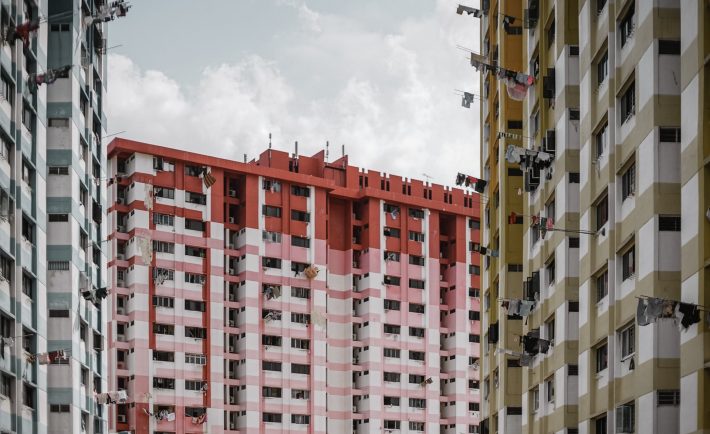
4. “Durable, self-disinfecting coating applied on all HDB lift buttons”

One of the things that we frequently touch on a daily basis is the lift button. Teams from Singapore’s 16 town councils applied a self-disinfecting coating to the lift buttons over the past two weeks. This was made possible by the donation of 650 litres of sdst by the Changi Airport Group’s (CAG) philanthropic arm Changi Foundation. The self-disinfecting coating is called sdsr. It kills bacteria, viruses, and fungi upon contact.
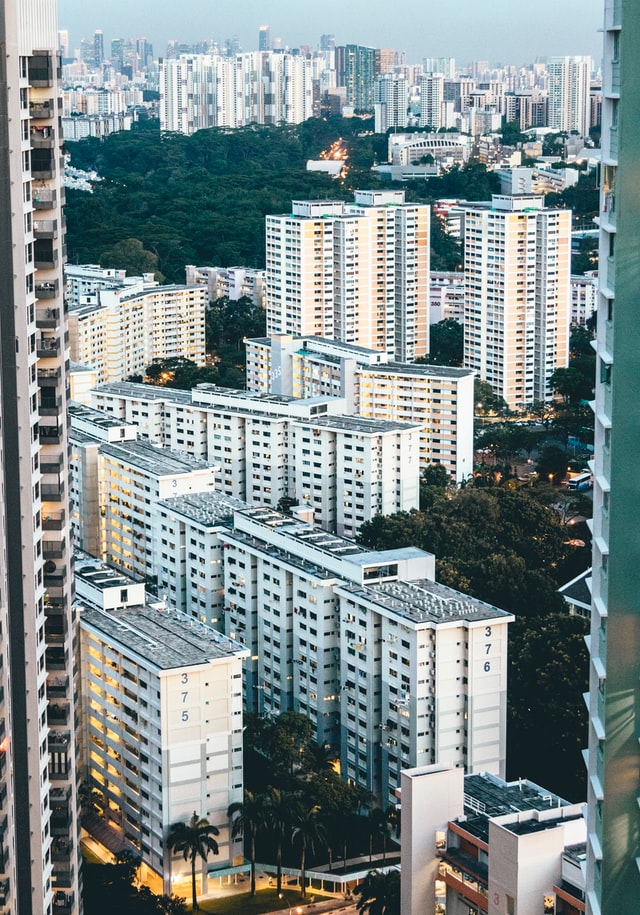
Image Credits: unsplash.com

It remains in place, even with repeated cleaning and scrubbing, as chemical bonding agents help it to adhere tightly to surfaces at a molecular level. It is said to last for up to three months. That is one way to keep the HDB lifts and lift lobbies in Singapore safe!
Read More...

Singaporeans Get Financial Support And Frozen Government Loans Amid COVID-19 Pandemic

As you may know, many establishments and livelihoods have been put on hold due to the Coronavirus widespread. Floating in limbo led many Singaporeans to worry about their finances, particularly their bills and household expenses. This level of uncertainty is not limited to our country. It happens all over the world! Moreover, it takes a toll on developing countries whose majority relies on daily salaries and meal allowances to survive.

The Singaporean government has put a plan into place. Last Thursday, Deputy Prime Minister Heng Swee Keat said that they “will put more cash in the hands of all families to help them cope”. The cash payouts announced in Budget 2020 will be tripled!

All adult Singaporeans will receive $300, $600, or $900 depending on their income. The amount for parents with at least one Singaporean child aged 20 and younger will receive up to $300 as compared to $100 before. The Workfare Special Payment for lower-income workers will also be increased to $3,000 in cash.

Lastly, the $100 PAssion Card top-up for seniors will be given in cash instead. They will get their money directly in their bank accounts. “This is to avoid the need to queue at top-up stations during this period,” he said.

In addition to supplementary budget, the Government will freeze all fees and charges for its services for one year from April 1. Late payment charges on Housing Board mortgages will be suspended for three months. Graduates who took up Government loans for their university or polytechnic studies will receive a loan repayment suspension for a year from June 1.

Image Credits: unsplash.com

Deputy Prime Minister Heng Swee Keat also highlighted the importance of self-help groups. Grants for self-help groups will be doubled to $20 million over two years. While, community development councils will get $75 million. As he listed various initiatives on his speech, he said that they will “protect jobs, support our workers, and protect livelihoods”. All these efforts are necessary to help the citizens bounce back during these uncertain times.

Sources: 1 & 2

Read More...

How To Budget Your Money Through Tough Times

Let us admit it! One of the biggest challenges that governments are facing right now is how to allocate their budget efficiently in order to fight the COVID-19. While some countries have pledged money to developing testing kits, some have spent money for community disinfecting drones.

The measures that need to be taken in order to stop the spread of the virus such as closing offices and schools or shutting down factories and airlines can lead to some companies going out of business.

Fortunately, Singapore set aside 5.6 billion Singapore dollars in the coming year financial year (April 2020 to March 2021) to help businesses and households tide through the ongoing coronavirus outbreak. This is according to the Minister of Finance, Mr. Heng Swee Keat.

For individuals, this tough situation is what Emergency Funds are for! Budgeting your spending can help you find a balance between spending and saving money throughout this period.

CONTROL YOUR SPENDING

The rise of credit cards and online banking apps paved the way for better shopping experiences. The extent to which we fall trap to these temptations boils down to our willpower. During these times of scarcity, you need to focus on the things you want rather than what you need. It is easier said than done as self-control is like a muscle that gets strained due to overuse.

It is the willpower of those who face repeated difficult financial situations that tends to deplete the most. Hence, it is important to seek the help of someone who cares. Seek professional advise, if necessary.

PLAN YOUR MEALS

One of the easiest ways to control your spending is to plan ahead. Meal planning can help you stay within the budget and control your visits to the grocery. For those who are practicing social distancing and are opting to stay at home, a meal plan is your best-friend!

If you know what you are going to consume for a week or a month and have shopped accordingly, there will be no need for extra store visits that will lead to more spending and more food wastage. Allot a specific portion of your budget for weekly meal plans.

PRIORITIZE YOUR SPENDING

Each of your expenses should be placed in appropriate budget categories such as food, toiletries, and utilities. When faced with a decision to see what gets paid this month and what gets the least portion of the budget, it is important to prioritize. Essentials go up the ladder! These are followed by your creditors and your non-essentials.

You need to accept the situation you are in. Expenses that are core to your survival should be prioritized. The rest can wait.

CUT DOWN YOUR SPENDING

One of the major things you can do to help yourself and your budget during these tough times is to figure out what you are currently spending on and what you can live without. Whether you are cutting down your monthly cable bill or reducing your trips to Starbucks, there are various ways to reduce your expenses. I am referring to little unnecessary expenses that tend to pile up.

It is best to know where your money goes. If you are using a debit card, keep track of the payments. If you are using cash, keep the receipts and review them. Watch out where your money goes and adjust accordingly.

STAY POSITIVE

In times like this, all we can do is to hope for a better future. Staying positive can help lift your mood throughout a bad situation. As bills come in and your debt continues to increase, keeping a positive mindset with a strategic plan can help you.

Image Credits: unsplash.com

Remember that what you are going through is temporary and will not last forever. We can get through the setbacks brought by COVID-19!

Sources: 1 & 2

Read More...

How To Start Investing With S$100 A Month

Oh, adulting! It comes in a slate of responsibilities thrown at a person all at the same time. To survive the challenges of life, one must establish a healthy savings plan. Long-term savings include having an insurance policy, a good credit score, and an emergency fund. Many people grow their savings thru investing.

Investing is an overwhelming idea for many Singaporeans as they perceive it to be expensive. Few people outside the financial industry have thought of investing their money for themselves. However, you do not need to have S$10,000 or more to start investing. You can grow your wealth with just S$100 per month.

Here are some strategies that you may apply.

#1: MAKE SMALL INVESTMENTS REGULARLY

It comes as no surprise that one advantage of making small invest regularly is that you are not trying to time the market. Instead, you are relying on your money’s “time in the market”. This is important because stocks have their ups and downs, but their prices tend to increase as time passes. This is a strategy known as dollar-cost averaging, which will average out the cost of share purchases in a period of time.

For as little as S$100 a month, you may start investing in DBS Invest-Saver as it allows you to buy an Exchange Traded Fund (ETF) that mirrors the performance of the Singapore stock market or a bond ETF.

#2: CONSIDER REGULAR SHARES SAVINGS

One of the most affordable ways to get inside the Singapore Exchange (SGX) is through Regular Shares Savings (RSS) plans. RSS can be opened with the help of a local brokerage firm or bank.

The broker of the financial institution will invest a fixed amount of money every month based on your instructions or financial capabilities. For instance, you may choose to invest S$100 each month into the Straits Times Index (STI) Exchange Traded Fund (ETF).

Control is one of the best parts of RSS plans. If you wish to invest money in different companies each month, you may do so. If you wish to stop investing in a company each month, you may do so. Simply instruct your broker and adjust your monthly investments. Some financial institutions allow you to take control of your RSS plan through online platforms.

#3: APPLY FOR UNIT TRUSTS

If you prefer to have someone else control your investments then, you may choose to invest in unit trusts. Unit trusts work by collecting money from many investors. A professional fund manager will take this pool of money and grow it following a specific investment strategy. It is a collective investment, which is why you do not have personal control over the individual components of the investment portfolio.

A common misconception about investing thru unit trusts is that you do not need to do anything. This is not true! As an investor, you must do your research before deciding which unit trusts you wish to invest in. By doing your research, you will know that both DBS and OCBC unit trusts allow you to either invest a lump sum of S$1,000 or S$100 per month.

Image Credits: pixabay.com

Good luck with your investment journey!

Sources:1 & 2

Read More...

Simple Acronyms That Can Help You Save Money

Stuck in a rot? Consider imbibing some or all of these four acronyms to maximize your daily savings!

1: BYOB – Bring Your Own Beverage

Bid farewell to your endless Starbucks trips and say hello to BYOB. Bringing your own beverage and food to school or work has many benefits. For starters, you can choose what you eat for the rest of the day. This is especially helpful to the people who vowed to lose weight or to eat healthier meals this year. Lastly, bringing your own beverage and food lessens your chances of dining out. BYOB prevents you from mindlessly breaking the bank on food expenses.

2: PIYS- Put In Your Savings

Aside from having a physically fit body, you must strive to have a financially fit account. Luckily for you, you can just PIYS. Whether you have accumulated loose change or have work incentives, you can PIYS. Do not spend your extra money! Put it in your savings account instead. You may also enroll your account to an institution’s automatic savings program to ensure that you do not touch your money.

3: YODA – You Overspent Days Ago

If you need a reminder on why you need to save, just think of Baby YODA. This adorable Star Wars character cannot only charm your heart, but also give you a potent reminder. “You Overspent Days Ago or You Overspent Decades Ago” is something that resonates many Singaporeans. If you are bound to repeat the same financial mistakes you have done in the past then, what does that make you? It is time to learn from the past and focus on your needs.

Image Credits: pixabay.com

Start building a future that you will be proud of. When faced with another temptation to spend, simply evoke the name of YODA. May the force be with you!

4: ABC – Allocate, Budget, and Cut

Did you know that budgeting is as easy as ABCs? Simply start with Allocation, proceed to Budgeting, and apply the Cut. Allocation is the processes of listing down your expenses and identifying which ones are important. Allocate the right amount of money per expense category.

Image Credits: pixabay.com

Then, maintain a budget that you will keep track of. Monitor your progress and the money you are currently saving. Lastly, apply cost-cutting when your savings remain too low. Cut down unnecessary expenses and focus on expenses that will help you survive.

Read More...