3 Simple Tips To Stop Living From Paycheck to Paycheck

Living barely within your income is not a laughing matter. When you are living paycheck to paycheck, you live a life of constant stress, worry, and dread that you might be stuck in an unfortunate debt. It is a struggle to gain control of your money and your commitments. So, here are 3 Simple Tips To Stop Living From Paycheck to Paycheck…

1. CREATE A SYSTEMATIC FINANCIAL OPERATING SYSTEM

In order to cease your worries, a huge turnover can be money flow management. You must give conscious effort to know about where your money flows in and out. Once you have control over your money flow. Then, you will be able to create a systematic financial operating system that consists of: money flow management and budgeting.

Money flow management is accomplished by using a ledger or an app. There are a couple of efficient yet free apps that can help such as: EXPENSIFY, EXPENSE MANAGER, MONEYWISE, POCKET EXPENSE PERSONAL FINANCE, and MINT.
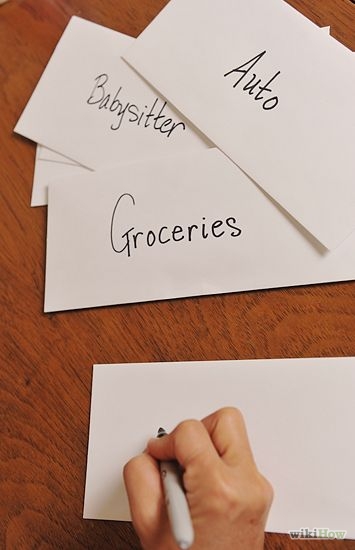
Image Credits: wikihow.com/Do-Envelope-Budgeting

Image Credits: wikihow.com/Do-Envelope-Budgeting

Likewise there are a couple of budgeting such as STATIC or FLEXIBLE budgeting. For personal finances, I highly recommend a simple technique called ENVELOPE budgeting. It starts by storing the cash into separate categories of household expenses that are allocated in separate envelopes.

Budgeting will surely help you gain clarity and control. Start by writing down your monthly income, followed by your monthly expenses, and then subtract the two. Plan and search for a suited technique.

2. PREPARE MONEY FOR YOUR BILLS ACCORDINGLY

Some bills are due frequently while some are semi-annually. Prepare money for your bills accordingly by noting them down. If you have a monthly bill, you may try a trick called half payments. For half payments, you prepare the payment for the bill by subtracting half of the bill’s amount to your bank account per two weeks (bi-weekly).

3. BOOST YOUR EMERGENCY FUND

Prepare for the unforeseen events and financial failures by saving at least 8% of your income per month. You shall call this category your “emergency fund”. It is better to save a certain amount of money than to have nothing save at all.

Image Credits: reynermedia via Flickr

Read More...

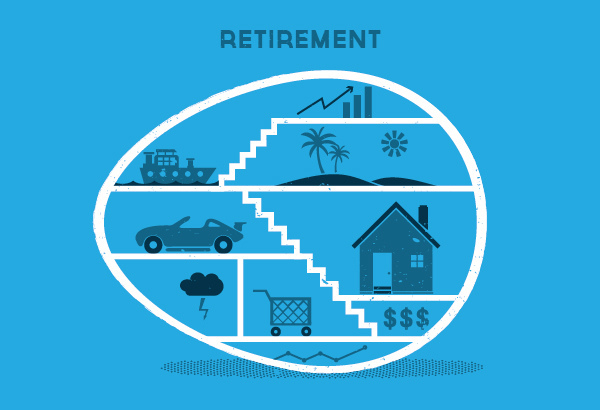
How And Why You Should Save For Retirement Before Your Mid-30s

When you are young, in your 20s or 30s, retirement feels like a looooong way ahead.

Typically in your 20s, the only person you have to spend for is yourself. In your 30s, you will have new financial priorities such as the wedding, child’s schooling, house loans, etc.

If you consider all the aspects of your finances and fast-paced life today however, you will realize that it is the best time to start saving for retirement before you hit 35. Even the strategies to save for retirement are in-lined with the ideal to start saving while you are young.

Here are the 4 strategies to save for your retirement before your mid-30s…

1. PAY OFF YOUR DEBTS

It makes sense to pay off your debts or at least your high-interest debts before you save for your retirement. Since not all debts are equal, pay off your high-interest debts first followed by the lower ones.

2. SET UP A BUDGET

Systematically allocate your income onto different categories and stick to that budget. Do not spend beyond what your budget is for that month. This allows you to save regularly rather than arbitrarily.

3. SEEK FOR AN EMPLOYER THAT SUPPORTS YOUR GOALS

Image Credits: American Advisors Group via Flickr

Image Credits: American Advisors Group via Flickr

As much as possible, look for an employer that supports your long-term goals. If your employer offers Retirement or Pension Plan then embrace this company benefit.

4. TRACK YOUR RETIREMENT SAVINGS

During your…

a. 20s

It is best to start saving at least 5% of your income or sign up for your employer’s Retirement Plan. Avoid debt as much as possible and get educated about your finances.

b. 30s

Invest your money and check whether it is in lined with your goals. Increase your contribution to your Retirement Savings while preparing for your child’s school fees.

c. 40s

Make thought-through decisions about your expenses and cut down the unnecessary. This is when you hit your savings to the maximum. By this time you should have at least S$80, 000 to your Retirement Savings.

d. 50s

During your 50s, you must prepare for the unexpected. Seek the financial experts’ help if you must. Then, plan your exit with glee because you are well prepared for it.

Note: This is just an ideal time frame for your Retirement Savings. Contemplate and reconsider the realistic measures that are suited for you.

Read More...

Use Envelope Budgeting To Manage Your Money In Just 3 Simple Steps

According to DEBTSteps.com, envelope budgeting or envelope system is a popular way of maintaining a budget. It starts by storing the cash into separate categories of household expenses that are allocated in separate envelopes.

1. TRACK YOUR LAST MONTH’S SPENDING PATTERNS

One of the first steps that you have to take is to analyze your spending patterns, variable expenses and fixed expenses (i.e., monthly electric bills).

Fixed expenses remain the same every month (e.g. Hand Phone Plan, or HDB Rent). Variable expenses include food, entertainment, clothing, and other expenses that may change every month or year. The challenge now is for you to choose on which expenses you can reduce.

2. DEVISE A BUDGET PLAN

Recording all your expenses, no matter how big or small they may be, can help you plan your budget wisely. Categorize your expenses 7 or more sections such as Rent, Utilities, Electricity, Groceries, Gas, Entertainment, Savings, Loan, Childcare, Tax, Travel, etc.

For example if you are Fresh graduate living in your parents’ house and you earn S$1600 a month. Allocate your money with the fixed expenses first.
Rent- S$700

Utilities- S$150

Electricity- S$80

Student loan- S$100

Fixed Expenses Total: S$ 1,080

Then your variable expenses…

Savings- S$170 (transfer it to your bank account)

Groceries- S$100

Travel- S$100

Entertainment-S$100

Emergency- S$50

Variable Expenses Total: S$520

3. PUT YOUR INCOME IN SEPARATE ENVELOPES

Image Credits: wikihow.com/Do-Envelope-Budgeting

Image Credits: wikihow.com/Do-Envelope-Budgeting

Use your marker to assign each category to each envelope. Use whatever size is best for you. It shall be able to fit easily in your purse or wallet. Follow the budget plan and allocate your money accurately. Spend only from the designated envelope and stop spending once you’ve emptied it. This practice of discipline will help you save a great deal of money.

Watch this simple video tutorial of the envelope budgeting or envelope system by NCNBlog:

Read More...

5 Tips For Couples with Joint Bank Accounts: Sharing is Saving

Being in a relationship founded by mutual trust may find it natural to create a joint bank account together.

Since you can trust your partner with everything else, why not trust him/her with your own finances?

But, managing this may be difficult especially when there are two people with different buying habits and priorities.

So, here are 5 Tips to Help Couples with Joint Bank Accounts…

1. HAVE SHARED GOALS

Maintain a joint bank account for big financial goals such as vacations, household bills, or insurance. Whatever the purpose and goals may be, be sure to make it unanimous as both of you will contribute each month.

Image Credits: Asher Isbrucker via Flickr

Image Credits: Asher Isbrucker via Flickr

2. CREATE RULES BEFORE OPENING AN ACCOUNT

Have a plan of how each of you will contribute (e.g. 50-50 or 60-40). As said a while ago, discuss the goals and priorities you want to pursue in order to know where the money will go.

3. MAINTAIN YOUR OWN BANK ACCOUNT

Aside from the joint account, each person is entitled to have an individual account. This is because you must treat yourself or your partner personally without affecting the “household money”.

You might say that this burns the bridges of sharing, but not really. The key to having individual accounts is that both would have access to each other’s account in case of emergency so there are no secrets.

4. RECORD AND MANAGE YOUR EXPENSES TOGETHER

Communicate openly about your joint bank account and organize your expenses. Make it a habit to log on to your online banking account to reconcile all your purchases together (i.e., every week or every two weeks). Through this, you will understand how you are spending the money. Make cut backs if possible so you can save more.

5. REMAIN EQUALS

Embody your marriage vows or treat it like a merger between to companies. Everyone has an equal say and contribution to the shared account. This is why setting up rules and agreement before the processing is very important. Through this, you can keep an open eye if one overspends on something you did not agree on.

Image Credits: BK via Flickr

Image Credits: BK via Flickr

Ultimately, you must respect each other’s decision and communicate openly about your finances. Having a joint bank account may not be easy, but it is possible! Sharing is not only showing Care but it also Saves money.

Read More...

5 Ways to Shop for Healthy Foods Without Spending Too Much

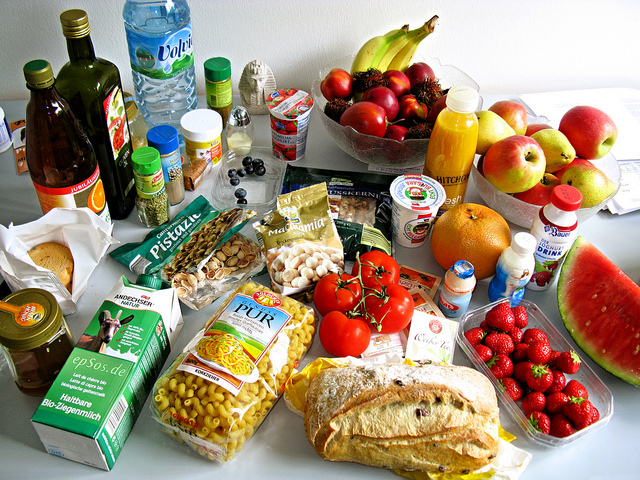
It is no secret that buying organic and healthy foods is more costly than buying junk. But, if you are willing to shop smartly, then you can enjoy the goodness and freshness of organic foods without breaking your food budget. Here are 5 Ways to Shop for Healthy Foods Without Spending Too Much…

1. Purchase Within Your Family’s Needs

Buy stocks of food to fit your whole family. Usually, to save more money, you will want to buy in bulk, but, not if you are a family of three or two. Rethink your family’s needs and list it down.

2. Shop Around

In order for you to find the best price in town, you must shop around different stores. Besides supermarkets, you can search for healthy foods in specialty stores, Gourmet Delis, Wet and Dry Markets, and even Online. For instance, you may go to two different stores to save money and buy the best product: one for the vegetables and one for the sea foods.

Image Credits: epSos .de via Flickr

Image Credits: epSos .de via Flickr

3. Shop in Season

You will definitely save more money if you purchase the organic produce that is in season. Price always lowers when there is greater supply. Summer and fall are usually the best times to go creative with your food choices.

4. Grow Your Own Food

Growing your own food is organic at its finest. If you do not have a backyard or an apartment balcony there are community gardens for you to plant your own seed. Aside from being domestic, you can also save more money if you buy produce of the local supermarket’s brand (e.g. Mixed Vegetables by FairPrice).

5. Go Gaga over Greens

Kale, arugula, and spinach are some of the most nutritious and affordable foods you will find in a grocery store. As the color of the vegetable gets darker, the more nutritious it is because of its antioxidants and beta-carotene. If possible, buy the leafy greens that are not pre-packed because they are cheaper.

Image Credits: Amazing Almonds via Flickr

Image Credits: Amazing Almonds via Flickr

BONUS TIP! Stay on the outside aisles of the grocery store because the further you go inside, the less healthy it becomes. That is all for now. Have fun shopping!

Read More...