Surefire Ways To Waste Your Money On Technology

NOT CONTROLLING YOUR DATA PLAN

You are totally wasting your money if you cannot handle your data usage well. Fortunately for the large-scale telecoms, you are not alone! Millions of people around the globe overpay for their postpaid plans because they underestimate their usage in messages, in minutes, and in bytes of data.

Overuse of SingTel and StarHub plans may appear to be a wee affordable at first but, all of these fees add up. For Singtel users, excess local 3G data is charged up to S$10.70/1 GB and excess data beyond the bundled plan is charged at S$0.50/100 KB. While StarHub 4G users get to pay S$10.70/1 GB in excess. Paying over ten dollars is costly especially because almost every place in Singapore offers free Internet connectivity.

This is why you must think of clever ways to handle your data. Firstly, change your settings to Wi-Fi instead of using 3G/4G network all the time. It will not only save you money but also preserve your battery.

Secondly, analyze your mobile phone billing statements for the past few months and average each factor. Select a postpaid plan that is best suited for your needs. Lastly, upgrade your data allowance for just S$9.90 per month! Singtel’s latest DataX3 add-on triples your data allowance. Learn more by clicking here.

DOWNLOADING USELESS APPS

Ohhh! I cannot quantify the times I downloaded apps that I soon deleted. Do not worry too much about me as these are all free. However, there are some people who spend their hard-earned money on useless apps such as the “Fan Cooler™“. It does not hold true to its claim as  an efficient cooling system for your iPhone and iPod devices. The user by the name of “Reavell2” encapsulates it in one review: “Total rubbish don’t spend .99 cents!”

Do not get me started with other apps that claim to pour beer or to make ridiculous sounding ringtones that you will only use once.

PURCHASING 3D TELEVISION

Fantasizing of watching a great film like “Train to Busan” in a theater-like setting at home?

Few people turned that fantasy into a reality when they purchased a 3D television that includes 3D glasses, lifelike images, vivid colors, and three-dimension effects. The price for this unique set rangers from S$2,800 to S$14,999.

Let me wheel you in on a little “secret”, 80% of the 3D TV owners in United Kingdom regretted their purchases. This is why it is best to do extensive research on the latest technology before buying it.

BUYING STANDALONE GADGETS

Christmas is fast approaching! This means that sales will sprout from now until the coming months. As much as possible, avoid purchasing a standalone gadget. Standalone gadgets is a category that refers to the devices that has one function only. In this category are the likes of media players and point-and-shoot cameras. Chances are, the person already has a powerful smartphone or tablet that is packed with features.

Do not waste your money on standalone gadgets unless the person requests for the it specifically. Just imagine if you are about to spens S$564 for your siblings who asked for the GoPro HERO4 Silver Edition Camcorder!

PAYING FOR EXTENDED WARRANTIES

Most digital experts agree that extended warranties are a complete waste of your money. If your laptop has a problem, it will most likely present itself within the first few months. You may also approach your company’s IT personnel first before hiring the services of the repair shops.

Image Credits: pixabay.com

Image Credits: pixabay.com

As you read in the above scenarios, it helps if you are aware of your spending habits. Avoid making unnecessary purchases that are meant to fill your emotional void by questioning your cash-flow. The less you surrender to your pointless wants, the less financial resources will be affected!
Sources: 1 & 2

Read More...

4 Places For Best Money Exchange Rates In Singapore

Currency, as we know it, is a result of a period of evolution. Long time ago, there were no coins, there was only barter – simple exchange of goods for goods. Now, money (i.e., in the form of coins, paper, etc.) around the world has its equivalent value.

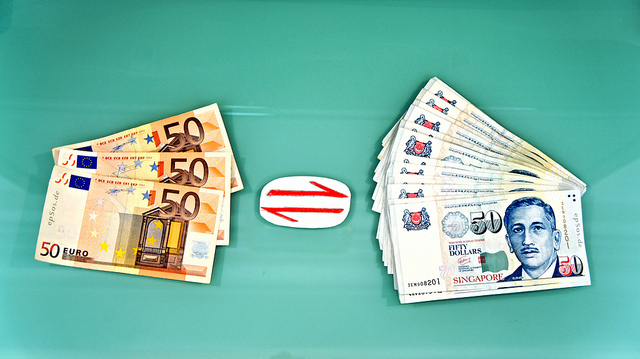
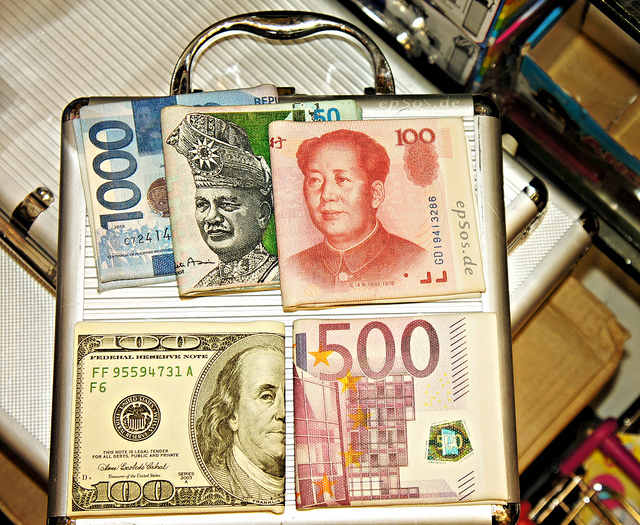
When you travel, it is quintessential to find a good place to change the currency of your money. Luckily for travelers, Singapore provides a wide array of reliable and licensed money changers that offer best rates for most foreign currencies. If you are unaware of the best money changers out there, here is a swift list for you…

1. PEER TO PEER – MARCO POLEE (Update: 15 Sep 16)

Since our article has gone out, we’ve discovered Marco Polee – a currency exchange platform that networks people to exchange currency between each other. Customers can create a new listing, which consists of where they’d like to exchange, and the amount. The best bit is that the exchange rate is locked to the market exchange rate (midmarket rate)! With absolutely no fees, no commissions, and the ability to exchange at market rates – this service is definitely worth taking a look at. Marco Polee’s goal is to provide travellers with a better option as they believe the people deserve better than to lose money just to exchange currency.

Website: Marco Polee 

2. PARKWAY PARADE

Do you live around the Katong area? Parkway Parade Shopping Centre, a building with about 300 shops, is the most convenient place for you to change your money. In here, the suggested money changers are located at the Level 1 as it provides the best rates for THB, USD, JPY, MYR, and HKD.

Suggested Money Changers: Sino Money Changer, Yakadir Enterprises, Everpeace Money Changer, and Parkway Money Changer

Address: Parkway Parade 80 Marine Parade Road, Singapore 449269

3. THE ARCADE AT RAFFLES PLACE

A busy business center in Singapore, Raffles Place has proven to be a good place for changing your currencies. Offering good rates for USD, GBP, EUR, JPY, THB, MYR, and TWD all year round.

Suggested Money Changers: Arcade Plaza Traders Pte Ltd, Sheen International Exchange, People’s Corner Money Changer, and Arcade Money Changers

Address: The Arcade, 11 Collyer Quay, Singapore 049317

4. PEOPLE’S PARK COMPLEX CHINATOWN

An old building located at the heart of Chinatown, People’s Park Complex, is one the most famous places to exchange your money. The money changers here are numerous that you can compare rates by hopping from shop to shop. Nonetheless they offer good rates for CNY, PHP, THB, HKD, and MYR.

Suggested Money Changers: Today’s Money Exchange, Crante Money Changer, AK Money Changer & Department Store, and Emerald Money Changer

Address: People’s Park Complex 1 Park Road, Singapore 059108

5. LUCKY PLAZA

For tourists that are around the Orchard area, money changers at Lucky Plaza is your most convenient choice. With shopping centers around the area, it is a good place to exchange rates for PHP, MYR, and THB.

Suggested Money Changers: Rahiman Trading, Rabi Trading, Fajar Money Changer, and True Blue Money Changer

Address: Lucky Plaza 304 Orchard Road, Singapore 238863

Image Credits: epSos .de via Flickr

Image Credits: epSos .de via Flickr

Remember to compare the rates in different money changers in the building to get the best rates! Some money changers offer updates via their website so, be aware of that.

(* Now that you’ve get the best of your exchange rate, use our hotels search engine to search for the best price guaranteed hotels: http://hotels.moneydigest.sg)


Read More...

Mind-Blowing Facts About Debt

FACT #1: SINGAPORE’S DEBT-TO-GDP RATIO RANKS THIRD IN THE WORLD

With a Debt-to-GDP ratio of 382%, Singapore ranks third in the world according to a 2015 report published by McKinsey Global Institute. The global report found out that Japan lead with 400% followed by Ireland and Singapore.

This significant percentage includes the total debt of the government, households, and non-financial corporations. It comes no surprise that a large part of the country’s debt hails from the corporate sector.

FACT #2: OVER 9 MILLION CREDIT CARDS WERE ISSUED

The credit card is one of the most powerful tools of our nation’s consumers. Would you believe that the summation of the country’s credit card debt is worth over S$5 billion. All these are in the form of balances rolled over to the next statements. Shocking and scary at the same time, is it not?

Furthermore, over 9 million credit cards were issued in the past decades as of November 2015. I can only imagine how this number will grow after a year!

FACT #3: OVERWHELMING DEBT IS ASSOCIATED WITH MENTAL HEALTH ILLNESSES

A review of 65 studies published in the Clinical Psychology Review showed that there is potent association between mental health illnesses and debt. In fact, your likelihood of having a mental health problem is about 3 times higher if you have debt. This is because debt is a common stressor.

It can lead to the feelings of helplessness, hopelessness, and low self-esteem. According to Dr. Nadine Kaslow of Emory University School of Medicine, these three are risk factors for depression.

FACT #4: HOUSEHOLD DEBT IS SOARING IN THE RECENT YEARS

Singapore is a crucial financial hub across the globe. At 77% in 2013, its household debt relative to the GDP is among the highest rates in the Asian countries. It evidently rose from 2007’s rate of approximately 64%.

The rapid growth in the recent years were in accordance with the booming property market.

FACT #5: DEBT CAN CONTRIBUTE TO DIVORCE

As mentioned a while ago, debt is a common stressor. It can negatively influence relationships and marriages due to its alarming nature. Psychology Today found that couples who argue about money periodically were less likely to divorce over time than those who argue about money on a weekly basis.

FACT #6: YOU MUST OWE AT LEAST S$10,000 TO BE BANKRUPT

An individual becomes bankrupt if he or she owes at least S$10,000 and has no means to pay for it.  It starts with the filing for bankruptcy by the creditor or the debtor. A deposit of S$1,600 to the Official Assignee (OA) is required. The OA is the authority that is responsible for selling as many of your assets as possible to repay your creditors.

Image Credits: pixabay.com

Image Credits: pixabay.com

The effect of bankruptcy does not only take a toll on your finances but also on other aspects of your life.

Sources: 1, 2, 3, 4  & 5

Read More...

5 Must-Read Books About Retirement

A prosperous retirement is more than just attaining financial independence. It involves finding happiness and meaning in this fresh chapter of life as well as stretching your financial resources to aid your journey.

Here are the must-read publications if you are looking for ways to make the most of your remaining years:

1. “HOW TO MAKE YOUR MONEY LAST: THE INDISPENSABLE RETIREMENT GUIDE” BY JANE QUINN

But it here.

Are you at the library right now? Check out the self-help books and other resources about retirement. You will notice that most of these books focus mainly on how to invest your money to create a potent retirement fund. The author’s experience supported this. Quinn once said: “I found books and websites on how to invest but practically nothing on how to prudently parcel your money out. If you take too little from savings, you’re depriving yourself of some of the comforts that you worked for. If you take too much, you’ll go broke.”

You see, spending your money wisely is just as important as building a nest. Find a balance between these elements by reading this book. Written in plain terms, this book explains how you can stretch your money once you are in retirement.

2. “THE NEW RULES OF RETIREMENT: STRATEGIES FOR A SECURE FUTURE” BY ROBERT CARLSON

Buy it here.

For people who are far from the retiring age or who are in the earlier stages of retirement, this gem is perfect for you. It is dubbed to be a “global book” that seeks to help its readers to wrap their minds around the whole subject. It takes a realistic look at the diverse life patterns that are emerging in the retiring Baby Boomers in the recent years.

It includes chapters that educate you about managing your fund, avoiding scams, planning for long-term care, and more. These chapters are detailed and easy to read.

3. “HOW TO RETIRE HAPPY, WILD, AND FREE” BY ERNIE ZELINSKI

Buy it here.

What makes this book shine above the rest is its Canadian humor and its focus on the non-monetary aspects of retirement. It encourages its readers to improve their physical, spiritual, and emotional well-being. It puts heavy emphasis on how to live during retirement. This is why the contents of the book are not only practical but also relevant.

4. “THE RETIRING MIND: HOW TO MAKE THE PSYCHOLOGICAL TRANSITION TO RETIREMENT” BY ROBERT DELAMONTAGNE

Buy it here.

A Psychological transition to retirement entails dealing with the emotional stress that comes with this significant milestone. A substantial part of the book is dedicated to finding the reader’s inner being to create a fulfilling life and to enhance personal relationships. Dr. Delamontagne helps us to understand our personality types as it influences how we grow toward the next stage. These nuggets of knowledge are backed by his personal experiences.

5. “WHAT COLOR IS YOUR PARACHUTE? (FOR RETIREMENT: 2ND EDITION)” BY JOHN NELSON & RICHARD BOLLES

Buy it here.

Learn about the wide array of variables that are involved in retirement as this book provides you with useful guidelines on how to be healthy, happy, and successful. There are worksheets and exercises inside for hands-on or practical learning.

Image Credits: pixabay.com

Image Credits: pixabay.com

Ultimately, the authors view retirement as a crucial stage in life and not just an event that occurs when you stop working.

Sources: 1 & 2

Read More...

Why Some Singaporeans Don’t Buy Travel Insurance Anymore

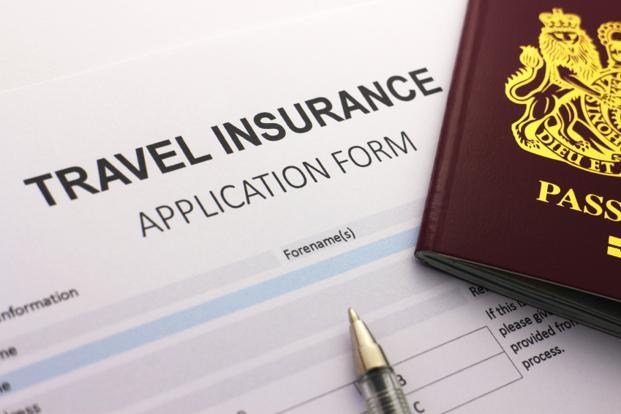
Some Singaporeans have gone off the idea of travel insurance. While it used to be considered an absolute necessity, more travellers now think of it as an unnecessary waste of S$50 to S$100.

This is particularly true of those who go on short trips, to whom travel insurance becomes a significant expense. But are they doing the right thing?

Why No Travel Insurance?

The most common reasons are:

  • They have personal accident insurance
  • They feel the claims process is unrealistic and restrictive
  • The seek cost-efficiency
  • They are already covered by credit card
  • They are covered under their employer’s insurance
  • They Have Personal Accident Insurance

For some travellers, their main concern is their healthcare related. They do not want to face medical expenses if they suffer from a fall, get hit by a car, etc.

They are less concerned about the other things that travel insurance covers. These are things like lost jewellery (they may not be carrying anything valuable), flight delays (not an issue if they have airline memberships that already compensate them), or tour agency issues (they may not be on a package tour).

For those travelling to countries where they have friends or family, some of the emergency assistance from travel insurance may be irrelevant. For example, if you are travelling to stay with your uncle in Canada for a few days, it may not be a big deal if your luggage is diverted for a day or two. The inconvenience may not be worth a S$100 insurance policy.

(It might be a different story if you are travelling alone, and know nobody where you’re going).

These travellers typically add personal accident coverage to their existing insurance policies, in the form of a rider. This can give them comprehensive protection wherever they are, for a fairly low cost (e.g. under S$30 a month).

If they are going skiing, for example, they may be happy to rely on their personal accident coverage, without adding travel insurance.

  1. They Don’t Want to Go Through the Claims Process

Some seasoned travellers are intimately aware of travel insurance terms, and are dissatisfied with them.

For example, many policies do not allow you to make claims for lost jewellery. For lost cash, the maximum claimable amount might be too small to be relevant (e.g. The maximum claimable amount is S$250 regardless of how much you lose, and then insurance policy alone is already over S$100).

There are often tight limits on maximum claim amounts, on a per item basis. Even if the policy insures you for you to S$1 million, for example, the maximum claimable amount on your broken iPad may only be S$500.

Some travellers also feel the claims process is unrealistic, or too convoluted. For example, you may be required to present original receipts if you want to make a claim for your broken laptop.

With regard to trip cancellations, some policies only pay out only under specific conditions. For example, a policy may not pay out if the cause of the cancelled trip is the Singapore haze or a strike (the trip may only be insured against poor weather).

As such, a subset of travellers believe travel insurance has too many restrictions to be useful. If you want to join their ranks though, you will have to be sure that you make up for lack of travel insurance with the right safety precautions, and the right personal insurance policies.

  1. They Seek Cost-Efficiency

As a rule of thumb, it is not cost-effective to insure expenses you can pay out of pocket.

For example, it would not make sense to pay premiums to insure your socks, or to insure cheap canned food in your kitchen pantry – the odds of losing them are so low, and the cost of replacement so cheap, that the premiums would just be a waste of money.

The same theory can be expanded to things like second-hand laptops, cheap watches, old clothes in your bag, etc. Some travellers would feel no significant pain from losing these items, and prefer to have more cash on hand for shopping or better accommodations. Should they lose the items, they have more than sufficient money to replace them immediately.

(Note: if your worry is losing your luggage and having no clothes, toiletries, etc., you should note that most airlines provide supplies or funds for passengers whose luggage they lose).

  1. Their Credit Card Offers Free Travel Insurance

Many air miles credit cards, such as the Citi PremierMiles Visa Card, come with complimentary travel insurance if you charge your travel tickets to it. The Citi PremierMiles Visa Card covers up to S$1,000,000 in case of death or permanent disablement from accident in a common carrier, up to S$40,000 for medical expenses during a trip, and travel inconvenience.

If you are satisfied with these, there’s no need to buy more travel insurance.

  1. They are Covered by Their Employer’s Insurance

Many people overlook this, so make sure you don’t.

If you are flying abroad for business, check with Human Resources on whether you are covered under your employer’s insurance. If there already is one, you do not need to buy your own.

Some companies have generous corporate insurance plans, that will cover you even if you are not on official business. If so, all you need to do is familiarise yourself with the terms (and get private only if you are unsatisfied).  


(This article is brought to you by Singsaver.com.sg)

Read More...