6 Financial Resolutions For Every Singaporean

As I receive my annual bank statements and credit card summaries, I realize how my financial year went by. January is a fantastic time to review your financial strengths and weaknesses. Where did you fall short? Not only is it a good way to reflect on your spending habits, but it is also a good way to craft your financial goals.

Use your year-end resources to establish your financial resolutions for the year 2020!

1: IDENTIFY YOUR FINANCIAL GOALS

Several articles from Money Digest highlighted how helpful it is to determine your financial goals. Start your journey by identifying both your short-term and your long-term financial goals. Are you hoping to earn a degree or to expand your retirement fund? Do you see yourself purchasing a new flat with your spouse? Or, do you want a to lead a different career?

To illustrate your path in a detailed manner, you may create a Financial Vision Board. Take some time to think about how to achieve your financial goals this year. Consider your outlook before your plan of attack.

2: SAVE MORE MONEY

How many times have you heard about “saving more money” as a resolution? This is a common financial resolution for many Singaporeans. However, most people do not know how to start. It is recommended to be specific to increase the chances of success. Increase the percentage of your monthly income that goes into your savings.

Save at least 15% or your monthly income and increase the percentage whenever you feel more comfortable. If you are already saving 20% of your income then, you are in good place. A person who is earning S$4,000 per month can reap the benefits of having S$9,600 by the end of the year. Raising the percentage to 30% will equate to having S$14,400 by December 2020. Saving more money gets you closer to achieving your financial goals.

3: PAY OFF YOUR DEBTS IN FULL

Two years ago, MAS estimated that there are 9 million credit cards in circulation in Singapore, with Singaporeans charging an average of S$555 per card. Imagine how much these numbers have grown since? Credit card debt is rising in the country as convenience is hard to resist.

Many credit card holders enjoy the attractive benefits or the good rewards programs of several issuers. While there is nothing wrong with paying using cashless methods, you need to be responsible with paying the hefty interest rates and balances. Commit to paying the full amount of your monthly debts this 2020!

4: GROW YOUR INVESTMENTS

Aside from increasing your savings, you can make your money work for you by investing each month. There are many ways to invest your money such as putting it in high-interest savings account. This can increase your earnings by 2% per annum.

Another approach is to sign-up for investment-linked insurance policy where a portion of your premiums will be invested in specific investment funds. Review your insurance policies and ask your financial adviser about this option.

5: GO ON A CASH-ONLY DIET

You have endured the back-to-back expenses brought by the Holiday season. Chances are, your credit card got exhausted due to the year-end sales and other Christmastime delights you spent for your beloved ones.

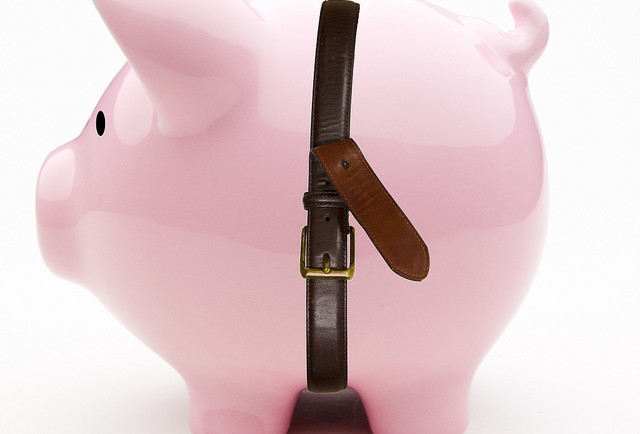
Cushion these expenses by going on a “cash-only” diet for a few weeks or a couple of months. Begin by allocating a monthly budget based on the money you have. Give yourself a specific cash amount per week and work your way around it. Doing this will challenge your self-control and your resourcefulness.

6: AUTOMATE YOUR SAVINGS

Transform your new year enthusiasm into something productive by automating your savings. Commit to this new habit by researching on the available services of the local bank institutions. For instance, I recently came across with the UOB Stash Account.

UOB Stash Account allows you to accumulate your savings for up up to 1% p.a. interest, simply by maintaining or increasing your previous month’s Monthly Average Balance. An initial deposit of S$1,000 is needed to open the account, which is open for all. You can apply for your Stash Account and get an approval within minutes by simply going to the website. Terms and conditions apply.

Sources: 1 & 2

Read More...

How To Make A Financial Vision Board

Consumed by the demands of your daily life, it is easy to lose track of the bigger picture. What are your financial goals? What are your dreams made of? A simple representation of all your hopes, dreams, and goals is a Vision Board.

A Vision Board helps you to clarify your financial goals to enable you to achieve them. Its mechanism is powered by the idea that if we put our desires out there, the universe will be able to bring it to us. It is powerful because it forces the person to be clear and decisive about the kind of life they want to lead. Visual images serve as daily reminders of what we really aspire to become.

A study showed that people were more likely to achieve their goals if they write them down. Vision boards take this notion one step further. It enables the person to be specific when it comes to his or her dreams. It makes your financial goals more concrete and detailed. Better results can be achieved by putting your vision board in a place where you constantly see it. Choose five to ten goals to focus on (e.g., getting a new job or paying all your debt). Put these financial goals on your vision board.

Here is an example of a financial vision board:

To create a vision board, you need:
* Poster board/Cork board
* Pins
* Colored markers
* Glue
* Tape
* Scissors
* Old magazines

Aside from these materials, it is important to follow these steps.

#1: DREAM A LITTLE DREAM

Social media and advertisements have conditioned us to want things we see around us. Material things can bring your short-term delight, but what can really bring you happiness? It is time for you to think about that. Daydream the improved life that you want for yourself and your family. A financial board needs to reflect your ideal reality.

#2: COLLECT AND SELECT

Begin flipping through your stack of old magazines and newspapers to cut anything that speaks to you. Use images or words that embody your goals. You can sort all these later once you get a sizable amount of cutouts.

Edit your cutouts into five to ten goals. Then, paste them on your board as you fit the puzzles together. You can even organize the images per theme or per time-frame.

#3: WISH YOUR HEART MAKES

Mentally commit to your financial goals by gluing or pinning them down on your board. This vision is cemented for the year. It may feel weird at first, but this is the first step toward making your dreams a reality.

Hang your vision board in a place where you can revisit your financial goals. Or, you may consider setting it as your wallpaper on your phone or your laptop.

#4: PLAN AND ACHIEVE

Lastly, you must reflect on your financial vision board and think of ways to achieve each one. Choose to focus on one goal at a time or on the smaller goals first.

Image Credits: pixabay.com

Good luck!

Sources: 1 & 2

Read More...

Welcome The New Decade With This Financial Mindset

The Financial Mindset is a predetermined set of beliefs about money. Although you cannot verbalize what your mindset is, it still exists. We all have this set of beliefs within us! It is important to note that your financial mindset affects the energy you give off and the energy you receive.

With a new decade, it is high time to refresh your finances with your financial resolutions or goals. Laying out your new financial resolutions or goals can help shift your mindset and give you new ways to perceive your life in general.

CRAFT A VISION BOARD

Start the year right by creating a vision board with your 2020 financial goals. Much has been said about creating a life you want to indulge in through visualization. You attract what you set your mind into. So, put several images of the things or milestones you want to achieve this year.

There are no wrong answers! Whether you want to have your own car or keys to your new flat, you can put all these on the board. Find inspiration on how to make one in Pinterest or in this Money Digest article.

ASK WHAT YOU CAN OFFER

In a world where people are so used to taking, aim to be the one who gives. Ask yourself some wealth-creating questions such as “What unique product can you offer?” or “Which service can your peers benefit from?” This trait is seen in many millionaires and entrepreneurs. Search yourself to know how to add value in other people’s lives. This will enable you to make money in the process.

You may not be able to answer these questions right now, but the important thing is to put your mind in a resourceful and open state.

DEVELOP A REALISTIC BUDGET

How many of you have created a budget based on your average earnings per year? This may seem as a premium plan to have, but you are not creating a realistic budget. Realistic budgeting goes beyond creating an Excel sheet and figuring out how much to allocate for every category. It enables you to look at how much money you have right now.

Based on your current funds, you will be able to create a realistic budget for the month. When you blow a category up due to overspending, you must not quit. You need to have an emergency fund for that. Only budget and consume the money you have right now.

TRACK YOUR SPENDING

It is common to have a financial resolution whereby you want to save more money. In order to do that, most people start by tracking their spending. See where you can cut back and where you can make room for more savings. It is a tedious task at first! However, you can re-frame your mind by attaching your Psychological wellbeing in the mix.

To help you with your frugal mindset, you must experiences purchasing differently. Track your spending and write down how you felt after the purchase. Do you feel happy or guilty? Where you shopping while you are bored or angry? Emotions play a huge part in managing and spending your money.

It is crucial for you to be aware of your spending patterns and triggers. Mindfulness of situations that trap you to spend can enable you to change your financial life. Bring value and joy to your finances through healthier spending patterns.

BOTTOM-LINE

Your mind is a powerful tool, which creates your reality. It dictates what you believe is possible and leads you to it. This is why it is important that you feed your mind with optimism grounded in your current circumstance. Consume books such as Think and Grow Rich from Napoleon Hill or podcasts from trusted financial advisers.

Image Credits: pixabay.com

Feed your mind with a grow mindset to indulge on a better financial year ahead!

Sources: 1 & 2

Read More...

Want to Take Control of Your Personal Finances? Use This Promo Code to Get 50% off Tickets (U.P. $88) to Seedly Personal Finance Festival 2020

It’s 2020.

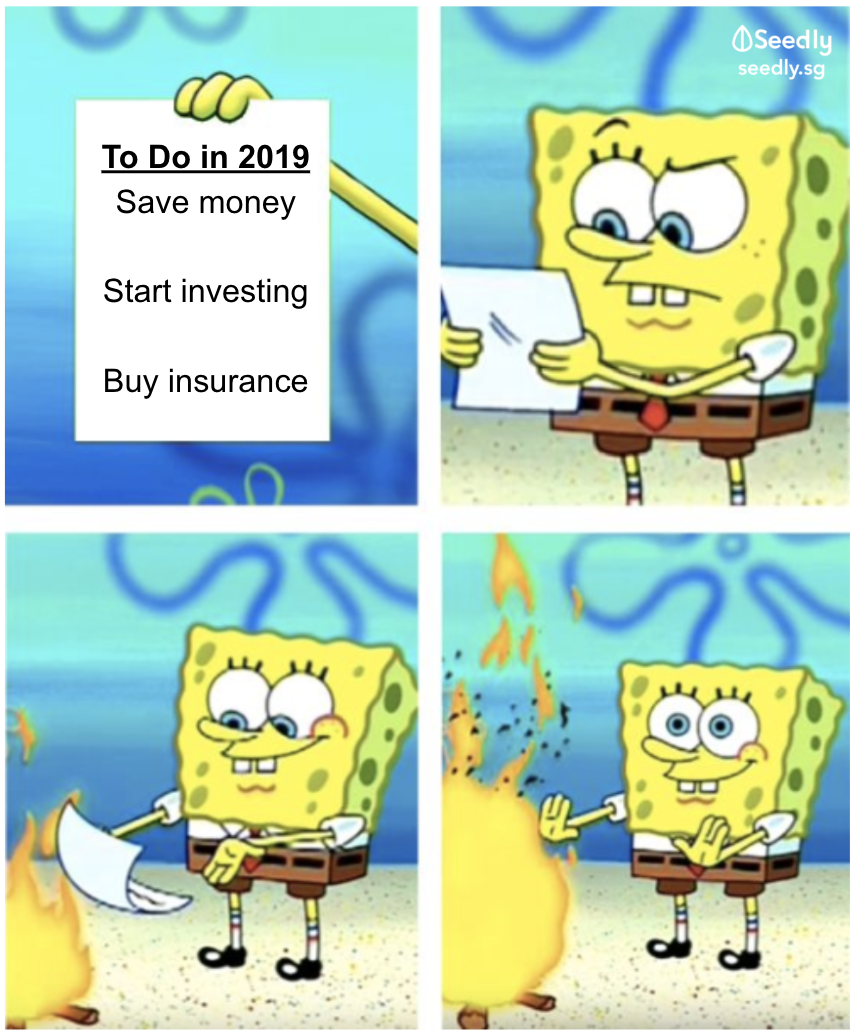
How were your personal finances in 2019?

Did you manage to start saving money for your retirement?

Did you finally start investing for your future?

Have you bought insurance to protect yourself and your family?

If this is you:

then you might want to pay attention.

Be Part of Singapore’s Largest Personal Finance Festival

This 2020, Seedly wants to help YOU take control of your personal finances with Seedly Personal Finance Festival 2020 — the LARGEST personal finance festival in Singapore — that is happening on Saturday, 7 March 2020.

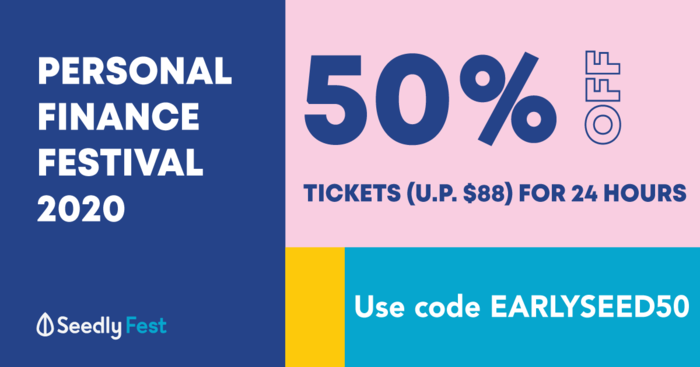
For 24 hours only, starting on Thursday, 2 January 2020, 12pm, enjoy 50% OFF all Seedly Personal Finance Festival 2020 tickets with a special early bird promo code.

Simply enter EARLYSEED50 before checkout to enjoy the following:

  • Early Bird Ticket at $29 (usual price $58)
  • Buddy Ticket at $40 for a pair of tickets (usual price $80)
  • Regular Ticket at $44 (usual price $88)

The first 1,000 ticket sign-ups will also get a limited edition goodie bag worth $55!

Act fast because the tickets for last year’s Seedly Personal Finance Festival were sold out within 30 hours!

What Is Seedly Personal Finance Festival 2020 About?

Seedly Personal Finance Festival 2020 is Singapore’s largest personal finance festival where you can learn to take control of your personal finances in one day.

There will be discussion panels, fireside chats, talks, and workshops on various topics like:

  • Investment (Stocks, REITs, Alternative Instruments)
  • Property
  • Insurance
  • Career
  • CPF

All of these will be presented in an actionable and simple manner by experts, industry titans, and leaders from Singapore’s personal finance space.

You will also stand a chance to win $3,000 worth of lucky draw prizes, just by attending the festival!

When and Where Is Seedly Personal Finance Festival 2020?

Seedly Personal Finance Festival 2020 is happening on Saturday, 7 March 2020, 9am to 6pm, at Suntec Convention Centre Hall 405 and 406.

Where to Buy Tickets for Seedly Personal Finance Festival 2020?

Simply go to the Seedly Personal Finance Festival 2020 website and enter the promo code before checkout to enjoy the offer.

The early bird promo code EARLYSEED50 is only valid till Friday, 3 January 2020, 12pm (or while stocks last).

Read More...

Unhealthy Spending Habits To Kick To The Curb

How you spend your dollar is just as important to your financial health as your decision to save or to pay for debt. Savvy spending habits keep you from overspending on an item or a service. Nobody needs a stack of infomercial items paid for by impulse buying.

Spending smartly by kicking your bad habits to the curb allows your dollar to go further. Lead a resolute year by leaving these spending habits in 2019! A better 2020 is up ahead.

ADDITIONAL ATM FEES

I am guilty of paying for out-of-network ATM fees at the expense of my convenience. I withdraw money from other banking institutions from time to time as it is more favorable proximity-wise. The service fee may be minimal, but it adds up. A good solution is to open up an account at a bank that is more favorable to where you live in or where you work at.

SPENDING MONEY YOU DO NOT HAVE

Many Singaporeans are guilty of spending money that they do not have. How is this so? They spend money through taking loans, cash advances, or credit cards. Spending money you have yet to earn creates a pile of debt for year 2020. It will continue to grow, if you do not fully repay your debt each month.

Image Credits: pixabay.com

Solve this bad habit by cutting down your expenses and relying on your debit card or income to pay for your essentials and wants. Prioritize your needs first.

BOTTLED WATER EXPENSE

Speaking of expenses that pile up, you must look into your bottled water expenses. Water is a necessity, which we cannot escape from. Your daily water consumption can cost you more than S$1,000 per year. Reduce this number by drinking from the just-as-healthy tap water from the tap. In the long run, a little savings goes a long way.

CREATING MORE DEBT

Using debt to pay off your debt is not healthy. You are lying to yourself when you think that you are solving your problems by paying your initial debts with other cards. You are simply shuffling your debt around and incurring more interest in the process.

Using debt to “pay off” debt can only be beneficial if you can transfer a balance from a high-interest rate credit card to a lower limit one. Be careful when you do this. Transferring balance to take advantage of a good rate is different from continually dodging your credit card payments.

LIVING WITHOUT A TRACKER

Last year, I refrained from using a money tracking app. I lived without a financial tracker to see how my finances will be affected. Interestingly, I spent more within the year than I ever did in the past couple of years. Keeping up with your expenses is a healthy way to ensure your financial health.

Image Credits: pixabay.com

You can either whip out a ledger or download a money tracking app. Start using a budget tool such as Mint or Spendee to stay on top of your spending habits and to eliminate unnecessary expenses.

Sources: 1 & 2

Read More...