
Have You Heard About the Debt Snowball Strategy?

WHAT IS THE DEBT SNOWBALL STRATEGY?

Popularized by personal finance author Dave Ramsey, Debt Snowball is a strategy used for paying down debts. It focuses on paying off your smallest balance first before moving to the larger ones. The person lists down all his or her debts and categorizes these debts from smallest to largest. Money will then be allocated to pay off the smallest debt first, while making only minimum monthly payments on the other debts.

This strategy would not save you as much interest as the Debt Avalanche, but it can help you stay on track in your debt repayment journey.

HOW CAN YOU GET STARTED?

List down all your debts to get started. Then, gain momentum as you knock out each remaining balance. When the smallest debt is paid in full, you will move your efforts toward the next smallest debt on the list. To illustrate, here are the steps:

Step 1: Write down all your debts from smallest to largest, regardless of its interest rate

Step 2: Make minimum payments on all your debts except for the smallest debt on your list.

Step 3: Pay as much money as you can on your smallest debt. This is going to be your priority.

Step 4: Repeat the process until each debt is paid in full.

HOW CAN I APPLY THIS STRATEGY?

Let us imagine that you can afford to put aside S$1,000 every month to pay off your three sources of debt: S$30,000 worth of student loan debt (minimum monthly payment of S$500), S$5,000 worth of car loan debt (minimum monthly payment of S$100), and S$2,000 worth of credit card debt (minimum monthly payment of S$50).

Using the Debt Snowball strategy, you would spend a total of S$650 to cover each debt’s minimum monthly payment. You would then put the remaining S$350 toward the credit card debt because it is the smallest on your list.

Once the credit card debt has been fully paid, the extra payment will go towards your second-smallest debt. At some point, you will be able to clear up your car loan and focus all your money on eliminating your student loan. Like a snowball, each paid-off debt frees more cash to get rid of the remaining ones.

WHAT ARE ITS ADVANTAGES AND DISADVANTAGES?

Its advantages include increasing your motivation and easing your implementation. Paying off three or more debts can seem more manageable if you break it down into smaller pieces. You see, you can get frustrated with the repayment plan if you focus all your efforts on the largest debts. Furthermore, this strategy is easy to implement. You do not need to compare the annual percentage rates (APRs) for all your debts or to tackle deeper into the terms and conditions. You simply need to know the balance owed and its minimum monthly payment to categorize each debt.

On the other hand, its disadvantages include issues in time and interest. Since this strategy focuses on repaying debts according to the balance, it may take you longer to pay off your debts. Interest can be another factor because you are prioritizing balances over APRs. Remember, you could end up paying more money in interest over time.

WHAT ARE THE KEY TAKEAWAYS?

The Debt Snowball Strategy helps you pay off debts by focusing on your smallest balance before moving on to the remaining ones. You will always pay the minimum on each of your debts, except on your smallest debt. This strategy cannot save you as much interest as the Debt Avalanche, but it can help you stay motivated.

Prudent use of personal loans can save you more in the long run, especially if you’re currently saddled with severe credit card debt or are facing a financial emergency that could wipe out your savings. Ultimately, the only way to prevent bad debt from snowballing is to have the discipline to control your spending until your loan is repaid. If you find yourself in any of the above situations and are looking for a personal loan to help relieve some of your financial burden, be one of the first 2 applicants daily to have your 1st year’s interest (up to S$550) covered by SingSaver. Click here to learn more. Offer until 21st Mar 2022. T&Cs apply.
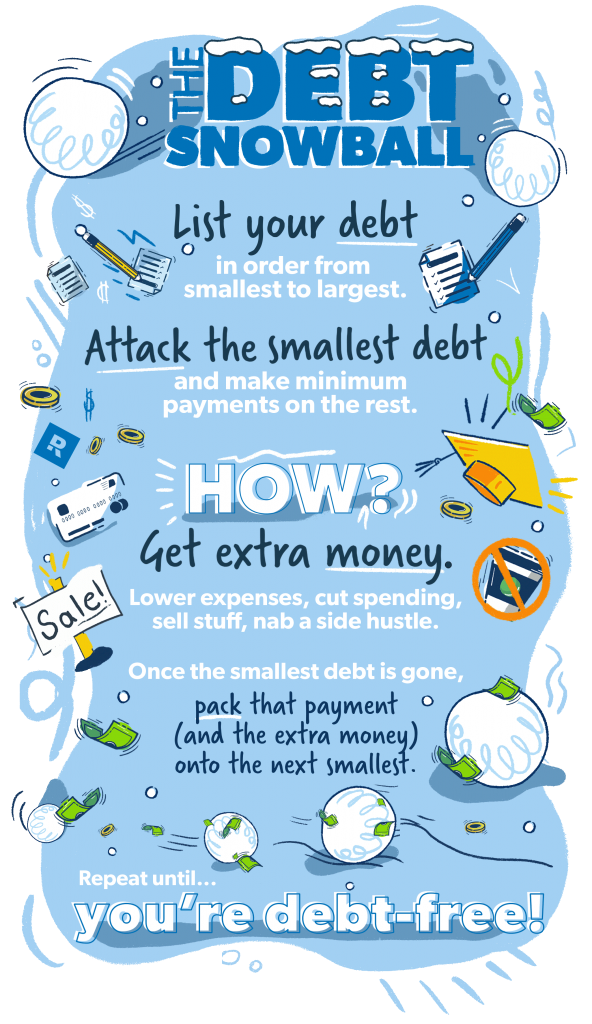
Image Credits: ramseysolutions.com

If you need professional help when it comes to managing your debt, you can seek assistance from a credit card counselling organization such as the non-profit organization called Credit Counselling Singapore (CCS).


Sources: 1, 2, & 3

Read More...

Why are IKEA stores designed like a maze?

You start off with good intentions and a robust shopping list in your hands. You walk in with a purpose and determination to beautify your home. However, it only takes a few minutes, and you are distracted with other items that you can put inside your shopping bag. You feel lost in the maze of IKEA. And this happens every time!

Budget furniture giant IKEA lets its shoppers experience the journey of walking into labyrinth of furniture and home décor, and typically they walk out with more than what they anticipated.

Why is this so?

#1: TO ENCOURAGE IMPULSE SHOPPING

IKEA’s confusing layout delays the completion of the shopper’s list. It is designed to stop you from leaving. This emotional process disorients and dissociates shoppers from the outside world.

When they eventually figure out the space and start buying, shoppers feel licensed to treat themselves. By the time you find the stool that you are looking for, you will end up being so impressed by how cheap the table lamp is and end up getting it too. Alan Penn, a professor at University College London, said that this results in impulse buying.

#2: TO CREATE A WALK-THROUGH CATALOG

IKEA said goodbye to its printed catalogs after seven decades of publishing, but it does not mean that you cannot witness its pages in real life. Apart from delaying the completion of a shopper’s mission with its confusing layout, IKEA found a way to spend more time with its shoppers through its interactive spaces.

“Historically, we wanted the flow of our stores and presentation of the products to appear in the same way as they would in a catalog,” said Mr. Marcus Engman, the Chief Creative Officer for Ingka Group.

Image Credits: unsplash.com

#3: TO OVERWHELM YOUR SENSES

Consumer Psychology expert Paul Harrison highlighted that IKEA’s layout overwhelms the senses to stop shoppers from thinking about time and space. According to him: “We’re not very good at imagining. We look to others for ideas and IKEA’s store layout helps you imagine your ideal life, how life could be.”

Cognitively, shoppers are not able to control their behavior and responses because they become more emotional. These emotions cascade to the process of building its products. You see, the furniture’s self-made concept provides shoppers with a sense of achievement.

#4: TO TRY NEW THINGS

Despite its popular maze-like layout, IKEA tried out other store formats last year. It tested two new formats to explore how physical locations can remain relevant in the age of e-commerce and amidst the pandemic.

Ingka Group, which operates most IKEA stores, reopened a location in Shanghai to test its new format. This format provides shoppers with other activities aside from shopping. Showrooms were introduced alongside a theater-like space where shoppers can hangout, a restaurant with sustainable food, and a Maker’s Hub where staff can help shoppers repair old items. This store represented its second test store.

Image Credits: unsplash.com

Can IKEA still amaze its shoppers even without its signature maze? Let’s see what the future of IKEA holds!

Sources: 1, 2, & 3

Read More...

Travel Insurance vs International Health Insurance with selected Covid-19 Coverage

Are you unsure about the difference between travel insurance with selected Covid-19 cover and international health insurance? Here we look at the key differences between the two types of cover.

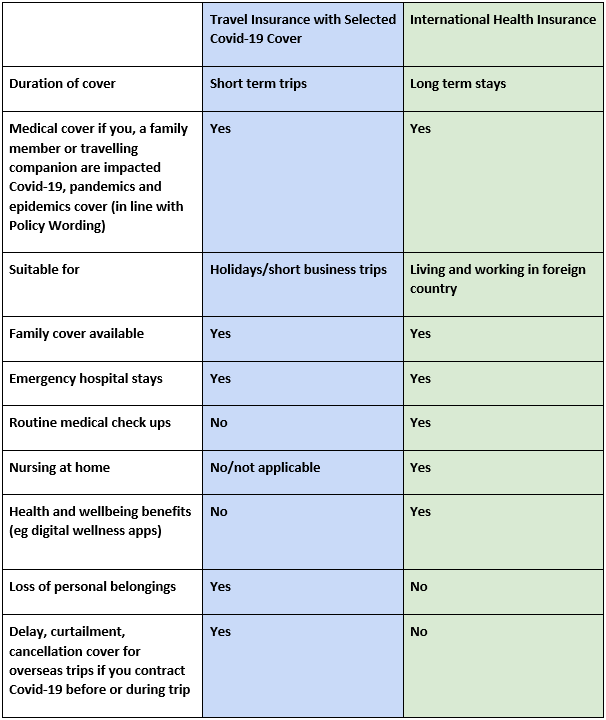
In short, travel insurance with Covid-19 cover is designed for holidaymakers and those on short business trips to cover things like emergency medical treatment (including covered events related to Covid-19), cancellations and personal belongings. International health insurance provides multi-country cover and is designed for those living and working overseas who need cover for in-patient medical check-ups, medical emergencies and ongoing treatment of chronic conditions.

Below is a general comparison of travel Insurance with selected Covid-19 cover and international health insurance. Exact coverage will depend on the chosen policy.

What about lockdowns and other kinds of general travel disruption?

It’s important to remember that travel insurance doesn’t cover you for everything*. For instance, it does not generally cover against lockdowns, border closures and other kinds of general travel disruption.

*It’s important to remember that travel insurance doesn’t cover everything. Your policy will be subject to the terms, conditions, exclusions, and benefits limits of the policy wording

Travel insurance (with selected Covid-19 cover*) – in more detail

Travel insurance with selected Covid-19 cover is travel insurance that covers you for things like trip cancellations / trip interruptions / trip delay , loss/theft of personal belongings and emergency medical treatment, and includes selected coverage for Covid-19, pandemics and epidemics before or during your trip (in line with the Policy Wording of your chosen policy).

For example:

  • If you or a travelling companion/family member are diagnosed with Covid-19 before your trip and need to cancel, you can make a claim for things like travel and accommodation costs.
  • If you or a travelling companion/family member are diagnosed with Covid-19 during your trip, you can make a claim for things like medical care and quarantine costs.

In terms of medical coverage, travel insurance is intended to provide short-term emergency medical treatment within your specified area or period of cover. The aim of this is to get you well enough to return home. Travel insurance rarely covers long term medical treatment.

Selected Covid-19 coverage* with Allianz Travel

Travel insurance from Allianz Travel Singapore includes selected Covid-19 coverage*, plus cover for epidemics and pandemics in general (when diagnosed with a disease). The Medical and Dental cover limit is S$1,000,000 (Comprehensive Bronze and Silver) and unlimited for Comprehensive Platinum.

Travel insurance in general is designed to cover you for trips of limited duration. It is intended for holidaymakers and short term trips abroad, and also offers protection against other travel related issues.

For example, Allianz Travel insurance benefits include:

  • Selected Covid-19, pandemic and epidemic cover*
  • Medical/dental cover of up to $1,000,000
  • 24/7 Medical Assistance
  • Cancellation, Delay, Curtailment
  • Loss/theft/damage of valuables
  • Rental Excess cover (Silver & Platinum Plans only)

If further treatment is required, you will be expected to return to your home country. Cover ceases once you are back in your country of residence.

*It’s important to remember that travel insurance doesn’t cover everything. Your policy will be subject to the terms, conditions, exclusions, and benefits limits of the policy wording. For more information please click on the Allianz Travel Policy Wording

Buy Travel Insurance Now

Get exclusive 40% off for MoneyDigest readers.
Use promo code: moneydigest40 until 28 March 2022

International health insurance – in more detail

International health insurance is designed for individuals and families living and working overseas for prolonged periods. It is designed to cover things like in-patient care, out-patient GP visits, emergency treatment, specialist consultations, maternity and dental. International health insurance is multi-country and provides members with flexibility in terms of choice of doctor and treatment facility, and with the ability to receive treatment anywhere within their region of cover.

For individuals or families who are unfamiliar with a country’s health system and/or language, international health insurance can make it easier and simpler to obtain medical care. Depending on which country you are moving to, it may also save you significant sums of money compared to ad hoc care if you are not entitled to local free or subsidised medical care.

International health insurance plans vary, but often include:

  • Hospital stay
  • Routine check-ups
  • Cover for pre-existing conditions
  • Cover for chronic conditions
  • Choice of medical providers

Some international health insurers make it possible to build a plan that suits specific needs. For example, Allianz offers a standard Core plan to which modules can be added, including:

  • Out-patient treatment
  • Maternity care
  • Dental care
  • Repatriation

If you choose international health insurance from Allianz, benefits include:

  • A range of treatments, inclusive of specialist fees and diagnostic tests, plus generous cover for alternative treatments and physiotherapy
  • Health and wellbeing benefits, including digital health apps
  • Cover for emergency treatment overseas, medical evacuation and nursing-at-home
  • Choice of supplemental cover including Maternity, Dental and Repatriation Plans
  • A growing network of over 900,000 quality medical providers
  • Cover for Covid-19, pandemics and epidemics

Get 10% off until 28 February 2022

Discover More

Read More...

How to Bounce Back from a Costly Mistake at Work

Take a step back. We all make mistakes at work, and no one is perfect!

Depending on the gravity of the mistake and your tenure with the organization, a timely resolution may solve your problem. Whether you missed a deadline or came unprepared to a client meeting, the most important thing is to act and address the situation sooner rather than later.

On that note, here are eight steps you can take to deal with your costly mistakes at work.

#1: BE ACCOUNTABLE

There is no point in hiding your mistakes or finding a scapegoat to cover up your problems. Be accountable for the mistakes you have made. These are part of the learning process that can help you become better at your job. Assess your part in the situation and acknowledge where things went wrong.

#2: BE ABLE TO EXAMINE THE SITUATION

Look into the issue with fresh lenses. Pretend as if someone else made the mistake to evaluate what happened with an objective eye.

Ask yourself these questions:

What actions led to the mistake?
What is the severity of the situation?
What should the person have done instead?
What are the consequences of the mistake?
How can the situation be prevented in the future?

#3: BE OPEN TO A PRIVATE MEETING WITH YOUR SUPERIOR

Setting up a private meeting with your boss may not always be necessary, but you could schedule one if your mistake led to serious repercussions.

Be direct, factual, and honest during this meeting. Apologize for your mishaps and explain what happened. Your boss does not need to listen to your excuses!

Image Credits: pixabay.com

#4: BE APOLOGETIC

A sincere apology goes a long way. Other people can still be held accountable for the mistake you made. Your boss and co-workers may step in to fix the issue too. So, being apologetic is important in maintaining these professional relationships.

#5: BE ABLE TO COME UP WITH SOLUTIONS

Instead of whining about your mistake, focus on finding a solution. Once you determine where things went wrong, you can figure out how to fix it. Leaders appreciate people who bring solutions instead of problems. These types of people are usually considered to rise to the top.

#6: BE ACTIVE IN SOLVING THE PROBLEM

Do everything within your power to ensure that the issue gets remedied or fixed quickly. List all the viable solutions and review which one offers the best outcome. Stay in the path throughout the process even if the resolution has been taken out of your responsibilities. It is still vital to know how the solution was executed for future references.

#7: BE OPEN TO CHANGE

You should constantly adjust your flow until you find a work routine that suits you best. If you are always late in submitting your reports or if you are always sending the wrong proposals, you must do something to turn things around. Incorporate healthy habits such as using a planner or meditating for a few minutes. Apply healthy habits to improve your focus, concentration, and productivity.

#8: BE KIND TO YOURSELF

You can be your harshest critique. Eliminate any negative self-talk, learn from the mistake, and move forward. The mistakes you make will not ruin your career. Instead, your reaction to these mistakes can break you!

Image Credits: pixabay.com

Sources: 1 & 2


Read More...

5 Financial Red Flags in a Relationship

Is your relationship doomed?

While you and your partner are compatible in many areas of your life, it is possible to be financially incompatible. Ongoing financial problems can quickly put a strain on your relationship. As such, these are some red flags that you may keep a lookout for.

#1: YOUR PARTNER HIDES HIS OR HER CASH FLOW

What will you do if you find a receipt or a billing statement for a purchase that your significant other made? Moreover, he or she gets defensive every time you bring it up. Over-spending, lying, and hiding finances can destroy any relationship.

Your partner not only spends money without telling you, but also spends a portion of your joint savings and hides it. You can work through your financial issues by attending counseling together.

#2: YOUR PARTNER CONTROLS YOU THROUGH MONEY

One of the financial issues that counselors observe in a marriage is financial abuse. A spouse tries to control the other through money and allowance. This is more common for people who only have a single-income household. It is nice to have someone take care of financial matters, but decisions need to be made as a team.

Your spouse should not hang financial decisions over you once you are married. Consider seeking help before the situation becomes too serious to manage.

#3: YOUR PARTNER LIES ABOUT FINANCIAL MATTERS

One of the biggest red flags that you must watch out for is dishonesty about financial situations. From small instances such as hiding the amount spent on a dress to big instances such as hiding the amount of debt they have, lying about your bad financial situation and spending habits can hurt your relationship.

Image Credits: pixabay.com

Lying sets a precedent for later in the marriage, and it is not a thing that you want to deal with.

#4: YOUR PARTNER HAS AN ADDICTION

It is tough to maintain the stability of your relationship when your partner has an addiction problem. From drug addiction to gambling or shopping addiction, you need to handle your financial issues as a team when addiction is involved.

These types of behaviors can affect your finances and destroy years of hard work. You should certainly see a counselor to work through your partner’s struggles with addiction.

#5: YOUR PARTNER DOES NOT PAY BILLS ON TIME

While everyone makes mistakes, it is a different story if your partner consistently pays his or her bills late. Does your partner notice? Does your partner care?

If you live together, this shows that your partner is not considering you or how unhealthy habits affect the relationship. Discuss this important matter with your partner.

Sources: 1 & 2

Read More...