
Tips for traveling light on your winter holiday

Changi Airport

You’re getting ready for your winter holiday and you realize that you have way too much stuff. 

It’s time to weed out the unnecessary and figure out how to travel light. There are a few things to keep in mind when trying to lighten your load.

For one, think about the activities you will be doing on your trip. Another thing to consider is the temperature changes at your destination. There are ways to reduce the amount of weight you’re carrying without leaving anything important behind.

Here’s how.

Stick to a color scheme

Sticking to a color scheme will help you to be more organized and efficient with your packing.

Start by picking two or three colors and then mix and match different items that match those colors.

For example, if you’re going with a monochrome color scheme, you could pack a white top, black bottom, and grey outerwear. And for ladies, don’t forget about accessories—a colorful scarf or a pair of fun earrings can instantly brighten up an outfit.

Edit your beauty routine

The holidays are a time when we all want to look our best, but that doesn’t mean you have to overpack your beauty bag.

Start by editing your routine down to the essentials. Pack your beauty basics and bring along a moisturizing lip balm and hand cream. And don’t forget sunscreen—even in the winter, you need to protect your skin from the sun’s harmful rays.

If you wear makeup, pack the products you can’t live without, but leave the rest behind. You can always buy new makeup when you get to your destination. And if you’re worried about scrambling to find your stuff in your suitcase, consider packing your beauty products in a ziplock bag.

Make a list and stick to it
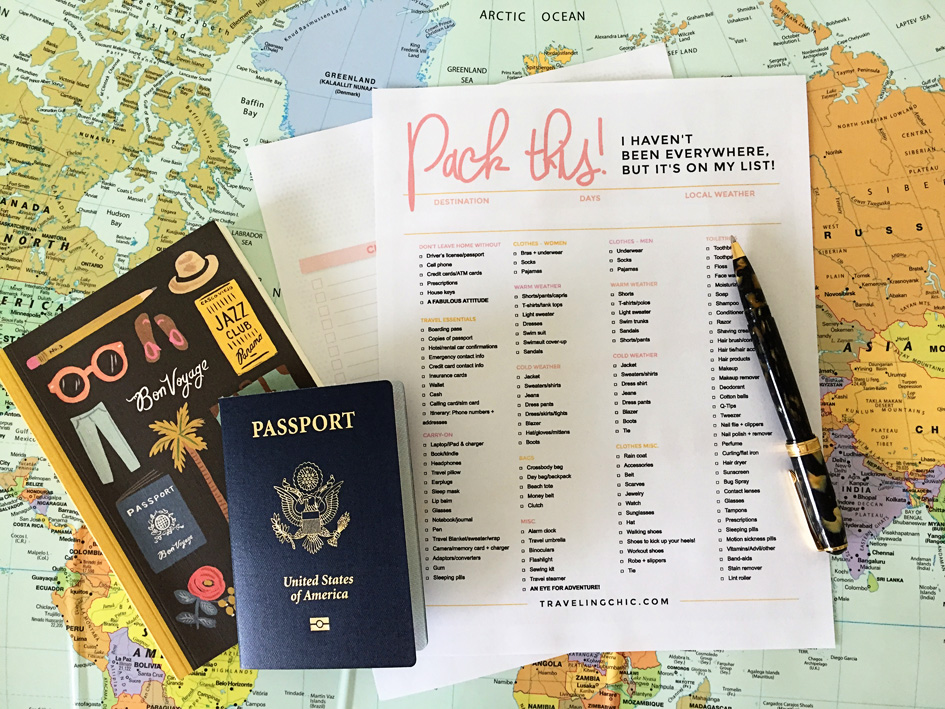
travel packing list

Image Credits: travelingchic.com

If you know what you’re taking with you, you won’t be tempted to pack unnecessary items. A good way to avoid this is to make a list of the items you need and then stick to it. If something doesn’t make the list, don’t bring it. It’s as simple as that.

Invest in versatile pieces and roll your clothes

When it comes to packing for your winter holiday, the key is to invest in pieces that are versatile and can be worn in multiple ways.

That way, you can pack fewer clothes and have more room in your suitcase. Another packing tip: roll your clothes instead of folding them. It will take up less space and they will less likely to have creases.

It can be tough to pack light for a winter holiday—after all, you need to consider the day and night temperature fluctuations. But with a little bit of planning and some smart packing tips, you can travel light and still have everything you need. Here are a few tips we’ve mentioned earlier: pack clothes you can layer so you can adjust to the temperature changes, choose versatile clothing that can be mixed and matched, and bring along essential items that you can’t live without. With these recommendations in mind, you can pack everything you need into a suitcase and be ready for your winter holiday.


Read More...

The disadvantages of multitasking: Why you should focus on one thing at a time

multitasking

Believe it or not, multitasking has some pretty big disadvantages.

You may think you’re getting more done by multitasking, but the truth is that you’re slowing yourself down.

Let’s take a look at some of the most common problems that come with multitasking and why it’s better to focus on one task at a time. We will also explore some of the benefits of single-tasking and offer some tips on how to make it work for you.

Poor time management

When you try to do too many things at once, you’re not giving any of them your full attention. 

And that’s going to lead to mistakes and poor-quality work. This means you might be redoing more work than the original set you had.

Less productive than you think

Not only is multitasking less productive than you think, but it can also be draining.

When you try to do too many things at once, your brain is working overtime to try to focus on all of them. Constantly switching gears takes a lot of energy—energy that could be used more productively if you focused on one task at a time.

Can lead to information overload
man listening to music as he works at his desk on a laptop

Image Credits: unsplash.com

Imagine this: you’re in the middle of an important project, and you’ve got email notifications pinging left and right on your screen.

You’re trying to keep up with your work, but you keep getting pulled away by these little distractions. Pretty soon, you’ve got a dozen different windows open on your computer, and you’re completely overwhelmed.

You can’t focus on anything because you’re trying to do too many things at once. This is what’s known as information overload, and it can be a real productivity killer. In short, multitasking is not as productive as it seems.

So why not try focusing on one task at a time? You will be surprised at how much more you can get done when you’re not constantly jumping around.

How to focus on one thing at a time

Do you know that it takes about 20 minutes for your brain to get back into focus after you’ve been interrupted?

So if you’re constantly jumping from one task to another, you’re not giving anything your undivided attention and it’s going to show in the results.

The bottom line is that multitasking is not as productive as you might think. The best way to get things done is to focus on one task at a time and give it your all. Once that’s done, move on to the next task and repeat.

Multitasking might seem like the best way to get things done, but it’s not as effective as you might think. It takes more time to switch between tasks than it does to focus on one task at a time. Multitasking can also lead to mistakes since you’re not 100% focused on the task at hand. And finally, multitasking can be overwhelming, which can lead to productivity slowdown or even burnout. If you want to be more fruitful and achieve better results, focus on one task at a time. It might take a little bit longer, but you will be more efficient and less stressed.

Read More...

Learn to embrace discomfort: Why being uncomfortable is the pathway to success

woman with hands to her face

You’re probably familiar with the phrase “growth comes from discomfort.” But do you know why it’s true?

When you’re uncomfortable, that’s when you’re learning and growing the most. Challenging yourself to do things that scare you or make you feel uneasy is how you become better, stronger, and more successful.

The more you can get used to feeling uncomfortable, the easier it will become and the more progress you will make in all areas of your life. So how can you start embracing discomfort?

Here are a few tips to help get you started.

What is the comfort zone?

In short, it’s a place where you feel safe and in control.

And it’s a great place to be—as long as you don’t want to grow or achieve anything new.

When you’re in your comfort zone, you’re doing what you’ve always done. You’re playing it safe, and that’s not going to get you very far. If you want to achieve something great, you need to be willing to step outside of your comfort zone and embrace discomfort.

The problem with staying in your comfort zone

You know the saying, “If it ain’t broke, don’t fix it”?

Well, that’s what you’re doing when you stay in your comfort zone. You’re not challenging yourself to become better.

And sure, staying in your comfort zone might make you feel safe and secure. But that’s not what life is about. Life is about experience, learning, and maturing. If you’re not uncomfortable sometimes, then you’re not living to the fullest.

So how do you break out of your comfort zone? You have to be willing to experiment, to take risks. And most importantly, you have to be willing to fail. Because failure is how we discover and develop.

What challenges you can start with to get out of your comfort zone
dance class

Image Credits: unsplash.com

You’re probably wondering what kind of challenges you can start with to get out of your comfort zone. Well, here are a few ideas to get you started:

  • Introduce yourself to someone new at a party.
  • Volunteer for a task that’s outside your comfort zone.
  • Speak up in a meeting when you normally stay quiet.
  • Take on a new project at work that you know will be challenging.
  • Sign up for a dance class even though you’re shy and self-conscious.
What are some little things you can do to celebrate your progress

Celebrating your progress is a wonderful way to stay motivated. After all, if you don’t take the time to pat yourself on the back, who will?

So how can you go about celebrating your success? Here are a few ideas:

  • Share your victory with others. Tell your friends, family, and followers on social media. Let them know what you’ve accomplished and how you did it.
  • Treat yourself to something nice. Whether it’s a new outfit, a weekend getaway, or a nice dinner out, make sure you take some time to enjoy your hard-earned victory.
  • Document your success. Keep track of what you’ve achieved and refer back to it when you need a little bit of inspiration. Recording your progress is a wise way to stay motivated and on track.

You’re reading this because you’re looking for a way to be more successful. You want to take your life to the next level, but you’re stuck—because you’re too comfortable. You’re afraid to try new things, and when you do, you always play it safe. It’s time to change that. You need to be uncomfortable if you want to see any real growth. Embrace the feeling of being out of your comfort zone. Push yourself harder than you ever have before. Remember, the only way to grow is to constantly challenge yourself. So get out there and embrace discomfort—it’s the key to success.

Read More...

Writing a job ad? Keep these tips in mind

job ad

As a hiring manager, you want to write a job ad that attracts the best candidates.

But what should you include to make your ad stand out? There are a few key things to keep in mind when drafting a job ad.

Stay on this page as we reveal all of the information that will help you attract top talent.

Who are you writing the job ad for

When you’re writing a job ad, keep your audience in mind. Who are you writing it for?

If you’re targeting top talent, you need to make sure your job ad stands out from the crowd. Think about the tone you set. Are you being realistic about the job responsibilities? Are you highlighting the company culture and the benefits of working for the company?

What are the must-haves in a job ad?

When you’re writing a job ad, you’re not just selling the job—you’re also selling the company. 

And you want to make sure that the candidates you attract are a good fit for both the position and the company.

So what are the must-haves in a job ad? First and foremost, it should be clear what the job is and what the responsibilities are. You should also describe the company culture and what kind of environment the candidate will be working in.

And don’t forget to list the qualifications for the job. This is key because you want to make sure that you’re only attracting candidates who are a good fit for the role.

What not to do when writing a job ad
spelling typos

Image Credits: rdasia.com

Avoid making common mistakes. For example, don’t make the ad sound too demanding or restrictive.

Remember, you want to attract the best candidates, so avoid using language that will scare them away. And please proofread your ad before publishing it. A typo can cost you a great candidate!

How to make your job ad stand out from the competition

Here are a few tips to help you do just that:

  • Use catchy headlines

If you can pique the reader’s interest with a clever headline, you’re already halfway there. Try to capture the essence of the position in a few words.

  • Use eye-catching visuals

If you can, use visuals to help bring your ad to life. Graphs, charts, and images are all great ways to engage the reader and make your ad stand out from the rest.

  • Write a clear job description

Make sure the job description is clear and concise and lists the essential qualifications required for the position. This will help weed out unqualified candidates right away.

When writing a job ad, keep the tone and content friendly and engaging so that you can attract the best candidates. Remember to be clear about what you’re looking for, and to list the requirements and expectations of the position. It’s also important to make sure your job ad stands out from the rest. Using keywords that are relevant to your industry and posting on sites that are frequented by your target audience can help. By following these tips, you can create a job ad that will attract talented candidates who will be a perfect fit for your company.

Read More...

Post-meeting strategies to help you avoid information overload

stressed woman biting a pencil

You just left a meeting that was full of details. Now what?

It can be tough to process all the information you just received, especially if you don’t have much experience dealing with it. You might feel like you’re not sure where to start or what to do next. That’s why it’s good to have a plan for post-meeting follow-up.

If you’re feeling overwhelmed after a meeting, use these strategies to help you avoid information overload. Keep reading!

Recognize the signs

After every meeting, you feel completely crushed.

You can’t seem to focus on anything, and all you want to do is take a nap. You know you need to get your work done, but you can’t seem to start. This is a telltale sign that you’re experiencing information overload.

Understand the reasons behind

working on laptop with sticky notes by the side

Image Credits: unsplash.com

It’s easy to feel overpowered after a meeting since you’re bombarded with so much information, and it’s all so fresh in your mind.

Maybe you feel like you can’t remember anything specific or that you’re just not sure where to begin. Well, the first step in dealing with information overload is understanding why it happens in the first place.

There are a few reasons:

  • Trying to do too many things at once
  • Not taking the time to properly digest the info
  • Not organizing the information in a way that makes sense

Once you understand the reasons behind your information overload, you can start to come up with strategies to help you deal with it.

Create a plan to avoid information overload

After every meeting, take some time to process all the information that was just thrown at you. And one of the best ways to do that is by creating a plan.

Here are a few things you can do:

  • Create a system for filing away meeting notes and documents
  • Break down the meeting takeaways into individual tasks and make a list of what needs to be done
  • Delegate tasks to different team members and create a timeline for when they need to be completed

Don’t try to do everything at once. Take your time and go through the information gradually. If you try to process it all at once, you will just end up getting stressed out.

After any meeting, it’s crucial to process all the new information. Make a list of the most meaningful points from the meeting, and focus on those first. Take some time for yourself to relax and digest fresh data and if necessary, talk to someone else about the meeting, and see if they had a dissimilar take on it. By following these tips, you can help minimize the amount of stress that comes with information overload.

Read More...