Why you shouldn’t assume that your parents will look after your kids during the upcoming school break

grandparents and grandchild

Hey, hold your horses before you tell your kids they are going to be with ah gong and/or ah ma this upcoming yearend school break.

You think your parents haven’t got their own lives to live? Just because they’re your parents doesn’t mean they are forever at your beck and call to babysit your little monsters when you and your spouse are busy with the daily grind.

Wake up your idea. Your parents have their plans and may also want to go jalan-jalan themselves instead of being stuck at home playing “maids.”

The changing roles of grandparents

Times are changing so don’t simply assume your parents will take care of your kids during the school holidays.

Modern grandparents usually lead active lifestyles and have their travel plans or hobbies. Their free time may not always match your kids’ school breaks.

Yes, they may dote on their grandkids and don’t mind babysitting them for the weekend. But if you rob them of their total “me time” and just dump your kids on them without asking first, they may feel taken advantage of.

Also, some grandparents return to the workforce or do volunteer work. Their schedules may not permit them to watch your kids, especially for long periods. It’s best not to assume their availability and check with them first before making plans.

Consider your parents’ needs and limitations

Taking care of kids for days on end can be tiring for anyone, let alone the elderly. Before dumping your little ones at their place:

  • Think about their schedule and commitments. Check with them first before making arrangements.
  • Consider their energy levels and health conditions. Looking after active children requires stamina and patience. Be sensitive to your parents’ abilities and limitations.
  • Provide clear details about the kids’ routines, schedules, favorite activities, and any medications or special needs. Don’t leave your parents guessing and scrambling to figure things out. Give them as much information as possible.
  • Offer to contribute to costs for food, activities, and transport while they’re at their grandparents’ house. Your parents will surely appreciate the gesture.
Make backup care plans for your kids

kids at a holiday camp

Image Credits: tickikids.com

Some backup plans in case your parents cmi:

  • Find holiday camps or activities

Sign your kids up for some holiday camps, classes, or activities to keep them engaged. Things like sports camps, arts and crafts workshops, or science experiments are great for learning new skills and making new kawans. The kids can try different activities throughout the yearend holiday to prevent boredom.

  • Arrange playdates

Organize some playdates with your children’s good friends so they can spend time together. Meet at a playground, indoor play area, or each other’s house. Supervise them or take turns with the other parents to look after the group.

  • Hire a babysitter

If you need to work or run errands, consider hiring a babysitter, nanny, or tutor to watch your kids. Ask friends or family members for recommendations or check websites that offer background checks. Meet potential sitters first before leaving your children alone with them.

  • Stay home yourself

Or if your work schedule can afford it, why not take some time off yourself to spend with your kids? Cook their favorite foods, watch movies, play games, and just enjoy each other’s company.

Your children will appreciate having your undivided attention and you will get to witness more of the little moments that make their childhood so fleeting. The school holidays will fly by, so make the most of this time with your little ones!

Your parents have spent decades raising you already, now you want them to help you take care of your little monsters? Don’t be so selfish. If possible, make your own arrangements for the yearend holidays this year. Your parents deserve rest after working so hard their whole lives. If you don’t show them some “sense” now, then when? Time to step up and be the parent, stop dumping the childcare work on your poor parents.


Read More...

Deepavali 2023: Illuminating Celebrations and Savings Await!

Deepavali, also known as Diwali, illuminates the spirits of people across various Indian traditions worldwide. This vibrant Hindu festival symbolizes the triumph of light over darkness, good over evil, and knowledge over ignorance. One of its key narratives involves the return of Lord Rama to Ayodhya with his wife Sita and brother Lakshmana after vanquishing the demon king Ravana.

The festivities of Deepavali are set to light up Singapore from November 10 to November 15, with the main celebration falling on November 12, a Sunday. Following this, Monday the 13th becomes a public holiday, allowing everyone to immerse themselves in the festivities.

WHERE TO CELEBRATE DEEPAVALI IN S’PORE

#1: LITTLE INDIA

The heart of Singapore’s Indian community, Little India, transforms into a captivating spectacle during Deepavali. Streets adorned with diyas and kolam create a colorful tapestry. Dive into the festivities at the Deepavali Mela, a street carnival featuring food stalls, games, and cultural performances.

Indian Heritage Centre: This center is a treasure trove of knowledge about Indian history and culture in Singapore. During Diwali, it hosts workshops on making diyas and kolam, allowing visitors to engage with traditions hands-on. The Diwali Open House 2023, from October 14 to November 12, invites everyone to enrich their understanding of this vibrant festival through various activities.

Find more details about Diwali Open House 2023 here.

Image Credits: unsplash.com

#2: FESTIVAL VILLAGE

Nestled along Campbell Lane, the Festival Village offers traditional clothing, delectable snacks, handicrafts, and festive decorations. Open from September 30 to November 9, 2023, this vibrant market promises a treasure trove of experiences from 10 am to 10 pm.

Explore the Festival Village here.

#3: DEEPAVALI FOOD BAZAAR

Indulge your taste buds at the Deepavali Food Bazaar at Poli@Clive Street. From 2 pm to 10 pm daily until November 11, this bazaar offers an array of authentic Indian snacks and dishes, including biryani and murukku. It’s a culinary delight you won’t want to miss!

Discover the Food Bazaar here.

#4: WALKING TOUR OF LITTLE INDIA

Experience the vibrant heritage of Little India through a 2.5-hour walking tour. Delve into the area’s cultural nuances, from the best eateries to hidden gems. While the tour is free, tips for the guides are appreciated.

Book your Little India walking tour here.

#5: HINDU TEMPLES

Explore the vibrant tapestry of Hindu culture by visiting some of Singapore’s most iconic temples. Begin with the crowning jewel of Little India – the Sri Veeramakaliamman Temple. Established in 1855, it holds the distinction of being one of Singapore’s oldest religious sites.

In the heart of Chinatown, make sure to visit Sri Mariamman, Singapore’s largest and oldest temple, situated on South Bridge Road. Renowned for its breathtaking painted ceilings, this temple is also famous for hosting the Fire Walking Ceremony, known as Theemithi. If you find yourself in the East, head over to Sri Senpaga Vinayagar Temple on Ceylon Road. What sets it apart is its unique musical pillar, which produces different notes when tapped, adding to the temple’s allure.

WHERE TO FIND DEEPAVALI SPECIALS

Image Credits: unsplash.com

a. Sheng Siong Deepavali Special Promotion: Enjoy special offers from October 20 to November 9, 2023.

b. Giant Get Ready for Deepavali Promotion: Dive into festive shopping from October 26 to November 1, 2023.

c. Lazada Singapore’s Redmart Diwali Sale: Avail up to 60% off on a variety of items during this Diwali Sale.

This Deepavali, Singapore promises a celebration that’s not just lit but also rich in culture and tradition. Embrace the festival of lights and revel in the joy it brings!

Sources: 1,2, & 3

Read More...

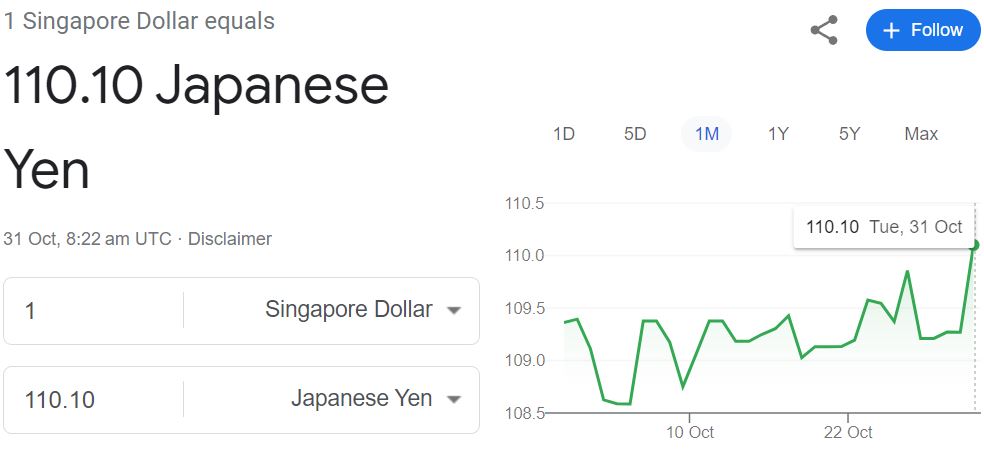
S$1 to ¥110.10: SGD Hits Record High Against JPY On 31 Oct 23, Time For A Holiday

The Singapore Dollar (SGD) has hit a record high against the Japanese Yen (JPY), with the exchange rate reaching as high as ¥110.10 for every 1 Singapore Dollar on 31 October 2023.

The Japanese Yen (JPY) experienced a decline in value due to the Bank of Japan’s (BoJ) commitment to maintaining an exceptionally accommodative policy to bolster the domestic economy.

For those who are planning a trip to Japan soon, this might be a good time to exchange for some Japanese yen.

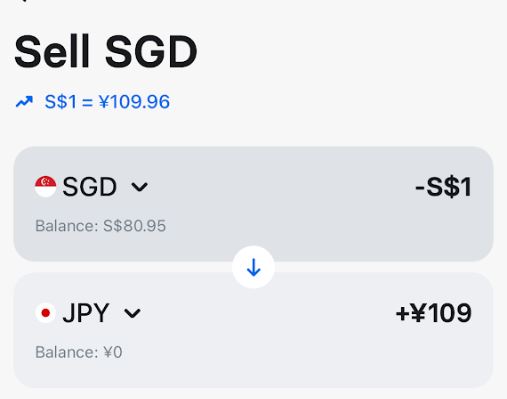
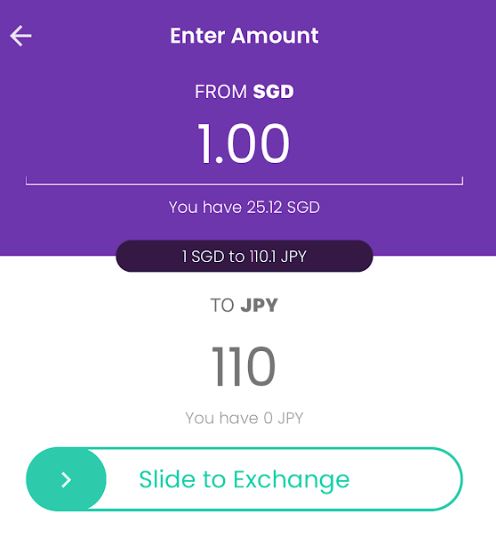
When the exchange rate hits 109.66 in October this year, many customers have visited local money changers to stash up on the currency. For those who are own multi-currency travel wallets such as YouTrip or Revolut can take advantage of the favourable exchange rate to do an in-app exchange in real time.

You can get a rate of S$1 = ¥109.96 on Revolut:

If you also use YouTrip to lock in a rate of as high as S$1 = ¥110.10:

Read More...

Have you heard of estate planning for pets? Here’s what you need to know

a cat and dog in the living room

If you’re a pet parent and want things to be taken care of properly when you leave this world, you’ve got to start digging deep into estate planning for pets.

Never heard of or the idea has never crossed your mind?

Well, allow us to share with you more in this post.

Indirect beneficiary

Providing for your furkid is like providing for a vulnerable beneficiary.

But do you know that our animal companions are classified as property? This means they cannot be named directly as beneficiaries or inherit our stuff. 

Simply put, I cannot leave a lump sum directly to my puppy. However, in my will, I can name a caretaker as a beneficiary. As long as they agree to take care of my sweet fluff, then my pup becomes an ‘indirect beneficiary’.

Just relying on a family member or relative without entrusting them with money is not a good idea. Who wants to take sudden responsibility for a furkid if they have to pay extra out of their own pocket?

With that said, structure your will properly so that your appointed caregiver can only access your money after confirming they will take care of your pet.

A safer bet with a pet trust

Sure, a legally binding document to distribute your estate can give you peace of mind. And you can name your caregiver and earmark money.

But once assets are distributed, the job’s done. In other words, the will executor is not legally bound to see your wishes through.

So how?

If you want a more confirm plus chop bet, this is where a pet trust comes in useful.

Setting up a trust by appointing a trustee company means they are lawfully tied to carry out your instructions according to your wishes. Whereas a will is based on trust between you and your appointed caregiver only.

With a pet trust, your chosen caregiver is legally restrained to only spend money on your pet’s needs, not on their personal wants. Otherwise, they may risk having their funds frozen.

a cat licking

Image Credits: unsplash.com

How much money should you leave behind?

How much money do you need to leave behind for your pet?

A good way to estimate the amount is to take their annual spending and factor in their breed lifespan. Then make your calculations.

For instance, if your cat is expected to live 10 more years and you spend $1,000/year, that means you need to allocate at least $10,000.

But vet visits may increase when they are older so plan for medical bills or consider pet insurance to cover those costs. Don’t forget to factor in inflation too.

As we come to a close, do you know how much estate planning costs?

Depending on the complexity, we’re looking at a few hundred dollars to thousands of dollars for those that involve testamentary trust or standby trust.

If you want to know the exact numbers, you should hit up a financial advisor or estate planner for the deets.

Life is short and unexpected, so there’s no harm in starting to plan early if you want your furkid (and your money) to be in good hands after you bid goodbye to life on earth.

Read More...

Understanding CFD vs. Forex: What Every Trader Should Know

Considering CFD or Forex trading for your financial portfolio? This article gives you a clear picture of their differences and how you can get started.

Forex and CFDs are international financial instruments. Both are highly leveraged instruments that offer the possibility of financial success, but they are not the same. Contracts for difference are a special kind of derivative financial product, while Forex involves buying and selling currencies.

What Is CFD Trading?

Contracts for Difference are derivative contracts allowing investors to speculate on price changes in underlying assets without purchasing or owning such assets. They enable investors to trade the difference between an asset’s opening and closing prices through a broker. CFD trading offers a wide variety of assets, including stocks, indices, commodities, and cryptocurrencies. Its minimal barrier to entry means it can be used by anybody, anywhere in the world. Using leverage, you may manage bigger holdings with the same amount of money.

What Is Forex Trading?

Foreign exchange is the buying and selling of currencies in the Foreign Exchange market. Currency exchange is decentralized, allowing traders to purchase and sell currency pairings like GBP/JPY or EUR/USD to benefit from price changes. Due to the overlap of sessions in several time zones, currency trading can occur around the clock, five days a week. As in CFD trading, traders can use leverage to magnify their gains on a reduced financial investment.

What Is the Difference Between a CFD and Forex Trading?

Asset Traded and Characteristics

Unlike Forex trading, which only trades currencies, CFDs allow you to speculate on various markets your broker can cover. Traders can take a bullish or a bearish stance on an asset and place either a short or a long position. Gains or losses are determined by the fluctuation between the asset’s opening and closing prices.

The foreign exchange market is global in scope. There is typically no centralized currency exchange. The value of one currency is exchanged in relation to another.

Pips are the smallest increment of change in a currency pair that can result in a profit or loss.

Leverage is a feature of Forex and CFD trading that allows investors to manage a larger position with the same amount of cash. However, leverage amounts may vary depending on factors like the broker, location, and regulations.

Liquidity and Access to the Market

Since the foreign exchange market is open around the clock across several time zones and can be accessed by anybody with an internet connection and a broker account, it offers excellent market access and liquidity. The forex market is the most liquid financial marketplace, with daily exchange volume averaging $6 trillion. In addition, this market has low entry barriers, necessitating only a little starting capital investment and some familiarity with currency pairs.

Market access and liquidity of CFD trading make it possible to trade on a wide variety of worldwide marketplaces throughout their respective hours. As expected, they vary depending on the underlying asset being traded. Traders benefit from this variety of markets and assets but face problems like adapting to various laws, fees, spreads, and commissions.

Spreads, Commissions, and Other Charges

The spread, or the difference between the broker-quoted buy and sell price, is a frequent cost associated with buying and selling CFDs and FX. This charge covers your broker’s overhead and the money they make from your trades. The spread shifts due to changes in the asset, the broker, the market, and the liquidity.

Currency trading on the FX market has more competitive spreads than CFDs since more people trade in this market. In addition to spreads, you may incur other expenses for each trade while trading CFDs. CFD trading makes greater use of them, especially when dealing with equities and indices.

Reason for Trading

Foreign exchange trading can be done for speculative purposes, although its principal function is facilitating commerce and investment across national boundaries. Foreign exchange markets include transactions between central banks, businesses, institutional investors, and private speculators. Hedging is another reason people trade Forex. Currency traders often work with forex brokers, although Forex can also be traded on the Contracts for Difference market.

The initial intent of the CFD market was to serve as a hedging mechanism. CFD contracts can be a hedging tool for existing equity and commodity investments. Contracts for difference do not expire like option contracts. Rolling over overnight contracts may incur additional fees depending on the provider. Since there is currently no oversight, the fees may differ.

Mini and micro units are more manageable for smaller traders and are available for several currency transactions. Currency futures contracts can also be traded as options. Currency exchange-traded funds (ETFs) allow investors to trade currencies on the stock exchange.

Final Words: How To Trade CFD and Forex

First, you must create and fund an account with a trustworthy broker. Make sure your broker has a solid reputation through background research.

After selecting a broker and opening an account with them, you will need to fund your account using the method you have chosen. Some account types and platforms are more suited to your specific needs and style than others, so do your homework.

You should also choose a way to trade that is consistent with your objectives and risk comfort level. You can reduce your risk and enter and exit positions with more consideration when you have a plan. You can use technical and fundamental analysis to spot opportunities and determine when to enter and quit a market.

Ultimately, you must decide which asset or currency pair to trade. Studying the economic statistics, geopolitical events, and central bank policies that affect the price fluctuations of your preferred currency pair is crucial. After deciding the currency pair to trade in, you may purchase or sell it on your platform. Always keep a tight eye on your investments and employ risk management strategies to reduce potential losses.


Read More...