MediShield Life is a basic health insurance scheme that offers Singaporeans and Permanent Residents access to quality healthcare at subsidized rates within B2/C wards. However, to ensure widespread affordability, it does have limitations on coverage, including certain expenses and reimbursement caps.
For instance, MediShield Life doesn’t cover pre and post-hospitalization treatments such as diagnostic scans, consultations, rehabilitation, and specialist follow-ups. Additionally, there are caps on reimbursements for specific medical procedures, potentially leaving individuals with out-of-pocket expenses. If a complicated surgery exceeds the cap specified by MediShield Life, the excess amount will not be reimbursed.
To bridge these gaps, individuals may consider purchasing an Integrated Shield Plan (IP), offering extensive coverage surpassing that of MediShield Life, thereby guarding against substantial medical expenses that could present significant financial risks.
The most economical option for extending coverage to these additional areas is the B1 “as charged” IP, available from seven insurers, including plans such as Enhanced IncomeShield and GREAT SupremeHealth.
CAN YOU AFFORD AN UPGRADE?
When thinking about upgrading to an IP, it’s crucial to consider two things: your budget and your comfort level with the types of hospitals, wards, and doctors. Can you afford the IP premiums in the long term, especially as they rise with age?
Private insurers offer extra protection or riders to cover deductibles and co-insurance, which may require separate payments. All new riders from March 2018 onwards will need to incorporate a co-payment of 5% or more. Additionally, it’s important to note that IP premiums may increase over time, and additional riders to cover deductibles and co-insurance may require separate payments.
By securing an IP early on, individuals can ensure insurability regardless of future medical conditions, providing long-term peace of mind. However, it’s essential to understand that purchasing insurance is a significant commitment that should align with individual needs and circumstances. Therefore, seeking advice from a financial advisor is recommended to assess specific requirements and explore suitable insurance options.
Image Credits: unsplash.com
Disclaimer: This information serves as a general guide and does not constitute financial advice. Terms and conditions of insurance policies may vary, and coverage is subject to individual circumstances and insurance provider policies. Seek professional assistance when necessary.
**Social Media Management**: Take charge of the company’s social media profiles, ensuring they reflect the brand identity and engage the target audience effectively.
**Marketing Calendar Planning**: Collaborate with the marketing team to craft monthly calendars that align with business objectives and showcase services in an enticing manner.
**Content Creation**: Bring the brand to life through captivating visuals, compelling copy, and engaging multimedia content tailored for various social media platforms.
**Idea Generation**: Fuel growth by brainstorming innovative marketing ideas that resonate with the audience and drive sales revenue.
**Analytics and Optimization**: Monitor social media metrics, analyze performance data, and leverage insights to refine strategies for maximum impact.
**Ad Hoc Support**: Dive into diverse projects and tasks as needed, demonstrating adaptability and a willingness to contribute to the team’s success.
Currently enrolled in or recently graduated from a Diploma or Bachelor’s program in Marketing, Communications, or a related field.
Strong understanding of social media platforms and their respective participants (Facebook, YouTube, Twitter, Instagram, LinkedIn, etc.) and how they can be deployed in different scenarios.
Excellent writing, video editing, presentation, and communication skills.
Detail-oriented with the ability to multitask.
A positive attitude, with a willingness to learn and contribute.
Experience with content creation and digital marketing tools is a plus.
Key Responsibilities
Assist in the creation and management of social media campaigns and strategies, including content ideation, schedule, and analysis.
Film and edit engaging long-form & short-form content for social media platforms (such as Facebook, Twitter, Instagram, and LinkedIn) with Capcut, Adobe Premiere Pro, and/or Final Cut Pro
Write engaging captions and word posts for social media platforms (such as Facebook, Twitter, Instagram, LinkedIn)
Monitor social media platforms (such as Facebook, Twitter, Instagram, and LinkedIn) for trends, insights, and customer engagement.
Analyse social media campaign performance and suggest improvements.
Engage with followers, respond to queries promptly, and monitor customer reviews.
Assist in managing our clients’ social media profiles and presence.
Keep up-to-date with the latest social media best practices and technologies.
Participate in team meetings and brainstorming sessions
Editor’s note: These internships are selected based on the “remote” tag, but some positions are hybrid ones and you may need to report physically to the office. For more deets, do contact the employer directly.
Looking for an exciting escape from the daily grind? Dive into unforgettable adventures on Sentosa Island! Gather your friends or family and explore these thrilling new attractions.
#1: HYPERDRIVE
Get ready for the ultimate racing thrill at HyperDrive’s Game of Karts! Experience Asia’s first-ever gamified karting adventure, where virtual excitement meets real-life adrenaline.
Zoom around the track collecting power-ups and bonuses projected onto the course. From speed boosts to strategic weapons, every lap is packed with action! While, HyperDrive Cafe awaits racers hungry for delicious treats and refreshing beverages, offering a scenic view of the track.
Location: 54 Palawan Beach Walk, Singapore 098233
#2: SCENTOPIA
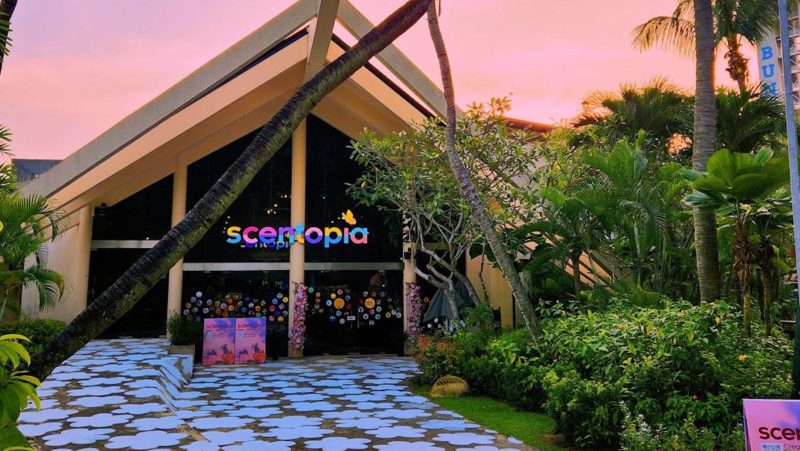
Unleash your creativity at Scentopia, Sentosa’s newest gem! Enter a world of fragrance where you can design your own personalized scent. With over 200 scent oils to choose from, embark on a sensory journey to create a fragrance that truly reflects your personality.
Image Credits: facebook.com/scentopia.singapore
A simple personality test is all it takes. Whether it’s a perfume, reed diffuser, or essential oil, capture your unique essence at Scentopia.
Escape to luxury at Tips Unicorn Beach Club, nestled along Siloso Beach. With both indoor and alfresco seating, enjoy the sun in style from private cabanas or daybeds. Groove to live music while sipping on expertly crafted cocktails, immersing yourself in the ultimate beach club experience.
Don’t miss out on interactive games, fitness programs, and breathtaking sunset views!
Location: 36 Siloso Beach Walk, #01-01, Sentosa Island, Singapore
#4: ULTRAGOLF
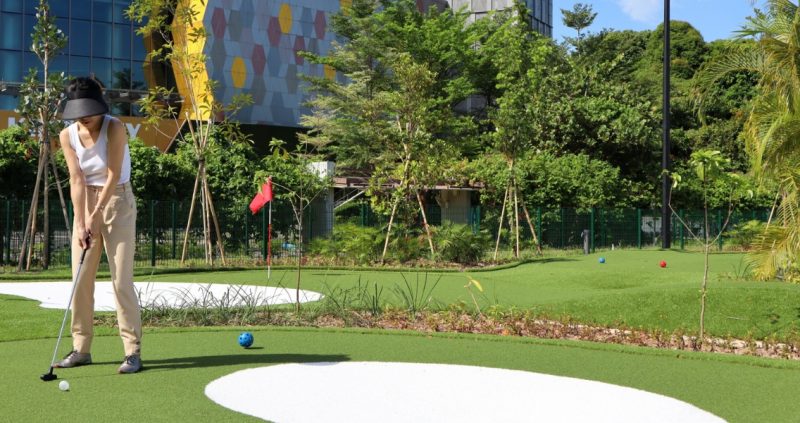
Tee off for an unforgettable mini-golf experience at UltraGolf! Set against the stunning backdrop of the beach, tackle the 18-hole course designed for both seasoned golfers and beginners.
Image Credits: thepalawansentosa.com/ultragolf
Bring the whole family along for a day of fun in the sun, with special tee-off points for kids aged three and above.
Location: 54 Palawan Beach Walk, Singapore 098233
#5: SENSORYSCAPE
Sentosa’s newly opened Sensoryscape serves as a crucial link between the island’s northern and southern regions, captivating visitors along the way. Stretching 350 meters and covering 30,000 square meters, this pathway seamlessly connects Resorts World Sentosa to the southern beaches, offering an immersive journey through nature, technology, and architectural wonders.
By day, Sensoryscape invites exploration, guiding visitors from Sentosa’s lush ridges to its vibrant reefs. As night falls, the walkway transforms into a mesmerizing spectacle with interactive digital light art and augmented reality experiences, igniting the imagination.
Location: 3 Siloso Rd, Singapore 098977
Discover Sentosa Island’s newest attractions with the ones you love. Create unforgettable memories and make every moment count!
Much has been said about the dangers of screen time for children, which makes many parents in this age suspicious around technology when it comes to their kids. But on the opposite end, there are also numerous benefits that technology can provide in terms of early childhood education, as long as it used properly.
Today’s preschool classrooms are no longer limited to books, chalkboards, crayons, and paper. Contemporary classrooms also come with smart TVs, tablets, robotics kits, and other educational technology tools that are designed to provide engaging and fun learning experiences for preschool children.
In the Smart Nation of Singapore, technology can help your child understand and navigate the world they will be growing up in, ultimately in healthy ways. As they start their academic journey in preschools like Kinderland Singapore, they will be exposed to innovative ways of learning using technology as a vital tool and resource. To see this in action, prospective parents can check out Kinderland SG’s Facebook page and Kinderland SG’s Instagram page.
As a parent, it’s important to be aware of these new technologies used in preschools. In understanding these new ways of teaching and learning, you can allay any unfounded suspicions about technology and better support your child at home as well as communicate your concerns with your child’s educators. Below are just a few educational technologies used in preschools that you should know about:
1) Interactive Learning Platforms for Online Learning
The COVID-19 pandemic drove online learning platforms (OLP) to mainstream popularity. However, even before the pandemic, many online learning platforms were already in use all over the world. In fact, 63 percent of private kindergartens and childcare centres in Hong Kong have been using these platforms, as noted in a 2012 study by W.M.V. Leung, cited in a National Library of Medicine paper.
OLPs can come in custom portals developed for specific schools, and there are free OLPs, such as Khan Academy, Udemy, and Coursera, that provide age-appropriate learning programs on a variety of educational topics.
With valuable resources to support your child’s education, these OLPs can become a great platform for remote learning on days that your child can’t come to school.
2) STEM Robotics Kits for Robotics and Coding Lessons
Introducing STEM education at an early age has become an essential part of the preschool curriculum in Singapore. In some preschool institutions, basic coding and robotics concepts are actually being integrated into classroom lessons.
To effectively demonstrate the principles of coding and robotics, developmentally appropriate STEM kits have been created for preschool students to try. In some popular robotics kits, simple blocks contain basic commands that kids can put together to animate the robot included in the kit.
In the classroom, children can experiment with the robot, giving it commands to solve puzzles and perform experiments. Through hands-on learning and play with technology kits like these, your child can develop their critical thinking skills and problem-solving abilities—both of which they’ll need to flourish in competitive learning environments such as those of Singapore.
3) Tablets and Computers for Digital Storytelling
Digital storytelling is a concept that goes further than simply reading an e-book on a tablet. It also encompasses a wider range of learning activities, several of which are now being used in preschool classrooms.
In digital storytelling activities, preschoolers are challenged to create their own stories using tools like age-appropriate storytelling apps. Aside from enhancing their linguistic and communication skills, kids can also use digital storytelling to let their creative juices flow by drawing the scenes and animating the characters in their narratives. If implemented properly in the preschool classroom, digital storytelling can be an effective way to achieve interdisciplinary learning.
4) Augmented Reality (AR) and Virtual Reality (VR) for Immersive Learning
The use of AR and VR in early childhood education is still relatively new. However, these advanced technologies open up more possibilities for immersive learning, which is being studied as a more engaging way to teach preschool children.
Through VR applications, your child can go on virtual tours all over the world, visiting locations like Mt. Everest, the Pyramids of Egypt, and the Louvre. Meanwhile, AR apps like SkyView and Wonderscope provide a fun and educational AR experience in which your child can learn about space and learn to read through storytelling.
These immersive experiences can stimulate a preschooler’s curiosity and enhance their comprehension of abstract concepts. Indeed, AR and VR technologies may come to your local preschool someday and expand your child’s mind beyond the confines of the traditional classroom.
5) Assistive Technologies for Children with Special Needs
Inclusive education lies at the heart of Singapore’s preschool system, and assistive technologies play a critical role in ensuring equal learning opportunities for all children.
Tailored to children with special needs, assistive technologies support their unique learning requirements to make their educational experience richer and more enjoyable. Some examples of assistive technology are screen readers and braille printers for the visually impaired and text-to-speech apps for non-verbal children.
Preschools that integrate assistive technologies for children with special needs truly show their commitment to nurturing every child’s development. They are also valuable champions for inclusive and healthy learning environment for all.
If used appropriately, technology in early childhood education will provide a richer learning experience for your child and prepare them for a future where technology is present in every sector of society. As a parent with their child’s best interests at heart, it would be good for you to continue learning about technology’s role in the classroom and how it will affect your child’s present and future education.
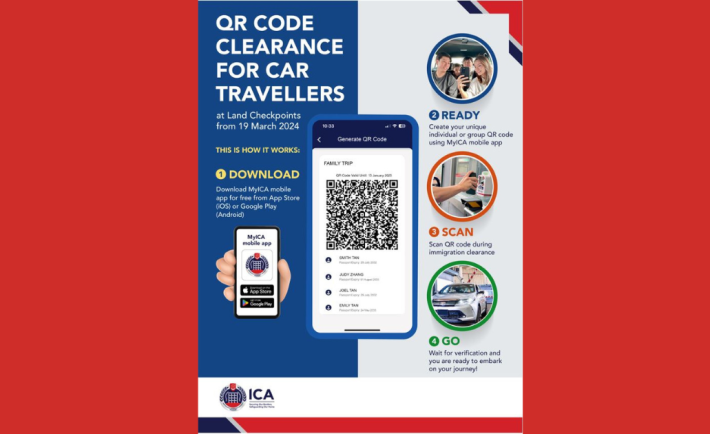
Because starting this month, travelers arriving at or departing from our little red dot through the Woodlands and Tuas checkpoints can clear immigration using QR codes.
To be exact, from Tuesday, 19 March 2024.
No more physical passports
Once rolled out, you won’t need to present your physical passport to Immigration and Checkpoints Authority (ICA) officers at the car counters.
Instead, all you need to do is this:
Just scan a single QR code. Swee.
This QR code is generated through the MyICA mobile app before arriving at a checkpoint and can be shared by all travelers in the car.
While you will eventually be able to do “self-clearance” from your car with minimal officer involvement, the in-car clearance process starting this month is not fully automated yet.
And quite understandably so for a start, yeah.
That said, officers will still be at the manual counters, as ICA mentioned last May at a seminar.
This isn’t a bad thing because that means you can still choose to present your physical passport to ICA officers at the counters instead of using QR codes.
The “old school” method is sometimes safer too, a guaranteed bet that won’t fail you.
Anyway, the QR code initiative only applies to Singapore’s checkpoints for now and you will still need to show your physical passports at Malaysia’s checkpoints.
How to generate your QR code
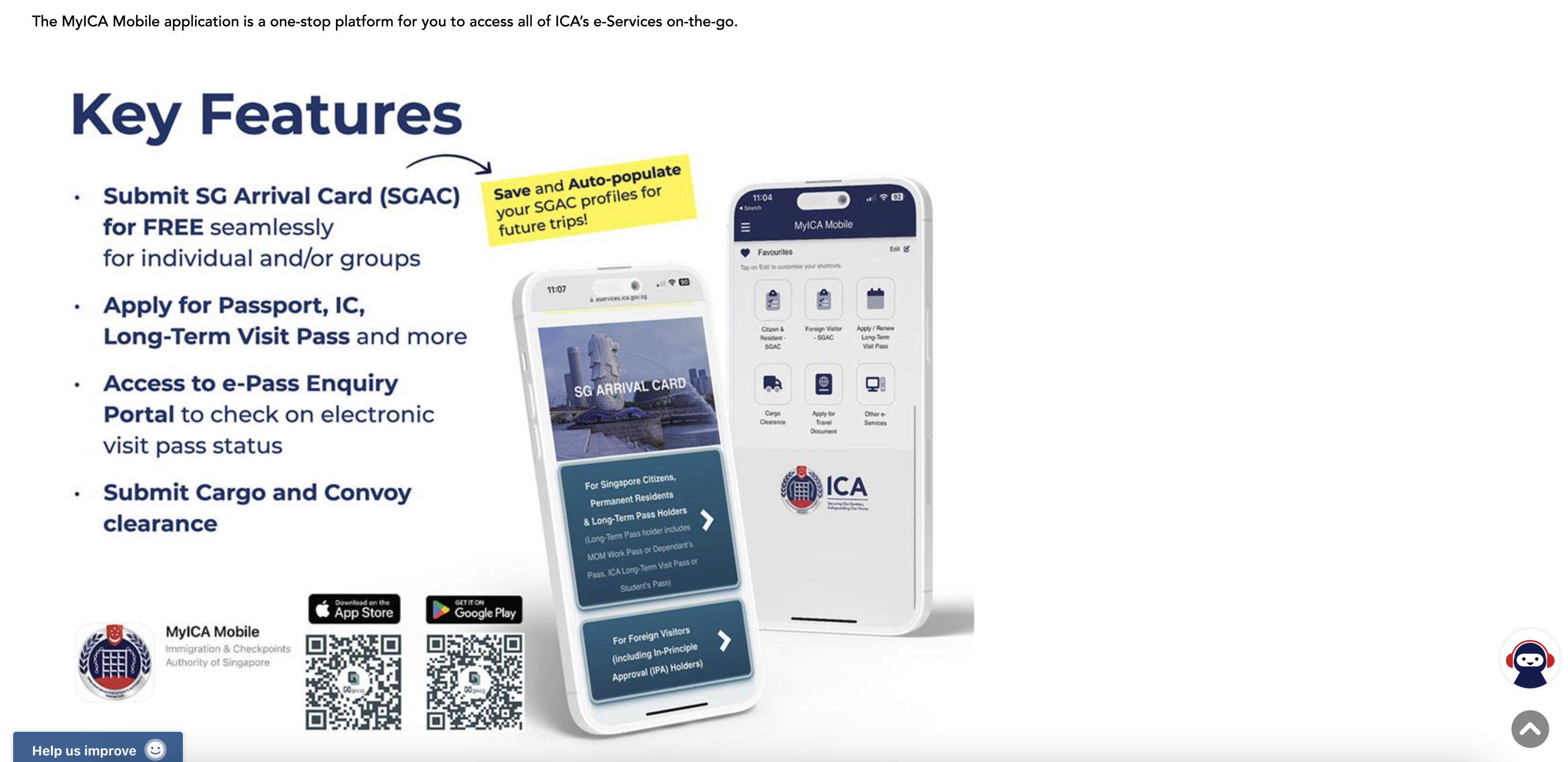
To generate your unique QR code, first, go download the MyICA mobile app.
Image Credits: ica.gov.sg
If you’re a Singapore resident, you can auto-populate your passport details using Singpass or scan your passport’s machine-readable zone with the app’s camera.
Foreign visitors who previously visited Singapore can also auto-populate details by scanning their passports.
Meanwhile, first-time visitors and those re-entering Singapore with a different passport need to present their physical passport.
But they can then use QR codes for future trips.
One QR code for all
To simplify things and save time, you can also generate one group QR code for everyone in a vehicle.
For example, if you’re a family of five, you can store your family members’ passport details on your phone and generate a family-unique QR code.
Or you can also create multiple codes for different groups of up to 10 travelers each.
Which makes sense because we don’t always travel with the same group to JB, right?
Do the codes expire?
As with most things, there’s an expiration date.
Here’s what you need to know:
Your individual QR code expires after one year or upon your passport’s expiry, whichever is first.
A group’s QR code expires after one year or the earliest passport expiry of an individual that makes up the group, whichever takes precedence.
With the QR codes generated and stored in the app, you can then scan it at the counter yourself.
Or if you would like, you can also generate individual codes even when traveling in a group.
After the scanning process, officers will conduct face-to-face checks using the QR code data.
For now, there are no dedicated QR code lanes.
But there are plans to open them at Tuas from 2026 and Woodlands’ redevelopment from 2028, 2 to 4 years from now.