The Real Cost of Long-Term Care in Singapore

The Real Cost Of Long Term Care in Singapore

In the next fifteen years, 20% of the population in Singapore will be aged 65 and above. That figure is astonishing when you put this into perspective: there will only be 2 citizens in the working age band (aged 20-64) for each elderly citizen.

Singapore is not too far away from Japan as one of the fastest ageing population in Asia. With low fertility rate and later marriages, Singapore faces the challenge of a declining working population and stagnant economy.

With the increase in the number of elderly to 900,000 in 2030, healthcare and long-term costs are expected to rise alongside.

The concern of whether our 3M (Medishield, Medisave and Medifund) healthcare system is adequate to address the impact of a silver tsunami should be reviewed.

Besides the 3M approach to healthcare, what about the costs of long-term care (LTC) after being discharged from hospital? LTC refers to those with chronic medical conditions that has rendered them severely disabled to the extent of not being able to perform 3 out of the 6 activities of daily living which include washing, dressing, toileting, transferring, feeding and mobility.

The Eldershield scheme is designed to provide financial protection for long term care which seeks to provide a cash payout of $300 or $400 per month for a period of 5 to 6 years.

The question is if that amount is sufficient? Let’s take a look.

Inpatient care:

Community Hospital

You may be discharged from the hospital but that doesn’t mean you have fully recovered. You will need additional inpatient care such as therapy and rehabilitation, nursing care and the need of caregiver to provide help with daily living. The estimated cost is around $8,000 – $9,000 a month. There are government subsidies between $1,800 to $7,000 a month which you can apply for.

Nursing Home

These are for patients who cannot take care of themselves in their own home and need significant assistance. It costs around $1,200 – $3,500 a month. You can tap into government subsidies and Medifund for selected homes only.

Respite

Those that require temporary help can apply for respite care costing around $100-$150 a day.

Inpatient hospice care

Patients who suffered from serious and progressive diseases may need extra attention from a highly trained medical team.

It costs around $7,000 a month payable via Medisave.

Day centres:

Day rehabilitation centre

Suitable for patients who need therapy to regain the ability to perform daily tasks. Estimated cost: $700-$1,000

Dementia day care centre

Estimated cost: $700-$850

Hospice day care centre

Patient with cancer and life limiting disease. Estimated cost $700-$850

Care services at home:

Home medical service:

For those with mobility issues, home medical service is an option and cost around $130-$200 per visit

Home nursing:

Suitable for bedridden patients. Estimated cost: $80 per visit

Home therapy:

Estimated cost: $100-$150 per visit

Home help:

Patient who live alone and can’t leave their home will need some assistance which cost around $100-$150 per visit

Hospice medical/nursing home care:

Suitable for cancer patients. Estimated cost: $150-$220 per visit

Cost of informal family care

In a study by NUS, 80% of informal care for the elderly was provided by family member. That is to say, elderly who can’t afford to look after themselves financially will need assistance from their loved ones. These duties usually have a negative impact on the caregiver with majority of them having to make work accommodations, take leave of absence or to turn down a promotion.

It also changes the family dynamic of the caregiver as they have less time for their own family which can strain the relationship between spouse and children.

Ways to pay for it

Fortunately our government values our Pioneer Generation and has various schemes in place to help shoulder the burden of long term care cost. Here are some options:

Medisave: Medisave can be used to pay for the expenses at approved community hospitals, hospices, day rehabilitation centre.

Medifund Silver: Forms a safety net and to be used as last resort for elderly who can’t afford basic healthcare. It has been extended to include non-residential intermediate and long term care (ILTC) services.

Eldershield: Cash payout of $300-$400 a month to help defray living costs

Personal Savings: You may have to tap into personal savings should your long term care cost exceed the total benefits you can claim

Foreign Domestic Worker (FDW) Grant & Levy: A monthly grant of $120 to support families who hire a foreign domestic worker

Senior Mobility and Enabling Fund (SMF): Subsidies for assistive devices, specialised transport and consumables

Enhancement for Active Seniors (EASE): Home modifications to make it more conducive and safe for them

Pioneer Generation Disability Assistance Scheme:  PioneerDAS provides $1,200 a year to help pioneer with their care need

Interim Disability Assistance Program for the Elderly (IDAPE): Provide $150 or $250 a month for a maximum of 72 months for those who are not eligible for Eldershield due to age or pre-existing condition

Subsidy for intermediate & long-term care (ILTC): Eligible patients can claim for subsidies through mean-testing and depends on the per capita monthly household income


 Ageing Singapore

Read More...

8 Books Young Investors Should Read

8 Books Young Investors Should Read

Every young people should invest their money. That’s the best advice i heard since i was in college. When you are young and in your twenties, the most valuable asset is not money – but time.

When you are young, you not only have the time horizon to ride out market fluctuations, there are plenty of time for the effect of compounding to work in your favour. Investors who start young will have the flexibility to take on risk and recover from any missteps.

Many young investors procrastinate because they think that investment is confusing and trying to comprehend investment jargons is akin to reading the entire encyclopaedia. That’s a common mistake to make by not starting at all.

My favourite way of learning to pick up investment is to start reading books. Books are a good way to increase your knowledge of a particular topic as they were written by people who have had vast amount of experience in the field.

We picked 8 investment books to read for beginners. Unless you have a knack of picking winning lottery numbers or you were born with skills of a perfect investor, make sure you read a couple of these books before you start to ride the bull and bear roller coaster.

In no particular order:

1. The Intelligent Investor by Benjamin Graham 

Ever since it was first published in 1949, it has sold more than a million copies worldwide. If you do not know who Benjamin Graham is, you better know who Warren Buffett is – the second richest man in the world. Benjamin Graham is the mentor of Warren Buffett, so it is no doubt that this book is acclaimed as the “bible to investing”. In his book, Graham tries to explain behavioural investing and to develop an intrinsic valuation of a stocks. Despite being a heavy read, i highly recommend reading this before entering the stock market.

2. The Little Book of Common Sense Investing by John C. Bogle

John Bogle is the founder and retired CEO of Vanguard Group which is one of the largest mutual fund provider in the U.S. He is also the person who created the first index mutual fund available to individual investor.

His philosophy of investing in index fund is clearly explained in his books where the stock market is a zero-sum game. For every stock that beats the market, there is a stock that doesn’t beat the market. That is to say for an average investor, half of the stocks picked would beat the market and half will not beat the market. What is left, is the investment less off fees – a net loss. His focus on costs minimisation and low-cost investing is his manifesto to success.

3. A Random Walk Down Wall Street by Burton G. Malkiel

Malkiel explains both technical and fundamental analysis in this book where he thrashes out technical analysis as a “a run of luck or misfortune of the ordinary gambler”.  The market is full of randomness and trying to impose any sense of order is spurious at best. He also talks about the bubbles throughout history: Tulipomania, Wall Street Crash of 1929 and the South Sea bubble and addresses market efficiency in his book.

4. Irrational Exuberance by Robert J. Shiller

As per book title, irrational exuberance purports the notion of human emotions as illogical herd mentality. His analysis was spot on and warned about the dot-com bubble before it crashes. He also challenged the efficient-market hypothesis where investors value a stock base on expectation of future dividend discounted to present value. His take? Market volatility was greater than what could be explained by any rational view of investors – taking reference to the performance of the U.S stock market since 1920s. A good read albeit being lengthy and verbose.

5. Why Stocks Go Up (and Down) by William Pike

This should be read before reading any other investment books. You will understand why as this book is packed with many investment fundamentals such as financial statement analysis, stock price valuation and more. Terms such as price/earning ratio, diluted earnings, enterprise value/EBITDA are succinctly explained in his book. Have a go at this first to build up a strong investment basics before loading yourself up with capital market maxims.

6. Bull: A History of the Boom and Bust, 1982-2004 by Maggie Mahar

We know that past prices is not an indicator of future performance – a common mistake every investors make. What’s a better lesson than learning and picking up from a mistake? Mara began by examining the history of the Dow since 1982 which hovered below 1000 before it peaked around 11,000 in 1999. It came to an end when it crashes in 2000. She teaches many valuable lesson in her book and noted that euphoria is self-blinding – a regular feature of every bull market. It is easier to pick trend rather than timing them.

7. One Up On Wall Street: How To Use What You Already Know To Make Money In The Market by Peter Lynch

Peter Lynch is touted as a legendary mutual-fund manager and in his book he advocates two rules which he stands strongly by: “Invest in what you understand” and “Invest in companies you like”. Average investors can beat any professionals and achieve financial success. He also offer guidance on investing for the long-term and how it can reward you. His style is witty and entertaining and offers a good read for anyone who wants to invest on their own.

8. Buffett: “The Making of an American Capitalist” by Roger Lowenstein

Nothing is better than learning more about the most successful investor Warren Buffett. Roger Lowenstein’s prose in his biography of Buffett is well-crafted. Besides knowing deep into Buffett and his family, this book shares insights on Buffett’s investment strategy and how he avoided the dot-com bubble. There were many “how-tos” and noted Buffett’s long-term strategy of focusing on undervalued stocks and holding them to their worth. A rather lengthy read but it pays to know how this man has amassed a fortune from investing where many would envy.

Note that the list is not exhaustive and neither of these books are money-making recipe. They form a bedrock to your future investment journey and there could be no better time to pick up these valuable knowledge when you are still young and intellectually competent.


Read More...

5 Free Money Management Apps to Increase your Savings

Money Tracker App

In order to decide on how much you shall save, first you must be aware of how much you are spending.

Expenses can be categorized as either fixed or variable. Fixed expenses remain the same every month or year due to Singapore’s laws and Company service-provider terms (e.g. Hand Phone Plan, or HDB Rent). Variable expenses include food, entertainment, clothing, and other expenses that may change every month or year. The challenge now is for you to choose on which expenses you can reduce.

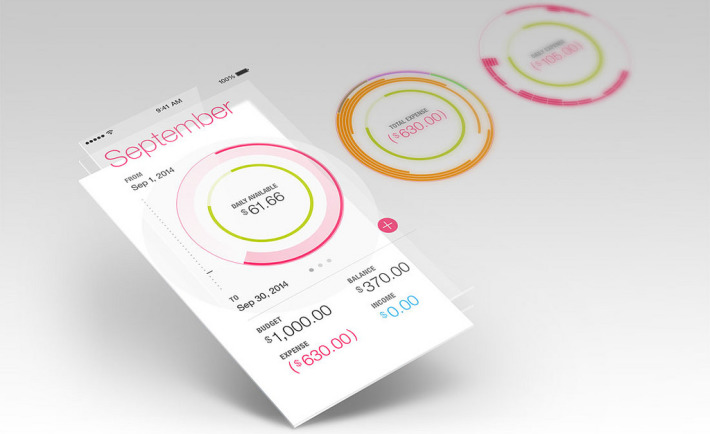
Recording all your expenses, no matter how big or small they may be, can help you plan your budget wisely. This is why; here are the 5 Money Management Apps for all your devices. Best of all? These are handy and FREE!

  1. EXPENSIFY
    (Available on IPhone, IPad, Android, and Blackberry)

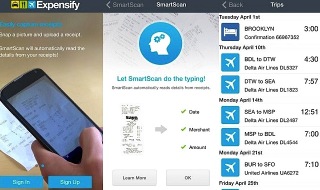
    Expensify app helps you record your daily transactions, hourly rate, mileage, and generate expense reports. Its SmartScan feature allows you to upload photos or capture your receipts for easy bookkeeping. It also helps you minimize information errors that you may encounter when writing everything down.

    expensify

    Photo Credit: Expensify App via TechTudo

  2. EXPENSE MANAGER
    (Available on Android)

    Another top rated money tracker in Google Play store is the Expense Manager app. It is raved to be simplistic and very easy to use. You may record the type of purchase, the type of payment, the purchasing price, the company the item was purchased from, and the date. The app also allows you to manage multiple accounts in various currencies, to email account activities, and to save it on your SD card.
  3. MONEYWISE
    (Available on Android)

    MoneyWise app combines minimalist design with powerful functionality. It may seem minimal but it can do a lot! It allows you to generate charts or graphs, track budgets or spending, and create regular account backups. Conveniently, you may export data in CSV or HTML formats that you may send to others via email.
  4. POCKET EXPENSE PERSONAL FINANCE
    (Available on IPhone and IPad)

    Pocket Expense Personal Finance app combines all your financial accounts together so it can track all your bills and set your budgets. This app lets you categorize your transactions through its calendar view. It is the perfect way to organize your income and expense because of its user-friendly and simplistic interface. But most importantly, it is password protected.
  5. MINT
    (Available on IPhone, IPad, and Android)

    Mint app manages your personal finance accounts (credit cards, loan and investment) on one place through your fingertips. With Mint, you can track your spending, develop a monthly budget, receive bill reminders, and save more money. It is also accessible online through its website. What’s more? It sends online alerts if you’ve gone over your budget.

    With all these awesome money management Apps, the power to budget and save money is in your fingertips! Make wise money tracking a habit! You won’t regret it. 

Read More...

Planning for retirement

Planning for retirement

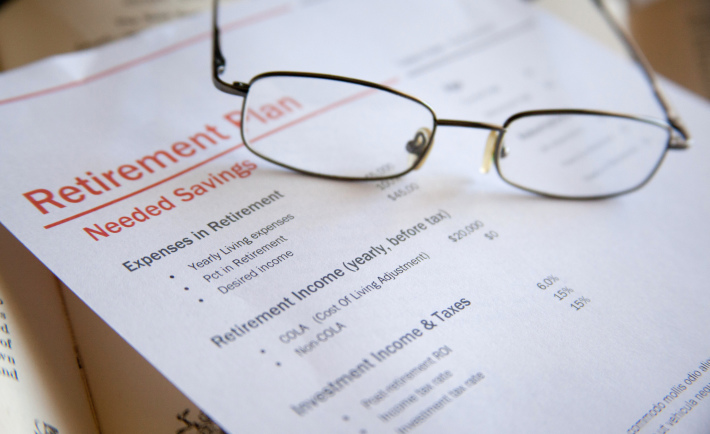
To most people, early retirement would probably be at the age of 55. That’s when you bid goodbye to your tie, suit and briefcase and donned your polo tee and go golfing. You will travel around the world not once in a year but once every few months. That’s the dream retirement for many. Let’s take Tom, a 24 years old who has just graduated from his university. He found a job that pays him an average of $3,600 a month. He is a saver and his monthly expenses adds up to $400 a month. After CPF deduction, that would leave him with around $2,500 a month. Now Tom cracks his head and wonders what would be the best possible way to grow this $2,500 a month.

1. List down and prioritise his financial goals

Listing down his goals give him a clearer picture of what he need to achieve and how to plan for his finances. Tom has goals ranging from short to long term which he wants to achieve.

Short Term (1-5years)

1. Getting married
2. Buying a house

Mid Term (5-15years)

1. Saving for children’s expenses
2. Purchasing a family car

Long Term (>15 years)

1. Children tertiary education
2. Retirement
3. Health expenses

2. Starts budgeting

Short term goals come first and that is something that he needs to set away without taking too much risk. Let’s make the assumption that he will need to accumulate $40,000 in 5 years time to meet his short term goals. He needs to stash away $8,000 a year, not in a bank, but in higher yield assets such as the SGS government bonds or T-bills.

3. Make plans to invest the extra dollars

Many people are risk-adverse and when the word ‘investment’ is mentioned. They shun it because the older generation told them that putting away your money in the bank is the safest and best option. Wait. Best? If you want work to a 9-5 job all the way to 65, then by all means. Otherwise, make your money work harder. A general rule of thumb of investing is do a ‘110 minus your age’ stock-bond portfolio . That is to say Tom should allocate his remaining money into a 86% stocks and 14% bond portfolio. READ ALSO: How to invest in STI ETF? We can’t foresee Tom’s future whether he will be able to rise up in ranks to take home a bigger paycheck, win a lottery or whether the stocks market will go smoothly. So we have to make some assumption of all other things being equal, a 8% growth of $2,500 a month. When he turns 40 and assuming the stock market has not crashed, he would be sitting on a portfolio of close to a million dollar. He could also explore other ways such as investing in dividend yielding stocks or property to generate a passive income.

4. Re-visit his plan and make changes accordingly

As his life stages change, his income and expenses changes and he will need to revisit his strategy to see if it is in line with his retirement goal. The more Tom reduces his expenses, the earlier his retirement would be. Furthermore, as he grows older, he will need to adjust his holding in different assets to minimise the risk exposure.

5. Throwing in the towel and retire

Once Tom has reached his goal, it’s time to consolidate all his assets and starts to calculate if the money and asset he worked all his life for would be able to last him a lifetime. Most financial planners would say you can draw down at 4% – but wait, what if you live longer than expected? Mortality rate in Singapore has been increasing and with better healthcare, your money might run out while you are still around to witness the birth of your great-grandchildren. Aim for the ideal withdrawal rate that doesn’t touch the principal and you will be able to live off with passive income supplement by your CPF and other annuities. Some of you might think that to die with too much money left might be foolish but why not leave a legacy to your loved ones or people whom you care about?

Read More...

Best bank accounts in Singapore

Best Bank Account in Singapore

Hey folks, it’s time to wake your money up!

If you have come to this page looking for the best bank accounts in Singapore that offers the highest interest rate, look no further.

In a low interest rate environment, everyone should aim to put their savings where their money works the hardest. No doubt it cannot beat inflation, but beside being risk-free, it beats putting your money in a biscuit tin or an account that offers a paltry 0.01%.

There are 8 saving and current accounts that make it to the list. Let’s see how they match up.

1. OCBC 360 Account

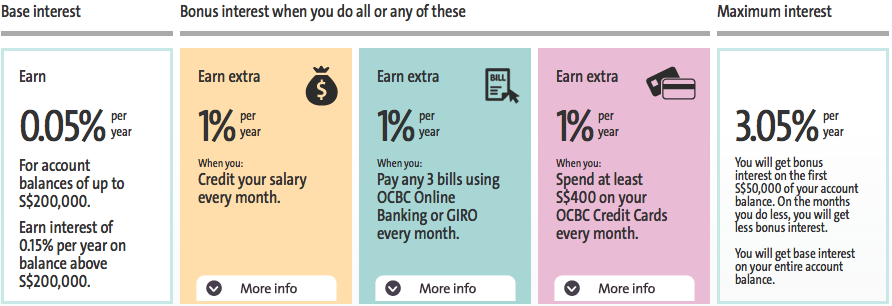
One of the most popular choice among Singaporean would be the OCBC 360 Account as it offers up to 3.05% interest on your saving account.

There is a base interest of 0.05% and an additional of 3% if you fulfil 3 requirements every month: crediting your salary to the account, pay any 3 bills and spend at least $400 on OCBC credit cards.

OCBC-360-Account

2. Citibank InterestPlus Account

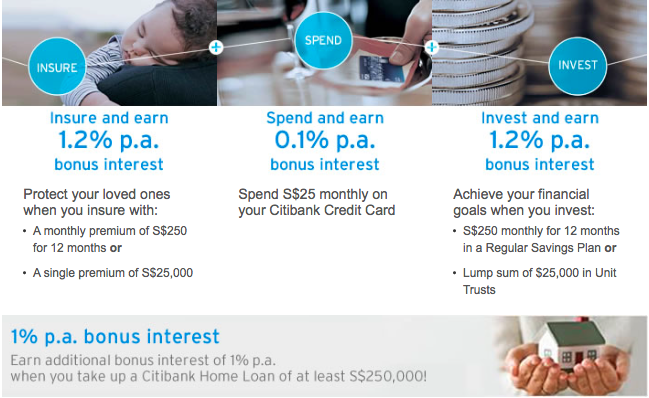
For individuals who are planning to insure and invest can look at Citibank’s InterestPlus Savings account. You can get up to 2.5% bonus interest if you meet the following criteria:

    1. Insure yourself with a monthly premium of $250 for 12months or a single premium of $25,000
    2. Spend $25 on Citibank Credit Card
    3. Invest $250 monthly for 12 months in a Regular Saving Plan or set away $25,000 in Unit Trusts.

Citibank-InterestPlus


3. DBS Multiplier Account

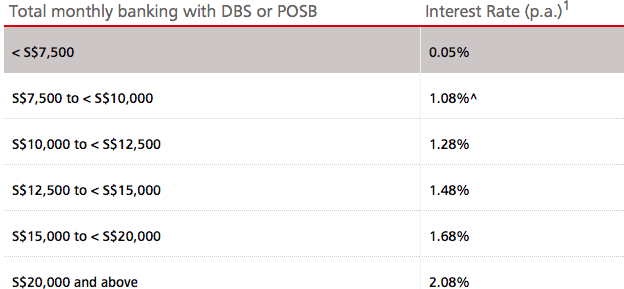
Our local bank DBS has introduced a multiplier account that rewards up to 2.08% interest. This is a multi tier programme where you get higher interest after meeting the minimum required amount for regular banking. Regular banking refers to crediting your salary, shopping with their debit and credit cards, monthly installments of home loans and crediting your investment dividends from your CDP account.

For the different tiers, refer to the screengrab.

DBS Multiplier


4. Standard Chartered Bonus$aver Account

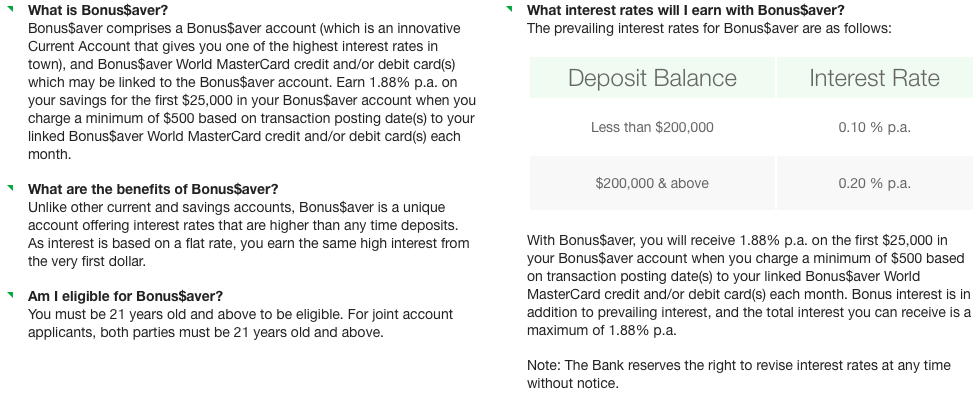
With Bonus$aver account, you can get interest of 1.88% p.a when you charge $500 a month to your Bonus$aver Credit/Debit card. For those who spend at least $500 a month can consider charging them to these cards to enjoy the interest rate. Take note that the interest is only on savings up to $25,000. Any amount more than $25,000 will get 0.1% interest – the same rate applies if you cannot meet the $500 a month spending.

SCB BonusSaver

5. Standard Chartered e$aver Account

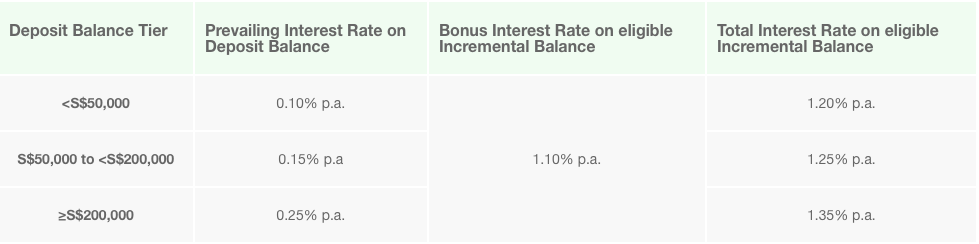
Currently with a limited time promotion until 31 January 2015, you are eligible for an interest rate of up to 1.35%, subject to terms and condition.

SCB-eaver-Accounts-Promotion

Bonus interest is awarded on the incremental average daily balance from October’s average daily balance.

6. Maybank iSAVvy Savings Account

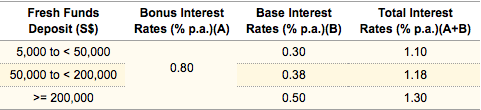
Maybank has a similar promotion as SCB and you can get up to 1.3% interest.

Maybank-iSAVvy-Savings-Account-Promotion

For Maybank, there is a min deposit of $5,000 for incremental average daily balance to be eligible for the bonus interest rate.

7. CIMB StarSaver Accounts

CIMB offers an attractive 0.8% interest rate on their saving accounts. Min deposit is $1,000 and to be eligible for 0.8%, you just need to deposit at least $100/month. If not you will be entitled to 0.5% interest rate – not too bad.

CIMB-StarSaver-Account

8. ANZ Progress Saver Account

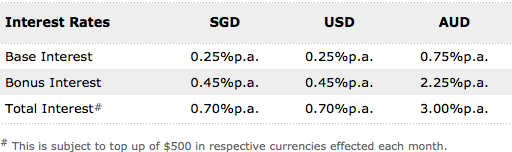
ANZ Progress Saver Account is the next on list. Customers can enjoy up to 0.70% interest rate.

Minimum initial deposit is $5,000 and to be eligible for the bonus interest, just deposit at least $500 a month.

ANZ-Progress-Saver-Account

Read More...