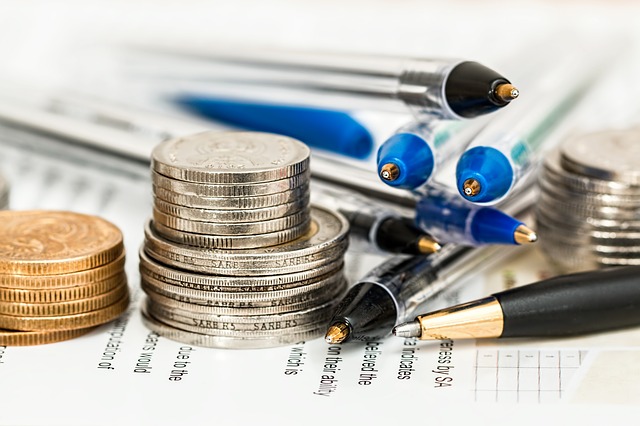
In the daily hustle of the city, being a busy bee is hard work but, that is not an excuse to remain untidy with your finances!
Simply spare at least 20 minutes of your time to manage your own finances with these four ways:
1. IDENTIFY YOUR FINANCIAL VALUES AND GOALS
Without underlying values and goals about money, you would not be able to fully integrate it to your life. Thus, the essential first step is asking yourself: What are the most important things to me (i.e., values) and how do I get there (i.e., goals)?
Develop a habit of financial goal setting to know where you are going and to plan how you can get there. Write down your financial goals with a trusted witness and contemplate the monetary milestone you would like to accomplish in the next 2 months to 2 years. Track down your monthly progress accordingly.
2. TIDY UP YOUR WALLET
Like your study or workspace, you will be able to clear your thoughts better when your wallet is organized and neatly placed. Fill the individual pockets with your bank and identification cards so you can easily take it out when needed. Then, spend a few minutes emptying your wallet of old receipts and other clutter.
3. REDUCE YOUR FINANCIAL ACCOUNTS
In a world filled with a certain bank account card for all your needs, most people have several numbers of bank or credit card accounts. The complication starts when the credit card for travel, for petrol, and for shopping sends bills at the same time. Also, you may have different bank accounts for higher interest, minimal fees, and rebates.
More than being complicated, the constant shuffling between these accounts can get messy. Simplify your life by closing out one account per week or you may consolidate all your accounts online.
4. BUILD AN EMERGENCY FUND
Do you have an emergency fund to protect you from unforeseen events? If you do, it is best to put it on a separate account with an online access so you can easily tap on it if the need rises.
If you do not, the best time to build one is now! Consider joining the 52-Week Money Challenge (available here). The challenge starts off by saving S$1 a week and by the end of the year, you will be able to save up to S$1,378!
Image Credits: pixabay.com (License: CC0 Public Domain)
What better way to usher in the New Year than by making smart financial resolutions to improve your wealth?
1. ELIMINATE YOUR UNHEALTHY HABITS
Unhealthy habits, such as excessively drinking alcohol or smoking tobacco, that you enjoy on a regular basis can not only increase your insurance premiums but also your daily expenses. Another unhealthy habit that may be costing you a lot is regularly eating junk. Junk food is called junk for a reason as excessive consumption can lead to obesity, diabetes, high blood pressure, and so on.
When you decide to stop drinking, smoking, and eating unhealthily this 2016, you will see your bills going down and you will feel improvements in your health in no time!
2. WIPE OUT UNNECESSARY EXPENSES
As you review your annual statement, there is probably an expense or two that you can trim from your budget. Mine is my mobile phone plan. Due to accessible Wi-Fi connection almost anywhere in Singapore, I am able to refrain from using the allotted local calls and SMS on my plan. Yet I am still paying for it. What a waste!
How about you? Go through your past purchases. After seeing the bigger picture, it is time to cut down your expenses. Reduce the unnecessary expenses such as mobile phone plan, designer bags or costly coffee beans and turn a new leaf.
3. BE MORE ECO-FRIENDLY
Fix, refurbish, or recycle your furniture, decor, or appliance that are still in good condition instead of spending money to replace these. As you revamp your stuff, use lighter colored paints to reduce the heat and energy consumption. As you recycle, you may consider turning your old drawer into a shelf. There are many ways to cheaply decorate your home and saving Mother Earth in the process…just keep your creative juices flowing!
4. LOSE WEIGHT
Every January, a huge queue of people flock in fitness studios and gyms. These members soon to disappear as months go by. Instead of wasting your money on costly gym or fitness studio memberships, workout for virtually free at your own home or at the town parks. Do yoga, jog outdoors, run in the stadium, or try any workout routine that you can do for free.
5. TIDY UP YOUR LIFE
Being messy with your space and time can cost you!
For instance, being untidy with your billing statements can result to late payments and penalty fees while being unorganized with your cooking time can result to overspending on take-out food. The list just goes on.
Image Credits: pixabay.com (License: CC0 Public Domain)
It is important to organize your life…have a physical storage for your bills and schedule your tasks. As long as you are on track, you will be able to save!
Frequent bank branch users in Singapore more likely to switch banks
Singapore, 21 December 2015 – The writing is on the wall: consumers in Singapore view having to use bank branches for basic transactions as an inconvenience, which makes them more likely to turn away from their primary bank and flock to more on-demand ways to bank.
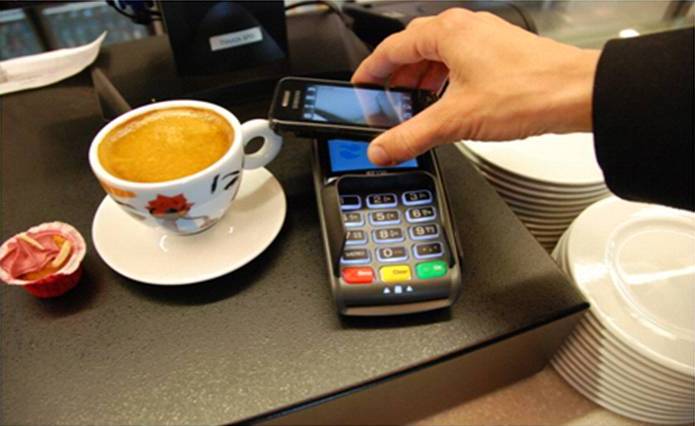
Bain & Company, in its sixth annual report on consumer banking behaviors, Mobilizing for Loyalty, asked which consumers would miss more for a day, their mobile phone or their physical wallet. The survey found mobile reigns supreme, with about 60 percent of the 2,500 Singaporean bank customers surveyed choosing their phone over their wallet. That share climbs to nearly 80 percent in China. Further, the survey revealed that those who rely on mobile and digital channels are 40 percent less likely to switch banks versus those who use mobile rarely. Conversely, those who frequently use a bank branch say they are three-times more likely to switch compared to those who rarely use branches. Yet, even as more banking activities go mobile, a major challenge for banks is identifying the right sequence of moves for delighting customers through a great mobile experience, while funding the investments in digital channels through cost reductions in the branch network.
Bain’s research reveals mobile interactions now exceed online interactions in 10 of the 17 countries surveyed, with the Netherlands and South Korea leading the pack and Singapore not far behind. Meanwhile, Japan and Germany lag well behind, due to the high adoption of ATMs and online banking, which provides less incentive for banks in these countries to invest heavily in trying to convert their customers to mobile.
Overall, banks’ investments in mobile are paying off in greater customer loyalty. Mobile apps used for routine transactions are one-third more likely to delight customers as similar transactions in the branch, whereas a routine branch visit is 2.4 times more likely to annoy – a pattern that repeats across many counties, including the U.S., the Netherlands and South Korea.
“As an example, our experience in the U.S. is that 60-70 percent of branch interactions in a typical bank are bad or avoidable,” said Gerard du Toit, lead author of the research and a Bain partner. “So, most of the time a branch visit results in an inferior customer experience and comes at a higher cost for the bank. Clearly, the branch as currently configured is headed for extinction.”
As such, some banks have been trying to shift routine transactions, such as deposits and cash withdrawals, away from their branches and into digital self-service channels instead, but progress is varied. For example, Mexico has more than six times the number of routine transactions per respondent compared to the Netherlands.
For the average bank, the most critical first step is to focus on improving the mobile experience – make it fast, intuitive, convenient and capable of handling basic needs to delight the customer. In many cases, this means forgoing the website for the mobile app.
“Just because you build a mobile app doesn’t mean customers will come,” said Harshveer Singh, partner in Bain’s Financial Services Practice in Southeast Asia. “Banks need to take deliberate actions to inform customers about the app’s benefits and encourage adoption at every opportunity.”
Next, banks must improve on their product sales capabilities:
More than 60 percent of buyers in Singapore used both digital and traditional channels for their research and purchase.
In Singapore, nearly 14 percent do their product research through mobile, and 14 percent actually buy through mobile.
“To make the product research and purchase experience shine on a mobile device, the products themselves must be reworked to make them easier to understand. The internal processes must also be overhauled to simplify the chain of activities,” said du Toit. “This is essential to stemming the ‘hidden defection’ issue we detailed in last year’s report – more than one-third of existing customers bought a product from a competing bank during the year.”
To succeed in banking, Bain identifies six new capabilities that bank organizations must have:
Extraordinary design discipline, given the small screen, slow speed of accurate typing and impatient users
Radical simplification of products, processes and communications
Personalization powered by good data and analytics so that only relevant information is displayed to the user
Contact methods that allow for anytime, anywhere chat and video calls with fast authentication
Much faster development cycles to keep pace with new functionality and consumer expectations
A new operating model that provides organizational agility, based on breaking down barriers that divide internal departments and a willingness to collaborate externally To receive a copy of the report or arrange an interview with Mr. Singh contact: Susan Renshaw at [email protected] or +65-6228-1094
About Bain & Company
Bain & Company is the management consulting firm that the world’s business leaders come to when they want results. Bain advises clients on strategy, operations, technology, organization, private equity and mergers and acquisition, developing practical insights that clients act on and transferring skills that make change stick. The firm aligns its incentives with clients by linking its fees to their results. Bain clients have outperformed the stock market 4 to 1. Founded in 1973, Bain has 53 offices in 34 countries, and its deep expertise and client roster cross every industry and economic sector. For more information visit: www.bain.com. Follow us on Twitter @BainAlerts.
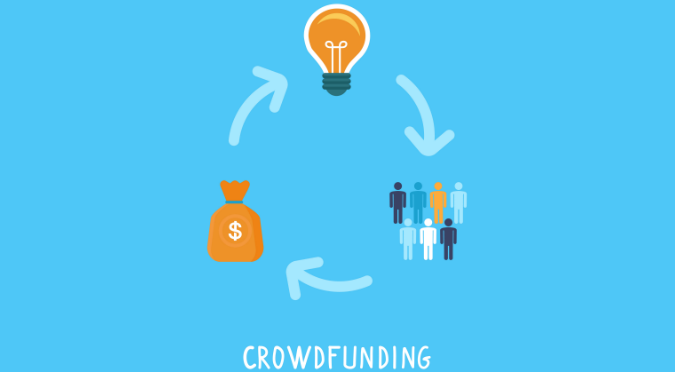
Crowdfunding is a relatively new concept that has rapidly gained popularity in Singapore. It is a means by which a large number of people can finance a business via a platform.
There are four distinct types of crowdfunding, each of which caters to different requirements:
In my years as a consultant, I have advised and been mentored by many brilliant individuals including the CEO of major corporations and household names. Risk / returnratio was always the centrepiece of major decisions. While regulators and financial institutions are taking up more responsibility in the post-crisis world with Dodd-Frank and Basel III, we as individual investors should view investment return with a risk lens too, for risk is the shadow of return, the two sides of the same coin.
Many are attracted by the idea of “guaranteed investment return” or “maximum return minimum investment.” A Google search of these keywords gives us 3.2 million and 216 million results respectively. However, these pursuits are inspirational but not aspirational. In financial markets and many commercial activities, if one wants to achieve higher returns on average, one often has to assume more risk. The key question is then not “How can I make the most return?” but rather “How can I make the most return at a risk I’m comfortable with?”
Four Common Approaches in Risk Management
In the practice of risk management, there are 4 common approaches towards risk i.e., avoid, transfer, mitigate and keep. Most would inadvertently take the approach of avoid or keep i.e., avoid investment risk and not invest at all, or invest and face the full risk. In fact, based on an internal survey Funding Societies has conducted with 500 members of the public, 50% of the respondents across all segments keep their funds in saving accounts and do not invest. 19% of respondents consider returns but not safety of capital as critical investment criteria. Avoid and keep are common not because of ignorance, but because of convenience.
Importance of Diversification
Investing has to be deliberate. For most, we believe the right approach is to mitigate risk by systematically diversifying investment. While a focus strategy may be suitable for experts who dedicate hours into analyzing and monitoring investments, diversification is tremendously valuable for regular investors who prefer to “invest and forget”. Effective diversification is not only about making more investments, but also investing in areas less correlated with each other by geography, industry and asset class etc. This is especially true in a weak economic environment that is fraught with uncertainty.
I have personally invested in equity, investment fund, real estate and alternative investment, with of course always 6 months of savings as contingency. I began with Asia equity and bond investment funds to achieve diversification even with limited capital. As I accumulated more capital, I ventured into US equity and Singapore real estate for further diversification. Diversification has helped me through many financial crises. By strategically allocating funds into a portfolio suitable for me, I only have to check my investments once a month and still enjoy reasonable returns.
P2P Lending Platform – A New Way to Diversify Your Investments
The recent rise in alternative investments such as peer-to-peer (P2P) lending in US, UK, Australia and China provides a new, proven opportunity for higher return and diversification. While higher return clearly comes with higher risk, it is at a level suitable for working professionals like me, especially given the shorter term and hassle-free nature of P2P lending. Investing on P2P lending has become my new favorite. A few P2P lending platforms have since launched in Singapore. An example is Funding Societies that focuses on small-medium enterprise (SME) loans.
Of course, diversification takes capital, cost and effort. Undue diversification could spread us too thin across investments. The key is to select uncorrelated investments. The less correlated the investments are, the better the diversification effect. One may ask: how do we know whether the investments are correlated? Without going into a statistical model or correlation matrix, basic intuition is a good start.
As risk guru Michel Crouhy aptly summarized, “The future cannot be predicted. However, the financial risk that arises from uncertainty can be managed.” We need to be deliberate in our risk / return decisions and be diligent in diversification because if we don’t decide them for ourselves, the market will decide for us.