According to Markit Ltd., Singapore’s 2016 dividend growth forecast is among the worst. On the other hand, the South Korea’s dividend growth forecast is among the best in the Asia-Pacific region. This is with the exclusion of countries such as Australia and Indonesia as they are foreseen to cut payouts.
For those of you who are less knowledgeable about the stock market, a dividend is the payout or the distribution of the company’s earnings to its stakeholders. These are issued as cash, shares of stock, or other properties.
Markit, a global provider of financial information services, based its dividends outlook on what is supposed to be reported in 2016. Thus, the year-on-year comparison is in accordance with the dividends reported in 2015 (FY14 final + FY15 interim) and in 2016 (FY15 final + FY16 interim).
Markit foresees Singapore to distribute S$15.865 billion in 2016 – only greater by 0.3% from last year’s S$15.824 billion. If specials are included, the distribution is predicted go down by 2.5% (S$16.2 billion) compared to 2015’s S$16.6 billion.
Continue to sleep well if you are a stakeholder at Singapore banks because as a sector, it remains to be the highest dividend payers.
Image Credits: Wikimedia Commons
In fact, a Markit analyst said that the three Singapore banks’ (i.e., DBS Group Holdings, OCBC Bank, and United Overseas Bank) contribution to the total dividends increased to 27.2% last year from about 25% since 2011. However, this number is estimated to go down slightly to 27.1% this 2016.
OCBC Bank and DBS Group Holdings are presumed to observe single-digit increases while United Overseas Bank is improbable to pay a special dividend in its final 2015 results. In the past few years, United Overseas Bank has paid special dividends of 5 cents in 2013-2014 and of 10 cents in 2012.
Image Credits: pixabay.com (License: CC0 Public Domain)
Once again, these numbers are solely based on the predictions of Markit and are not entirely carved in stone!
More than just a sparkling indulgence, investing on jewelry is an embedded tradition in many Asian cultures. In fact in Indian and Chinese cultures, jewelry can be given as gifts as individuals approach the marrying age.
To these cultures, investing in gold jewelry is a sound investment. Truly, gold has continued to rise, up to five-fold in a decade, in value despite the worldwide economic slowdown.
However, anyone who is considering jewelry as a means of investment needs to carefully contemplate on its advantages and disadvantages.
Here are some of them:
LABELS
It is not just about what jewelry pieces you buy but where you buy them. Pieces with designer labels are more susceptible to the erosion of value (over time) as you are paying mainly for the marketing costs.
For example, a sterling silver necklace sold by a lesser known retailer in the third world country may cost about S$15 while a sterling silver necklace sold by Tiffany & Co. in the first world country may cost about S$400! They are made of the same material but the branding and craftsmanship attached to it makes the difference.
PORTABILITY
Jewelry is an investment that you can wear. Whether it be gold rings, silver necklaces, and diamond earrings, you can always carry your wealth around wherever you go.
Image Credits: pixabay.com (License: CC0 Public Domain)
PRICES
The craftsmanship can add up to 30% on the price of the actual jewelry pieces. So if you want to benefit from the full price of gold alone, you can invest in products and funds that are associated to gold. For example, you can consider SPDR Gold Shares as they are backed by gold exchange-traded fund.
VINTAGE
Some pieces from the past are still fashionable today. Vintage jewelry from 1920s to 1930s have strong linear designs incorporating diamonds and platinum that can very much look modern!
Furthermore, second-hand jewelry (e.g., at auctions) are less expensive than contemporary pieces as they are not affected by the mark-up of the retailers. If you purchase this from a source that has low costs, it can prove to be profitable to own.
TRADITIONS
As said above, a positive side in jewelry investment is keeping one’s heritage. In fact, India is one of the world’s largest gold market due to the cultural demands during Deepavali and wedding season (i.e.,jewelry may be offered as wedding dowry).
The embedded notion is that jewelry retains (if not increases) its value over a long period of time. Although, this is not always the case.
Image Credits: pixabay.com (License: CC0 Public Domain)
The value of investments and gains can go up as well as down. Sometimes your may get back a value lesser than the amount you have invested. This is why it is recommended that you seek expert financial advice first before making any investment decisions.
Crowdfunding is a relatively new concept that has rapidly gained popularity in Singapore. It is a means by which a large number of people can finance a business via a platform.
There are four distinct types of crowdfunding, each of which caters to different requirements:
In my years as a consultant, I have advised and been mentored by many brilliant individuals including the CEO of major corporations and household names. Risk / returnratio was always the centrepiece of major decisions. While regulators and financial institutions are taking up more responsibility in the post-crisis world with Dodd-Frank and Basel III, we as individual investors should view investment return with a risk lens too, for risk is the shadow of return, the two sides of the same coin.
Many are attracted by the idea of “guaranteed investment return” or “maximum return minimum investment.” A Google search of these keywords gives us 3.2 million and 216 million results respectively. However, these pursuits are inspirational but not aspirational. In financial markets and many commercial activities, if one wants to achieve higher returns on average, one often has to assume more risk. The key question is then not “How can I make the most return?” but rather “How can I make the most return at a risk I’m comfortable with?”
Four Common Approaches in Risk Management
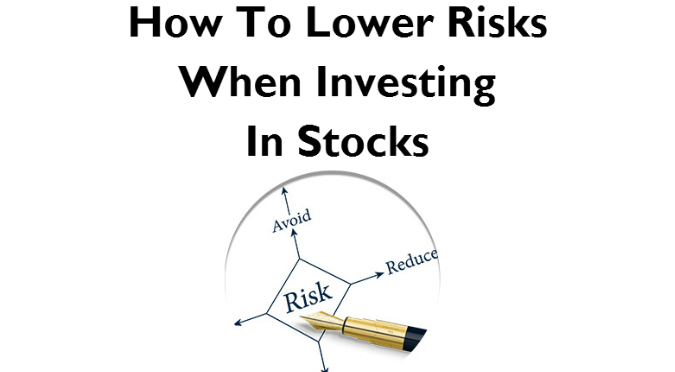
In the practice of risk management, there are 4 common approaches towards risk i.e., avoid, transfer, mitigate and keep. Most would inadvertently take the approach of avoid or keep i.e., avoid investment risk and not invest at all, or invest and face the full risk. In fact, based on an internal survey Funding Societies has conducted with 500 members of the public, 50% of the respondents across all segments keep their funds in saving accounts and do not invest. 19% of respondents consider returns but not safety of capital as critical investment criteria. Avoid and keep are common not because of ignorance, but because of convenience.
Importance of Diversification
Investing has to be deliberate. For most, we believe the right approach is to mitigate risk by systematically diversifying investment. While a focus strategy may be suitable for experts who dedicate hours into analyzing and monitoring investments, diversification is tremendously valuable for regular investors who prefer to “invest and forget”. Effective diversification is not only about making more investments, but also investing in areas less correlated with each other by geography, industry and asset class etc. This is especially true in a weak economic environment that is fraught with uncertainty.
I have personally invested in equity, investment fund, real estate and alternative investment, with of course always 6 months of savings as contingency. I began with Asia equity and bond investment funds to achieve diversification even with limited capital. As I accumulated more capital, I ventured into US equity and Singapore real estate for further diversification. Diversification has helped me through many financial crises. By strategically allocating funds into a portfolio suitable for me, I only have to check my investments once a month and still enjoy reasonable returns.
P2P Lending Platform – A New Way to Diversify Your Investments
The recent rise in alternative investments such as peer-to-peer (P2P) lending in US, UK, Australia and China provides a new, proven opportunity for higher return and diversification. While higher return clearly comes with higher risk, it is at a level suitable for working professionals like me, especially given the shorter term and hassle-free nature of P2P lending. Investing on P2P lending has become my new favorite. A few P2P lending platforms have since launched in Singapore. An example is Funding Societies that focuses on small-medium enterprise (SME) loans.
Of course, diversification takes capital, cost and effort. Undue diversification could spread us too thin across investments. The key is to select uncorrelated investments. The less correlated the investments are, the better the diversification effect. One may ask: how do we know whether the investments are correlated? Without going into a statistical model or correlation matrix, basic intuition is a good start.
As risk guru Michel Crouhy aptly summarized, “The future cannot be predicted. However, the financial risk that arises from uncertainty can be managed.” We need to be deliberate in our risk / return decisions and be diligent in diversification because if we don’t decide them for ourselves, the market will decide for us.
Stock investing is not for everybody. But with a little homework and planning it is possible to select a stock in a manner that reduces your risk and puts you in a position to benefit when its price rises.
There is a great deal of information available on publicly traded companies that can help you decide if its stock is worth buying. But it is a challenge to sift through all the data to arrive at the figures that tell you the real story about its performance and its prospects.