Cut the excuses and unlock success: Tips for moving ahead in 2023

go up and never stop neon sign

The only way to eat an elephant is one bite at a time.

But when it comes to success, it’s easy to forget that saying and get overwhelmed by the size of the goal. Suddenly, the elephant doesn’t seem so manageable after all. Before we know it, we’re making excuses to put off progress.

Well, no more. In this article, we’re going to give you some tips on how to cut through the excuses and start moving ahead in 2023. Let’s get started!

Spotting excuses: What are you telling yourself?

The first step is recognizing when you’re making excuses.

Excuses are just stories we tell ourselves to justify not doing something. So what’s going on? Why are you telling yourself that you can’t do something?

Sometimes, our excuses are fears in disguise. We’re scared to take action because we’re afraid of failing. We’re scared of the unknown. We don’t want to put in the hard work required to achieve our goals.

But once you become aware of your excuses, you can start to ask yourself whether they’re true. Are you too busy or tired? Or are you just making excuses so you can avoid taking action?

Reframing the problem: How can you adjust your mindset?

Changing your mindset is easier said than done.

It’s hard to break old habits and patterns of thinking, especially if you’ve been making excuses for years. But it’s not impossible.

One way to do this is by practicing cognitive reframing. This means becoming more aware of the thoughts that go through your head, and then adjusting them so that they’re more supportive.

For example, if you find yourself saying “I’m not good enough” or “I can’t do this”, try reframing those statements into something more positive, like “I’m trying my best” or “I can do this”.

Another way to adjust your mindset is to change your fixed mindset into a growth mindset. This means taking on a more flexible attitude, and realizing that you’re not born with all the answers—you have to learn and grow to achieve success. With a growth mindset, you’re more likely to take on new challenges and persist even when things get tough.

Find motivation: What’s driving you to succeed?

a motivational quote on the wall

Image Credits: unsplash.com

Now that you’re ready to get moving, it’s time to find your motivation.

For some people, this is easy—they’re driven by a passion for the work they do, or they want to achieve a certain goal. But for others, it can be more difficult to find that motivating force.

If you’re having trouble getting started, try to identify what’s driving you to succeed. What are your reasons for wanting to achieve this goal? Is it the recognition? The money? The feeling of satisfaction you will get when you finish?

Once you know what motivates you, it’s easier to get past the excuses and stay focused on your goal. You can use this information to create a plan and set smaller goals that will help you reach your ultimate destination. And if you ever feel like giving up, remind yourself of what’s waiting for you on the other side.

Break down goals: What small steps can you take to tackle the problem?

If you want to move forward and be successful, you need to learn how to cut the excuses and get down to business.

One way to do this is to break down your goal into small, manageable steps. When you have a huge task ahead of you, it can be overwhelming, and easy to make excuses. But if you break it down into smaller steps, you can focus on one thing at a time and make progress without getting bogged down.

For instance, let’s say you want to start your own business. That’s a big goal that can seem insurmountable. But if you break it down into smaller steps, it becomes much more manageable. You can start by doing some research, then creating a business plan, and then start scaling. By taking small steps, you will be able to achieve your big goal without getting overpowered.

Keep track of success: Celebrate small wins and use them as fuel

You may not always feel like you’re making progress, but trust us, you are.

And it’s important to keep track of your successes—no matter how small they may seem—so that you can use them as fuel to keep going.

One way to do this is to express gratitude for your wins, however small. When you take the time to celebrate your accomplishments, it stimulates your brain’s reward center and gives you a sense of satisfaction that can help motivate you to keep going.

So take a few minutes each day to write down what you’re grateful for. It could be something as simple as finishing a task or making 1% progress. Whatever it is, acknowledging your successes—however small they may be—is a crucial step in moving ahead.

Talk it out: Connect with an accountability partner

colleagues in a discussion

Image Credits: stylist.co.uk

If you’re serious about making progress, find someone who can help you stay on track. Here’s why an accountability partner is so important:

  • They keep you accountable.

It’s easy to make excuses when we’re the only ones holding ourselves accountable. But when someone else is watching over us, we’re more likely to follow through.

  • They offer a different perspective.

When we’re stuck in our heads, it’s hard to see things clearly. But when we talk to someone else, they can offer a different perspective that we might not have considered.

  • They help you see your blind spots.

We all have them—the things we can’t see about ourselves because we’re too close to the situation. An accountability partner can help you identify these blind spots so you can work on them.

Every day we are confronted with tasks that require effort. Whether it’s getting out of bed early to start your day, going to the gym, or sitting down to work on a project, there will always be moments when it’s easier to make excuses. And that’s okay. What’s crucial is that you don’t let the excuses win. Aim to move forward at least 1% each day. You got this!


Read More...

Picking the right person: A guide for promoting employees

woman receives a praise in the office

You’re a boss, and one of your top priorities is to promote the right people to the right positions.

But before you promote someone, there are a few things you need to consider. In this article, we will discuss the key factors to look for before promoting an employee. We will also provide some tips on how to promote employees in a way that benefits both them and your business.

How to evaluate employee performance

Promoting someone is a big decision—and one that can have a significant impact on your business. So how do you go about evaluating employee performance?

The best place to start is by looking at the qualities that are essential for a managerial position. Are they articulate? Are they able to take initiative? Can they handle stress? Do they have a good work ethic?

You also want to be on the lookout for employees who are proactive and take the initiative to go above and beyond their job duties. These are the employees who will help your business grow and thrive.

And finally, subtly ask exploratory questions to get a sense of what the employee wants from a managerial position. This will help you gauge their interest in moving up the ranks.

Is the employee ready for a leadership role?

Assess their readiness.

This includes looking at whether they can manage themselves, whether they’ve begun to change their vocabulary from “mine” to “ours,” and whether they have a proven track record of problem-solving.

Giving employees room for growth and development
a seminar presentation

Image Credits: unsplash.com

When you promote an employee, you’re allowing them to grow and develop their skills.

Remember, a talented employee who isn’t allowed to grow will eventually move on to a company that will.

There are a few things you can do to encourage employee growth and development:

  • Reward and recognize exceptional work. This will motivate employees to continue working hard and strive for excellence.
  • Keep employees engaged by providing continuous feedback. This will help them understand what you’re looking for and what they need to do to improve.
  • Implement processes to evaluate the strengths and weaknesses of employees. This will help you identify any areas that need development, and provide employees with the tools they need to grow professionally.
Training and mentoring new team leads

Do they know how to manage a team? Do they understand what their new responsibilities will entail?

If not, you need to provide them with a mentor who can help guide and support them as they transition into their new position. Another option is to send them on training courses so they can learn the skills they need to be successful.

When looking to promote an employee, assess their strengths and weaknesses to determine if they are the right fit for the job. In addition, it is crucial to provide employees with the necessary training and resources to help them succeed in their new roles. By following the abovementioned tips, you can help ensure a smooth transition for both your employee and the company.

Read More...

Sad to Return to Work? Toxic Positivity Says You Need to Feel Blessed!

The longer our time off work is, the more common it is to feel upset about returning. As we return to work after the long Yuletide season, our routine will start to change. Humans experience the most comfort with what is known and a routine of being at home or being away from work becomes our normal. Feeling nervous or discontent about returning to work after a break of one week or more is not necessarily concerning! It is more likely human nature.

As you enter the halls of your office, a co-worker may tell you to “bring good vibes only” or “feel blessed that you have work”. It is upsetting to hear that “be positive” remark when you know that you are having a difficult day. You are in the presence of toxic positivity at work. Toxic positivity comes when you are actively minimizing or invalidating negative emotions.

A study showed that more than 75% of respondents in a survey by Science of People said they “sometimes, often, or very often ignore their emotions in favor of being happy.” An example of toxic positivity in the workplace is being told that you need to “look at the brighter side” or to “just stay positive” despite not getting the promotion that you worked hard for. Have you experienced these? Does your workplace value positivity to the extent that it turns toxic?

Toxic positivity at its worst can negatively impact engagement and productivity, diminish trust, and damage company culture.

#1: INCREASED BURNOUT

Toxic positive increases burnout, which is exacerbated by emotional labor. Emotional labor occurs when you are feeling obligated to express an emotion that you are not actually feeling.

#2: LOSS OF TRUST

Invalidating the emotions of the employees or minimizing their prowess can cause loss of trust and create an avoidant work culture.

#3: BLOCKED MINDFULNESS

When you cannot even name what is happening to you, you cannot start the process of analyzation. You will not be able to process your emotions. It not only affects your mental health, but also your overall well-being. Toxic positivity blocks mindfulness, because you cannot accept what is happening in the present.

#4: UNSAFE SPACE

If you do not feel comfortable telling each other your feelings when something is not functioning properly, you may not feel that the space is safe. Is it time to turn the culture upside down to create a new level of emotional openness?

#5: UNQUESTIONABLE TOXIC POSITIVITY

Organizations should ask themselves the following queries to identify if toxic positivity is present:
a. Are employees allowed to change or challenge the culture?

b. Are employees allowed to express concerns or reservations during meetings?

c. Is this team allowed to play the role of devil’s advocate?

d. Are your employees expected to say yes or to agree all the time?

Image Credits: unsplash.com

Optimism is healthy. However, you need to ensure you are not being positive at the expense of the truth. Leaders should encourage openness and honesty at work. Employees will follow soon. Practice emotion-sharing exercises at meetings to foster more understanding and ignite cohesion between co-workers!

Sources: 1 & 2

Read More...

Take control of your business by understanding and improving your sales conversion rate

woman making a purchase online with her credit card

You may have the best product or service in your industry, but if no one is buying it, you’re not going to make any money. The fact is, most businesses could do more to improve their sales conversion rate.

What is a sales conversion rate, you ask? In its simplest form, it’s the percentage of people who visit your website or come into your store and then buy something. In other words, it’s how well you’re turning browsers into buyers.

If you’re not happy with your current conversion rate, don’t worry—we’re going to show you how to improve it. We will start by explaining what influences a sale, then give you some tips on how to increase your conversion rate. Let’s get started!

Analyzing your sales funnel

Before you can start improving your sales conversion rate, you need to understand where it stands now. This means taking a look at your entire sales funnel and analyzing every step of the user journey.

This starts at the top of the funnel, where you’re capturing leads. Are you capturing all the leads you could be? Are you using effective lead capture forms and techniques? Are you segmenting your leads correctly so that you’re targeting the right people?

Once you have their contact information, are you then providing them with compelling content that entices them to convert? Is your content relevant to their needs? Is it helpful? Is it engaging?

Once they’ve been convinced to become customers, are you making it easy for them to purchase? Are your checkout processes smooth and simple? Are you providing them with all the details they need? Are you offering them incentives to buy?

Start by analyzing your sales funnel and making changes where necessary. The more effectively you can guide potential customers through your sales funnel, the more likely they are to convert.

Optimizing your leads & reviews
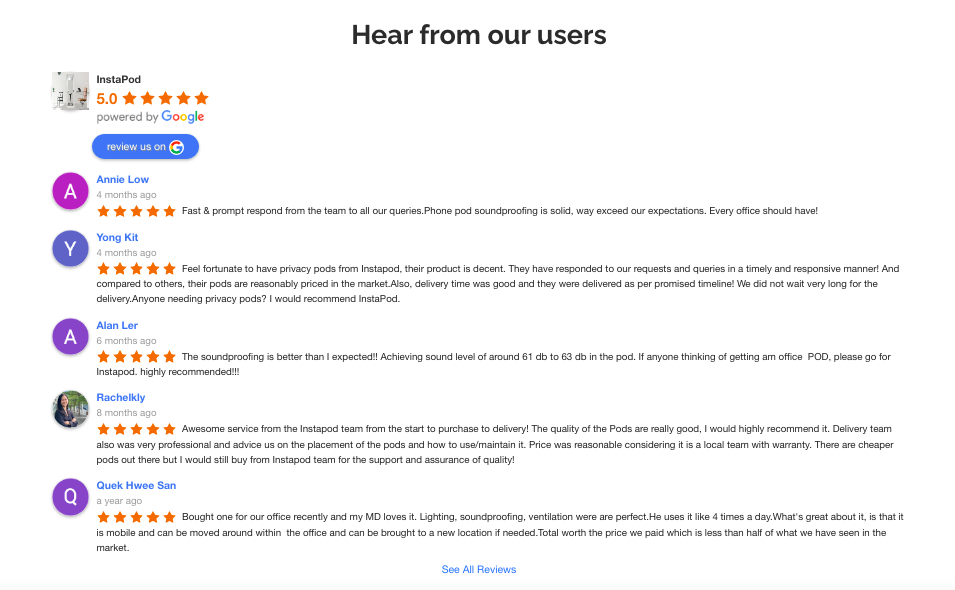
user reviews

Image Credits: instapod.com.sg

When it comes to optimizing your sales conversion rate, there are a few things you can do to improve your chances of making a sale.

Narrowing down your leads is one way to improve your results. By targeting only those most likely to buy from you, you’re eliminating the need to convert those less likely to buy. This makes the process easier for both you and your customers.

Another way to improve your conversion rate is by adding an exit-intent popup. This will give customers one last chance to consider buying before they leave your site. And if they don’t buy, it’s still a great way to capture their information and follow up with them later.

Finally, building trust with your customers is key. Showcasing social proofs, such as customer reviews and testimonials, is a smart way to do this. This helps create a sense of authenticity and builds confidence in your brand.

Enhancing the customer experience

Another way to increase your sales conversion rate is by giving your visitors a personalized experience. You can do this by tracking their behavior on your website and offering them content that’s relevant to their interests.

Also, focus on providing top-class customer service. This means being responsive to customer inquiries and concerns, offering a hassle-free returns policy, and providing additional details to product descriptions.

Utilizing AI & automation to increase conversion
a white robot

Image Credits: unsplash.com

If you’re not utilizing AI and automation to increase your conversion rate, you’re seriously missing out. Here’s why:

  • AI analytics unlock robust customer data. It provides insights into customer behavior that would otherwise be hidden. This data can be used to improve your marketing and sales strategies, and ultimately increase your conversion rate.
  • Automation enables businesses to focus on more essential things. By automating repetitive tasks, businesses can concentrate on providing exceptional customer experiences. And we all know those happy customers are more likely to convert.

So if you want to take control of your business and increase your sales, utilizing automation and AI is the way to go.

You could be leaving money on the table by not optimizing your sales conversion rate. Don’t be content with merely increasing traffic to your site—you need to make sure those visitors are turning into paying customers. If not, you’re just wasting your marketing spend.

Read More...

Know your audience: How to establish sticky brand loyalty

retail store

When it comes to establishing sticky brand loyalty, it’s all about knowing your audience.

That may sound obvious, but it’s something a lot of entrepreneurs struggle with. They create a brand that doesn’t match the needs or interests of their target market and then wonder why their efforts don’t result in customers who stick around.

If you’re looking to create a brand that inspires loyalty, you need to start by getting to know your target market inside and out. Ask yourself questions like: What are their pain points? What do they care about? Once you have a good understanding of what makes them tick, you can start creating messaging and marketing that resonates with them.

Knowing your target audience

Do you know who your target audience is?

If not, you need to do some in-depth market research to figure it out. You might be targeting the wrong people, or you might not be targeting them in the right way.

Once you know your target audience, geo-target them. This means tailoring your message to specific locations and demographics. If you want to build sticky brand loyalty, speak their language and understand their needs.

Don’t try to appeal to everyone. It’s impossible, and it won’t result in anything but a watered-down message that no one will care about. Narrow down your target audience and focus on reaching them effectively.

Focusing on touchpoints with your customers

What do we mean by this?

Well, every interaction your customer has with your brand is a touchpoint. This can be anything from seeing your advertising to using your product or service and interacting with customer service.

It’s essential to create a strategy that acknowledges these different touchpoints and rewards customers for their loyalty. For example, you might offer a discount on future purchases for customers who have signed up for your mailing list or send them a special offer for making X purchases in a month.

The key is to put yourself in your customers’ shoes and think about what would make them loyal to your brand. What would make them content? What would make them feel appreciated?

Developing an effective customer service strategy
interacting with the customer

Image Credits: unsplash.com

Think about your favorite brands.

Odds are, you’re incredibly loyal to them. Maybe you even brag about them to your friends. Why is that? What do those brands have that others don’t?

One key factor is often an excellent customer service strategy. When you’re focused on providing top-notch customer service, it shows that you care about your customers and their experience with your brand. And when customers feel appreciated and valued, they’re far more likely to stick around.

That’s why it’s wise to track customer service and loyalty metrics. By measuring how well you’re doing in this area, you can identify areas for improvement and continue to provide the best possible experience for your customers.

In addition, make sure your branding aligns with your values. When customers can see that you stand for something they believe in, they’re more likely to want to stick with you. Finally, appeal to their emotions. Creating an emotional connection with customers is a powerful way to build loyalty.

Approaches for building a community around your brand

Here are a few things you can do to get started:

  • Incentivize community engagement. If you want people to participate, give them a reason to. This could be in the form of discounts, exclusive content, or early access to new products or features.
  • Measure community success. Keep track of things like engagement rate, number of new members, and community sentiment. This will help you identify what’s working and what’s not.
  • Regularly engage with your brand’s community. Show them that you care about what they have to say. Respond to their questions and comments, and solicit feedback regularly.

When it comes to sticky brand loyalty, it’s all about understanding your target market and giving them what they want. This means putting your customers first and always striving to meet their needs. By creating a strong connection with your customers, you can build a loyal base of supporters who will stick with you through thick and thin. So don’t be afraid to get personal and get to know your customers on a deeper level. The more you know about them, the easier it will be to give them what they want and keep them coming back for more.

Read More...