

6 Times When Bigger Isn’t Always Better

Not everything in life needs to be big. Sometimes, reaching a certain level of height can drain your savings and become destructive to your lifestyle. Society may market the statement “bigger is better”. We seem to be obsessed with having tall buildings, busy airports, or large homes. This obsession with growth applies to businesses too.

Growth is not always good for an entrepreneurial venture. To survive and thrive as a growing business, entrepreneurs must change their business strategies and improve the way they run their business. If they do not change the way they run things, the odds of the business surviving the trials of growth are not very good.

Let this article illustrate the times when bigger is not always better.

#1: IN GROWING YOUR BUSINESS

If you grow your business solely based on your aspirations, you can create a business that is an intentional reflection of the lifestyle you desire. Remember that success in life should be so much more than simply growing a company and making money. Creating redundancies and having unnecessary complexities are just some of the consequences of growth.

When traditional large companies have a problem, they have to hire more people and build complex infrastructures to support more employees and processes. Thanks to the opinions and demands from board members, investors, and other departments, growth makes it increasingly challenging to get simple things done efficiently.

#2: IN SELECTING YOUR PROJECTS

Since you aim to be the biggest firm in Singapore, you tend to accept all the projects that come your way. One advantage of being small is having more freedom and flexibility in your work. As a small company, you are not enveloped with expectations and overhead. In contrast, bigger companies need to hustle to thrive and survive.

#3: IN INVESTING ON PRIVATE EQUITY FUNDS

When it comes to fund size, bigger is not always better. Higher fees put more money in the managers’ pockets, but that does not guarantee that investors share in the upside. Expectations for larger returns increase as investors pay more in fees. However, larger funds do not necessarily bring in larger returns.

#4: IN RENOVATING YOUR HOME

A bigger home means you must spend more time and money on renovating and maintaining it. By revamping the existing space, you will be responsible for the cost of changing the structure to suit your needs. You will also be responsible for upgrading the existing home to follow the current health and safety codes. Your budget will depend on how extensive the renovations are. Generally, the older the building, the more it will cost you to renovate.

#5: IN BUILDING YOUR WEALTH

Putting a large amount of money in your savings account may seem like the most practical thing to do. However, money held in savings accounts has not grown much in the previous years due to historically low interest rates. With inflation running high, your savings are at risk of losing value in “real” terms as you will be able to purchase less with your money.

For instance, inflation averages 3% over the next 5 years. What costs you S$1,000 today would cost you S$1,159.27 in the year 2026. Putting S$1,000 in your savings account today with 0.5% interest will earn you S$25.25 over the same period. Thus, you will inevitably lose about S$134.02.

#6: IN KEEPING UP WITH OTHERS

“The big question about how people behave, is whether they’ve got an inner scorecard or an outer scorecard. It helps if you can be satisfied with an inner scorecard.” – Warren Buffett

Aiming for greater things just to keep up with the success of others is harmful to your wellbeing and your wallet. You can be anything, but you cannot be everything. When we compare ourselves to others, we often compare their best features against our average ones. The unconscious realization that we are not better than others can become self-destructive.

Image Credits: unsplash.com

Instead of aiming to have the biggest funds, grandest home, and largest projects, you can realistically push for what works for you best!


Sources: 1,2,3 & 4


Read More...

Grocery Shopping Mistakes That Might Be Keeping You Poor

Championing your grocery runs takes experience and skill. As a young adult, you may encounter challenges and make shopping mistakes along the way. As you become more experienced, you will be able to pick the right items while trying to save money.

From buying only name-brand products to buying fruits that are out of season, here are some supermarket mistakes that are slimming your wallet.

#1: YOU ONLY GET NAME-BRAND PRODUCTS

Say you enter the halls of the grocery and find countless options in the aisles. Keep your eyes peeled on the products in the topmost or lower shelves. These shelves often stock up on generic or store-exclusive products. You can get similar-quality products for a fraction of the price when you do not snob these generic products. Brand does not always equate to quality.

#2: YOU DO NOT CHECK THE PRICE PER KILO

When you are buying fresh produce, a good indicator of value for money is the price per kilo on its label. Do not always presume that loose produce is the best option. Sometimes, packed fruits and vegetables are cheaper. Get the best deal every time you shop by getting into the habit of comparing loose produce to different packaging sizes.

#3: YOU OFTEN BUY THINGS THAT ARE OUT OF SEASON

Various vegetables and fruits are less available during certain times of the year. The shortage of supply influenced by the high demand hikes up the price in the supermarkets. When this happens, you will be paying more. Keep track of what is in and out of season through helpful charts. Not only will the produce be tastier, but it will be cheaper too!

For instance, blueberries can cost up to S$10 when it is off-season compared to the price of around S$5 when they are in season. During the off-season, you can look for canned substitutes such as peaches and pineapples.

#4: YOU TEND TO IGNORE THE SELL-BY DATE

Do not pick up the first packet of meat you see, as tired as you might be. Inspect the food first, before leaving the store. Visible brown spots are telltale signs that the meat is about to go bad. Check the sell-by date too. You do not want to waste your money on meat that is about to reach the end of its shelf life.

#5: YOU IGNORE THE FREE SERVICES

Did you know that some supermarkets provide free services such as descaling and filleting? If you are a newbie cook or you just do not have a good handle on fish, it is best to take advantage of the free services offered at the supermarket. Otherwise, you will ruin a good fish.

#6: YOU GO TO THE STORE WITHOUT A LIST

Making a meal plan for the week will help you reduce your waste and encourage more savings. Make a list before you visit the nearest supermarket. Remember to check what is available in your own home too before you start planning what you are going to bring home.

#7: YOU BOUGHT MEAT FIRST

The longer the amount of time your meat spends in room temperature, the higher the chances of bacteria growing on it. When there are more bacteria on the meat, its lifespan becomes shorter, even if it is kept in the fridge. So, if you have an extensive list of items to grab, let meat be the last item before heading to the cashier.

#8: YOU SKIP PRODUCE WITH SPECKS OR SPOTS

The appearance of fresh produce is often manipulated by manufacturers to make it look more attractive to consumers. When fresh produce looks unnaturally spotless, it is usually because of the wax or pesticides that make them look fresh and shiny. Avoid these chemicals by embracing fruits and vegetables with natural spots or specks.

#9: YOU FORGET ABOUT THE DIFFERENCES IN PACKAGE SIZING

Many people go through the supermarket aisles and only look at the prices. While it is an excellent idea to pay attention to the price tag, you should also consider the size of the products that you are purchasing.

While one item on the shelf may be cheaper, due to packaging, you may get less product on a similar item that only costs a few cents more. When you are aware of the package price and size, you can make a more informed decision. Spend more money on things that will actually last longer.

#10: YOU TEND TO BUY THINGS THAT GO BAD QUICKLY IN BULK

Coming inside the grocery store with a list in hand does not always end up the way you want it to. Even experienced grocery shoppers buy too much of what they need. When it concerns highly perishable goods (e.g., strawberries, broccoli, and spinach), buying in bulk often results in food wastage. Items tend to go bad before we have a chance to consume them.

Although it is tempting to buy more than what you need to get the sweet deal of 10 for S$10, avoid unnecessary spending and stress. This does not apply to parents who have a huge family with many mouths to feed.

#11: YOU DISREGARD THE COST PER UNIT

Cost per kilo and cost per unit are important in making informed decisions. When we think of bundles, we usually associate getting more items for an affordable price. However, this is not always the case! Compare bundles with standalone items to get your money’s worth.

For instance, you are buying cartons of juice.

Image Credits: unsplash.com

2 cartons of 275ml juice cost S$5, which totals to about S$0.009/ml
1 carton of 500ml juice costs S$3.50, which totals to about $0.007/ml

The difference between these prices may seem minute, but it can affect your savings in the long run. Remember to check the price of the item versus its quantity. Additionally, you have to compare the prices across the available brands. These steps may take time, but your wallet will surely thank you later.

Sources: 1, 2, 3, & 4

Read More...

Cross Island Line Phase 1 Targets to Be Completed by 2030

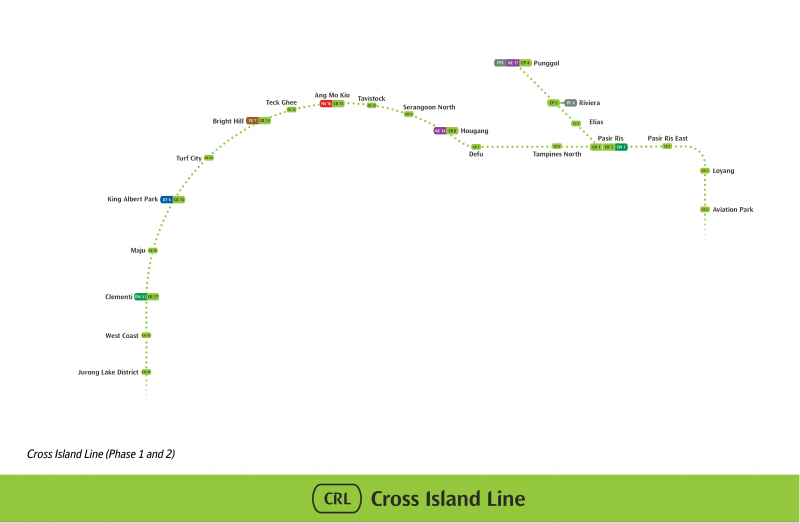
On January 18, the construction of the Cross Island Line (CRL) Phase 1 began. It is the country’s eighth MRT line. The interchanges for Phases 1 and 2 will include Hougang on the North-East Line, Ang Mo Kio on the North-South Line, Bright Hill on the Thomson-East Coast Line, Pasir Ris and Clementi on the East-West Line, and King Albert Park on the Downtown Line. The details for Phase 3 of the CRL will be released later.

According to Land Transport Authority, CRL sets a record as the longest fully underground line.

“Our eighth MRT line, the Cross Island Line will be our longest fully underground line at more than 50 kilometers long. It will serve existing and future developments in the eastern, western, and north-eastern corridors, connecting major hubs such as Jurong Lake District, Punggol Digital District and Changi region.

When operational, it will have the highest number of interchange stations, with almost half the stations on the line being linked to existing rail stations. This means more alternative travel routes to get to your destination.”

The 29-kilometre-long Phase 1 of the CRL will include 12 stations from Aviation Park to Bright Hill. This will be beneficial for the residential and industrial areas such as Tampines, Pasir Ris, Defu, Hougang, Serangoon North, and Ang Mo Kio. It is estimated that more than 100,000 households will be served from Phase 1 of CRL. Furthermore, common recreational spaces such as Changi Beach Park and Bishan-Ang Mo Kio Park will become accessible through public transportation. Construction for Phase 1 of CRL is targeted to be completed by 2030.

Image Credits: lta.gov.sg

The second phase is approximately 15 kilometers and comprises six underground stations such as Turf City, King Albert Park, Maju, Clementi, West Coast, and Jurong Lake District. The Environmental Impact Study for Phase 2 of CRL has been completed and reports are made available.

The construction works for CRL – Punggol Extension are expected to start by the end of 2022 and targeted to be completed by 2032.

Transport Minister S Iswaran highlights that this massive project is not without its challenges as its construction will “test the professional mettle of our engineers and all our partners”.

He added: “That means having a tunnel that goes through a wide variety of soil conditions at different stretches, ranging from soft marine clay to extremely hard rock.” Special machines and added precautions will be needed to ensure the safety of the workers and the stability of the ground.

Rail expansion is a key thrust in Singapore’s comprehensive effort to enhance its transport system – from the first to the last mile, said the transport minister. The CRL is set to improve the lives of its residents and workers nearby. It also gives people access to the beautiful attractions that they offer.

Let’s see what CRL offers in the year 2030!

Sources: 1 & 2

Read More...

Work Efficiency Tips for People with ADHD

People with attention deficit hyperactivity disorder (ADHD) can experience different challenges at work. These challenges include struggling to finish tasks, difficulty in prioritizing assignments, and feelings of boredom.

Pinpointing effective strategies to help you cope with these challenges can greatly impact your work success and overall happiness.

#1: TIME YOUR TASKS

Use a timer to adjust the schedule of each work task. Be realistic about the time you need to accomplish something. Plan for urgent tasks and prioritize as some things take longer than you think. For some people, thirty minutes of work followed by a 10-minute break is beneficial. For others, a shorter work or break period may work better.

#2: PREPARE YOUR STATION

Prepare your workstation to stimulate concentration. A conducive working station looks different for everyone. Personally, I prefer working in a quiet area with a comfortable and a table. Do you prefer to work with the blinds half open or closed? Do you prefer to be sitting on a pillow or a hard bench? Prepare your environment for focus.

#3: START WITH THE FUN

Do the interesting tasks first. Once you get the fun stuff done and have your dopamine high, your body would want more things to be accomplished. This will lead you to finishing the rest of the uninteresting tasks.

#4: HAVE BREAKS

Give yourself a transition time between tasks. For mentally challenging projects, you can set a 10-minute break to take a walk or to sip a cup of joe. Use this time to psych yourself up for the next task on your to-do list.

#5: AVOID MULTITASKING

Multitasking hurts productivity and causes people to lose time switching between tasks. This statement pertains to employees with or without ADHD. Staying focused on a task is necessary to get it done. If you frequently multitask, you will have a tougher time completing the necessary tasks. Do things one at a time.

#6: SPLIT COMPLICATED TASKS

Adults with ADHD tend to have difficulty with long, multi-step tasks. For complicated tasks, you can split it into manageable chunks. Break the large tasks into smaller steps that are not as intimidating. This will help you keep up your momentum as you focus on the next doable step.

#7: LIMIT DISTRACTIONS

While you are at work, try to limit the distractions. Request a private space in the office and shut the door to block out distractions. If this is not possible, you can politely ask for your spot to be placed away from the main work area. Of course, these options are not always available.

#8: SEEK SUPPORT

A supportive co-worker or an understanding manager can help you stay on task and be your source of support. Some people have found it helpful to share information about ADHD to their employers. Sharing your condition and seeking help can make work more successful.

Image Credits: unsplash.com

Boosting your focus at work often involves a bit of experimenting. Keep track of which strategies you are using and monitor your progress. Should things get increasingly difficult you can seek the help of a mental health professional to manage your symptoms.

Sources: 1 & 2


Read More...

When to Bypass an Inefficient Boss

Chain of command exists in most organizations to ensure accurate communication, proper allocation of time, and orderly business operations. The entire business can crumble when the chain of command is broken.

Ideally, everyone from the top down will adhere to the designated chain of command. However, there are instances when individuals will bypass the chain of command and initiate communications with people above or below them.

In recent years, the chain of command has been challenged by Tesla CEO Elon Musk who sent an e-mail to his workers. His email is as follows:

“There are two schools of thought about how information should flow. By far the most common way is chain of command, which means that you always flow communication through your manager. The problem with this approach is that, while it enhances the power of the manager, it fails to serve the company.

…Anyone at Tesla can and should email/talk to anyone else according to what they think is the fastest way to solve a problem for the benefit of the whole company. You can talk to your manager’s manager without his permission, you can talk directly to a VP in another dept, you can talk to me, you can talk to anyone without anyone else’s permission. Moreover, you should consider yourself obligated to do so until the right thing happens.”

This email challenges traditional organizations that rely on the chain of command to process information efficiently. Furthermore, it allows flexibility and creativity to flow, which intends to arrive at the best solution to the problem.

When there is a need to bypass your (inefficient) boss, here are some steps you may take:

#1: TALK TO YOUR BOSS

Give your immediate supervisor the opportunity to address your workplace concerns or issues before talking to the upper management. Your supervisor will appreciate the professional courtesy, which can help build a cohesive team. Ensure that all communication will be in the form of email or memo so that you can both be acknowledged and protected.

#2: DISCUSS POSSIBLE WORKPLACE ISSUES DURING ONBOARDING

During the onboarding process and periodically thereafter, you can discuss the workplace issues and concerns to the Human Resources Department and your immediate supervisor. This will help address the situation/s at hand.

#3: BROADEN YOUR NETWORK

Broaden your strategic alliances by seeking out the help of the organization’s “movers and shakers”. Shared collaborations can exist between you and them.

#4: BE MORE VISIBLE

Make an effort to get noticed in your organization. For instance, you may sign up for your office’s speaking engagements. Doing this will help create a raised profile for yourself, which can influence your credibility once there is a need to communicate a serious matter.

Image Credits: unsplash.com

If your boss is holding you back at work and is dominating your every move, you would want to speak up. Some bosses are ego-driven and like nothing better than to see their employees take the back seat to relish the rewards of other people’s achievements. However, taking the issue to the upper management can be considered as bypassing your boss.

Breaking the chain of command can create confusion, conflict, and chaos. Remember to handle everything respectfully and professionally to ensure that you are doing what is best for you and the company.

Sources: 1, 2, & 3

Read More...