5 Must-Visit Bars that Shape Singapore’s Nightlife

From speakeasies hidden behind coffee counters to vintage-inspired lounges filled with curiosities, the country’s bartenders are embracing both artistry and playfulness in equal measure. On that note, here are 5 standout destinations redefining what it means to go out for a drink in the Lion City.

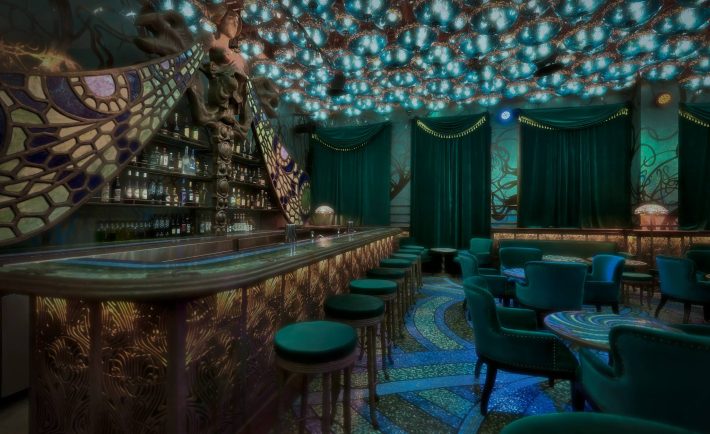
Tucked inside Vibe Hotel Singapore Orchard, is the whimsical Dragonfly Bar. It’s a jewel-box lounge inspired by its Hong Kong counterpart. Walking in feels like stepping into a fairytale, complete with an iconic glass dragonfly centerpiece that glows under moody lights. The menu draws from the principle of cause and effect, beginning with timeless classics before progressing to the team’s own original creations that showcase the skill and imagination of its bartenders. With a focus on low ABV cocktails and an atmosphere that blends elegance with intimacy, Dragonfly Bar is quickly becoming a favorite for those seeking artistry in a glass. Visit its location at 24 Mount Elizabeth, #01-05, Singapore 228518.
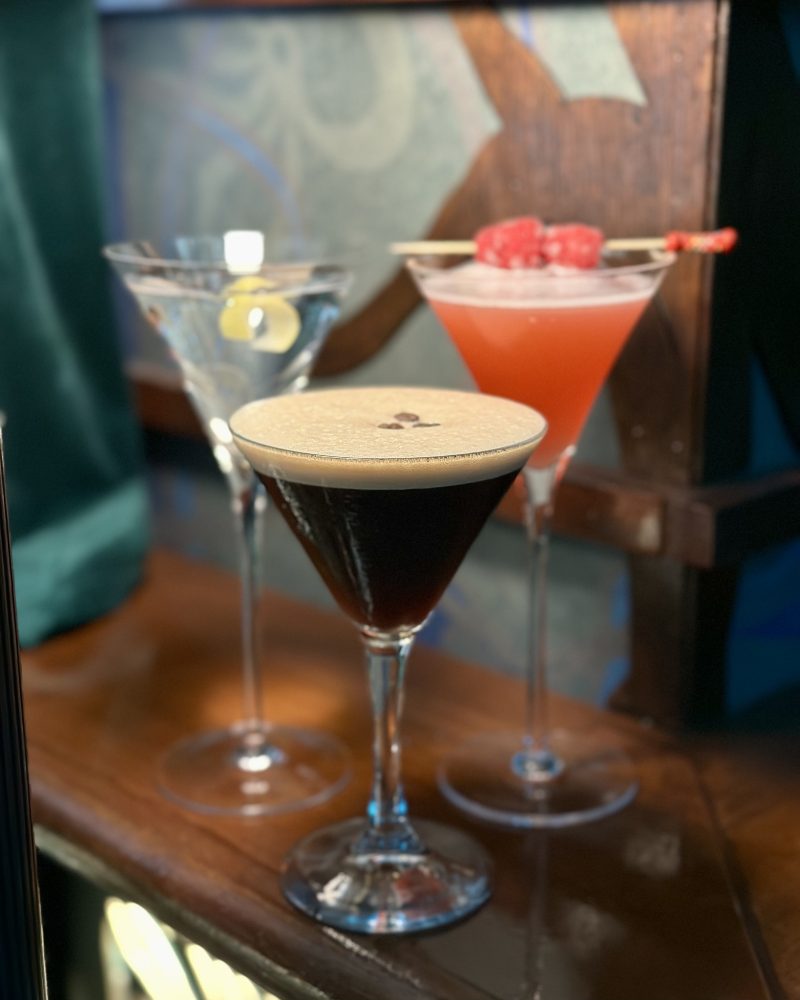
Image Credits: facebook.com/dragonflysingapore

Down by Clarke Quay, Level Up takes nightlife in a more playful direction. Since opening in 2017, this bistro bar has doubled as an arcade, outfitted with billiard tables, glow-in-the-dark air hockey, foosball, claw machines and retro arcade games that bring out friendly competition among guests. Game tokens come with every drink ordered, which makes ordering another round feel like a ticket to nostalgia. Beyond the games, graffiti-covered walls and neon photo spots make it as much an Instagram playground as it is a social hub. With promotions nearly every day and a Sunday special offering free-flow alcohol and unlimited games for three hours, it has cemented itself as a lifestyle destination rather than just another bar. Drink and play at 3A River Valley Road, #02-04, Singapore 179020.

Image Credits: facebook.com/1levelupsg

For those who prefer their evenings with a dose of mystery, Cat Bite Club offers a hidden experience in the heart of Duxton. By day, the small shopfront functions as a coffee bar, but come nightfall, it transforms into a moody speakeasy with a rebellious streak. Award-winning bartenders curate a selection that places heavy emphasis on agave and Asian rice spirits, boasting the largest collection of its kind in Singapore with more than 200 bottles. The space has already developed a cult following, complete with its own merchandise. Signature cocktails such as the Cat Bite Margarita, made with Código 1530 Blanco Tequila, Siete Misterios Espadín Mezcal and agave nectar, capture the depth of the bar’s expertise. Head to 75 Duxton Road, Singapore 089534 to experience Cat Bite Club yourself.
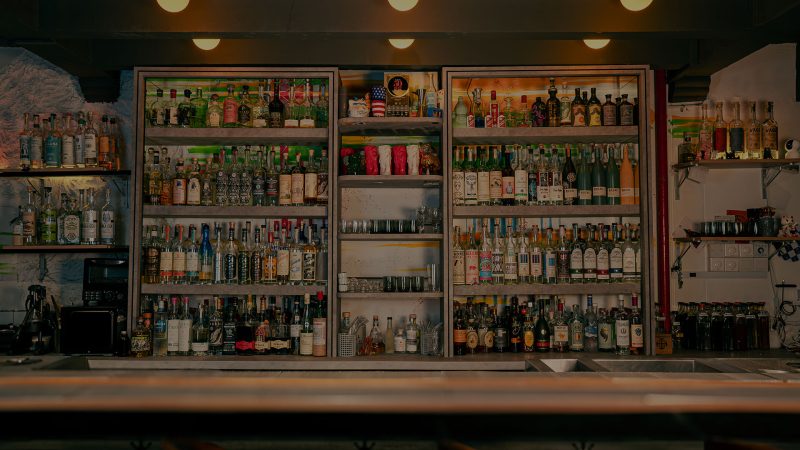
Image Credits: catbiteclub.com

At Oriental Elixir, hidden inside Spiffy Dapper on River Valley Road, the line between curiosity shop and cocktail lounge blurs. This unconventional speakeasy is filled with vintage oddities, antiques and jars of house-infused gin flavored with everything from shrimp and laksa leaf to goreng pisang. Guests can opt for bespoke cocktails tailored to their preferences or join workshops that teach the art of mixology. Together with Culturally x Oriental Elixir, visitors can even taste the first gin produced in Singapore and learn to craft their own spirit-forward experiments. Their address is 294 River Valley Road, Singapore 238335.
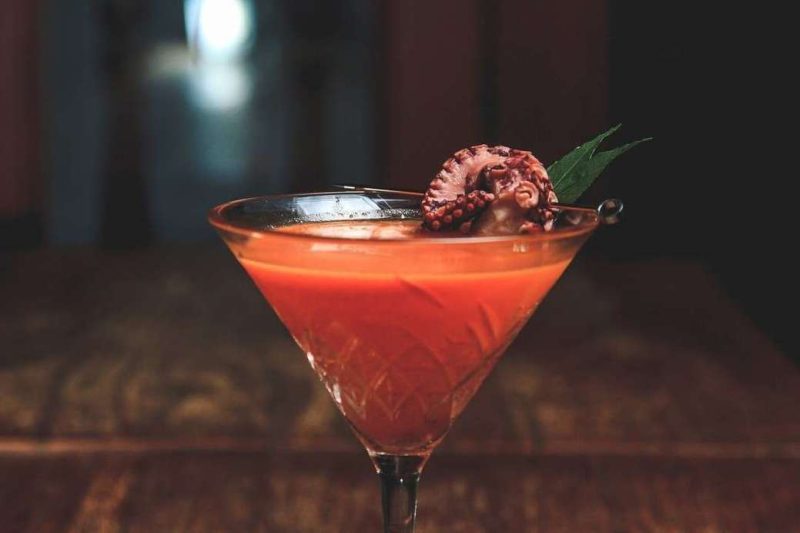
Image Credits: instagram.com/oriental.elixir

No list of Singapore’s leading bars would be complete without Jigger & Pony. It’s consistently recognized as one of the best in Asia and recently crowned the very best. With an atmosphere that evokes the glamour of the Prohibition era, this nine-year-old institution delivers cocktails that are both inventive and deeply rooted in tradition. Signatures include the Yuzu Whiskey Sour and Journey of the West, an Old Fashioned-style drink aged with oak spirals previously used for Japanese whisky. What sets Jigger & Pony apart, however, is its menu-zine, a 54-page publication designed like a vintage propaganda booklet, filled with thoughtful essays on the cocktail world across Asia. Take your friends to Amara Singapore, 165 Tanjong Pagar Road, Singapore 088539.
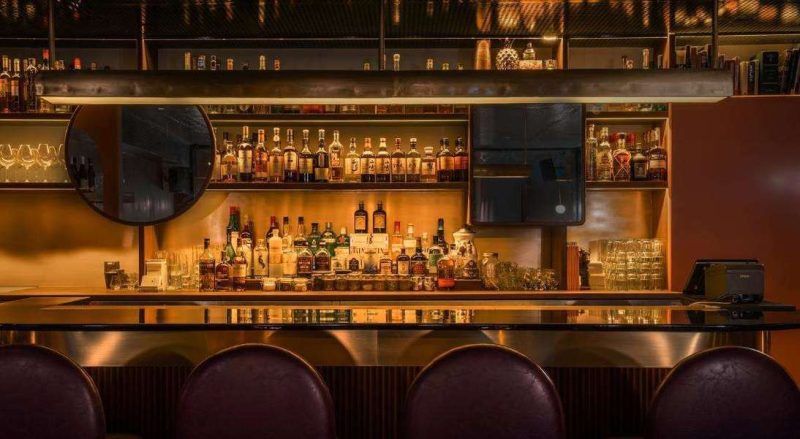
Image Credits: jiggerandpony.com

From whimsical lounges to arcade-powered nights out, each bar offers its own distinctive take on what nightlife can be. Which one do you want to visit first?
Read More...

60,000 Free Books Up for Grabs at NLB’s Big Giveaway This Weekend

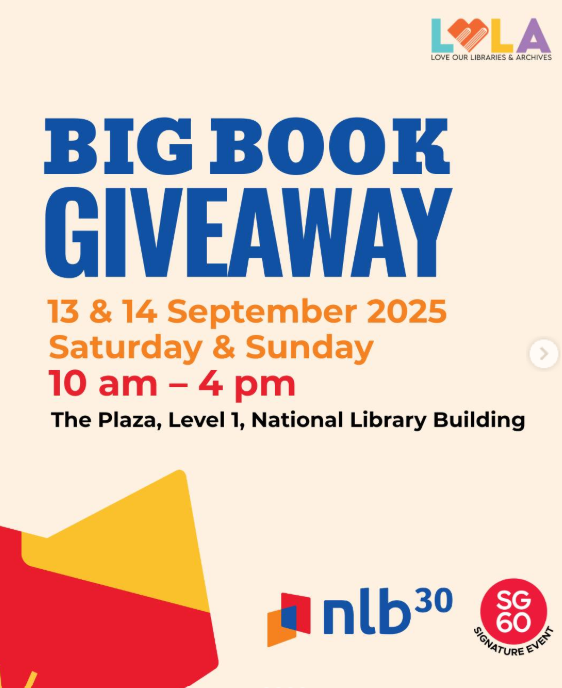
Singapore’s book community has reason to celebrate as the National Library Board (NLB) prepares for its biggest-ever Big Book Giveaway. In honor of its 30th anniversary, NLB is releasing 60,000 pre-loved books on September 13 and 14 at the Plaza of the National Library Building. This also marks the 10th year of the initiative, which began as a way to extend the life of books and share the joy of reading with more Singaporeans.

The event runs from 10 am to 4 pm on both days, where visitors can pick up to 10 books each. Participation is simple: attendees just need to scan their library-compliant ID, NLB eCard, or request a QR code day pass on-site. Adding to the excitement, 60 lucky participants will also walk away with special prizes through a lucky draw, though details remain under wraps.

The collection on offer spans a wide range of genres, from fantasy and science fiction to mystery, non-fiction, and children’s titles in both English and Mother Tongue languages. This year, a dedicated section will spotlight works about Singapore, in celebration of SG60. For many, the highlight will be the chance to discover older editions and hidden gems that once lined the shelves of Singapore’s libraries.

Image Credits: unsplash.com

Unlike previous years, which saw smaller events spread across multiple branches, the 2025 edition consolidates everything into one large-scale gathering at the National Library Building. Last year’s giveaway drew 6,000 participants, and attendance this weekend is expected to be significantly higher.

The Big Book Giveaway also reflects a growing focus on sustainability. Visitors are encouraged to donate their own pre-loved books during the event, with a cap of 50 titles per person. These donations, along with leftover books from the giveaway, will be redistributed to community partners and international institutions. To date, NLB has shared books with more than 130 organizations worldwide, ensuring that stories continue to find new readers.

For NLB, the event is about more than just giving away books. It is part of the wider Love Our Libraries & Archives (LOLA) initiative, a month-long series of community programs under the Libraries & Archives Blueprint 2025. This five-year roadmap aims to reimagine libraries as hubs of learning, creativity, and connection.

Image Credits: instagram.com/publiclibrarysg/

As NLB’s Chief Executive Officer Ng Cher Pong puts it, the event is “eagerly anticipated by many” because physical books remain a source of comfort and joy. I, for one, love the smell of physical books and still make it a point to purchase at least two every month. This initiative not only touches on the heart of sustainability but also encourages book lovers like me to donate pre-loved titles or breathe new life into old ones, rediscovering them as fresh stories.

Source: 1

Read More...

How Singaporeans Really Spend Their Money

How much do Singaporeans actually know about their monthly spending, and where does all that money go?

A 2021 survey of 1,299 adults revealed a surprising insight: less than half (or 48%) said they knew how much they spent each month. The slight majority of 52% admitted they had little idea. Among the youngest group, aged 18 to 24, only 43.6% tracked their monthly expenses. By comparison, adults aged 25 to 34 were the most aware at 52%, likely because that stage of life comes with big-ticket commitments such as weddings, first homes, and raising children. Older respondents, aged 55 and above, also showed relatively high awareness at 49.8%, possibly because retirement planning was on the horizon.

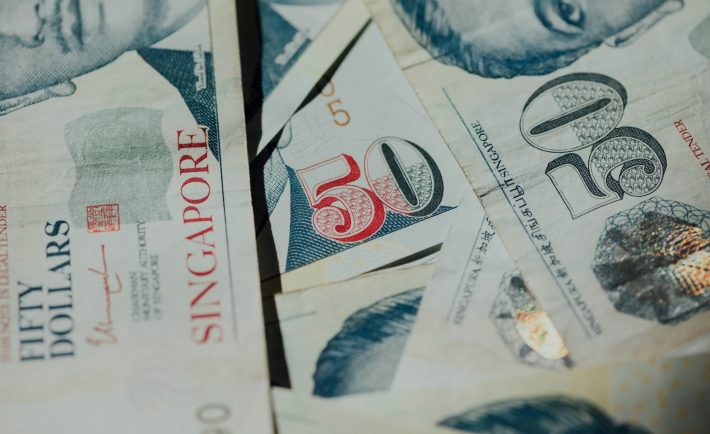
By 2025, the numbers painted a clearer picture of actual spending. Young adults spent about S$1,486 a month on average. Full-time employees typically spent between S$501 and S$1,000, while part-time workers spent less than S$500. Interestingly, food consistently ranked as the largest expense for full-time workers, a reflection of Singapore’s strong dining-out culture at hawker centres, cafes, and restaurants.

Image Credits: unsplash.com

The bigger question is whether income growth has kept pace with rising expenses. In 2019, Singapore’s median monthly household income from work including employer CPF contributions, was S$9,425. On a per-person basis, that translated to S$2,925. In 2000, the median household income was just S$4,398. The near-doubling over two decades highlights Singapore’s steady income growth, an important indicator of its economic resilience. Yet with inflation and lifestyle expectations rising, the real challenge lies in how households allocate that income.

The 2017/2018 Household Expenditure Survey offered a detailed snapshot. The average household spent S$4,906 per month. Out of this, S$1,199 went to food, with S$810 spent outside the home. Clothing and footwear accounted for S$123, recreation and culture for S$379, and educational services such as tuition for S$339. Housing remained one of the most significant lifestyle markers. By 2019, Singapore’s home ownership rate had reached an impressive 90.4%, making property both a financial anchor and a status symbol.

Ultimately, spending habits are shaped by three main factors:

a. Income level. Higher earners devote more to experiences and luxury goods, while lower-income households focus on essentials.

b. Lifestyle and preferences. Some prioritize saving and financial goals, while others lean toward experiences such as travel, dining, and entertainment.

c. Age. Different life stages bring different financial priorities, from weddings and childcare to retirement planning.

Image Credits: unsplash.com

The real question for Singaporeans is not only how much they spend, but also whether those spending patterns bring them closer to the lifestyle they aspire to. Personally, my husband and I spend most of our money on food, utilities, and travel. How about you?

Sources:1,2, & 3


Read More...

Unlock Free Lounge Access with Your Credit Card

For frequent jetsetters, nothing feels more indulgent than stepping away from the crowded terminal and into the calm of an airport lounge. More than a waiting area, it is a sanctuary where you can settle into a plush seat, sip a complimentary drink, enjoy a hot meal, and even catch up on work without the usual airport frenzy.

This experience is no longer reserved for business class tickets or elite frequent flyers. With the right credit card, you can unlock a global network of lounges that quietly elevate your travel routine.

Image Credits: unsplash.com

At the top of the scale sits the American Express Platinum Card, often regarded as the gold standard for those who value both breadth and luxury. Cardholders earn 0.69 miles per S$1.60 spent locally and enjoy unlimited worldwide lounge access. The exclusivity comes at a steep cost with an annual fee of S$1,744, but for those who fly often, the comfort and convenience often outweigh the price.

For travelers seeking balance between cost and perks, the Citi PremierMiles Card has long been a crowd favorite. It offers 1.2 miles per local dollar and 2.2 miles per overseas dollar, along with two complimentary Priority Pass lounge visits per year at more than 1,300 airports. The annual fee of S$196.20 makes it a practical choice for those who may not travel every month but still want comfort when they do.

The DBS Altitude Visa Signature Card delivers strong value, especially for those who maximize overseas spending. Cardholders earn 1.3 miles per local dollar and up to five miles per overseas dollar, paired with two complimentary Priority Pass lounge visits each year. With an annual fee of S$196.20, it is a solid option for travelers who want their everyday spending to translate into meaningful travel rewards.

At the entry level, the Standard Chartered Journey Credit Card with an annual fee paying version extends a taste of premium travel. It earns 1.2 miles per local dollar and two miles per overseas dollar, plus two Priority Pass lounge visits annually. The annual fee of S$196.20 makes it an approachable choice for younger professionals or occasional travelers who want to enjoy the benefits of lounge access without overcommitting.

Image Credits: unsplash.com

In the end, the value of free lounge access depends on how often you fly and how much you prize comfort before takeoff. For some, unlimited entry is worth every dollar of the fee. For others, a couple of complimentary visits each year provide the right balance. What is clear is that modern credit cards are reshaping the way we travel, making airport lounges less of an exclusive privilege and more of a practical perk.

Sources: 1 & 2

Read More...

How You Are Losing Money on Food Without Realizing It

Food in Singapore is culture, identity, and daily ritual. From kopi breaks at the hawker centre to late-night prata runs, every bite tells a story. But behind the convenience and indulgence, there is also a silent leak in our wallets. Many Singaporeans are losing money on food without realizing it, not because of lavish dinners, but because of everyday habits and subtle market tactics that quietly chip away at their savings.

Take the morning kopi or teh. For many office workers, the day does not begin until that first sip. It feels like a small indulgence, just a couple of dollars each time, but stretched over 250 working days in a year, that routine can cost S$300 to S$600. Add bottled water from convenience stores and the annual expense creeps even higher. A reusable bottle and office pantry coffee sachets are modest investments that can prevent hundreds of dollars from disappearing each year.

Then there are the promotions that are not quite what they seem. Supermarkets and e-commerce platforms know how much Singaporeans love a bargain, and they play the psychology of discounts masterfully. Price tags that scream “Now S$9.95, Was S$13.50” give the impression of savings, yet the so-called original price was sometimes never charged at all. Consumers have caught brands quietly inflating prices before slapping on a limited-time offer sticker. Even the classic “Buy 1 Get 1 Free” deal is not always a deal, especially when the single unit price had been raised the week prior. What looks like a victory at checkout can, in reality, be a loss.

Food waste is another hidden drain. A 2017 study by the National Environment Agency found that nearly half of household waste consisted of food, much of it perfectly edible. One in four families admitted to having leftovers after meals at least half the time, while others confessed to throwing away expired groceries that were forgotten at the back of the fridge. These habits cost households hundreds of dollars a year. Better meal planning, shopping with a clear list, and tracking expiry dates are simple strategies that could turn waste into savings.

Image Credits: unsplash.com

Even if you are a careful shopper, shrinkflation can catch you off guard. Instead of raising prices, manufacturers quietly reduce the size of products while keeping the packaging nearly identical. A tub of yogurt that once held 500 grams may now contain only 450 grams, yet the price remains the same. A bottle of cooking oil that used to be 2 liters might suddenly be 1.8 liters. Rice, instant noodles, and even snacks have slimmed down in this way. Without checking unit prices, shoppers may not notice they are paying more for less.

There is also the convenience premium. Delivery platforms and ready-to-eat meals have become staples of modern life, but the markup compared to cooking at home is significant. A hawker dish that costs S$5 in person can easily reach S$9 or S$10 after platform fees and delivery charges. Multiply that by just a few meals each week, and the annual cost rivals a luxury holiday. Convenience saves time, but it does not always serve your wallet.

You see, the biggest financial drain for many Singaporeans is not a Michelin-starred dinner but the small daily leaks that go unnoticed. Habits like buying bottled water, falling for flashy promotions, over-purchasing groceries, accepting smaller portions for the same price, and relying too heavily on food delivery can add up to thousands of dollars over the course of a year.

Image Credits: unsplash.com

Awareness is the first step. Households can reclaim money that is better spent on meaningful experiences, investments, or even that long-postponed trip abroad by paying closer attention to these hidden costs.


Read More...