
Money-Saving Tips For Uni Students In Singapore

Many people believe that the “student life” is golden. I firmly agree! The holistic experiences and social exposures you receive during the course of your tertiary education are heavily treasured. You cannot get these things anywhere else!

Ease your financial load by following these tips:

JUST KEEP PEDALING

Automobile companies lure us with their promise of privacy and convenience during our daily commute. Owning a car may add a level of prestige, but it comes with a hefty price! You must cover several expenses such as gas, parking, and maintenance. Just thinking about my car’s maintenance gives me a headache!

As a thriving student, it is a good idea to steer away from this financial burden. Consider the alternative types of commute such as public transportation, cycling, and walking. You are eligible to apply for an Undergraduate Concession Card as a full-time undergraduate from a government or government-aided tertiary institution (T&Cs apply). This card allows you to save a decent amount of cash for your entire matriculation.

Image Credits: pixabay.com

Image Credits: pixabay.com

Secondly, cycling to school is beneficial for the environment and for your health. The same benefits apply to walking. When I was a university student, I spared 40 minutes of my day for travelling. I walked to school every morning with music in my ears. I can either feel the breeze or focus on my thoughts. Do the same thing if you are going to travel short distances.

As a friendly reminder, stay safe by having someone accompany you while walking to isolated areas. Let a family member or a friend know about your whereabouts at all times.

SELL YOUR BOOKS

It goes without saying that the product of one’s intellect comes with a price. Reference books or textbooks suited for tertiary students costs as low as S$50 each. It is a significant price to pay for a book that you will use for barely 3-4 months. Thus, students must employ different strategies to save money on their books.

Firstly, you can rent a book for free at the National Library. Secondly, you can purchase second-hand books online. Lastly, you may sell your old books to afford another one. Aim to sell your books to the next batch of students.

I am well aware that some people refuse to discard their belongings, including the ones that are seemingly useless (e.g., old newspapers). Hoarding can harm your chances of getting the best deals as the books’ resale value lessens in time.

EARN ON THE SIDE

In general, tertiary students are divided into two financial groups. The first group of people can survive solely with their allowance. While, the second group survives by earning money on the side. It is easy to immerse yourself with your academic responsibilities without having to worry about your finances. However, you may want to invest on your financial freedom. Extra money entails that you can build a travel or an emergency fund.

Image Credits: pixabay.com

Image Credits: pixabay.com

I belonged to the first group. During the first year of my tertiary education, I underestimated the weight of earning my own money. I handpicked the friendly gatherings that I will attend to maximize my allowance. My perception all changed when my friend pointed out that I must choose the restaurant to eat at. I was given the tasked as she perceived me to be the “poorest”. I decided to boost my financial capacity by working as a secretary at my mother’s workplace. This experience has exposed me to the diverse work culture in the country. Not to mention, it benefited my career profile.

Make money on the side by working part-time at a restaurant, by distributing flowers, or by opening a blog shop. Find part-time jobs at freelancezone.com.sg.


Read More...

6 Financial Pledges For The New Year 2018

What are your financial resolutions for the next year? Here are some ideas to get you started.

#1: BE DEBT-FREE

When it comes to minimizing your debts, it pays to be strategic! You can either conquer a volume of smaller debts or a decent amount of high-interest debts. The important thing is to restructure your debts in order for payments to go towards your principal rather than the interest.

#2: CANCEL UNNECESSARY ACCOUNTS

Look into your current financial situation. Keep an eye on the redundant and unnecessary elements. Do you really need to pay for everything with your several accounts (i.e., both credit and savings accounts)? In most cases, the answer is “NO”! Financial institutions charges fees for the simplest of things. Consider closing down or canceling your unnecessary accounts.

#3: IMPROVE YOUR DEFENSE

No one knows when the next financial crisis will hit! To help ease the burden of unexpected costs, your first line of defense is the emergency fund. Modify your budget in such a way that you would have an excess amount of cash for emergencies.

#4: BOOST YOUR GOLDEN NEST

Now is the perfect time to invest for your needs beyond retirement. As a Singaporean Citizen or a Permanent Resident, you are privileged to have a straightforward retirement plan. Just ensure that your company’s terms are in lined with the CPF’s. Grow your “golden nest” to its full potential by maximizing your personal contributions.

#5: GIVE MONEY AWAY

Fulfilling someone’s monetary plea is one of the most positive ways to start the year 2018! If you are capable of shelling out a portion of your savings without hurting your budget then, you may donate to a good cause. You will realize the true value of your money as you see it transform someone else’s life.

#6: BE A BOOKWORM

Knowledge is definitely powerful! Particularly, printed media allows you to directly interact with some of the century’s brilliant minds. You may want to explore the different non-fiction topics including the wonders of Investments as a renewed bookworm. Look into the interesting titles such as “The Intelligent Investor” or “Common Stocks and Uncommon Profits”.

Image Credits: pixabay.com

Image Credits: pixabay.com

These books and similar ones will allow you to learn the basics directly from the people who were most successful in the field.

Sources: 1 &2

Read More...

Is Owning A Credit Card For Necessary You?

Weigh the advantages and disadvantages of owning a credit card, before signing up for one!

WHY YOU MIGHT NEED IT

Here are some of the convincing points that highlight how useful owning a credit card is:

1. Practical for Globetrotters

Singaporeans desire to discover the world’s wonders beyond its concrete jungle. As travelling became increasingly convenient nowadays, there are several options for payment. One is through credit. There are three primary reasons why travelling with a credit card is practical.

Firstly, travel arrangements such as room reservation and car rental are usually done with a credit or debit card. Secondly, it adds a proof of financial capacity when trying to acquire a Multiple Entry Visa in some countries. Lastly, there is a sense of relief to know that you always have access to emergency funds while travelling.

Image Credits: pixabay.com

Image Credits: pixabay.com

2. Protection against Crooks

I was once robbed when I was young. I let my guards down as I was accompanied by my friend. After watching a fantastic film, I noticed that my wallet was missing. My friend and I frantically searched for it for hours. I even left my contact details to the cinema staff, but I had no luck! I had to accept that a decent amount of cash was gone. The unfortunate ordeal applies to my house keys as well as my debit card. To prevent identity theft, I had to immediately contact my bank. The process took two days.

If I only carried a credit card, the gravity of the situation may lessen. Credit cards are not tangible as cash. It is also not linked to your savings account. Many establishments ask for further identification for significant purchases. Furthermore, you can simply report a lost card thru a phone call.

3. Essential for Good Credit Report

Gone are the days when you solely think about budgeting your allowance. Welcome to the adult world whereby property owners and automotive establishments judge you by your credit report. Some of the best interest rates are offered to the people who carry impressive credit report.

It takes no genius to realize that using your credit card sensibly builds a good credit report. If you are suffering from a bad one, it is time to rehabilitate through a realistic financial plan.

WHY YOU DO NOT NEED IT

Here are some of the convincing points that highlight how owning a credit card is a recipe for disaster:

1. Tempting for Impulsive Buyers

Whether you believe it or not, we all have a control over our shopping habits. You can either be a frugal shopper who regularly reads consumer reviews or an impulsive shopper who regularly submits to tempting offers. For a person who has a difficult time in resisting a purchase, equipping yourself with a credit card may be harmful for your finances.

Using a credit card diminishes the sense of awareness as you are spending the money that you do not have. You are likely to shop based on your wants than on its costs. On the other hand, shopping with cash may allow to contemplate about your purchase. You buy what you can only afford to pay for now.

2. Solely for Smaller Purchases

If your primary purpose for owning a credit card is to cover your fondness for retail therapy, owning a credit card is not necessary. It is a good idea to save up for purchases costing S$250 or less. The delayed gratification allows you to contemplate about the coveted product.

Swiping a credit card is helpful for bigger purchases that you want to pay in several chunks such as purchasing a new laptop as well as financing your child’s education.

3. Unnecessary for Savvy Planners

One of the famous tests involving Typology highlights the dichotomous nature of people who are calculated and people who are spontaneous. The latter plans out several areas of their lives before jumping into a decision. While, the former enthusiastically goes with the flow.

I, for one, plan out my entire budget for the month as well as the funds that will go to savings and the emergency fund. Setting up an emergency fund entails keeping at least 6 months’ worth of your salary. If you have a strong emergency fund, it is unnecessary to have a credit card for emergencies.

Image Credits: pixabay.com

Image Credits: pixabay.com

Sources: 1 & 2

Read More...

Asia’s Interesting Superstitions Surrounding Money

Proud of its value for racial harmony, Singapore is a country that fuses people from different nationalities. Each nationality has formed a culture built on their own set of practices, rituals, and beliefs. Said beliefs do not have to be logical all the time as superstitions exist. Some of the superstitions surround heavy issues like money.

If you are interested to learn more about the Asian diversity in financial superstitions, continue reading this article.

IN JAPAN

The eccentric country of Japan is known for many things. One of which is their ability to morph paper figures – the art of Origami. To attract good fortune or wealth, you will need to put an Origami frog inside your wallet. The word “frog” in their language (“kaeru”) is a homonym for the phrase “to return”. Hence, putting an origami frog in your wallet entails the continued circulation of money.

IN CHINA

As the age-old saying goes: “a purse on the floor is money out the door”. Putting your purse or handbag on the floor famously symbolizes your detachment from wealth. On the bright side, keeping your belongings at close proximity lessens the chances of object misplacement or theft.

IN KOREA

Whether you are shaking your nerves away or acting on an automatic response, you must avoid fidgeting your legs in Korea. This common mannerism is frowned upon as it is believed that you are literally shaking off your good luck or wealth.

IN PHILIPPINES

Have you been experiencing an annoying itch in your palm? Do not forget to put this “itchy palm” in your pocket immediately. What may seem like a product of insect bites is deemed to mean incoming wealth. Regardless of the origin of the itch, Filipinos believe that you must expect to receive money in the next couple of days.

IN SINGAPORE

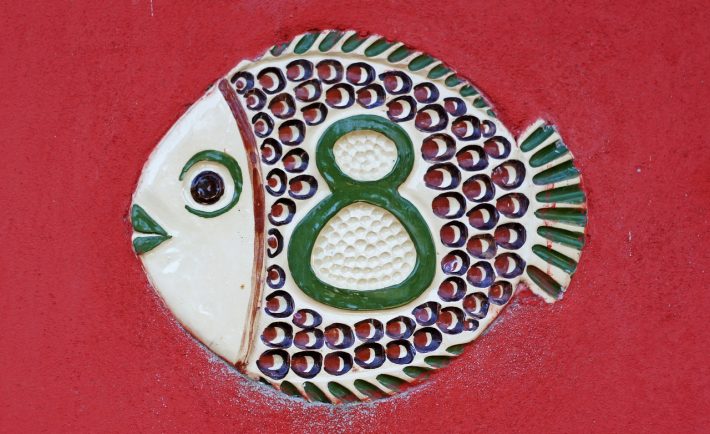
One of Singapore’s superstition roots from the Chinese beliefs about the numbers eight and four. They believe that number eight is fortunate and number four is unfortunate. These meanings were associated based on the Chinese language. You see, these words are homophones for the words “prosperity” and “death” respectively.

Image Credits: pixabay.com

Image Credits: pixabay.com

Try negotiating a discount if your apartment or condominium unit ends with number four. Research showed that it will work in your favor!

Sources: 1,  2, 3, 4, & 5

Read More...

Tips On Balancing 2 Jobs While Maintaining Sanity

In Singapore, it is not uncommon to hold two or more jobs. You may quickly browse thru your social media profiles to observe how some people seem to do it all. What you do not see behind the lenses is its challenging nature. It is difficult to balance several fulfilling commitments while maintaining your sanity!

On that note, here are some sensible tips that may help:

#1: ACCEPTANCE

Whatever career path you may take, your mindset echoes the way you act and feel. Start by accepting that you will acquire multiple jobs to cover your needs. Realize that the compact schedule will be a norm for you for the next couple of months or years.

#2: ORGANIZATION

Foresee how the upcoming weeks will pan out by having an organized planner. List down the priorities, tasks, or assignments that you need to accomplish next week. Distribute the week’s load as evenly as possible. Keep track of important appointments as well! Then, make smart decisions about social gatherings based on your schedule.

Image Credits: pixabay.com

Image Credits: pixabay.com

#3: SELF-CARE

Are you coughing intensely during your second shift? A healthy well-being is essential to juggle multiple jobs in a day. Self-care boils down to the basic needs: quality sleep and balanced diet. Combining these two with regular exercise and social support will help you reach your goal without experiencing burnout.

#4: AVOIDANCE

Transparency is a precautionary factor to avoid “conflict of interest” and other issues. If you are thinking of mainting two or more position for a long period of time, keep the communication lines open. Your primary employer must be aware that you are committing yourself to a second job.

#5: RELAX

Many people choose to block a day off during the week to replenish their strength. While we may not have the luxury of blocking an entire day, we can settle for a break of several hours. Take your mind on a pleasant ride by doing the activities that surround your passion/s.

#6: FOCUS

Focus on the task at hand! Completely surrendering yourself to one tasks enables you to accomplish it faster. Work at a conducive space that eliminates distractions, ignites relaxing music, and inspires you to think.

Image Credits: pixabay.com

Image Credits: pixabay.com

#7: END GOAL

Let us face it! You are not exhausting your physical and mental efforts for nothing. You are accepting these multiple jobs with an end goal in mind. Hold that goal dear to your heart and never lose sight of it.

Sources: 1 &2

Read More...