

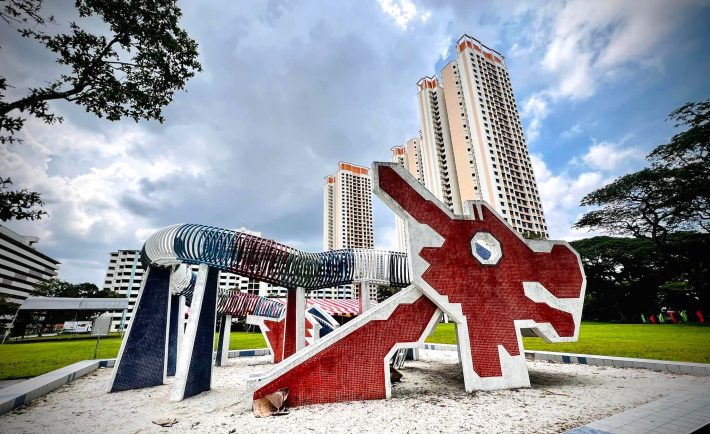
July 2025 BTO Launch: Price Estimates, Hot Estates, & What to Expect

BTO VS RESALE

If you are planning to buy a flat in Singapore, chances are you are considering an HDB Build To Order (BTO) flat. These are brand new homes that are only built once demand reaches about 70%, with a waiting period of around three and a half years. The appeal? A fresh, never-before-lived-in home at subsidized prices.

Unlike resale flats, which are ready for immediate move-in, BTO flats require some patience. But for many Singaporeans, they offer better long-term value and appreciation potential.

JULY 2025 BTO LAUNCH

The July 2025 BTO launch is one of the largest in recent years, with about 5400 flats across 7 locations, offering a range from 2-room Flexi to 5-room units, including 3Gen options for multigenerational families. Both mature estates like Bukit Merah and Toa Payoh and non-mature towns like Woodlands and Sembawang are in the lineup.

And yes, Simei is finally back on the map after over a decade! For East-side fans, that is big news.

WHERE ARE THESE FLATS LOCATED?
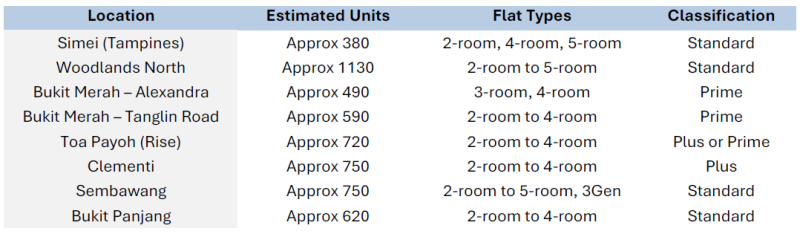
PRICE ESTIMATES?

While official prices for the July 2025 BTO launch have yet to be released, past launches offer useful benchmarks. In Toa Payoh during the February 2023 exercise, prices started at around s$90,000 for a 2-room Flexi flat, approximately S$351,000 for a 3-room unit, and from S$395,000 for a 4-room flat.

Over at Tanjong Rhu Parc, which was classified under the Prime model, a 3-room flat was estimated to start from S$309,000, while a 4-room unit began at roughly S$493,000. In Yishun, buyers could expect lower entry prices, with 3-room flats from about S$140,000, 4-room flats from S$236,000, and 5-room units starting from S$392,000.

These figures are based on previous exercises and should be viewed as general guides. Final prices for the July 2025 BTO launch may differ, so always check the official HDB website for the latest information.

WHAT DRIVES BTO PRICES?

Common factors that affect pricing include:

a. Location: Mature estates like Bukit Merah, Clementi, and Toa Payoh tend to cost more due to their amenities, transport links, and schools.

b. Flat Size: Bigger flats like 5-room units come with higher price tags.

c. Lease Length: This applies more to resale flats as shorter leases typically mean lower prices.

d. Grants: First-time buyers can qualify for schemes like the Enhanced CPF Housing Grant, which can shave off a significant amount from the total cost.

WHICH ESTATES STAND OUT?

a. Bukit Merah and Toa Payoh
Expect high demand here. These mature estates offer great access to the city, popular schools, and public transport. Projects in these areas may fall under the Prime or Plus classification, which means longer minimum occupation periods and stricter resale conditions.

b. Simei
After over a decade without a launch, Simei is back. Located near Upper Changi MRT, SUTD, and Changi General Hospital, it is ideal for families and East-siders looking to stay in a familiar zone.

c. Woodlands and Bukit Panjang
More affordable, with room for growth. These estates are increasingly attractive to younger buyers who want value and space.

d. Clementi and Sembawang
Clementi continues to appeal to families due to top schools and mature estate convenience. Sembawang, meanwhile, offers rare 3Gen flats, perfect for bigger households.

CHECK THESE OFF BEFORE YOU APPLY

Image Credits: unsplash.com

  • Confirm your eligibility: citizenship, income ceiling, and household structure
  • Understand the classification of your preferred project: Standard, Plus, or Prime
  • Look into transport, schools, and workplace distance
  • Sort out your finances: CPF Ordinary Account, HDB loan eligibility, and housing budget
  • Stay tuned to HDB announcements for application dates and official price lists

IN A NUTSHELL

Whether you are looking for your very first home or aiming to move closer to family, the July 2025 BTO launch is packed with potential. From familiar mature estates to under-the-radar growth towns, now is the time to shortlist your picks and prepare for the ballot.

Sources: 1,2,3 & 4

Read More...

The Real Cost of Art Therapy in SG

Nowadays, individual stress levels are at an all-time high. With long work hours, economic pressure, and growing mental fatigue post-pandemic, many Singaporeans are quietly hitting a wall. While some seek traditional talk therapy, a growing number are turning to a quieter and more expressive form of healing called art therapy.

Searches for “art therapy Singapore” have surged in recent months. Yet many still don’t know what it really involves or how much it actually costs. We break it down here.

MORE THAN JUST MAKING ART

Let’s clear this up. Art therapy isn’t just arts and crafts. It’s not art class, and it’s definitely not only for artists.

Art therapy is a professional form of psychotherapy that helps people express and process emotions through creative practices like drawing, painting, or sculpting. It isn’t about making something pretty. It’s about releasing what’s hard to say in words.

As a psychometrician and mental health advocate, I’ve witnessed how powerful this can be. I’ve also lived it. One day, I picked up a brush. I just painted as I needed to let something out. That moment was a turning point.

WHY IT’S DRAWING PEOPLE IN

In a society where productivity is prized and emotions often buried, art therapy is emerging as a safe and nonverbal space to breathe. It’s gaining traction especially among those:

a. Burnt out at work
b. Coping with anxiety or trauma
c. Struggling to open up through talk therapy
d. Parenting neurodivergent or emotionally sensitive children

Singapore therapists are also adopting trauma-informed, psychodynamic, and mindfulness-based approaches. Truly, the field is becoming more diverse and adaptive.

Watch this introduction to understand it better:

HOW MUCH DOES IT COST

Art therapy in Singapore isn’t cheap, but it doesn’t have to break the bank. Some clinics even offer free consults or subsidized options.

1. Singapore General Hospital
Offers individual, group, and family sessions
Learn more: sgh.com.sg

2. The Red Pencil (Singapore)
A nonprofit offering art therapy for communities and individuals
Learn more: redpencil.sg

3. Ayana Art Therapy
Personalized sessions with a FREE 20-minute consultation
Learn more: ayanaarttherapy.com

4. Haven Art Therapy
Works with clients from 4 months to 97 years old
Learn more: haventherapy.sg

5. Art For Good
Therapy, enrichment, and community art
Learn more: artforgood.sg
Prices:
Art Jamming (2 hours): S$50
Individual Therapy (1 hour): S$150
Consultation (30 minutes): S$60

6. Solace Art Psychotherapy
Offers multi-session packages
Learn more: solace.com.sg
Prices:
Single Session: S$230
5 Sessions: S$1100
10 Sessions: S$2000

ARE ART THERAPISTS LEGIT?

In Singapore, qualified art therapists typically hold a Master’s in Art Therapy and are members of the Art Therapists’ Association Singapore. Many are also credentialed by ANZACATA, a professional body for creative arts therapists.

Their training includes:
a. Supervised clinical placements
b. Personal therapy
c. Rigorous ethics and trauma-informed education

Image Credits: unsplash.com

FINAL PIECE

You don’t need to be an artist to begin healing. You don’t even need to know where to start. All you need is the willingness to explore what you feel.

When words fall short, art speaks through color and movement. In those quiet moments of creation, you may find calm and clarity.

Read More...

Lazada 7.7 vs Shopee 7.7: Which Sale Is Really Worth Your Click?

Singapore’s mid-year shopping showdown is here again, and it is game on between Lazada and Shopee. With both platforms promising jaw-dropping prices, lightning-fast delivery, and massive vouchers, the real question is: where should you spend your money?

We took a deep dive into both Lazada’s 7.7 Big Summer Sale and Shopee’s ongoing 6.6 to 7.7 Great Shopee Sale to help you figure out where the real savings are hiding this season. The discounts may be loud, but we’re cutting through the noise to find the true value.

THE SALE TIMELINE

Shopee launched its Great Shopee Sale, stretching the campaign from June 6 all the way to July 7. It is a full month of timed flash sales, daily dining deals, and exciting voucher drops. The main event will happen on July 7. The campaign keeps shoppers coming back with fresh offers almost every other week.

In contrast, Lazada keeps things concise. Its Big Summer Sale begins on July 6 and ends on July 10. The deals are tightly packed, and users can consult LazCalendar to track the daily highlights and prepare in advance.

Verdict: Shopee dominates in duration and frequency. 

FOOD & LIFESTYLE DEALS

Shopee’s 50% off daily dining deals are a clear win for budget-savvy foodies. From Popeyes and KFC to Mr Bean, the discounts cover everyday cravings and quick comfort meals. Combine that with Shopee Live cashback, time-limited vouchers, and major markdowns on fashion and beauty, and you get a fantastic online GSS experience.

Lazada offers lifestyle deals as part of wider store promotions, but it is not as aggressive in food discounts. Their focus leans more toward value-for-money bundles across electronics, home, and essentials.

Verdict: Shopee steals the spotlight for lifestyle and food offers.

DELIVERY, RETURNS, & USER PERKS

Shopee’s guaranteed next-day delivery is a major win for shoppers. Free shipping vouchers are available all day and buyers enjoy a no-questions-asked 15-day return policy. It is fast, forgiving, and fuss-free.

Lazada offers free shipping on selected items and LazMall products often arrive quickly. Returns are usually accepted but policies can vary depending on the seller. Their 100% satisfaction guarantee provides some peace of mind, although it feels less straightforward than Shopee’s blanket return policy.

Verdict: Shopee leads the way with convenience and smoother logistics.

FLASH SALES, FASHION, & TECH

Shopee’s flash sales hit hard with up to 90% off branded items from Timberland, David Jones, and H&M. Vouchers stack across categories including fashion, home, beauty, and electronics. With major discounts on Roborock, PrismPlus, and Samsung, it is easy to get caught in the shopping loop.

Lazada focuses more on big-ticket deals across electronics, appliances, and home essentials. It may not have as many fashion-forward drops, but for large purchases, Lazada gives strong value through bundled discounts and cashback stacking.

Verdict: If you are planning to upgrade your home tech, Lazada offers a more structured deal path.

OVERALL SHOPPING EXPERIENCE

Shopee thrives on daily engagement. Its interface is built around live shopping, surprise vouchers, and limited-time rewards. The campaign feels more interactive, like a shopping game you want to keep playing.

Lazada appeals more to the planner. LazCalendar helps map your buys ahead of time and big-brand deals are usually clean and clearly labeled. It is less flashy, but arguably more efficient for focused shoppers.

Verdict: Shopee is more fun and immersive, while Lazada wins for structure and simplicity. It depends on your shopping habits.

FINAL VERDICT

Image Credits: unsplash.com

If you are chasing everyday value, fast delivery, and the joy of stacking vouchers across categories, Shopee is your go-to this 7.7. But if your eye is on the prize and that prize happens to be a new appliance or serious electronics upgrade, Lazada still holds its ground.

Want the best of both? Compare, claim early, and shop smart. These deals move fast and so should you.

Follow @moneydigest or facebook.com/MoneyDigest for real-time alerts and top picks this GSS season.

Read More...

How to Maximize Your 2026 Long Weekends

Get ready to mark your calendars because 2026 is shaping up to be a good year for long weekends in Singapore. With 11 public holidays on the official calendar and 6 of them falling on either a Friday or Sunday, there’s no better time to start planning your leave days strategically.

Three public holidays land on a Friday, automatically giving you a three-day weekend:

a. Good Friday (Apr 3)

b. Labour Day (May 1)

c. Christmas Day (Dec 25)

Another three fall on a Sunday, which means the following Monday will be a public holiday:

c. Vesak Day (May 31) – Mon, Jun 1 off

b. National Day (Aug 9) – Mon, Aug 10 off

c. Deepavali (Nov 8) – Mon, Nov 9 off

That’s 6 long weekends to look forward to, and that’s not even counting the possibility of extending your break with just one or two leave days in between. Think staycations, regional travel, or simply recharging at home.

WHAT IF YOU HAVE TO WORK ON A PUBLIC HOLIDAY?

For those in essential services or industries that never sleep, the Ministry of Manpower (MOM) has clear guidelines. Employees required to work on a public holiday are entitled to an extra day’s salary at their basic rate, on top of their usual pay.

Alternatively, employers and employees can mutually agree to swap the public holiday for another working day. Time-off-in-lieu is also an option, but this only applies to certain employees including:

a. Workmen earning more than S$4,500 per month

b. Non-workmen earning more than S$2,600 per month

c. All managers and executives

Image Credits: unsplash.com

TIME TO PLAN AHEAD

Whether you’re dreaming of a beach getaway, aiming to reconnect with loved ones, or simply resting at home, 2026’s long weekends give you the perfect excuse.

So get that calendar out and plan around those golden dates. A little foresight now could mean a lot more freedom and fun later.

Sources: 1 & 2

Read More...

Is Bad Publicity Really Good for Business?


Lately, my graduate school has been making headlines, and not the flattering kind. From administrative mishaps to student complaints going viral, the institution has found itself under the harsh glare of public scrutiny. As someone who’s finishing her program, I can’t help but wonder: what does this mean for the school’s reputation? And more broadly, can negative publicity ever truly be good for business?

We’ve all heard the phrase, “There’s no such thing as bad publicity.” But how true is that in an age where Google is your storefront and public opinion forms in real time?

HOW NEGATIVE NEWS SPREADS

In today’s hyper-connected world, perception often begins with a simple Google search. Unfortunately, bad news has a longer shelf life and stronger visibility than most positive press.

Why? Negative headlines drive more clicks, comments, and shares. This user engagement signals to search engine algorithms that the content is relevant, even if it’s outdated or misleading. As a result, a single bad article can show up prominently when someone looks up your business or brand, potentially turning away would-be customers or investors.

Google’s algorithm is designed to give users the best answers to their queries. But best often translates to most engaging, not necessarily most accurate. So that two-year-old article on your company’s past HR scandal might appear higher in search results than last week’s community outreach initiative.

THE REAL COST OF BAD PUBLICITY

The impact of negative press isn’t just theoretical. A 2019 study found that the effect of negative news on reputation is three times stronger than that of positive news.

It doesn’t take much to start losing ground. One unfavorable article can reduce the number of prospective customers by 22%. If there are four or more, that loss can jump to 70%. In a competitive market, that’s the kind of damage not every business survives.

Even worse, headlines don’t have to be true or even fair to cause harm. A clickbait title or misquoted soundbite can do serious reputational damage before a company even has the chance to respond.

WHEN THE STRATEGY BACKFIRES

Public relations, when done right, is strategic and thoughtful. But not all PR is created equal.

Some companies mistakenly believe that even bad press is better than none. This is particularly common among startups or businesses trying to break into a crowded market. However, the idea that negative PR is better than silence is misguided.

Image Credits: unsplash.com

Sloppy press releases, exaggerated claims, or defensive public apologies erode consumer trust. And once trust is broken, it is incredibly hard to rebuild. Negative PR does not just hurt in the short term; it can create long-term incoherence in your brand’s identity, making it harder for the public to understand who you are and what you stand for.

WHEN NEGATIVE PUBLICITY CAN BE AN OPPORTUNITY

That said, all is not lost. Bad news does not have to mean bad outcomes if you respond well.

Handled properly, negative feedback can actually serve as a catalyst for growth. Acknowledging mistakes, taking responsibility, and showing a clear plan for improvement can help your business appear more transparent, trustworthy, and resilient.

Consider these tips when responding:

a. Be proactive. Do not wait for the story to snowball. Get ahead of it with a clear, honest message.

b. Own it! If your business made a mistake, admit it. People respect accountability.

c. Offer solutions. Lay out specific actions you are taking to correct the issue.

d. Follow through. False promises can further damage credibility. Real change rebuilds trust and improves your reputation over time.

SO IS BAD PUBLICITY EVER GOOD?

Sometimes, controversy does put a brand on the map, but that attention is rarely sustainable. A viral scandal might spike interest, but what happens when the buzz fades and all that remains is a tarnished name?

True, not all bad press spells doom. Some brands have successfully leveraged backlash into branding gold. But these are the exceptions, not the rule. For most businesses, bad publicity is just that: bad.

The smarter strategy is to aim for meaningful visibility. That means consistent, authentic engagement with your audience and a willingness to respond thoughtfully when things go wrong.

Image Credits: unsplash.com

In business, as in life, reputation is earned slowly but can be lost in a flash. The better question is not “Can bad publicity help me?” but “How do I make sure my next headline is one I’d be proud to read?”

Sources: 1 & 2

Read More...