

5 Things To Consider Before Pursuing Graduate Studies

While employers highlight the importance of soft skills such as emotional intelligence and resilience, many in-demand jobs require higher education credentials.

I, for one, am looking for ways to better myself. Getting a master’s degree is one option. It has been a dream of mine to get a master’s degree. However, resources were not in my favor. Things changed when the pandemic came. I had the luxury of time as I was mainly working from home. This decision needs to be taken seriously. When deciding whether you must take a master’s degree or not, consider these factors.

#1: THE REASON WHY YOU ARE DETERMINED TO GET A MASTER’S DEGREE

Getting a master’s degree will enable you to follow your passion. It does not necessarily have to be closely associated with your bachelor’s degree. You have the power to carve your path.

Moreover, getting a master’s degree is a way to buy yourself some time. For students who are not sure of their career path, graduate studies may provide a safety net for the next couple of years. This should not be your primary reason. Choose to pursue it, if it would be better for your career. For instance, getting a master’s degree in education will help you to get promoted from your teaching position. It will build a bridge to the next step of your career.

#2: THE TRUE COST OF GRADUATE STUDIES

Be honest when it comes to your financial capabilities. Studying further is not cheap. Ask the registrar or the program adviser of the university you are eyeing on regarding their fees. Know if there are scholarships or other forms of financial aid schemes.

Remember that it is cheaper to complete your master’s degree using online courses. Some courses even provide free resources. There is a plethora of content available, at no cost, to the general public.

#3: THE LEVEL OF DIFFICULTY

Ask yourself how hard it is to get a master’s degree compared to your bachelor’s degree. You see, undergraduate programs involve tackling simpler topics. Graduate studies are more structured and complex. The amount of preparation required for the tests and classes is higher than before. You need to study beyond what your lecturers have taught.

#4: THE CHANCES OF SALARY INCREASE

It is no secret that people who have completed higher education are generally paid more money than those who do not. While a 25% increase in earnings is the average increase people see, attending the top MBA programs can boost your salary by as much as 60-150%. Equipping yourself with knowledge can help increase your earning potential.

#5: THE LOCATION OF THE SCHOOL

Given the current situation, you must access whether the location of the school will affect your lifestyle choices. It is difficult to travel and relocate at this time. Most graduate students have families. Thus, it makes relocation a difficult option. Think about the location of the school when searching for master’s degree programs.

Image credits: pixabay.com

Are you studying overseas or locally? Are there online schooling options? You need to decide on the best location for you.

Sources: 1 & 2


Read More...

Beginner’s Guide To Growing Houseplants

From vibrant succulents to the elusive variegated Monstera, the popularity of growing your own houseplants spiked during the pandemic. Visually driven social media has become a haven for foliage fanatics. Simply ask your friends, who are proud plant-dads or plant-moms, about their collections and they will gush with enthusiasm.

Although this botanic popularity may seem like a fad, people have long been maintaining a love affair with plants. Let us focus on the Millennial generation. Their love of plants roots from the self-care and wellness movements. This generation spend money on wellness categories such as boutique fitness classes and athleisure wear. It only make sense that they embrace the physical and mental health benefits offered by plants. Swipe through Instagram to see what I mean!

Image Credits: pixabay.com

Growing your own greens is a healthy way to save money and to enjoy fresh produce at home. When done correctly, you will be able to significantly cut down your grocery budget. Moreover, growing houseplants can help improve the indoor air quality. You just have to set aside a budget for gardening.

The total bill for a DIY garden will vary by the type of plant grown, the number of plants purchased, and other factors. To calculate the true cost of starting and maintaining a garden throughout the year, add the following factors together.

Cost of plants or seeds
Cost to provide nutrient-rich soil (i.e., dirt, fertilizer, and worms)
Cost to water plants
Cost to protect and structure plants (e.g., cages, coverings, and fences)
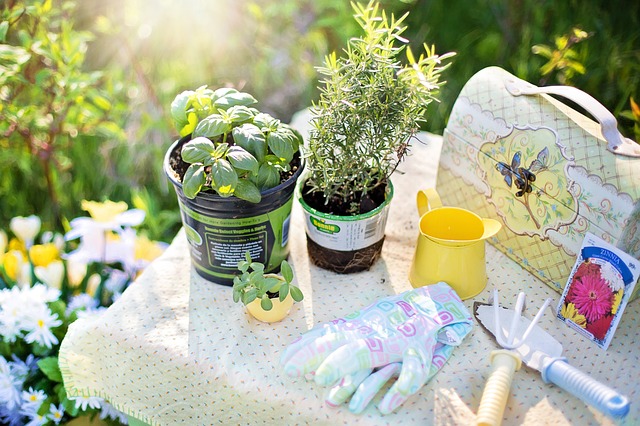
Cost of tools and accessories (e.g., garden forks, gloves, and spade)

Do your research when growing an arsenal of tools. You can start with these basic tools.

1. Gloves

Gardening is a wonderful hobby. Keep things on the pleasant side and avoid a thorny situation by using the right pair of gloves. Garden gloves should be durable, but not bulky.

2. Garden Fork

Garden forks can dig into dense soil better than spades. Forks with straight tines are used for digging and are great for rocky or clay soil. Forks with square tines are stronger than flat tines. Lastly, forks with slight curves to the spines are useful for scooping mulch or turning compost piles.

3. Spade

Spades are short-handled square shovels. A spade will help you to dig holes, create edges, and move small mounds of dirt from one are to another. It may be pricey, but a good spade will last for a long time.

4. Hoe

Hoes are useful in cutting down weeds and preparing your flower beds. You garden will dictate which hoe suits it best. For instance, a veggie garden may require a sturdy and wide hoe.

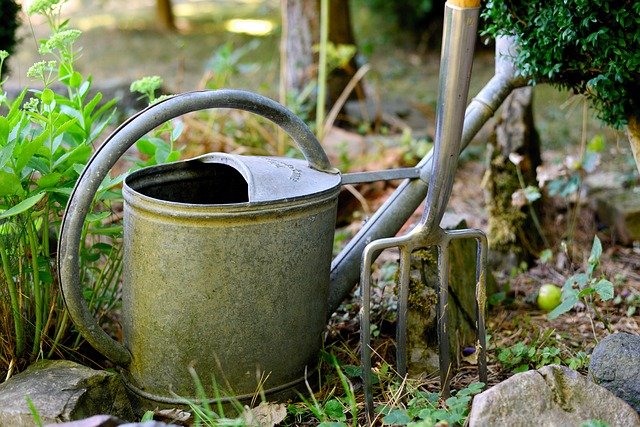
5. Watering Can

There are hundreds of styles, sizes, colors, and nozzle options when buying a watering can. However, the two basic types are plastic and metal. The plastic type may not last as long as the metal type.

6. Trowel

A trowel is useful for moving soil, digging, removing weeds, mixing fertilizer and much more. It is essentially a handheld shovel.

Image Credits: pixabay.com

I hope that this article gave you enough information to get you started. With everything else, do not forget to have fun! Embrace the physical and mental benefits that plants have to offer.

Sources: 1 & 2

Read More...

How To Train Your Replacement

April 2021 marks my fifth year in the company that I have grown to love. As I explore other possibilities and leave my position as a directress vacant, it is my responsibility to train my replacement. I realized the importance of ensuring that someone else was able to do my job early on. I took the liberty to help my fellow directresses too.

It was not because I had brilliant foresight. Rather, it is due to the fact that I had an unpleasant experience during my turnover process. The person who was supposed to mentor me did not want to leave her post. Her bitterness was evident as she prolonged her exit. Nonetheless, I took it as an opportunity to learn from her. I did not want to make my replacement feel the same thing. Expanding the knowledge of others around you is necessary to keep the business moving forward.

Training your replacement does not have to be difficult or awkward. It just needs to be well-thought-out. Do you still remember the first time you picked up a task that was unfamiliar to you? The rollercoaster of emotions you felt on your first day as the boss is something that your apprentice will go through. You need to guide your replacement through methods or instructions on how to complete the tasks.

Start by providing a list of duties or a training manual. I, for one, have a copy of the Directress Training Manual. It is a comprehensive guide divided into several parts such as handling parents’ concerns. In addition to including the job description and important forms, you need to provide detailed instructions for each task. Allow the person to follow along and ask questions whenever necessary.

You read that right! You need to be prepared to answer questions and clarify instructions. Do not assume that your replacement will be able to absorb everything in a day. They will require both verbal instruction and hands-on experience. If he forgot a step during training, patiently remind him of what he missed.

Demonstrate how the duties are done. Watching you go through the steps will help the person feel the depth of your instructions. Make them feel comfortable by letting them seat down and write down notes. As long as you are still receiving paychecks from the company, you are part of the team.  Stay professional at all times.

Arrive on time and dress accordingly to the company’s policy. Do not make your replacement feel that you do not care because you are leaving soon. Instead, become a positive role model to him or her. Be prepared with today’s agenda and monitor the trainee. Lastly, introduce him to the people in your office.

Image credits: pixabay.com

Show where your supplies, restrooms, and documents are. Tour him in the office and introduce him to your co-workers. This simple gesture can mean a lot. Let your trainee know what you are expecting to achieve within the day and impart your knowledge on the workplace culture. These details will help him as he adjusts to the new position.

Best of luck!

Read More...

Why Rewarding Yourself Is Important

John Maxwell once said: “Everybody wants money, yet seldom will anyone budget or control their spending.”

Setting financial goals is an easy task! Reaching these goals is another story. You may intend to purchase your first designer bag or to go back to school this year, but you are still building your funds for it. Moreover, you may have set some financial goals that are harder than you anticipated. Putting these goals into action is the first hurdle that you have to pass.

The second hurdle is reaching the finish line without losing your motivation. The solution to your problem is placing an efficient reward system. Rewards and actions have close association. Think about it! You perform an action expecting an outcome or a reward in the end. Though rewards do now always show up as a trophy, you can expect some form of return. Every time you receive a reward, your body releases a neurotransmitter called the dopamine. It plays important roles in executive functions, motor control, motivation, arousal, reinforcement, and reward. It also plays a role in lower-level functions including lactation, sexual gratification, and nausea. Simply put, it affects how we feel pleasure.

Dopamine spikes in your brain when something important is about to happen. It gives you a surge of pleasure as you finish a task. In turn, it increases your motivation and productivity. Use this knowledge to your advantage. Give yourself small rewards along the way to achieve a bigger goal. You may indulge at the end of the month by rewarding yourself with 5% of your hard-earned savings. Use this money to get a well-deserved treat after the whole month’s work. It will surely keep you going!

As long as you set aside a responsible amount of money, take your mind off the expenses that come with your small reward. Relax! Take these suggestions:

1. Take yourself out to breakfast or brunch.
2. Read a book for 15–30 minutes.
3. Watch an episode of your favorite Netflix series.
4. Listen to your favorite playlist for 15 minutes.
5. Buy a delicious dessert.
6. Enjoy an at-home spa day.
7. Paint, sew, or knit something.
8. Turn off your devices for an hour.
9. Indulge in a long shower.
10. Diffuse your favorite essential oils.
11. Write in your journal.
12. Watch the sunset.
13. Jog for 15-30 minutes.
14. Get a new water bottle.
15. Get a manicure or a pedicure.

Every action is tied to some outcome. The problem is, the result is not always immediate. You will not lose weight overnight. You will lose body fat over time. While waiting, you may lose the motivation to keep going. Hence, putting a simple reward system may help.

Rewards can act as psychological enforcers when you use it as a means of motivation to reach a particular goal. When done right, the natural process in the brain can be used to help you stay on track with your financial goals. The magnitude of the reward is not directly proportional to motivation. Even the smallest treats can get you pumped up for the rest of the month. Use the abovementioned list as a guide to help you put your reward system in place.

Sources: 1 & 2

Read More...

How To Deal With “Maskne”

Masks play a vital role in reducing the spread of COVID-19. However, prolonged wearing of masks can cause skin irritation and acne for individuals with sensitive skin. Maskne or Acne mechanica has never been a problem of ours with the exemption of healthcare professionals who have been wearing masks on their hospital duties. These healthcare professionals can attest to this irritating skin problem that has become more widespread among the general population.

Dr. Harry Dao, a dermatologist for Loma Linda University Health, explains what Maskne is.

“Masks impose heat, friction and occlusion on the skin and when combined with a moist environment from breathing, talking or sweating, this is a recipe for breakouts,” he says. The three main ways masks can cause breakouts are thru friction, occlusion, and irritation. Firstly, masks impose friction and chafing. The areas most at risk for breakouts are the bridge of the nose and behind the ears.

Secondly, pores get clogged and can become acne cysts or pimples. Your breath trapped beneath the mask makes the skin surface warm and moist. This environment can lead to a breakout called folliculitis, which happens when yeast or bacteria infect hair follicles.

Lastly, the material of a mask absorbs the skin’s natural oils. This leads to dryness and sensitivity for some people. When irritation becomes inflammation, you will see redness, dry patches, peeling, or dark marks. Acne is not the only skin condition reported by mask wearers. Other common skin problems include Seborrheic dermatitis, Rosacea, and Allergic contact dermatitis.

WAYS TO PREVENT SKIN PROBLEMS CAUSED BY MASK WEARING

1. Wash your face. It goes without saying that washing your face with a gentle cleanser and rinsing it with lukewarm water can help prevent dirt and oil from being trapped on the skin’s surface. Do this before and after you put your mask on.

2. Do not apply makeup. Who will see your entire face anyway? Wearing makeup under a mask causes clogged pores and breakouts. Makeup residue will also soil your mask.

3. Apply moisturizer. The moisturizer will not only act as a barrier between your face and your mask but, it will also keep your skin hydrated. This can reduce friction. Apply moisturizer onto a cleansed face before and after wearing a mask.

4. Wash your mask regularly. If you are wearing a cloth mask, ensure that you wash it after using. Otherwise, the dirt can become a breeding ground for bacteria. Choose a fragrance-free laundry soap because fragrances can irritate your skin.

5. Do not reuse surgical masks. Surgical masks are not meant to be reused. Throw it after using

6. Protect your ears. Elastic strap loops on the mask can cause friction burns on the back of your ears. If your skin is sensitive or if you will be wearing a mask for a long period of time, use ear savers. You can attach the straps on the ear savers’ buttons. You can buy yours from Lazada or Shopee.

When should you see a doctor?

If you have breakouts or skin damage that do not respond to skin care changes, you should see a dermatologist. Spreading redness or draining pus can be signs of infection too. Seek immediate medical attention, if this happens.

Image Credits: unsplash.com

Sources: 1 & 2

Read More...