
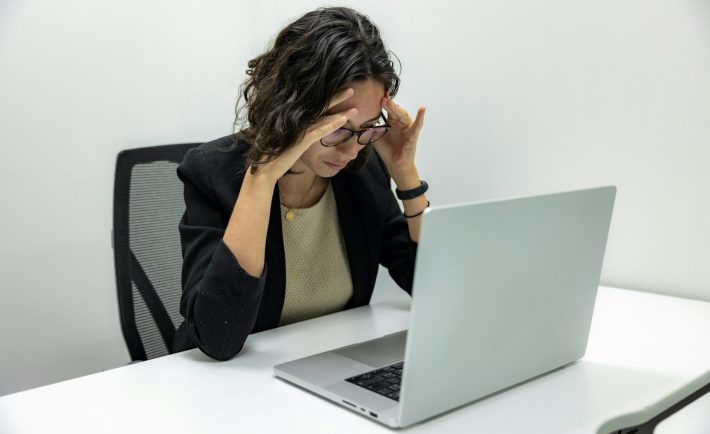
Can a Company Reject Your Resignation in Singapore?

A friend recently shared her frustration with me. She had been carrying the bulk of the workload in her company while her general manager basked in the recognition. When she finally reached her breaking point and tried to resign, her manager dismissed her request with a sharp remark: “You’re leaving when I’m leaving.” It sounded outrageous, but it echoed a question I had just seen debated online: Can a company in Singapore actually refuse a resignation, particularly when an employee offers to buy out their notice period?

On Reddit, one employee described being burned out and unable to cope with new management, yet afraid their employer might block their resignation. The responses were telling. One commenter wrote, “I called MOM because I was afraid my previous company would reject my buyout. It turns out that under the Employment Act you can either serve notice or buy yourself out with compensation.” Another added, “You are always allowed to walk out the door, but you have to offer compensation in accordance with your contract.” A third cut to the chase: “No, they cannot reject your buyout. If they could, that would be akin to slavery or forced labor.”

The law leaves little room for doubt. Under Singapore’s Employment Act, employees may resign at any time, either by serving the notice period in their contract or by paying their employer an amount equivalent to that notice. Employers have no legal right to reject a resignation or prevent an employee from leaving. In fact, the Ministry of Manpower makes it clear that it is an offence for an employer to disallow an employee from resigning.

Still, not every departure is clean. There are situations where an employee feels cornered into resigning, which raises the issue of wrongful dismissal. Singapore’s guidelines define wrongful dismissal as cases involving discrimination (e.g., age, race, gender, or religion) or retaliation against employees for exercising their rights. In such circumstances, employees can seek mediation through the Tripartite Alliance for Dispute Management or file a claim with the Employment Claims Tribunals.

For those preparing to resign, the most effective approach is to understand your contract and assert your rights. Submitting a formal resignation letter that states your final day of employment reduces ambiguity. Remaining professional, transparent, and courteous may ease the process, but ultimately, the decision to leave is yours to make. If harassment or threats surface, documenting every incident and consulting legal advice ensures you protect yourself.

Image Credits: unsplash.com

Resignation is not a privilege an employer grants. It is a right protected by law. The real challenge is not whether you are allowed to leave, but whether you manage the transition in a way that allows you to move forward on your own terms.

Sources: 1, 2, & 3


Read More...

Vaping Under Fire as Stricter Rules Take Hold

At first glance, vaping appears modern and fashionable. With candy-colored casings and flavors such as mango ice and cotton candy, e-cigarettes have quietly spread among Singapore’s youth. Yet behind this playful image lies a growing health crisis, one serious enough for Prime Minister Lawrence Wong to announce stricter vaping rules during his 2025 National Day Rally speech.

“Many of these vapes are laced with addictive and harmful substances like etomidate,” he cautioned. “Right now it is etomidate. In the future, it could be something worse, stronger, or far more dangerous.”

For a country long known for its uncompromising stance on tobacco, Singapore’s move against vaping marks a significant new phase in the battle against harmful addictions. The Government has made it clear that fines alone, previously capped at S$2,000, are no longer sufficient. Vaping will now be treated as a drug issue, supported by tougher penalties, rehabilitation programs, and a nationwide education drive.

Health experts warn that e-vaporizers release aerosols containing fine particles, cancer-causing chemicals such as formaldehyde and benzene, and toxic metals including tin, lead, and nickel. Nicotine, the main addictive substance, not only fosters dependence but also speeds up heart rate, raises blood pressure, and in younger people disrupts brain development in ways that affect learning, focus, and emotional regulation.

What alarms medical authorities most is the spread of Kpods, vapes secretly infused with etomidate, a sedative intended only for controlled medical use. When inhaled, etomidate bypasses the body’s natural defenses and enters the bloodstream directly. The consequences can range from spasms and breathing problems to seizures and psychosis. Because users are often unaware of what they are inhaling, these vapes pose risks far greater than cigarettes. Unlike tobacco or alcohol, vaping devices can be easily altered, refilled, and spiked with substances far more dangerous than nicotine.

To address the threat, the Ministry of Home Affairs and the Ministry of Health have launched a coordinated campaign that goes beyond enforcement. The Health Sciences Authority will work closely with officers on the ground, and more than 800 Singaporeans have applied to join the newly created anti-vape task force. The strategy mirrors Singapore’s earlier crackdowns on glue sniffing in the 1990s and chewing gum smuggling in the 2000s, treating vaping not as a passing trend but as a national threat that requires collective action.

The most crucial front line, however, lies in schools and campuses. The Government’s education program will target secondary schools, polytechnics, universities, and even National Service, ensuring young people are warned before habits form. “Today’s anti-vaping campaign must be as visible as yesterday’s anti-smoking efforts,” said Vikram Nair, Chairman of the Government Parliamentary Committee for Home Affairs and Law. “When I was a student, we all knew about glue sniffing because of the campaigns. This generation must see vaping in the same way.”

Still, the response will not rely solely on punishment. Those found addicted to vaping will be placed in supervised rehabilitation, while voluntary quitters will not face legal consequences if they seek support through programs such as the Health Promotion Board’s I Quit. This creates a two-pronged approach: disrupting supply chains to deter traffickers while offering users a path to recovery before their dependence becomes long term.

Image Credits: unsplash.com

What is certain is that the fight is only beginning. Battle lines are emerging in schools, shopping malls, airports, and the online spaces where vapes are promoted. As Prime Minister Wong made clear, this is not just about stopping a fad but about protecting an entire generation. The haze of vaping may seem harmless, but Singapore is determined to clear the air one crackdown at a time.

Read More...

AirAsia Flight D7 506’s Wrong Airport Landing Stuns Passengers

What should have been a routine Wednesday night arrival in Seoul turned into a surreal detour for passengers on AirAsia Flight D7 506 from Kuala Lumpur. The plane was scheduled to touch down at Incheon International Airport at 7.50 p.m. local time (6.50 p.m. in Singapore) on August 13. Instead, it landed at Gimpo International Airport at 8.08 p.m., more than 30 kilometers away, after circling in the air.

Image Credits: flightaware.com

At first, there was no sign that anything was amiss. The captain announced their arrival at Incheon, prompting passengers to stand and reach for their bags. It was only when some glanced out of the windows or checked their phones that the realization set in. They were in Gimpo, not Incheon. “Everyone panicked,” one passenger told The Korea Herald. “It seemed the cabin crew didn’t know we had landed at Gimpo until passengers told them.”

AirAsia later explained that poor weather over Incheon had caused turbulence and air traffic congestion, forcing the diversion. The aircraft remained at Gimpo for nearly two hours before departing again at 10.17 p.m. and finally arriving at Incheon at 10.59 p.m.

Image Credits: flightaware.com

For many on board, the delay was not the issue. It was the silence. “During the two hours before we departed for Incheon again, there was no clear explanation of what caused the landing or any effort to reassure passengers,” said Ryu, 39, who was travelling that night.

In a statement issued the next day, AirAsia X said the captain had kept passengers informed in English, but admitted there had been a miscommunication in the cabin crew’s landing announcement. Chief executive Benyamin Ismail promised to review the airline’s onboard communication protocols to ensure greater clarity in the future, and offered travel vouchers as a goodwill gesture.

Image Credits: unsplash.com

Diversions are part of the job in aviation. In the sky, as in business, turbulence is unavoidable. However, passengers want to be kept informed when flight plan changes occur. How you communicate in those moments can define your brand long after the landing gear touches down.

Source: 1

Read More...

JISOO Brings “Your Love” to Life in Rainforest Wild Asia

Singapore’s tourism scene has found a new pulse, driven by the synergy between pop culture and immersive destinations. In a strategic move to captivate a global audience, the Singapore Tourism Board has partnered with BLACKPINK’s JISOO, whose latest single “Your Love” premiered on August 12, 2025, accompanied by a visually captivating music video filmed entirely at Mandai Wildlife Reserve’s newest attraction, Rainforest Wild Asia.

Opened in March 2025, Rainforest Wild Asia has transformed the way visitors experience wildlife by blending biodiversity conservation with striking architectural design. This expansive habitat celebrates the lush ecosystems of Southeast Asia, featuring meandering streams, cascading waterfalls, and towering tropical canopies. It is home to elusive species such as the François’ langur and Sunda pangolin. Visitors can explore cavern chambers, relax beside tranquil lagoons, and enjoy a one-of-a-kind meal at the Cavern Restaurant.

In the music video, JISOO moves gracefully through this cinematic wilderness wearing a flowing pink gown. Her ethereal presence complements the rich greenery, creating visuals that are both romantic and timeless. From misty trails to the open sky at the Oculus, every scene captures the rainforest’s beauty. The opening moment, showing her placing a wooden disk into a vintage music player, sets a nostalgic tone before revealing the grandeur of the reserve.

The selection of Rainforest Wild Asia as the filming location is more than a creative choice. It acts as a cultural bridge, connecting K-pop’s worldwide influence with Singapore’s newest attraction. BLACKPINK’s JISOO, admired for her artistry and international appeal, becomes both muse and storyteller. Her influence reaches beyond music, shaping travel aspirations, fashion trends, and global perceptions of destinations. Since the video’s release, fans from around the world have shared images comparing JISOO’s scenes with their own plans to visit the reserve.

By blending the artistry of one of the world’s most recognizable performers with the sensory richness of Rainforest Wild Asia, this collaboration positions Singapore as a global destination. In JISOO’s newest video, the message resonates clearly: paradise is closer than you think, and it awaits beneath the rainforest canopy.

For local residents, the experience is even more enticing as WildPass holders can enjoy SG60 special rates from now until 31 August (T&Cs apply). See for yourself!

Read More...